

 Freedom Index
Listen to the article
In the four-second video clip from last December, an unmarked law enforcement truck with tinted windows rolls down a residential street in Memphis, Tennessee, and a voice says wryly over the truck’s loudspeaker, “Good job, Hunter.”
“Hunter,” was Hunter Demster, the man who was filming, and the fact that the federal agents inside the truck knew his name made him anxious. Demster had spent the past several months following and recording the Memphis Safe Task Force, a multi-agency task force of federal and state law enforcement, and he had been facing escalating hostility and intimidation from officers. Demster would later write in a court declaration that the sarcastic comment and the message behind it—we know your name—made him question whether it was worth it.
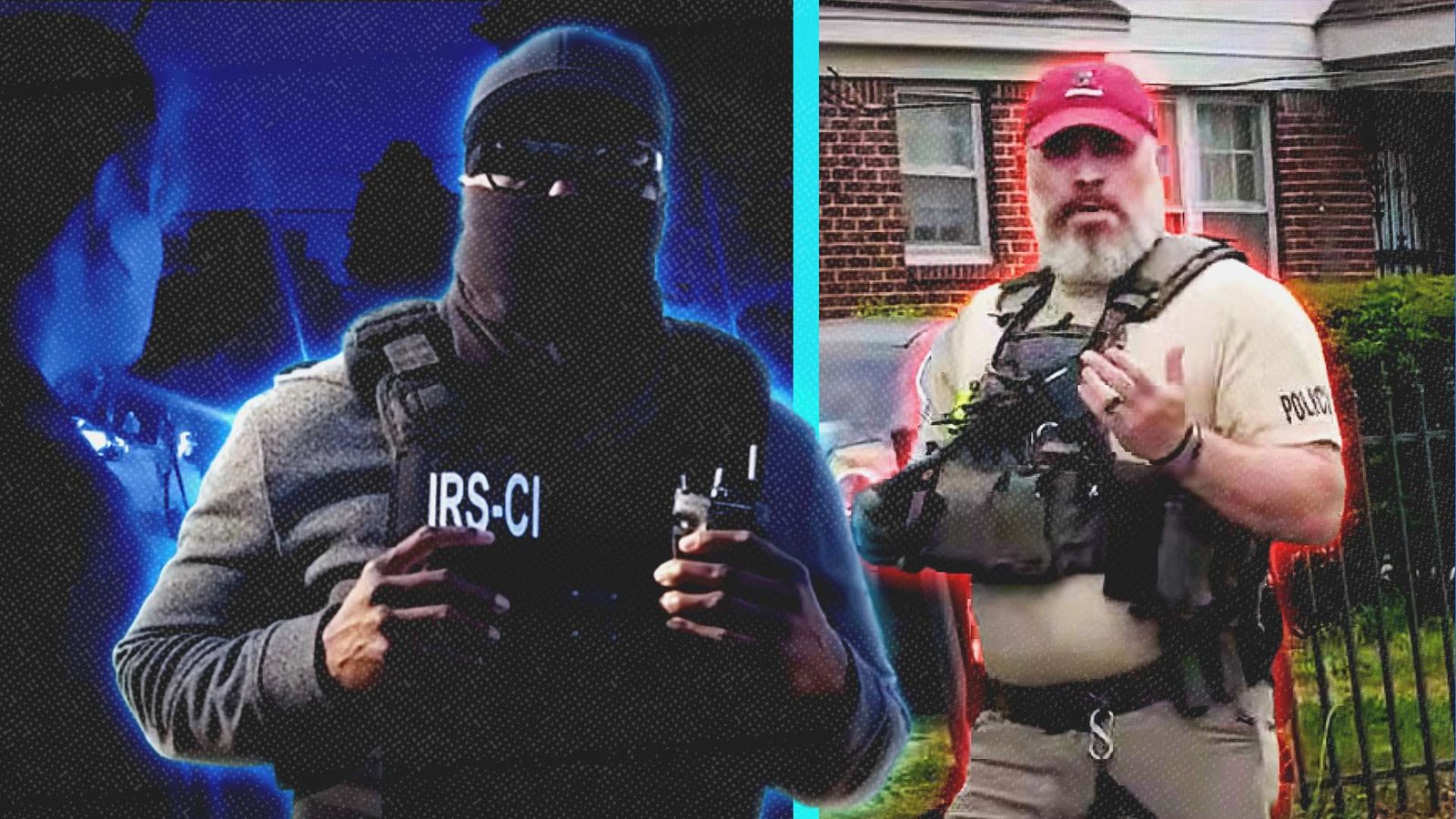
Demster is now the lead plaintiff in a First Amendment lawsuit, and the video is part of a tranche of exhibits in support of allegations that Task Force members illegally retaliate against observers who record their activities. Demster and eight other Memphis residents filed declarations in federal court last week that describe being violently arrested, surveilled at their houses, pulled over under false pretenses, boxed in by police cars, and jailed for trying to film the Task Force.
The lawsuit, filed in mid-May by the American Civil Liberties Union (ACLU), the ACLU Foundation of Tennessee, Selendy Gay PLLC, and BraunHagey & Borden LLP, is seeking a preliminary injunction blocking Task Force officers from intimidating, assaulting, or arresting people for recording. The proposed injunction would also ban Task Force officers from invoking a new state law against videographers that requires bystanders to stay 25 feet away from police.
The lawsuit is a major legal challenge to what the ACLU and organizations such as the libertarian Cato Institute argue is an unofficial and unconstitutional Department of Homeland Security (DHS) policy that treats recording the police like criminal activity. (In fact, as evidence of this, the ACLU lawsuit cites a previous DHS statement to Reason that following or recording federal law enforcement officers “sure sounds like obstruction of justice.”)
Although the Supreme Court hasn’t directly addressed the issue, seven federal circuit courts have firmly upheld the right to record and monitor the police, so long as one doesn’t physically interfere with them. However, over the past two years videos from around the country—from Oregon to Maine to the Florida Keys—have shown federal immigration agents arresting or threatening to arrest people for filming them.
Scarlet Kim, a senior staff attorney at the ACLU, said in a press release that this pattern is especially evident in Memphis, where the Task Force has launched a “campaign of harassment and intimidation” against observers.
“What we’re seeing in Memphis is the systematic repression of the First Amendment right to peacefully observe, gather information about, and film government officials operating in public,” Kim said in a press release. “No one should have their personal safety or privacy compromised simply for bringing to light what Task Force agents are doing on the streets of Memphis.”
According to Demster’s declaration, he had been documenting immigration enforcement in Memphis and providing Know Your Rights information in his neighborhood for roughly a decade when the Trump administration and State of Tennessee launched the Task Force last September. Demster wrote that his goal is “to bear witness to Task Force activity and hold Task Force agents accountable to the public, including by identifying Task Force agents and agencies operating in my community.”
However, Demster said he was continually stymied by interference and intimidation from Task Force officers. Demster wrote that officers got in his face, shone their flashlights at him to ruin his footage, erratically swerved their cars toward where he was standing, and ordered him to move so far away that he was unable to see what was occurring. Demster wrote that on several occasions, he returned home to find an unmarked police car idling outside his house.
On December 12, 2025, Demster was pulled over by a Tennessee Highway Patrol (THP) officer and several unmarked law enforcement vehicles. Demster wrote that at least six Task Force agents surrounded his car while the THP officer wrote him a bogus ticket for a broken taillight. According to his declaration, when Demster later showed up to traffic court, he was told that the ticket had never been filed in the system.
Jessica Chodor, one of the other plaintiffs in the lawsuit, was violently arrested on October 28 of last year while attempting to film a Task Force traffic stop.
A THP officer at the scene ordered Chodor to go back to her car, but Chodor instead said she was moving across the street to a public sidewalk.
“You’re going back there to your car or you’re going to jail,” the THP officer told her.
When Chodor insisted she wasn’t legally obligated to go back to her car, the officer grabbed her.
“[The Task Force agent] tackled me to the ground with immense force,” Chodor wrote in her declaration. “Once I was on the ground, he and another person pinned me to the ground facedown. I was shocked and scared. I did not know what was happening or understand that they were arresting me, because I hadn’t broken any laws and they did not tell me I was under arrest.”
Chodor was incarcerated in the Shelby County Jail for 27 hours before being released. According to the lawsuit, she was charged with resisting official detention, but the charges were dismissed.
In addition, the lawsuit is challenging the Task Force’s use of Tennessee’s “Halo law,” which makes it a crime to approach within 25 feet of a police officer when ordered to back away. Demster estimated in his declaration that Task Force members invoked the Halo law somewhere between 40 and 50 times to threaten him with arrest and move him more than 100 feet away from the scenes he was trying to record, well beyond the range where he could film anything.
Several other states such as Florida, Louisiana, Indiana, and Arizona have passed similar “buffer zone” laws in recent years. The bills’ sponsors say that first responders shouldn’t be harassed while on duty. However, civil liberties groups argue the laws have a chilling effect on the public’s ability to document police activity. Arizona’s law, for instance, was struck down by a federal judge in 2023 for being unconstitutionally overbroad.
“Despite the intimidation I have faced from the Task Force, I know that it’s important to stand up for my rights,” Demster said in an ACLU press release. “I have a constitutional right to observe Task Force agents without worrying that they might be surveilling my house or following my car. Documenting their activity and showing the world what is happening in Memphis is critical to holding them accountable, and I will use my voice and my platform to stand up for the First Amendment and for my neighbors.”
Read the full article here
Fact Checker
Verify the accuracy of this article using AI-powered analysis and real-time sources.