Close Menu
FSNN | Free Speech News NetworkFSNN | Free Speech News Network
  • Home
  • News
    • Politics
    • Legal & Courts
    • Tech & Big Tech
    • Campus & Education
    • Media & Culture
    • Global Free Speech
  • Opinions
    • Debates
  • Video/Live
  • Community
  • Freedom Index
  • About
    • Mission
    • Contact
    • Support
Trending

Cryptos jump 8% as bitcoin breaks $72,000

48 minutes ago

Crypto Stocks Soar as US Regulators Push Ahead

51 minutes ago

Senator Flags White House ‘Corruption’ Concerns Over Iran War Predictions Markets

56 minutes ago
Facebook X (Twitter) Instagram
Facebook X (Twitter) Discord Telegram
FSNN | Free Speech News NetworkFSNN | Free Speech News Network
Market Data Newsletter
Thursday, March 5
  • Home
  • News
    • Politics
    • Legal & Courts
    • Tech & Big Tech
    • Campus & Education
    • Media & Culture
    • Global Free Speech
  • Opinions
    • Debates
  • Video/Live
  • Community
  • Freedom Index
  • About
    • Mission
    • Contact
    • Support
FSNN | Free Speech News NetworkFSNN | Free Speech News Network
Home»AI & Censorship»Going Viral vs. Going Dark: Why Extremism Trends and Abortion Content Gets Censored
AI & Censorship

Going Viral vs. Going Dark: Why Extremism Trends and Abortion Content Gets Censored

News RoomBy News Room5 months agoNo Comments5 Mins Read1,293 Views
Share Facebook Twitter Pinterest Copy Link LinkedIn Tumblr Email VKontakte Telegram
Going Viral vs. Going Dark: Why Extremism Trends and Abortion Content Gets Censored
Share
Facebook Twitter Pinterest Email Copy Link

Listen to the article

0:00
0:00

Key Takeaways

Playback Speed

Select a Voice

BY KENYATTA THOMAS | September 22, 2025

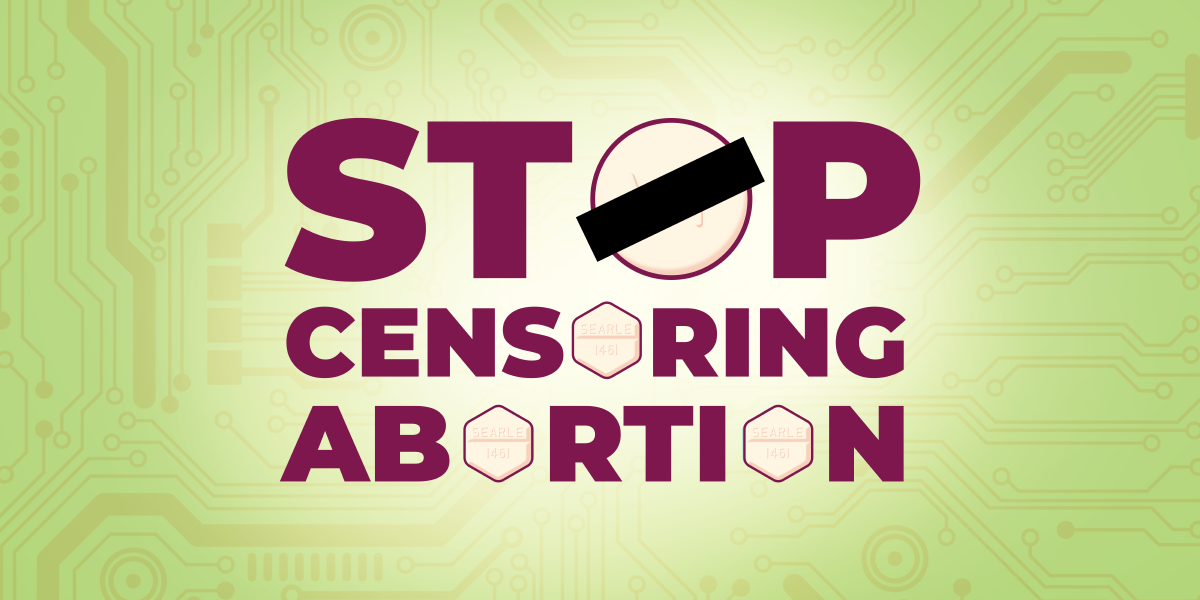
This is the fourth installment in a blog series documenting EFF’s findings from the Stop Censoring Abortion campaign. You can read additional posts here. 

One of the goals of our Stop Censoring Abortion campaign was to put names, stories, and numbers to the experiences we’d been hearing about: people and organizations having their abortion-related content – or entire accounts – removed or suppressed on social media. In reviewing survey submissions, we found that multiple users reported experiencing shadowbanning. Shadowbanning (or “deranking”) is widely experienced and reported by content creators across various social media platforms, and it’s a phenomenon that those who create content about abortion and sexual and reproductive health know all too well.

Shadowbanning is the often silent suppression of certain types of content or creators in your social media feeds. It’s not something that a U.S-based creator is notified about, but rather something they simply find out when their posts stop getting the same level of engagement that they’re used to, or when people are unable to easily find their account using the platform’s search function. Essentially, it is when a platform or its algorithm decides that other users should see less of a creator or specific topic. Many platforms deny that shadowbanning exists; they will often blame reduced reach of posts on ‘bugs’ in the algorithm. At the same time, companies like Meta have admitted that content is ranked, but much about how this ranking system works remains unknown.  Meta says that there are five content categories that while allowed on its platforms, “may not be eligible for recommendation.” Content discussing abortion pills may fall under the umbrella of “Content that promotes the use of certain regulated products,” but posts that simply affirm abortion as a valid reproductive decision or are of storytellers sharing their experiences don’t match any of the criteria that would make it unable to be recommended by Meta.

Whether a creator relies on a platform for income or uses it to educate the public, shadowbanning can be devastating for the growth of an account. And this practice often seems to disproportionately affect people who are talking about ‘taboo’ topics like sex, abortion, and LGBTQ+ identities, such as Kim Adamski, a sexual health educator who shared her story with our Stop Censoring Abortion project. As you can see in the images below, Kim’s Instagram account does not show up as a suggestion when being searched, and can only be found after typing in the full username.

Screenshots provided to EFF from M+A Hotline

Earlier this year, the Center for Intimacy Justice shared their report, “The Digital Gag: Suppression of Sexual and Reproductive Health on Meta, TikTok, Amazon, and Google“, which found that of the 159 nonprofits, content creators, sex educators, and businesses surveyed, 63% had content removed on Meta platforms and 55% had content removed on TikTok. This suppression is happening at the same time as platforms continue to allow and elevate videos of violence and gore and extremist hateful content. This pattern is troubling and is only becoming more prevalent as people turn to social media to find the information they need to make decisions about their health.

Reproductive rights and sex education have been under attack across the U.S. for decades. Since the Dobbs v. Jackson decision in 2022, 20 states have banned or limited access to abortion. Meanwhile, 16 states don’t require sex education in public schools to be medically accurate, 19 states have laws that stigmatize LGBTQ+ identities in their sex education curricula, and 17 states specifically stigmatize abortion in their sex education curricula.

In a world that is constantly finding ways to legislate away bodily autonomy and hide queer identities, social media platforms have an opportunity to stand as safe havens for access to community and knowledge.

Online platforms are critical lifelines for people seeking possibly life-saving information about their sexual and reproductive health. We know that when people are unable to find or access the information they need within their communities, they will turn to the internet and social media. This is especially important for abortion-seekers and trans youth living in states where healthcare is being criminalized.

In a world that is constantly finding ways to legislate away bodily autonomy and hide queer identities, social media platforms have an opportunity to stand as safe havens for access to community and knowledge. Limiting access to this information by suppressing the people and organizations who are providing it is an attack on free expression and a profound threat to freedom of information—principles that these platforms claim to uphold. Now more than ever, we must continue to push back against censorship of sexual and reproductive health information so that the internet can still be a place where all voices are heard and where all can learn.

This is the fourth post in our blog series documenting the findings from our Stop Censoring Abortion campaign. Read more at https://www.eff.org/pages/stop-censoring-abortion  

Affected by unjust censorship? Share your story using the hashtag #StopCensoringAbortion. Amplify censored posts and accounts, share screenshots of removals and platform messages—together, we can demonstrate how these policies harm real people. 

Read the full article here

Fact Checker

Verify the accuracy of this article using AI-powered analysis and real-time sources.

Get Your Fact Check Report

Enter your email to receive detailed fact-checking analysis

5 free reports remaining

Continue with Full Access

You've used your 5 free reports. Sign up for unlimited access!

Already have an account? Sign in here

Share. Facebook Twitter Pinterest LinkedIn Tumblr Email Telegram Copy Link
News Room
  • Website
  • Facebook
  • X (Twitter)
  • Instagram
  • LinkedIn

The FSNN News Room is the voice of our in-house journalists, editors, and researchers. We deliver timely, unbiased reporting at the crossroads of finance, cryptocurrency, and global politics, providing clear, fact-driven analysis free from agendas.

Related Articles

Media & Culture

ACIP To Discuss COVID ‘Vaccine Injuries’ Next Month, Despite That Not Being In Its Purview

3 hours ago
Media & Culture

Trump Officials Attended a Summit Of Election Deniers Who Want The President To Take Over The Midterms

8 hours ago
Media & Culture

FTC Admits Age Verification Violates Children’s Privacy Law, Decides To Just Ignore That

10 hours ago
AI & Censorship

Speaking Freely: Shin Yang

12 hours ago
Media & Culture

Judge Says He’s Sick Of The Government’s Shit; Threatens To Make DHS, DOJ Testify Under Oath

13 hours ago
Media & Culture

The Trump Administration Just Admitted Its War On Law Firms Was A Bluff. The Cowards Who Folded Already Paid The Price.

14 hours ago
Add A Comment

Comments are closed.

Editors Picks

Crypto Stocks Soar as US Regulators Push Ahead

51 minutes ago

Senator Flags White House ‘Corruption’ Concerns Over Iran War Predictions Markets

56 minutes ago

SKY jumps nearly 10% after governance vote slows new token creation while buybacks tighten supply

2 hours ago

A16z Crypto Raises $2 Billion Fund Amid Market Downturn

2 hours ago
Latest Posts

Big Tech Joins White House Energy Pledge as Iran Tensions Threaten Higher Costs

2 hours ago

The crypto crowd is so convinced this rally is a fakeout, it might trigger short squeeze

3 hours ago

Europol, FBI Wipe Major Crime Forum LeakBase Off The Web

3 hours ago

Subscribe to News

Get the latest news and updates directly to your inbox.

At FSNN – Free Speech News Network, we deliver unfiltered reporting and in-depth analysis on the stories that matter most. From breaking headlines to global perspectives, our mission is to keep you informed, empowered, and connected.

FSNN.net is owned and operated by GlobalBoost Media
, an independent media organization dedicated to advancing transparency, free expression, and factual journalism across the digital landscape.

Facebook X (Twitter) Discord Telegram
Latest News

Cryptos jump 8% as bitcoin breaks $72,000

48 minutes ago

Crypto Stocks Soar as US Regulators Push Ahead

51 minutes ago

Senator Flags White House ‘Corruption’ Concerns Over Iran War Predictions Markets

56 minutes ago

Subscribe to Updates

Get the latest news and updates directly to your inbox.

© 2026 GlobalBoost Media. All Rights Reserved.
  • Privacy Policy
  • Terms of Service
  • Our Authors
  • Contact

Type above and press Enter to search. Press Esc to cancel.

🍪

Cookies

We and our selected partners wish to use cookies to collect information about you for functional purposes and statistical marketing. You may not give us your consent for certain purposes by selecting an option and you can withdraw your consent at any time via the cookie icon.

Cookie Preferences

Manage Cookies

Cookies are small text that can be used by websites to make the user experience more efficient. The law states that we may store cookies on your device if they are strictly necessary for the operation of this site. For all other types of cookies, we need your permission. This site uses various types of cookies. Some cookies are placed by third party services that appear on our pages.

Your permission applies to the following domains:

  • https://fsnn.net
Necessary
Necessary cookies help make a website usable by enabling basic functions like page navigation and access to secure areas of the website. The website cannot function properly without these cookies.
Statistic
Statistic cookies help website owners to understand how visitors interact with websites by collecting and reporting information anonymously.
Preferences
Preference cookies enable a website to remember information that changes the way the website behaves or looks, like your preferred language or the region that you are in.
Marketing
Marketing cookies are used to track visitors across websites. The intention is to display ads that are relevant and engaging for the individual user and thereby more valuable for publishers and third party advertisers.