

 Freedom Index
Listen to the article
This is the fifth installment in a blog series documenting EFF’s findings from the Stop Censoring Abortion campaign. You can read additional posts here.
When the team at Women Help Women signed into Instagram last winter, they were met with a distressing surprise: without warning, Meta had disabled their account. The abortion advocacy non-profit organization found itself suddenly cut off from its tens of thousands of followers and with limited recourse. Meta claimed Women Help Women had violated its Community Standards on “guns, drugs, and other restricted goods,” but the organization told EFF it uses Instagram only to communicate about safe abortion practices, including sharing educational content and messages aimed at reducing stigma. Eventually, Women Help Women was able to restore its account—but only after launching a public campaign and receiving national news coverage.
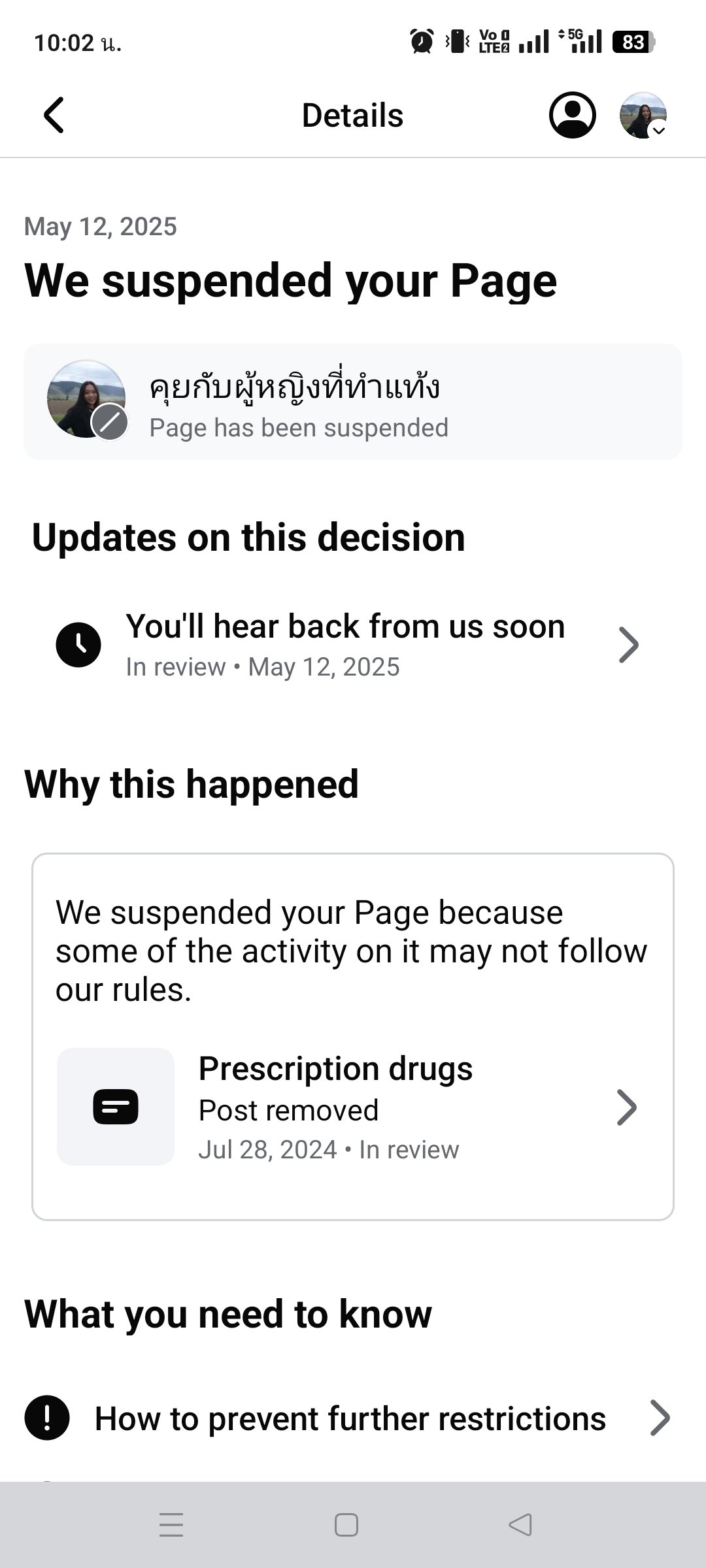
Unfortunately, Women Help Women’s experience is not unique. Around a quarter of our Stop Censoring Abortion campaign submissions reported that their entire account or page had been disabled or taken down after sharing abortion information—primarily on Meta platforms. This troubling pattern indicates that the censorship crisis goes beyond content removal. Accounts providing crucial reproductive health information are disappearing, often without warning, cutting users off from their communities and followers entirely.
What’s worse, Meta appears to be imposing these negative account actions without clearly adhering to its own enforcement policies. Meta’s own Transparency Center stipulates that an account should receive multiple Community Standards violations or warnings before it is restricted or disabled. Yet many affected users told EFF they experienced negative account actions without any warning at all, or after only one alleged violation (many of which were incorrectly flagged, as we’ve explained elsewhere in this series).
While Meta clearly has the right to remove accounts from its platforms, disabling or banning an account is an extreme measure. It completely silences a user, cutting off communication with their followers and preventing them from sharing any information, let alone abortion information. Because of this severity, Meta should be extremely careful to ensure fairness and accuracy when disabling or removing accounts. Rules governing account removal should be transparent and easy to understand, and Meta must enforce these policies consistently across different users and categories of content. But as our Stop Censoring Abortion results demonstrate, this isn’t happening for many accounts sharing abortion information.
Meta’s Maze of Enforcement Policies
If you navigate to Meta’s Transparency Center, you’ll find a page titled “How Meta enforces its policies.” This page contains a web of intersecting policies on when Meta will restrict accounts, disable accounts, and remove pages and groups. These policies overlap but don’t directly refer to each other, making it trickier for users to piece together how enforcement happens.
At the heart of Meta’s enforcement process is a strike system. Users receive strikes for posting content that violates Meta’s Community Standards. But not all Community Standards violations result in strikes, and whether Meta applies one depends on the “severity of the content” and the “context in which it was shared.” Meta provides little additional guidance on what violations are severe enough to amount to a strike or how context affects this assessment.
According to Meta’s Restricting Accounts policy, for most violations, 1 strike should only result in a warning—not any action against the account. How additional strikes affect an account differs between Facebook and Instagram (but Meta provides no specific guidance for Threads). Facebook relies on a progressive system, where additional strikes lead to increasing restrictions. Enforcement on Instagram is more opaque and leaves more to Meta’s discretion. Meta still counts strikes on Instagram, but it does not follow the same escalating structure of restrictions as it does on Facebook.
Despite some vagueness in these policies, Meta is quite clear about one thing: On both Facebook and Instagram, an account should only be disabled or removed after “repeated” violations, warnings, or strikes. Meta states this multiple times throughout its enforcement policies. Its Disabling Accounts policy suggests that generally, an account needs to receive at least 5 strikes for Meta to disable or remove it from the platform. The only caveat is for severe violations, such as posting child sexual exploitation content or violating the dangerous individuals and organizations policy. In those extreme cases, Meta may disable an account after just one violation.
Meta’s Practices Don’t Match Its Policies
Our survey results detailed a different reality. Many survey respondents told EFF that Meta disabled or removed their account without warning and without indication that they had received repeated strikes. It’s important to note that Meta does not have a unique enforcement process for prescription drug or abortion-related content. When EFF asked Meta about this issue, Meta confirmed that “enforcement actions on prescription drugs are subject to Meta’s standard enforcement policies.”
So here are a couple other possible explanations for this disconnect—each of them troubling in their own way:
Meta is Ignoring Its Own Strike System
If Meta is taking down accounts without warning or after only one alleged Community Standards violation, the company is failing to follow its own strike system. This makes enforcement arbitrary and denies users the opportunity for correction that Meta’s system supposedly provides. It’s also especially problematic for abortion advocates, given that Meta has been incorrectly flagging educational abortion content as violating its Community Standards. This means that a single content moderation error could result not only in the post coming down, but the entire account too.
This may be what happened to Emory University’s RISE Center for Reproductive Health Research (a story we described in more detail earlier in this series). After sharing an educational post about mifepristone, RISE’s Instagram account was suddenly disabled. RISE received no earlier warnings from Meta before its account went dark. When RISE was finally able to get back into its account, it discovered only that this single post had been flagged. Again, according to Meta’s own policies, one strike should only result in a warning. But this isn’t what happened here.
Similarly, the Tamtang Foundation, an abortion advocacy organization based in Thailand, had its Facebook account suddenly disabled earlier this year. Tamtang told EFF it had received a warning on only one flagged post that it had posted 10 months prior to its account being taken down. It received none of the other progressive strike restrictions Meta claims to apply Facebook accounts.
Meta is Misclassifying Educational Content as “Extreme Violations”
If Meta is accurately following its strike policy but still disabling accounts after only one violation, this points to an even more concerning possibility. Meta’s content moderation system may be categorizing educational abortion information as severe enough to warrant immediate disabling, treating university research posts and clinic educational materials as equivalent to child exploitation or terrorist content.
This would be a fundamental and dangerous mischaracterization of legitimate medical information, and it is, we hope, unlikely. But it’s unfortunately not outside the realm of possibility. We already wrote about a similar disturbing mischaracterization earlier in this series.
Users Are Unknowingly Receiving Multiple Strikes
Finally, Meta may be giving users multiple strikes without notifying them. This raises several serious concerns.
First is the lack of transparency. Meta explicitly states in its “Restricting Accounts” policy that it will notify users when it “remove[s] your content or add[s] restrictions to your account, Page or group.” This policy is failing if users are not receiving these notifications and are not made aware there’s an issue with their account.
It may also mean that Meta’s policies themselves are too vague to provide meaningful guidance to users. This lack of clarity is harmful. If users don’t know what’s happening to their accounts, they can’t appeal Meta’s content moderation decisions, adjust their content, or understand Meta’s enforcement boundaries moving forward.
Finally—and most troubling—if Meta is indeed disabling accounts that share abortion information for receiving multiple violations, this points to an even broader censorship crisis. Users may not be aware just how many informational abortion-related posts are being incorrectly flagged and counted as strikes. This is especially concerning given that Meta places a one-year time limit on strikes, meaning the multiple alleged violations could not have accumulated over multiple years.
The Broader Censorship Crisis
These account suspensions represent just one facet of Meta’s censorship of reproductive health information documented by our Stop Censoring Abortion campaign. When combined with post removals, shadowbanning, and content restrictions, the message is clear: Meta platforms are increasingly unfriendly environments for abortion advocacy and education.
If Meta wants to practice what it preaches, then it must reform its enforcement policies to provide clear, transparent guidelines on when and how strikes apply, and then consistently and accurately apply those policies. Accounts should not be taken down for only one alleged violation when the policies state otherwise.
The stakes couldn’t be higher. In a post-Roe landscape where access to accurate reproductive health information is more crucial than ever, Meta’s enforcement system is silencing the very voices communities need most.
This is the fifth post in our blog series documenting the findings from our Stop Censoring Abortion campaign. Read more at https://www.eff.org/pages/stop-censoring-abortion
Affected by unjust censorship? Share your story using the hashtag #StopCensoringAbortion. Amplify censored posts and accounts, share screenshots of removals and platform messages—together, we can demonstrate how these policies harm real people.
Read the full article here
Fact Checker
Verify the accuracy of this article using AI-powered analysis and real-time sources.