Close Menu
FSNN | Free Speech News NetworkFSNN | Free Speech News Network
  • Home
  • News
    • Politics
    • Legal & Courts
    • Tech & Big Tech
    • Campus & Education
    • Media & Culture
    • Global Free Speech
  • Opinions
    • Debates
  • Video/Live
  • Community
  • Freedom Index
  • About
    • Mission
    • Contact
    • Support
Trending

John Deere Faces Second Class Action For Monopolizing Repair

12 minutes ago

Judge Ross Should Have Been Punished For Abdicating Her Judicial Power To Her Law Clerks

13 minutes ago

Ethereum’s Vitalik Buterin is rethinking how DeFi handles market crashes

33 minutes ago
Facebook X (Twitter) Instagram
Facebook X (Twitter) Discord Telegram
FSNN | Free Speech News NetworkFSNN | Free Speech News Network
Market Data Newsletter
Monday, June 1
  • Home
  • News
    • Politics
    • Legal & Courts
    • Tech & Big Tech
    • Campus & Education
    • Media & Culture
    • Global Free Speech
  • Opinions
    • Debates
  • Video/Live
  • Community
  • Freedom Index
  • About
    • Mission
    • Contact
    • Support
FSNN | Free Speech News NetworkFSNN | Free Speech News Network
Home»News»Media & Culture»Trump’s Cotton Bailout Is Another Sign His Tariffs Aren’t Working
Media & Culture

Trump’s Cotton Bailout Is Another Sign His Tariffs Aren’t Working

News RoomBy News Room2 hours agoNo Comments3 Mins Read1,327 Views
Share Facebook Twitter Pinterest Copy Link LinkedIn Tumblr Email VKontakte Telegram
Trump’s Cotton Bailout Is Another Sign His Tariffs Aren’t Working
Share
Facebook Twitter Pinterest Email Copy Link

Listen to the article

0:00
0:00

Key Takeaways

Playback Speed

Select a Voice

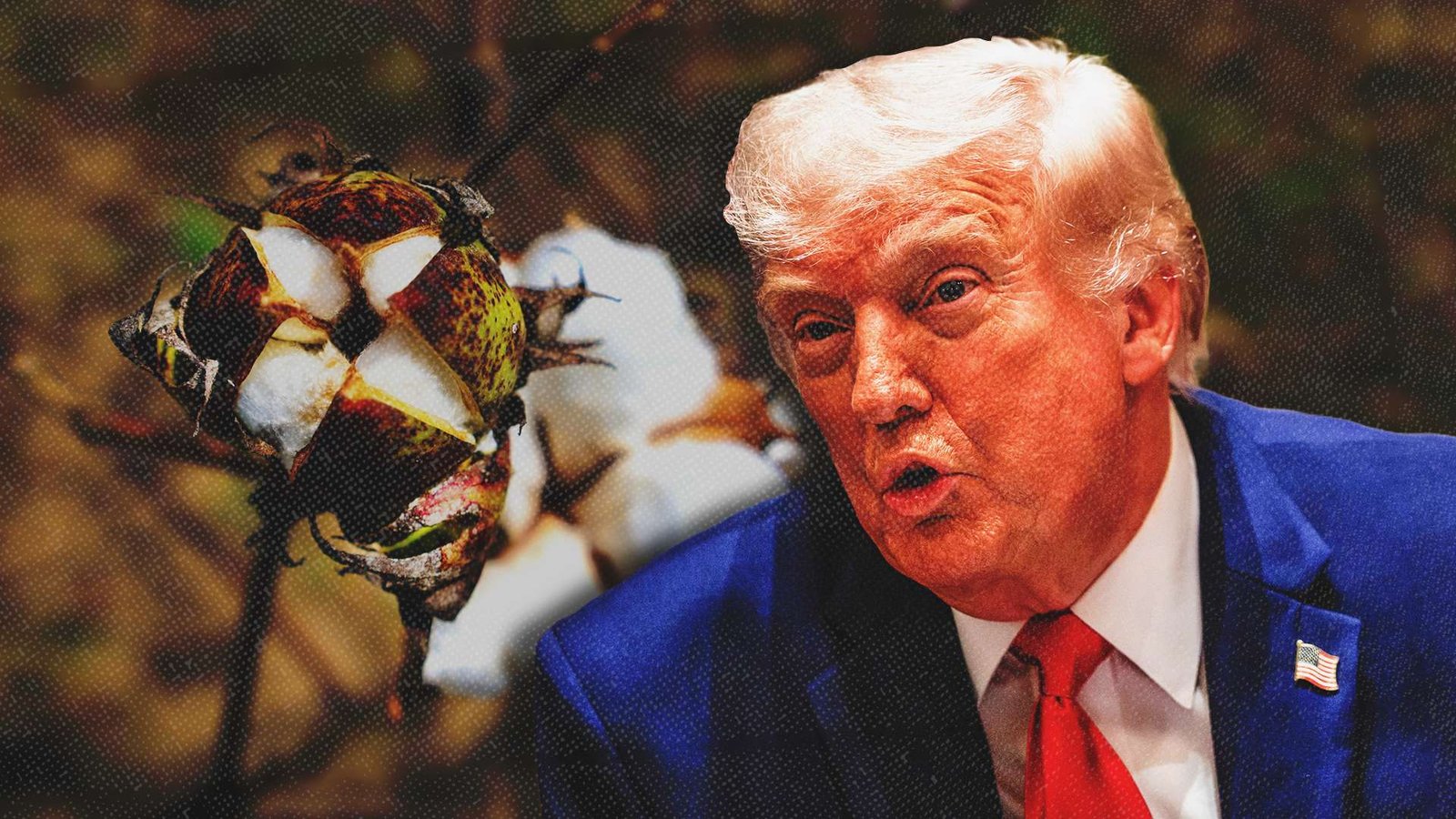
As the agriculture sector continues to feel the pain of President Donald Trump’s trade policies and the illegal war in Iran, Washington is bailing out cotton farmers. 

On Thursday, the U.S. Department of Agriculture (USDA) announced the Great American Cotton Plan, a protectionist initiative to subsidize American cotton farmers. Agriculture Secretary Brooke Rollins says the plan is necessary to help domestic growers who are being “crushed by rising costs, unfair foreign competition, and a flood of cheap synthetic products.” To that end, the USDA will distribute $16 million annually to cotton farmers through the Pima Agriculture Cotton Trust Fund, which received a windfall in last year’s One Big Beautiful Bill Act.

As part of the plan, Cotton farmers will receive a price floor of 55 cents per pound for upland cotton and $1 per pound for extra-long staple. If market prices fall below those rates, American taxpayers will be on the hook to cover the gap.

That could happen sooner rather than later. The world market price for upland cotton, which was about 69 cents per pound last week, is projected to drop to 63 cents per pound this week, according to USDA data. 

The Great American Cotton Plan also awards the National Cotton Council, an industry trade group, with $13 million in taxpayer funds this year through the Market Access Program—even though the group has already received over $140 million in the last decade. The Trump administration will also promote the Council’s “Plant Not Plastic” campaign, positioning cotton as the choice for microplastic-conscious consumers.

American cotton production has been declining for years. Given the government’s penchant for propping up struggling sectors, it’s no surprise that the industry is receiving this bailout. But it’s not “unfair foreign competition” or “trade distortions” that are causing America’s cotton industry to falter. Over the past decade, 84 percent of domestically produced cotton has been exported on average, which suggests that trade is going well for farmers. 

Instead, it’s the president’s own policies. 

During the first Trump administration, a two-year trade war with China helped Brazil become the leading global exporter of cotton. With retaliatory Chinese tariffs on American cotton as high as 65 percent, the trade war reduced the value of U.S. agricultural exports by about $25.7 billion, according to a report by the USDA Economic Research Service. 

The impacts of this are still being felt: In 2025, U.S. cotton exports to Turkey fell by 62 percent as the country turned to cheaper Brazilian cotton. Meanwhile, the president’s Liberation Day tariffs led China to impose steep retaliatory duties, causing annualized U.S. agricultural cotton exports to fall by nearly $1.3 billion, according to North Dakota State University.

Fewer exports aside, cotton farmers, textile manufacturers, and others in the industry face rising input costs for steel, aluminum, fertilizer, and agricultural goods due to retaliatory tariffs imposed by countries such as Mexico, Canada, Turkey, India, and China—all critical markets for America’s cotton industry. 

The consequences and unpopularity of these tariffs among cotton farmers led the National Cotton Council to sign on to a letter last April, urging the administration to back off the policy, which risked a combined $80 billion in agricultural exports. 

The Trump administration has made a habit of bailing out farmers faced with the negative impacts of its tariff policies. But rather than admitting its trade policies don’t work and letting the cotton industry stand on its own, the administration is preparing to double down on its bailout strategy. Farmers may like it, but ultimately, taxpayers will pay the price.

Read the full article here

Fact Checker

Verify the accuracy of this article using AI-powered analysis and real-time sources.

Get Your Fact Check Report

Enter your email to receive detailed fact-checking analysis

5 free reports remaining

Continue with Full Access

You've used your 5 free reports. Sign up for unlimited access!

Already have an account? Sign in here

#FreePress #IndependentMedia #Journalism #OpenDebate #PublicOpinion
Share. Facebook Twitter Pinterest LinkedIn Tumblr Email Telegram Copy Link
News Room
  • Website
  • Facebook
  • X (Twitter)
  • Instagram
  • LinkedIn

The FSNN News Room is the voice of our in-house journalists, editors, and researchers. We deliver timely, unbiased reporting at the crossroads of finance, cryptocurrency, and global politics, providing clear, fact-driven analysis free from agendas.

Related Articles

Media & Culture

John Deere Faces Second Class Action For Monopolizing Repair

12 minutes ago
Media & Culture

Judge Ross Should Have Been Punished For Abdicating Her Judicial Power To Her Law Clerks

13 minutes ago
Cryptocurrency & Free Speech Finance

Strategy’s Bitcoin Sale Timing Throws $50 Million Polymarket Bet Into Dispute

40 minutes ago
Media & Culture

Trump Broke the Law When He Slapped His Name on the Kennedy Center, a Federal Judge Says

1 hour ago
Cryptocurrency & Free Speech Finance

Florida Sues OpenAI, Sam Altman Over ChatGPT Safety Claims

2 hours ago
Media & Culture

Judge Reopens Trump’s IRS Case, Wants To Know If The Court Was Defrauded

2 hours ago
Add A Comment
Leave A Reply Cancel Reply

Editors Picks

Judge Ross Should Have Been Punished For Abdicating Her Judicial Power To Her Law Clerks

13 minutes ago

Ethereum’s Vitalik Buterin is rethinking how DeFi handles market crashes

33 minutes ago

Strategy’s Bitcoin Sale Reshapes Debate Around BTC Treasury Companies

35 minutes ago

Strategy’s Bitcoin Sale Timing Throws $50 Million Polymarket Bet Into Dispute

40 minutes ago
Latest Posts

Trump Broke the Law When He Slapped His Name on the Kennedy Center, a Federal Judge Says

1 hour ago

Strategy’s $2.5 million BTC sale and lessons from the first time MSTR sold in December 2022

2 hours ago

Japan’s Ruling Party Pushes Crypto ETFs, Yen-Denominated Stablecoins

2 hours ago

Subscribe to News

Get the latest news and updates directly to your inbox.

At FSNN – Free Speech News Network, we deliver unfiltered reporting and in-depth analysis on the stories that matter most. From breaking headlines to global perspectives, our mission is to keep you informed, empowered, and connected.

FSNN.net is owned and operated by GlobalBoost Media
, an independent media organization dedicated to advancing transparency, free expression, and factual journalism across the digital landscape.

Facebook X (Twitter) Discord Telegram
Latest News

John Deere Faces Second Class Action For Monopolizing Repair

12 minutes ago

Judge Ross Should Have Been Punished For Abdicating Her Judicial Power To Her Law Clerks

13 minutes ago

Ethereum’s Vitalik Buterin is rethinking how DeFi handles market crashes

33 minutes ago

Subscribe to Updates

Get the latest news and updates directly to your inbox.

© 2026 GlobalBoost Media. All Rights Reserved.
  • Privacy Policy
  • Terms of Service
  • Our Authors
  • Contact

Type above and press Enter to search. Press Esc to cancel.

🍪

Cookies

We and our selected partners wish to use cookies to collect information about you for functional purposes and statistical marketing. You may not give us your consent for certain purposes by selecting an option and you can withdraw your consent at any time via the cookie icon.

Cookie Preferences

Manage Cookies

Cookies are small text that can be used by websites to make the user experience more efficient. The law states that we may store cookies on your device if they are strictly necessary for the operation of this site. For all other types of cookies, we need your permission. This site uses various types of cookies. Some cookies are placed by third party services that appear on our pages.

Your permission applies to the following domains:

  • https://fsnn.net
Necessary
Necessary cookies help make a website usable by enabling basic functions like page navigation and access to secure areas of the website. The website cannot function properly without these cookies.
Statistic
Statistic cookies help website owners to understand how visitors interact with websites by collecting and reporting information anonymously.
Preferences
Preference cookies enable a website to remember information that changes the way the website behaves or looks, like your preferred language or the region that you are in.
Marketing
Marketing cookies are used to track visitors across websites. The intention is to display ads that are relevant and engaging for the individual user and thereby more valuable for publishers and third party advertisers.