

 Freedom Index
Listen to the article
Before he became the Trump administration’s chief military planner, Elbridge Colby had a single-minded mission: to muster the resources of the United States in defense of Taiwan. “Taiwan would not be the end of Beijing’s ambitions. So the question is, how do we deter China from attacking Taiwan and not just in some distant future, but as early as the coming years?” he said in a 2023 debate, arguing that U.S. commitments in other parts of the world (such as Ukraine and the Middle East) were a dangerous waste of military resources.
More than a year into Donald Trump’s second presidency, it’s safe to say that the administration is doing the opposite of what Colby recommended. In a congressional hearing last week, acting Secretary of the Navy Hung Cao said that the U.S. is “doing a pause” on weapons sales to Taiwan “in order to make sure we have the munitions we need for Epic Fury,” the name of the U.S. operation against Iran.
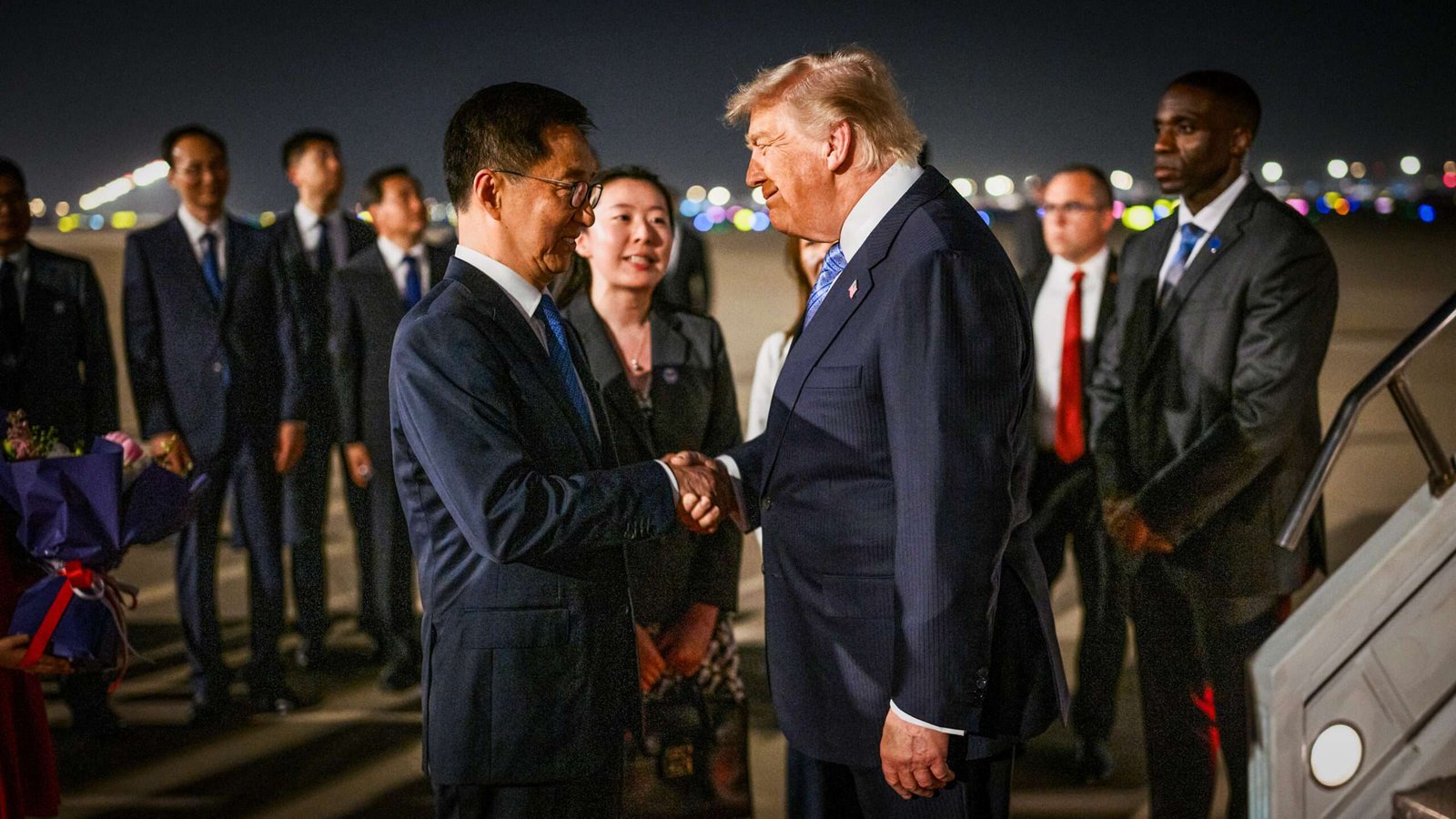
Trump himself gave another reason for the pause on the way back from last week’s meeting with Chinese President Xi Jinping. Weapons sales to Taiwan are “a very good negotiating chip for us, frankly,” Trump told Fox News in Beijing. “I’m not looking for somebody to go independent, and we’re supposed to travel 9,500 miles to fight a war. I’m not looking for that. I want [Taiwan] to cool down. I want China to cool down.” At that meeting, Xi warned Trump that conflict over Taiwan could go to “an extremely dangerous place.”
It’s a quiet but massive shift in U.S. policy. Both the first Trump administration and the Biden administration considered competition with China to be the United States’ most serious challenge. Now the U.S. government is trying to freeze that conflict—on terms slightly favorable to China, as far as Taiwan is concerned—in order to focus on small wars in the Middle East and Latin America.
Taiwan is currently awaiting Trump’s approval on a $14 billion weapons deal approved by Congress last year. (There is also a $29.72 billion backlog in weapons that Taiwan bought but the U.S. never delivered.) The proposed deal, whose contents were not publicly disclosed, “largely consists” of air defense ammunition, Reuters reports. The U.S. military rapidly burned through its air defense magazines during the war with Iran, firing more missile interceptors in defense of Israel than the Israeli military itself did.
“We firmly oppose the United States engaging in any form of military ties with China’s Taiwan region,” Chinese government spokeswoman Zhang Han declared before the Trump-Xi meeting.
The conflict between Taiwan and mainland China began with the 1947 revolution. While the communist People’s Republic of China swept the mainland, remnants of the old Republic of China reassembled on the island of Taiwan. The U.S. government recognized the Taiwanese republic as the only legitimate government of China until the 1970s, when Washington normalized relations with Beijing, recognized the People’s Republic, and dropped its support for the Republic of China.
Taiwan itself transitioned to democracy in the 1990s, and has had a hearty domestic debate on what exactly the island is now. Some Taiwanese administrations considered themselves the heirs to the Republic of China that should reunify with the mainland government. Others, including the current administration of President Lai Ching-te, have argued that Taiwan is a separate nation from China. Beijing has tried to quash this debate by force, passing a law in 2005 threatening an invasion if Taiwan moves towards full independence. Xi declared last New Year’s Eve that unification is “unstoppable” while overseeing major military exercises.
Meanwhile, Congress requires the U.S. government to continue providing “the governing authorities in Taiwan” with weapons to counter “any effort to determine the future of Taiwan by other than peaceful means.” Unlike other U.S. presidents, Trump has spoken directly to Taiwanese leaders, implicitly recognizing that Taiwan is independent. It’s a fragile peace in which each side maintains its claims without pressing them too hard. But the costs of war may leave Washington unable to back up its own stance.
Read the full article here
Fact Checker
Verify the accuracy of this article using AI-powered analysis and real-time sources.