Close Menu
FSNN | Free Speech News NetworkFSNN | Free Speech News Network
  • Home
  • News
    • Politics
    • Legal & Courts
    • Tech & Big Tech
    • Campus & Education
    • Media & Culture
    • Global Free Speech
  • Opinions
    • Debates
  • Video/Live
  • Community
  • Freedom Index
  • About
    • Mission
    • Contact
    • Support
Trending

U.S. House lawmakers who oversee the CFTC are urging Trump to fill the commission

19 minutes ago

Traditional Financial Exchanges Sound Alarm on HYPE’s Commodity Perps

20 minutes ago

Lombard Finance Dumps LayerZero, Will Use Chainlink to Power $1 Billion in Bitcoin Assets

21 minutes ago
Facebook X (Twitter) Instagram
Facebook X (Twitter) Discord Telegram
FSNN | Free Speech News NetworkFSNN | Free Speech News Network
Market Data Newsletter
Friday, May 15
  • Home
  • News
    • Politics
    • Legal & Courts
    • Tech & Big Tech
    • Campus & Education
    • Media & Culture
    • Global Free Speech
  • Opinions
    • Debates
  • Video/Live
  • Community
  • Freedom Index
  • About
    • Mission
    • Contact
    • Support
FSNN | Free Speech News NetworkFSNN | Free Speech News Network
Home»News»Media & Culture»Maryland’s Energy Crisis Was Created In Annapolis
Media & Culture

Maryland’s Energy Crisis Was Created In Annapolis

News RoomBy News Room2 hours agoNo Comments5 Mins Read1,469 Views
Share Facebook Twitter Pinterest Copy Link LinkedIn Tumblr Email VKontakte Telegram
Maryland’s Energy Crisis Was Created In Annapolis
Share
Facebook Twitter Pinterest Email Copy Link

Listen to the article

0:00
0:00

Key Takeaways

Playback Speed

Select a Voice

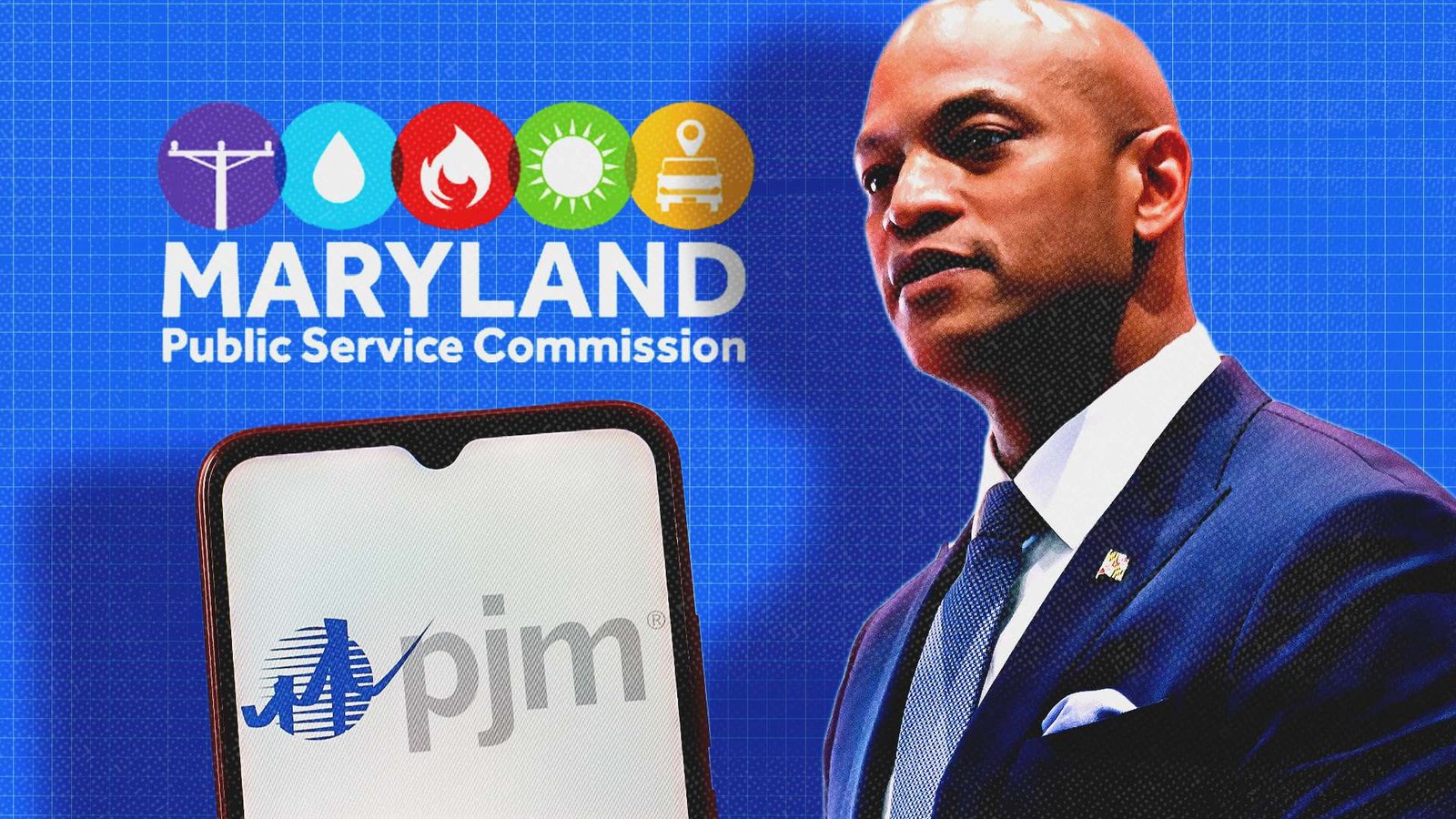
PJM Interconnection, the largest electricity grid operator in the nation, held its annual company meeting in Baltimore earlier this week. For Maryland Democratic Gov. Wes Moore, the event was an opportunity to voice grievances about rising energy costs. 

“I am here to say plainly that PJM can—and must—do more for ratepayers,” Moore said, adding that PJM’s system “isn’t working.” Moore’s comments come as the price of residential electricity in the state has reached 22.4 cents per kilowatt-hour. This is 24 percent higher than the national average and 6.4 percent more than last year. 

Maryland is not alone. Across the country, residential electricity prices rose by 7.4 percent from February 2025 to February 2026, the most recent month for which federal data are available. While data centers have become an easy scapegoat for rising wholesale prices, there are a range of factors behind these price hikes, including upgrades to aging grids, fluctuating natural gas prices, supply chain constraints, and growing demand that has simply outpaced supply.

As Jeffrey Shields, PJM’s senior manager of external communications, tells Reason, the operator is “working with relentless focus to accelerate the connection of new generation.” Any problems PJM faced with its interconnection process—pilloried by Moore—are a thing of the past, according to Shields. 

Facing a backlog of new energy generation and storage projects, PJM closed its interconnection queue in 2022, revamping its process from first-come, first-served to what Shields calls a “cluster” approach, resulting in 811 new generation projects in its first cycle this year. 

While Moore castigates PJM, he has consistently supported policies such as price caps and clean energy mandates that distort the market and increase costs for Maryland residents. This includes two bills recently signed by the governor that purport to “protect Maryland families from rising utility costs and make Maryland’s economy more business-friendly” but will likely have the opposite effect.

One of those bills, the Utility RELIEF Act, will allegedly save residents “at least $150 on their energy bills every year.” The law includes $100 million for refunds or credits to ratepayers drawn from the state’s Strategic Energy Investment Fund (SEIF). Another $100 million will go to the Maryland Energy Administration to “conduct a competitive, low-bid auction” for renewable energy projects. 

Funded by “alternative compliance payments” from utilities, the SEIF has seen payments grow from $77 million in FY 2022 to $365 million by FY 2025, according to the state’s energy administration. 

According to Josh Smith, a senior fellow at the Pacific Legal Foundation, actions like those spelled out in the RELIEF Act “tend to make things more expensive,” deterring suppliers from serving the market. 

Another bill touted by the Moore administration, the DECADE Act, will reportedly improve Maryland’s ability to “attract, develop, and grow businesses” through a series of tax credits and carve-outs designed to counter the state’s 3 percent tech tax, which Moore signed into law last May. The bill’s major provisions—including economic development zones, film tax credits, job creation credits, and R&D credits—seem representative of a state government that believes it’s better at allocating capital than the market. 

Max Gulker, managing director of technology policy at Reason Foundation, the nonprofit that publishes Reason, says Maryland’s problems require the state to consider expanding existing infrastructure and building new grids.

Easier said than done. The Piedmont Reliability Project, intended to increase the state’s transmission capacity, has faced regulatory and legal challenges from the state since it was first announced in 2024, according to local NBC affiliate WBALTV11. A decision by the state’s utility commission on the project’s viability isn’t expected until 2027.

Maryland has sought to streamline its permitting process for interconnection requests aligned with the state’s clean energy goals. Under the Next Generation Energy Act, eligible applicants can receive permits within 295 days. For a project to be eligible, its greenhouse gas emissions must be lower than those of coal or oil, and it must be capable of generating energy quickly during peak demand.

While this may appear to be a blatant example of the government picking energy winners and losers, such policies are common. As Maryland Public Service Commission Chairman Kumar Barve tells Reason, “all 50 states in the union have incentives for different kinds of energy….There’s not a single free market state in the union, not Texas, not Oklahoma, not anybody.”

And just as Maryland is not the only state to tilt the scales in favor of renewables, Moore is not the only governor to blame PJM for the price hikes from these policies. 

In New Jersey—which has long subsidized renewables and, until recently, banned construction of nuclear power plants—Democratic Gov. Mikie Sherrill has frozen utility rate increases. “I’m going to crack down on PJM, get new energy hooked into the grid, and sue to prevent excessive rate hikes,” she said while on the campaign trail last year.

Read the full article here

Fact Checker

Verify the accuracy of this article using AI-powered analysis and real-time sources.

Get Your Fact Check Report

Enter your email to receive detailed fact-checking analysis

5 free reports remaining

Continue with Full Access

You've used your 5 free reports. Sign up for unlimited access!

Already have an account? Sign in here

#Journalism #MediaAccountability #NewsAnalysis #PoliticalDebate #PoliticalNews
Share. Facebook Twitter Pinterest LinkedIn Tumblr Email Telegram Copy Link
News Room
  • Website
  • Facebook
  • X (Twitter)
  • Instagram
  • LinkedIn

The FSNN News Room is the voice of our in-house journalists, editors, and researchers. We deliver timely, unbiased reporting at the crossroads of finance, cryptocurrency, and global politics, providing clear, fact-driven analysis free from agendas.

Related Articles

Cryptocurrency & Free Speech Finance

Lombard Finance Dumps LayerZero, Will Use Chainlink to Power $1 Billion in Bitcoin Assets

21 minutes ago
Media & Culture

These Politicians Want To Tax the Rich. But Why Do They Seem To Despise Them?

51 minutes ago
Cryptocurrency & Free Speech Finance

Drake Calls for Sam Bankman-Fried’s Release in New, Critically Panned Album

1 hour ago
Media & Culture

Let’s Help Children, Not Trial Lawyers

2 hours ago
Cryptocurrency & Free Speech Finance

President Trump Discloses Coinbase, Robinhood and Bitcoin Mining Stock Trades

2 hours ago
Media & Culture

Vladeck v. Adler on the Shadow Docket

3 hours ago
Add A Comment
Leave A Reply Cancel Reply

Editors Picks

Traditional Financial Exchanges Sound Alarm on HYPE’s Commodity Perps

20 minutes ago

Lombard Finance Dumps LayerZero, Will Use Chainlink to Power $1 Billion in Bitcoin Assets

21 minutes ago

These Politicians Want To Tax the Rich. But Why Do They Seem To Despise Them?

51 minutes ago

CPJ, press freedom organizations renew call for justice on 9th anniversary of journalist Javier Valdez Cárdenas’ murder

1 hour ago
Latest Posts

Crypto market structure bill clears key hurdle as ethics debate looms over floor vote

1 hour ago

Solayer Introduces USDC Card with ATM support

1 hour ago

Drake Calls for Sam Bankman-Fried’s Release in New, Critically Panned Album

1 hour ago

Subscribe to News

Get the latest news and updates directly to your inbox.

At FSNN – Free Speech News Network, we deliver unfiltered reporting and in-depth analysis on the stories that matter most. From breaking headlines to global perspectives, our mission is to keep you informed, empowered, and connected.

FSNN.net is owned and operated by GlobalBoost Media
, an independent media organization dedicated to advancing transparency, free expression, and factual journalism across the digital landscape.

Facebook X (Twitter) Discord Telegram
Latest News

U.S. House lawmakers who oversee the CFTC are urging Trump to fill the commission

19 minutes ago

Traditional Financial Exchanges Sound Alarm on HYPE’s Commodity Perps

20 minutes ago

Lombard Finance Dumps LayerZero, Will Use Chainlink to Power $1 Billion in Bitcoin Assets

21 minutes ago

Subscribe to Updates

Get the latest news and updates directly to your inbox.

© 2026 GlobalBoost Media. All Rights Reserved.
  • Privacy Policy
  • Terms of Service
  • Our Authors
  • Contact

Type above and press Enter to search. Press Esc to cancel.

🍪

Cookies

We and our selected partners wish to use cookies to collect information about you for functional purposes and statistical marketing. You may not give us your consent for certain purposes by selecting an option and you can withdraw your consent at any time via the cookie icon.

Cookie Preferences

Manage Cookies

Cookies are small text that can be used by websites to make the user experience more efficient. The law states that we may store cookies on your device if they are strictly necessary for the operation of this site. For all other types of cookies, we need your permission. This site uses various types of cookies. Some cookies are placed by third party services that appear on our pages.

Your permission applies to the following domains:

  • https://fsnn.net
Necessary
Necessary cookies help make a website usable by enabling basic functions like page navigation and access to secure areas of the website. The website cannot function properly without these cookies.
Statistic
Statistic cookies help website owners to understand how visitors interact with websites by collecting and reporting information anonymously.
Preferences
Preference cookies enable a website to remember information that changes the way the website behaves or looks, like your preferred language or the region that you are in.
Marketing
Marketing cookies are used to track visitors across websites. The intention is to display ads that are relevant and engaging for the individual user and thereby more valuable for publishers and third party advertisers.