

 Freedom Index
Listen to the article
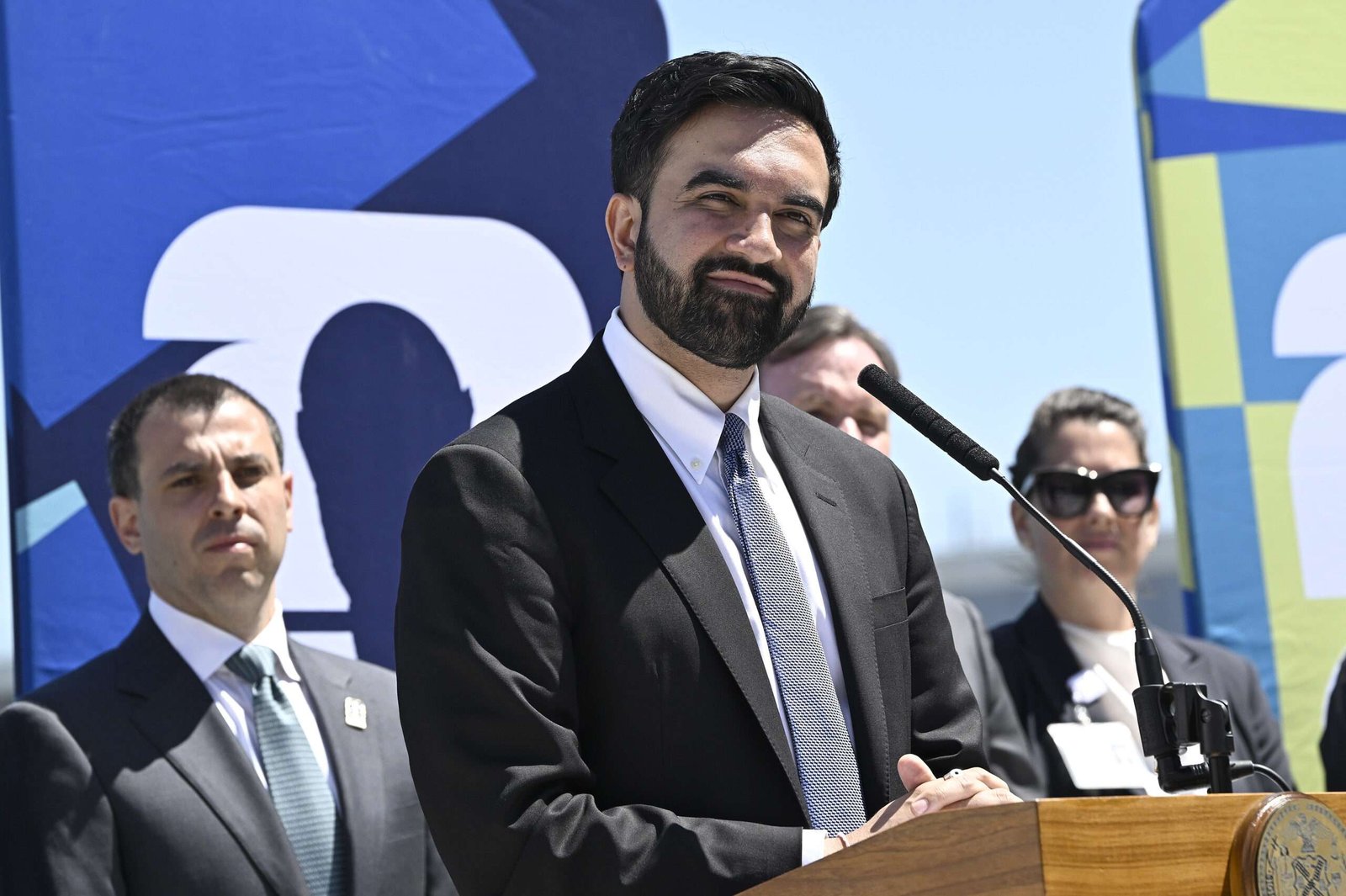
This week, New York City Mayor Zohran Mamdani announced an impressive achievement: Just months after warning of a ruinously large deficit, his first-term administration had both balanced the city’s budget and increased funding for his favored causes.
If that sounds too good to be true, well, it is.
“We inherited a $12 billion budget deficit,” Mamdani said in a video posted to X. “Many said the only way out of this was slashing services and passing an austerity budget. We rejected that. After months of painstaking work, that deficit is now zero. Our city is now on firm financial ground.”
“We didn’t close the gap on the backs of working people,” he wrote in the post. “We closed it while funding parks, libraries, safer streets and making historic investments in public housing. Call it Pothole Politics. Call it Democratic Socialism. It’s government that delivers for the people who make this city run.”
When we came into office, we uncovered a $12 billion budget deficit.
Today, I’m proud to say we brought it down to zero.
We didn’t close the gap on the backs of working people.
We closed it while funding parks, libraries, safer streets and making historic investments in public… pic.twitter.com/TbNu6fhvjs
— Mayor Zohran Kwame Mamdani (@NYCMayor) May 12, 2026
“Congratulations to Mayor Mamdani,” added Sen. Bernie Sanders (I–Vt.), Mamdani’s fellow democratic socialist. “He inherited a huge budget deficit, brought it down to zero, and still invested in childcare, housing and city infrastructure. When municipal governments stand with working families, not billionaires, there is nothing they cannot accomplish.”
“Despite endless speculation that a socialist couldn’t manage a budget, Mayor Zohran Mamdani helped close a $12 billion deficit without major cuts to public services—all while continuing investments in parks, libraries, safer streets, public housing and continuing to inspire millions of people that government can work for the people,” added Sanders’ political action nonprofit Our Revolution.
In February, soon after coming into office, Mamdani warned the city faced a $12 billion shortfall over the next two years. Its finances were so dire, he said, it may require drastic action, either raising taxes on the rich—his preferred option—or hiking property taxes on all city residents.
So how did Mamdani cut $12 billion—equivalent to 10 percent of the city’s annual budget—without raising property taxes, all while funding numerous additional programs, in just three months? Was it “democratic socialism,” like he said?
If by that he means a taxpayer bailout, then yes.
According to Mamdani, his administration balanced the budget “in two major ways.” For one, he notes, “We taxed the rich.” Gov. Kathy Hochul backed Mamdani’s proposal for a “pied-à-terre tax” on homes in the city worth at least $5 million that are not rented out or claimed as a primary residence. According to Hochul’s office, that tax would generate “at least” $500 million annually, though the New York City comptroller cautioned that once implemented, total revenue could be as little as $340 million, when accounting for homeowners who change their behavior to skirt the law.
Mamdani says they also found $1.77 billion by “poring over the city budget to identify savings. We reduced unnecessary overtime and found smarter ways for government to deliver services.” As progressive news site Common Dreams noted in March, this included terminating or renegotiating expensive or unnecessary contracts and shrinking the city government’s “physical footprint.”
But while cutting a couple billion dollars is certainly a good start, it doesn’t explain how Mamdani zeroed out the entire $12 billion deficit. In his video, he briefly notes “a better deal” from Albany, where the city is “getting billions more from the state to help tackle the gap.”
It turns out the majority of Mamdani’s vaunted budget-cutting came from an infusion of state taxpayer cash.
“The mayor was able to close the budget deficit because Gov. Kathy Hochul both provided billions of dollars in additional funds…and delayed a costly mandate for the city to reduce class sizes,” Greg David writes at The City. “Much of the money is short-term. For example, the governor has promised $1.6 billion for only the first two years of the rollout of Pre-K for three-year-olds and expansion of the slots for four-year-olds. There is no money for future years when the program is expected to be growing rapidly.”
Indeed, Mamdani finds savings by delaying several city fiscal issues without addressing them.
“The budget is hardly a symbol of fiscal rectitude,” David adds. “It relies on billions of dollars in one-shot or short-term money to fund permanent programs, it stretches out pension payments so the next generation will pay for the retirements of present-day workers and it projects a $7 billion deficit for the 2028 fiscal year that will need to be closed just one year from now.”
The pension gamble, in particular, saves $2.3 billion by delaying payments to certain public pension funds until a later date. “The city wants to reduce those debt payments and instead pay it off over a longer period, likely well into the 2040s,” write Ken Girardin and John Ketcham of the conservative Manhattan Institute, “meaning tomorrow’s workers will be taxed extra to pay for city services delivered before some of their parents were born.”
So rather than truly getting the city on “firm financial ground,” Mamdani got a bailout from New York State taxpayers, while postponing other obligations for another day.
Read the full article here
Fact Checker
Verify the accuracy of this article using AI-powered analysis and real-time sources.