Close Menu
FSNN | Free Speech News NetworkFSNN | Free Speech News Network
  • Home
  • News
    • Politics
    • Legal & Courts
    • Tech & Big Tech
    • Campus & Education
    • Media & Culture
    • Global Free Speech
  • Opinions
    • Debates
  • Video/Live
  • Community
  • Freedom Index
  • About
    • Mission
    • Contact
    • Support
Trending

Fidelity Defends Bitcoin’s Long-Term Security Model

25 minutes ago

Federalist Society Courthouse Steps Podcast on Pung v. Isabella County Takings Case

55 minutes ago

50K BTC Flow Adds Pressure To Bitcoin Price: Will The Sell-off Deepen?

1 hour ago
Facebook X (Twitter) Instagram
Facebook X (Twitter) Discord Telegram
FSNN | Free Speech News NetworkFSNN | Free Speech News Network
Market Data Newsletter
Saturday, June 27
  • Home
  • News
    • Politics
    • Legal & Courts
    • Tech & Big Tech
    • Campus & Education
    • Media & Culture
    • Global Free Speech
  • Opinions
    • Debates
  • Video/Live
  • Community
  • Freedom Index
  • About
    • Mission
    • Contact
    • Support
FSNN | Free Speech News NetworkFSNN | Free Speech News Network
Home»News»Global Free Speech»Venezuelan journalist details complicated fight for amnesty post-Maduro
Global Free Speech

Venezuelan journalist details complicated fight for amnesty post-Maduro

News RoomBy News Room2 months agoNo Comments5 Mins Read598 Views
Share Facebook Twitter Pinterest Copy Link LinkedIn Tumblr Email VKontakte Telegram
Venezuelan journalist details complicated fight for amnesty post-Maduro
Share
Facebook Twitter Pinterest Email Copy Link

Listen to the article

0:00
0:00

Key Takeaways

Playback Speed

Select a Voice

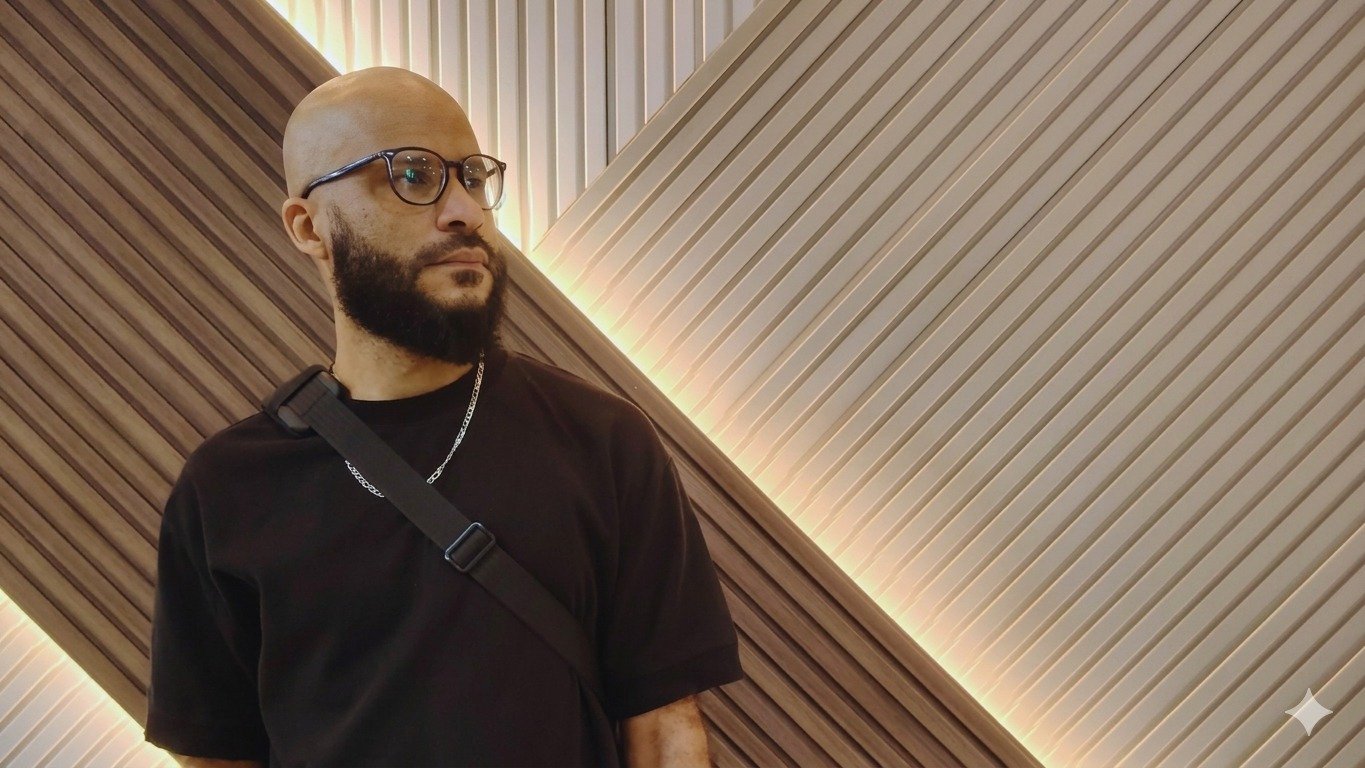
After nearly a year in prison, Venezuelan journalist Rory Branker is finally free. But he has yet to liberate himself from what legal experts and press freedom groups describe as trumped-up criminal charges that are hanging over his head. 

After the U.S. military ousted Venezuelan President Nicolás Maduro in January, Branker was one of more than two dozen journalists to be released from prison after being jailed by Maduro’s repressive authoritarian regime for their critical coverage. Meanwhile, Venezuela’s new government, led by interim President Delcy Rodríguez, also approved an amnesty law, authorizing judges to erase a broad range of criminal charges filed against former political prisoners over the past 26 years.

However, Branker, the chief content officer for the independent news site La Patilla, said that when he went to court to ask for amnesty, his petition was denied. As a result, he still faces charges of terrorism, treason, conspiracy to commit crimes, and inciting hatred. If convicted he could be sent back to prison for decades.

“I think the Venezuelan government has not yet finished messing with me,” Branker, 47, told CPJ in a May 1 interview.

Yet Branker isn’t the only formerly jailed journalist to get out of prison and remain entangled in legal red tape. While most received amnesty or were tried and found not guilty, Venezuela’s National Union of Press Workers (SNTP) says eight of the 28 journalists released from prison following post-Maduro still face criminal charges.

“The amnesty law has produced concrete progress, but its application has been inconsistent,” the press workers union said in a statement last month. “The law must be fully applied in a timely manner without restrictive interpretations to guarantee that criminal cases against journalists are closed.”

Even though journalists have more space to report the news in post-Maduro Venezuela, the arbitrary application of the amnesty law is just one sign that press freedom remains under threat. Self-censorship is pervasive and many Venezuelan journalists who fled the country over the past decade remain in exile. According to the SNTP and NGO Safe and Free Connection, the websites of at least 65 media outlets are still being blocked by the government inside Venezuela.

Many pro-Maduro hardliners have remained in the new government, including Interior Minister Diosdado Cabello, who in 2015 sued La Patilla for defamation.

What’s more, the judicial branch continues to answer to the president and journalists seeking amnesty must often petition the same judges that charged them with bogus crimes in the first place. So far this year, 29 journalists have been detained by security forces, though they were quickly released, according to the Venezuela free expression group Public Space.

Branker, who has returned to work at La Patilla, recently spoke with CPJ about his convoluted legal case.

After working for La Patilla for 15 years, why were you suddenly detained and jailed last year? 

La Patilla is one of the most-read news sites in Venezuela. But we were always critical of the government. We published stories about the contradictions between what the government said and what it actually did. We covered its ties to groups like Al Qaeda and Hezbollah and its links to drug cartels. Because of that, the site was blocked. Even today, you can only read La Patilla in Venezuela if you have a VPN (virtual private network) because the new government has refused to lift the block.

After Maduro stole the 2024 election, there was a massive government crackdown on dissent, and many journalists faced a very high risk of being arrested. I think the government targeted me to put pressure on La Patilla, intimidate our reporters and try to force its shutdown. Thank God, that didn’t happen. I was kidnapped on February 20, 2025, and held incognito for seven months. I was the only journalist who was forcibly disappeared for such a long period of time. 

How were you treated in prison?

At first, I was put in isolation cells and tortured. The guards put a hood over my head to suffocate me and try to get information about my colleagues. But I didn’t tell them anything and they had no evidence, so they didn’t know what to do with me. I was transferred to five different prisons. At one point they told me that if I ever was freed, I would have to leave the country. 

Do you know why you were released after Maduro was captured?

I was released because Trump did what he did and Maduro is no longer running the country. Trump also spoke about the problem of political prisoners. The Rodríguez government is releasing prisoners and promoting amnesty against its will. They are not happy that they now have to behave like human beings because of the U.S. pressure. I was the last imprisoned journalist to be released, which happened on February 4, 2026. But remember, there are still about 500 political prisoners behind bars. 

What happened when you applied for amnesty?

Venezuela now has special terrorism courts because under Maduro they enacted many new laws on corruption, terrorism and organized crime. At a preliminary hearing while I was in prison, the judge in my case decided that I would have to stand trial for terrorism, treason, conspiracy and inciting hatred. Once I was released and requested amnesty, a different judge, citing the ruling of the previous judge, decided that my case should go to trial and rejected my petition for amnesty. My lawyer says there is no legal basis for this decision under the terms of the amnesty law, so we are appealing. Meanwhile, I can’t leave the country and have to report to judicial authorities every week.

Why do you think other journalists received amnesty, but you did not?

The decision in my case was personal. I think the government is trying to punish me, [La Patilla cofounder and editor-in-chief] Alberto Ravell, and La Patilla. It may be coming from Interior Minister Diosdado Cabello who sued La Patilla for defamation. They are still not satisfied with all they have done to me. But I am not worried. I have been to hell and back and have survived much worse things. Despite these problems, I am living a normal life in Caracas and have gone back to work for La Patilla.

Read the full article here

Fact Checker

Verify the accuracy of this article using AI-powered analysis and real-time sources.

Get Your Fact Check Report

Enter your email to receive detailed fact-checking analysis

5 free reports remaining

Continue with Full Access

You've used your 5 free reports. Sign up for unlimited access!

Already have an account? Sign in here

Share. Facebook Twitter Pinterest LinkedIn Tumblr Email Telegram Copy Link
News Room
  • Website
  • Facebook
  • X (Twitter)
  • Instagram
  • LinkedIn

The FSNN News Room is the voice of our in-house journalists, editors, and researchers. We deliver timely, unbiased reporting at the crossroads of finance, cryptocurrency, and global politics, providing clear, fact-driven analysis free from agendas.

Related Articles

Global Free Speech

Belarus jails journalist Kyril Pazniak for 3.5 years 

1 day ago
Global Free Speech

CPJ, partners express urgent concern to NATO over press accreditation denial for Turkey summit in July

1 day ago
Global Free Speech

The high price journalists paid for LGBTQ+ reporting, and how to protect yourself now

1 day ago
Global Free Speech

Al-Arabiya correspondent killed by car bomb in Yemen

1 day ago
Global Free Speech

CPJ, partners call on EU to review approach toward Tunisia amid critical human rights decline

1 day ago
Global Free Speech

Photo by: Stephen Barnes/Medical/Alamy UK news this week is dominated by a damning report led by senior midwife Donna Ockenden that reveals how more than 500 mothers and babies were harmed or died at maternity units in Nottingham. This isn’t the first scandal Ockenden has investigated. A few years back terrible failings were revealed in Shropshire hospitals run by the Shrewsbury and Telford NHS Trust where 201 babies and nine mothers died.  We spoke to Ockenden for the magazine and she repeated this: “women aren’t listened to”. Another common thread was cover-up. Secrecy is not a one-off, it’s a pattern, wrote Martin Bright when he reported on the Shropshire scandal for Index. As Bright said, “this is not a historical story; it is an ongoing crisis”. Maternity scandals happen not only in Britain but all over the world. Last year’s protests in Morocco were ignited after eight women died in a maternity ward in Agadir because of severe medical neglect. In Egypt last week Omnia Sweidan, a former resident physician in obstetrics and gynaecology at Alexandria’s El-Shatby University Hospital, wrote a Facebook post detailing a series of abusive incidents faced by women at Alexandria’s Al-Shatby Hospital. It was read and shared by tens of thousands. Within 24 hours of posting, instead of the government declaring an investigation, security forces arrested Sweidan. While she was apparently later released, she’s been accused of spreading false news and misusing social media. She could end up in jail. Meanwhile, Afghanistan has one of the highest maternal mortality rates in the world – the figures of deaths and injuries are rising, but to what no one really knows. The Taliban won’t publish the data, probably to cover-up the true numbers. I’ve navigated maternity services myself in the UK. I’ve generally had good experiences and I’m very grateful to the NHS. But my experiences have not been uncomplicated – my daughter very nearly died. What saved her, I’ve been told, were a few factors – my race (white), my class (middle), where I live (London) and the fact that I relentlessly badgered those at my local hospital for weeks on end saying things didn’t feel right. Let me be clear here though: one shouldn’t have to be a dogged white Londoner to get good medical care. And a recent health committee report revealed terrible inequalities faced by people who are members of ethnic minorities, stating that “[B]abies that are Black or Black British Asian or Asian British have a more than 50% higher risk of perinatal mortality”. At Index we typically work on stories where dissidents take on the powerful: leaders, oligarchs and tech bros. The victims of maternity care scandals might not appear the same. But there is much that unites them. At the end of the day if the response you get from a doctor or nurse to a basic medical request is a shrug or a sneer, your free speech is being violated. If the systems view calls for accountability as dissent that must be silenced, then they are censoring. We grew up being told we’re lucky, that childbirth was one of the leading causes of death before the advent of modern medicine. For many of us that’s true. Just not all of us. That’s a travesty demanding urgent attention – in Nottingham and beyond. READ MORE

1 day ago
Add A Comment

Comments are closed.

Editors Picks

Federalist Society Courthouse Steps Podcast on Pung v. Isabella County Takings Case

55 minutes ago

50K BTC Flow Adds Pressure To Bitcoin Price: Will The Sell-off Deepen?

1 hour ago

This Week In Techdirt History: June 21st – 27th

2 hours ago

Why a selloff in gold and silver is dragging bitcoin down

2 hours ago
Latest Posts

Yuma Launches Bittensor AI Fund for Institutional Investors

2 hours ago

Coinbase and OKX try to lure in Binance’s users after it failed to secure a MiCA license

3 hours ago

The Stablecoin Founder Map Doesn’t Match the Stablecoin Volume Map

4 hours ago

Subscribe to News

Get the latest news and updates directly to your inbox.

At FSNN – Free Speech News Network, we deliver unfiltered reporting and in-depth analysis on the stories that matter most. From breaking headlines to global perspectives, our mission is to keep you informed, empowered, and connected.

FSNN.net is owned and operated by GlobalBoost Media
, an independent media organization dedicated to advancing transparency, free expression, and factual journalism across the digital landscape.

Facebook X (Twitter) Discord Telegram
Latest News

Fidelity Defends Bitcoin’s Long-Term Security Model

25 minutes ago

Federalist Society Courthouse Steps Podcast on Pung v. Isabella County Takings Case

55 minutes ago

50K BTC Flow Adds Pressure To Bitcoin Price: Will The Sell-off Deepen?

1 hour ago

Subscribe to Updates

Get the latest news and updates directly to your inbox.

© 2026 GlobalBoost Media. All Rights Reserved.
  • Privacy Policy
  • Terms of Service
  • Our Authors
  • Contact

Type above and press Enter to search. Press Esc to cancel.

🍪

Cookies

We and our selected partners wish to use cookies to collect information about you for functional purposes and statistical marketing. You may not give us your consent for certain purposes by selecting an option and you can withdraw your consent at any time via the cookie icon.

Cookie Preferences

Manage Cookies

Cookies are small text that can be used by websites to make the user experience more efficient. The law states that we may store cookies on your device if they are strictly necessary for the operation of this site. For all other types of cookies, we need your permission. This site uses various types of cookies. Some cookies are placed by third party services that appear on our pages.

Your permission applies to the following domains:

  • https://fsnn.net
Necessary
Necessary cookies help make a website usable by enabling basic functions like page navigation and access to secure areas of the website. The website cannot function properly without these cookies.
Statistic
Statistic cookies help website owners to understand how visitors interact with websites by collecting and reporting information anonymously.
Preferences
Preference cookies enable a website to remember information that changes the way the website behaves or looks, like your preferred language or the region that you are in.
Marketing
Marketing cookies are used to track visitors across websites. The intention is to display ads that are relevant and engaging for the individual user and thereby more valuable for publishers and third party advertisers.