

 Freedom Index
Listen to the article
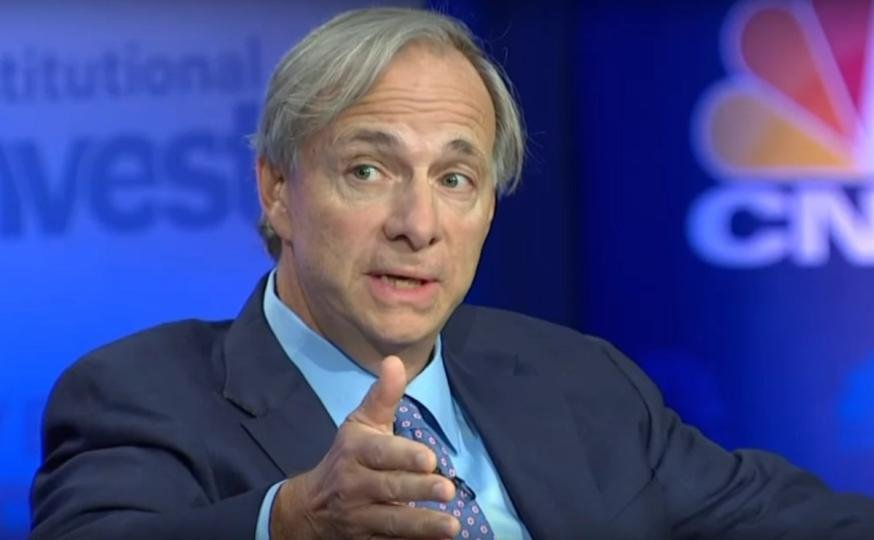
Bitcoin’s transparency was once considered one of its greatest strengths. Now, Ray Dalio says, it may be the very reason central banks won’t adopt it as a reserve asset, even though corporations and institutional investors have embraced it.
The billionaire hedge fund manager, who is also a bitcoin investor, said on X that, “Bitcoin lacks privacy. Transactions can be monitored and potentially controlled, which is why central banks aren’t looking to hold it.”
Ray Dalio has previously said he allocates about 1% of his portfolio to bitcoin.
Bitcoin, the world’s largest blockchain network, operates as a decentralized peer-to-peer system built on a public ledger. Every transaction is permanently recorded on this transparent ledger, allowing anyone to view it in real time.
Anyone can open a Bitcoin block explorer, enter a wallet address into the search bar, and view the entire transaction history associated with it. While wallet addresses are pseudonymous rather than directly tied to identities, blockchain analytics firms and law enforcement agencies can often trace the movement of funds and link activity back to individuals or institutions.
In other words, the flow of BTC, the blockchain’s native token, is highly transparent and traceable, even if it is not always directly tied to real-world identities.
This level of transparency, often praised by Bitcoin supporters, may also be what keeps central banks away. Imagine being a central bank and accumulating an asset whose flows can be tracked in real time on a public ledger.
The lack of privacy is also a concern for large institutional players. At Consensus Hong Kong in February, participants noted that the mass adoption of blockchain technology at the institutional level may ultimately depend on stronger privacy features, particularly for large transactions.
The market seems to align with the growing expert consensus on privacy. For instance, the privacy-focused coin zcash (ZEC) has surged over 800% since early 2025. Bitcoin, meanwhile, is down over 10%.
Correlated to stocks
Dalio’s concerns, however, go beyond central bank adoption. He pointed to structural issues that limit bitcoin’s appeal as a reserve asset compared to traditional alternatives like gold.
One of them is its tendency to take cues from Wall Street, especially the technology stocks, rather than acting as an independent store of value during periods of stress.
As of writing, the 90-day correlation coefficient between bitcoin and the Nasdaq, Wall Street’s tech-heavy index, was 0.89, according to data source TradingView. That translates into an R² of 0.79, meaning roughly 79% of bitcoin’s price movements can be explained by its relationship with the Nasdaq over the 90 days. The data points to BTC’s behavior more as a risk-on asset than an independent store of value.
The other issue Dalio highlighted is the market’s scale and structure. Unlike gold, which is deeply established, widely held, and exists outside any single digital system, bitcoin remains a relatively small and more easily influenced market. In his view, these factors further weaken its case as a global reserve asset, despite growing institutional participation.
“Ultimately, gold is more widely held, deeply established, and still plays a central role in the global system,” he said.
Dalio has repeatedly favored gold over bitcoin, and his views have been countered by crypto industry experts.
Read the full article here
Fact Checker
Verify the accuracy of this article using AI-powered analysis and real-time sources.