

 Freedom Index
Listen to the article
In July 1998, the Rome Statute created the legal basis for the International Criminal Court (ICC), a body designed to “guarantee lasting respect for and the enforcement of international justice.” The Office of the Prosecutor (OTP) was also created to initiate investigations and seek arrest warrants for anyone charged with crimes within the Court’s jurisdiction. Article 70 of the Statute empowers the Court to prosecute individuals for bribery, intimidation, or corrupt influence, but no one seems to have entertained the possibility that the prosecutor himself might be guilty of one or more of these offences. This oversight looks spectacularly naive in retrospect.
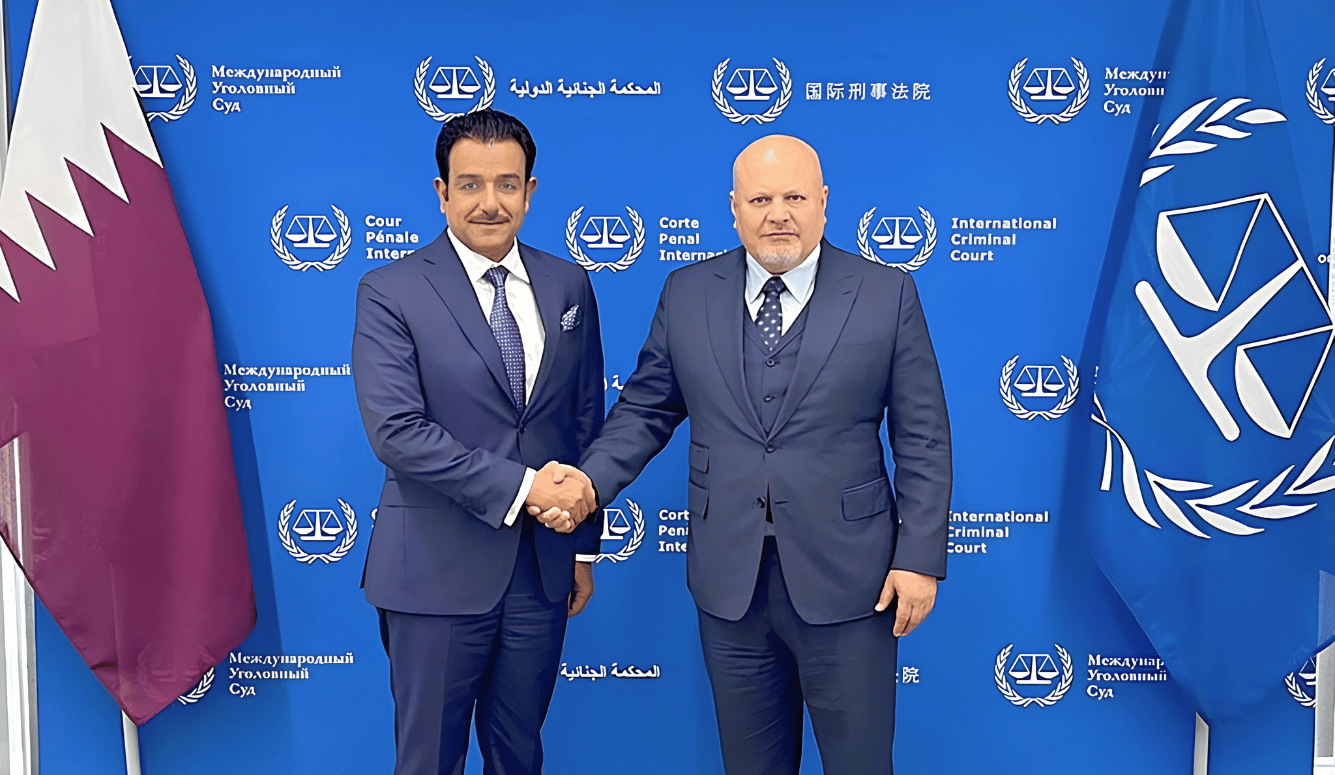
On 28 April, the Wall Street Journal reported allegations that the Qatari government had said it would “look after” ICC prosecutor Karim Khan if he indicted Israeli prime minister Benjamin Netanyahu and his former defence minister Yoav Gallant. Khan sought arrest warrants for both men on 20 May 2024 and denies receiving any such assurances from Qatar or any other state prior to doing so. Arrest warrants were also sought for Hamas leaders, but not for the Iranian and Qatari officials who financed and armed the group for years. In November 2025, the Guardian reported that Qatar had allegedly hired a private intelligence firm in Britain to discredit a Malaysian ICC staffer who has accused Khan of sexual assault. If substantiated, this conduct could raise questions about the applicability of Article 70. Notably, Khan’s decision to pursue Israeli leaders for war crimes was taken shortly after the emergence of the assault allegations, which he also categorically denies.
Allegations like these highlight the threat that financial incentives and judicial activism can pose to the pursuit of international justice. The notion that international courts are impervious to foreign influence is a delusion that The Hague has nurtured for decades, and it helps to explain why the system has failed to deter the commission of atrocities. This is a problem of institutional design. These courts were forged in debates about competing state interests and their independence from the UN Security Council, which baked power politics and reputational management into their architecture from the outset. A decade ago, these courts were widely depicted as neo-colonial instruments, advancing Western political interests against African states under the guise of human rights. Today, they have overcorrected into postcolonial theory, and like virtually every other liberal institution in the modern West, they have been captured by self-destructive ideologies and hostile foreign interests.
The campaign to bring Israeli leaders before international courts was led by a French lawyer and Palestinian advocate named Gilles Devers. On 6 November 2023, Algeria’s president, Abdelmadjid Tebboune, called for a complaint to be filed against Israel at the ICC. Three days later, Devers duly filed one. Upon hearing that arrest warrants against Netanyahu and Gallant were being sought by the ICC in May 2024, he reportedly told his son, “Now I can die in peace”—which he did in November. Devers also represented the Polisario Front—a Western Saharan separatist movement backed by Algeria and linked to Iran. So fervent was Devers’s advocacy that he received a posthumous award from the president of the Sahrawi Arab Democratic Republic, Brahim Ghali, and he was publicly mourned by the Algerian Ministry of Foreign Affairs.
The Politicisation of International Justice
A dissection of the ICC’s warrant application reveals that obvious liberties have been taken with the truth.
The ICC is not alone in its judicial revisionism. The current Lebanese prime minister, Nawaf Salam, served as president of the International Court of Justice (ICJ) from 6 February 2024 to 14 January 2025, during which time the Court was considering the genocide case filed against Israel by South Africa on 29 December 2023. On the day he left The Hague, Salam publicly called for the “full withdrawal of the Israeli enemy from every inch” of Lebanese territory. Language like that demonstrates that he was incapable of impartial judgment on matters relating to Israel, and yet his position as an ICJ judge was never challenged. Mohammed Bedjaoui, an Algerian politician who served as an ICJ judge for two decades and as its president from 1994 to 1997, once warned of “the constant threat which Israeli expansionism creates for the States of the region.” More recently, French prosecutors have pursued Bedjaoui on suspicion of money laundering, tax fraud, and international corruption, citing real-estate assets valued at approximately €35 million.
This is not simply a problem of institutional bias, competing national loyalties among presiding judges, or even the occasional bribe. Courts in The Hague have become essential strategic proxies through which anti-Western states advance their illiberal agendas. A week before the ICJ’s May 2024 order that Israel “must immediately halt its military offensive” in Rafah—a central focus of IDF operations against Hamas—the Qatari Embassy in the Netherlands publicly gifted a statue of an Arabian vessel to the Court. Qatari ambassador Mutlaq al-Qahtani used the occasion to lavish praise on the Court’s commitment to international peace, a gesture warmly received by Nawaf Salam.
Corruption and favouritism can, of course, be conducted in plain view, but it is what happens in the shadows that should concern us most. A 2024 report by the Institute for the Study of Global Antisemitism and Policy (ISGAP) exposed South Africa’s genocide case against Israel at the ICJ as part of a broader strategy pursued by Qatar and Iran. The report discusses the extensive anti-Israel activism of members of South Africa’s legal team, but it also looks at who is funding the case. The African National Congress (ANC), which governs South Africa, was on the verge of bankruptcy in 2022, but in January 2024, President Ramaphosa declared that the party had stabilised its finances, without disclosing how it had done so. The report notes that South Africa’s public allegations of genocide were made on 6 November 2023, but it neglects to mention that Tebboune’s calls for the ICC to take action against Israeli leadership were made the same day.
The Hague has become a cynical vehicle for world politics that pays little attention to the pursuit of blind justice. Repairing its reputation would require a rigorous and transparent independent audit of the finances and communications of ICC and ICJ officials involved in cases related to the Israel–Hamas conflict.
Responsibility for regulating the ICC lies with the Assembly of States Parties, which under Article 112(4) of the Rome Statute may establish subsidiary bodies, including an “independent oversight mechanism for inspection, evaluation and investigation of the Court.” Once full transparency has been established, the ICC would be in a position to issue Article 70 arrest warrants against those who have run interference campaigns in its proceedings, in particular Qatari and Algerian leaders. Precedent already exists: the Court has prosecuted interference schemes in cases like Prosecutor v Jean-Pierre Bemba Gombo et al. (2016), where Congolese politician Jean-Pierre Bemba and his defence team were convicted of witness tampering, based in part on phone records and financial data. The ICC has the legal basis and operational capacity to act; what it lacks is the will.
The ICJ has no comparable regulatory body overseeing its activities, but the UN General Assembly is responsible for determining the scope of its privileges and immunities. The ICJ’s Rules of Court place the burden of impartiality largely on the judges themselves, ensuring independence in theory but leaving accountability conspicuously thin in practice. And while the Court’s accounts can be audited by the Board of Auditors and the Joint Inspection Unit, these proceedings are entirely dependent on the will of the Court and can only be initiated upon its request. These rules should be amended to introduce asset disclosure obligations and independent audit mechanisms. Judges found to be accepting bribes should be disbarred and convicted on corruption charges. In doing so, the ICJ can avoid further iterations of the Bedjaoui affair.
After all, what use are these international judicial bodies if they fail to deliver on their mandates and their staff members appear to be so readily open to influence? When mobilisation around the Palestinian issue is one of the few areas in which Arab countries actively engage with these frameworks, does this reflect a principled commitment to international justice or evidence of ideological bias? Why should such institutions continue to receive hard-earned taxpayer funding—approximately US$187 million annually for the ICC and US$8 million for the ICJ—if they no longer command public confidence in their independence and effectiveness?
The tragedy is that these institutions rest on liberal-humanist foundations and were created with genuinely noble intentions. The ICC’s aim of punishing perpetrators of human-rights abuses is something few would dispute; likewise, the ICJ’s mandate to resolve disputes before they escalate into conflict—and to delineate what is and is not acceptable in war—is, in principle, laudable. David Scheffer, who led the US delegation during the Rome Statute negotiations, wrote of the accomplishment: “Almost everyone stood and applauded and yelped, with civil society delegates in the room congratulating government delegates and the Italian delegation literally jumping up and down.” That jubilation turned out to be premature. A lack of enforcement, selective engagement, and a near-total absence of meaningful accountability have transformed these courts into something far removed from their founding vision—a system in which “justice” is no longer blind, but contingent, and all too often comes with a price tag.
Quillette invites thoughtful responses to its essays.
Selected responses are published once per week as part of a curated Letters to the Editor feature. If selected, letters appear under the contributor’s real name and may be edited for clarity and length.
To submit a letter for consideration, please email [email protected].
Read the full article here
Fact Checker
Verify the accuracy of this article using AI-powered analysis and real-time sources.