

 Freedom Index

Listen to the article
In this episode of the Quillette Cetera Podcast, Zoe Booth speaks with classicist James Kierstead about a question that has become increasingly controversial in academia: does “the West” actually exist?
While many postmodern scholars argue that Western civilisation is little more than an imperial myth invented to justify colonialism and white supremacy, Kierstead argues that the West is a real historical tradition stretching from ancient Greece and Rome through Christianity and into the modern liberal democratic world.
The conversation explores the “Greek miracle,” monogamy and social stability, honour cultures versus dignity cultures, and whether the West can survive the decline of Christianity.
Kierstead holds a BA in Classics from Oxford and a PhD in Political Science from Stanford. Until the end of 2023, he was a Senior Lecturer in Classics at Victoria University of Wellington, where his role was disestablished shortly after he published reports critical of New Zealand universities. Documents later obtained through Official Information Act requests suggested he was criticised for failing to sufficiently incorporate Māori and Pasifika perspectives into courses on ancient Greece — something Kierstead argues represents a serious erosion of academic freedom and scholarly independence in contemporary universities.
He has written about the case on his Substack, Owl of Athena: Owl of Athena
Transcript
This is an AI-generated transcript and has been lightly edited for readibility.
Zoe Booth: James, thank you so much for joining me this morning.
James Kierstead: Thank you for having me.
ZB: A lot of postmodern thinkers and academics today say that the West doesn’t exist. It’s all a big myth. It was created to promote all these terrible ideas of white supremacy and misogyny, et cetera. What do you think about that? Does the West exist?
JK: Yes, the West exists. I think the particular theory nowadays is that it was created to help out imperialism. That’s what Naoíse Mac Sweeney says in her book: that the concept of Western civilisation is something that emerges in the early modern period, or the eighteenth and nineteenth centuries, just as European colonialism is getting going.
I think that’s really hard to support because, if we look at the Middle Ages and the Renaissance, you can see that these cultures in Europe are intimately bound up with the cultures of Greek and Roman antiquity. They’re drawing on the poetry, the philosophy, the architecture—the influence is there in so many ways. I think it’s pretty obvious that we can see various strands of a recognisably distinct culture already before the European colonial period.
So yes, I think it is a thing. I think we can describe it, maybe vaguely, but it is obviously a recognisable current in global cultural history, alongside other cultural traditions like Chinese and Japanese civilisation, because their literatures influenced one another, or Islamic civilisation.
Of course, we’re used to talking about these civilisations. Academics seem to have no trouble recognising that these are civilisations and traditions that go through history. But for some reason, when it comes to Western civilisation, you get this strange nihilism that has really only taken the form it has now in the last few years: not only is Western civilisation something that we should doubt or condemn, but it doesn’t exist at all.
ZB: Why the double standard when it comes to our own civilisation? Is it just a typically Western thing? Is it a sort of oikophobic thing—being highly critical of your own culture because it’s part of your culture and your civilisation? Or what is it?
JK: I think the oikophobia idea is a good one. I also think there’s something to be said for a sort of Judeo-Christian—or actually particularly Protestant—guilt complex. We really like beating ourselves up. We don’t really like beating others up.
‘Oikophobia’: Our Western Self-Hatred
The simplest way of defining oikophobia is as the opposite extreme of xenophobia.
The fact that this has emerged out of academia is no coincidence, because especially in academia you get points for being cosmopolitan and generous to other cultures. So if you’re in academia and you say, “The Persian Empire was so sophisticated,” or “The Assyrian Empire was so complex and sophisticated,” that sounds good. If you say, “The Assyrian Empire was brutal and impaled people,” and you stress that too much, you start sounding a little bit xenophobic. That’s associated with a kind of lower-class discourse.
So I think there’s this drive within academia to compete with one another by disavowing Western civilisation: to say that you don’t like it, you don’t want to think about it, or, in this latest wave, that Western civilisation doesn’t exist and never existed in the first place.
ZB: Does that really happen? Is there no statute of limitations on how far back you can go? If you criticise an ancient civilisation that’s not yours, can you really still get called a racist or get in trouble for criticising them? How far back can you go?
JK: I’m exaggerating slightly. I’m sure lots of academics do describe Assyrian impalements and so on. But I definitely think that, if you look for the word “sophisticated,” the Achaemenid Persian Empire is often said to be a sophisticated, complex empire.
It’s not that you’re going to be condemned for saying anything else or kicked out of the academy, but I think it’s very fashionable. It helps you. You sound sophisticated. You sound cosmopolitan. And that helps you in the academy.
You won’t sound particularly sophisticated or cosmopolitan if you go on too much about the negative aspects of these other civilisations. In New Zealand, for example, there are quite strong taboos against talking about Māori cannibalism. The historian Paul Moon wrote a book about that, which just dealt with the historical evidence, and there was a huge hullabaloo. Of course, he wasn’t doing it to beat up on people who are descended from Māori or modern Māori people. He was just trying to say that this is something that happened in the past. That’s not the only civilisation that was involved in that practice. But that’s the taboo.
Podcast #291: Science vs Māori Knowledge
Iona Italia talks to Professor Kendall Clements of the University of Auckland about attempts to conflate traditional Maori knowledge with science, which, he argues, debases both.

ZB: Of course not. It’s the same in Australia. We’ve published pieces and podcasts—a podcast in particular with Mungo Manic. I’m not sure if you follow him on X. He’s not an academic per se, but he’s someone who is very, very interested in Aboriginal history and knows a lot more about ancient Aboriginal people than most Australians do.
We published a podcast with him talking about some of those things—not cannibalism per se, but ancient circumcision rituals, the eating of dogs, and other things like this that are not okay to talk about now.
We also had comments from people who claimed to be Aboriginal and said that we were spreading secret, sacred men’s business, which I know New Zealand has had its own issues with: what knowledge is sacred, and what knowledge isn’t sacred? That doesn’t really fit in with the Western view of the world, which is that knowledge should be for everyone, right?
JK: That’s right. Ideally, everyone should be able to take part in it, and the heritage of the world’s civilisations is available to everybody. I think the great Bengali intellectual Rabindranath Tagore made that exact point, so it hasn’t just been people in the West who appreciated that.
But that also means, by the same token, that you should be able to read the great books of other civilisations and not think they’re very good, or you should be able to look at the historical records of other civilisations and say that they’re not particularly inspiring.
People can come to their own conclusions about that, but as historians and academics we should be trying to be even-handed. I think this whole idea that the West doesn’t exist originally came out of an attempt to be more even-handed, because the perception was that, in the past, people in the West were too chauvinistic. There was a lot of chauvinism in the imperial period, but now I think we’ve gone too far the other way.
ZB: How would you define chauvinism, or Western chauvinism?
JK: I suppose it’s the equal and opposite tendency in the other direction. The current tendency is to say that there’s nothing good about the West; in fact, it didn’t even exist. And that distorts the historical record.
Chauvinism is when you distort the historical record by excessively praising the West and refusing to look at the bad things that did happen—refusing to look at actual abuses that happened during the British Empire or other Western empires.
That was a big fixture of the imperial period in Britain and France, but I think now you can actually see it coming back a little bit on the far right online. You get this tendency of, “Screw the wokes. We’re going to say that everything the British Empire did was perfect.” And that’s also obviously not true.
ZB: Definitely. It’s this sort of idea that it didn’t happen, but if it did, it was good.
JK: Yes. That’s the curious thing about this current theory. It says the West has, in history, been both extremely harmful and also non-existent.
ZB: So Western chauvinism isn’t simply thinking that the West is great, or one of the greatest civilisations or histories to be part of?
JK: I think that’s part of it. But for me, when it becomes harmful, or when it becomes distorting of history—which is really my interest—is when you start to put things under the carpet, or not actually come to the conclusions that the sources are driving you towards, and just basically aren’t honest about the historical record.
As I say, that’s equally distorting whether you’re trying to heap praise on people of the past or whether you’re trying to denigrate them. The answer is just to look at how things really happened.
In this case, I think if we look at the way global cultural history really played out, it is, as I say, fairly obvious that there were these distinct strands, and that Westerners in the Middle Ages were looking back to the Greeks and the Romans. Japanese people in their history—the greatest authors and intellectuals—were often looking back to China. Persian authors were deeply enmeshed with the Arabic and Muslim traditions.
These are just facts of history. And I think the current intellectual elite wants to tell you that, for some reason, just the Western one—just the story of Western civilisation—is some kind of conspiracy, that it was just made up wholesale.
At that point, I don’t mean to sound arrogant, but I always feel as if I’m trying to explain to very sophisticated and intelligent people some really obvious facts. And I think that’s one of the problems within academia. If you’ve trained your whole life in Greek or Latin, it doesn’t sound very clever to start pointing out obvious things like, “Well, Aquinas was very indebted to Aristotle, and he called Aristotle ‘the Philosopher,’” because everybody kind of knows that. So they overlook it.
Then there’s this tendency to focus, for example, on the Silk Roads, or on Gandhara, where you have this very fascinating fusion of Greek culture and Buddhism. I agree that those things are fascinating, but academics are drawn towards them, and then they come to take these as typical, when really they are exceptions. They’re things that happen on the edge of these great civilisational realms.
But the main story is actually that Aquinas doesn’t know about Lao Tzu. Aquinas doesn’t know about Confucius, because that’s not the way the technology worked at the time. They didn’t have the Internet. It’s not that he’s being a bigot by not quoting Confucius. He’s just in a different cultural tradition, and what he has to draw on is Greek philosophy and what there was of Roman philosophy. It’s not Chinese philosophy. It’s not anything else.
ZB: Going back to this idea of the technique or tactic that critics use of erasing history: many cultures do that, don’t they? For example, I’m half Greek—or whatever that means; that’s an interesting question. I was just in Greece. Every time I go to Greece, I’m reminded, “Yep, I’m definitely not Greek. I’m very Australian.”
But for some reason, I guess due to the algorithm, when I use Twitter there I get served a lot of Greek content and Greek tweets. The Greek-Turkish debate is still raging, and is often quite tongue-in-cheek. It’s sort of just for fun, memes. But there is genuinely a lot—especially on the Turkish side—of erasure of Greek and Armenian history, and probably on the Greek side as well. This idea that Turkey doesn’t even exist; this idea of, “What is a Turk? You’re all just Greeks who got converted to Islam.”
I don’t know where I’m going with this question, but I guess it’s a common technique, right?
JK: It’s interesting, because one question I have for you is this: I know what you’re saying when you say you’re Australian and not Greek. I know exactly what you’re saying. By the same token—and I don’t mean this to be inflammatory, I mean it just as a question—are there not things that you see in modern Greek culture which are more similar to Australian culture than, for example, conservative Turkish culture?
ZB: One hundred percent. Yes.
JK: Right. So you have this sense—and you probably don’t hate Turks or anything—that their culture is more different. For whatever reason: it might be that some of the women wear veils, though not as much as in other Muslim countries. It may be that Muslim culture historically has not been strictly monogamous. It could be that you look at the architecture of their holy sites and they look different to the churches you’re used to in Australia, or to mainstream Australian culture—or majority Australian culture, I should say—and Greece.
All these things are things that everybody kind of recognises or picks up on. And that’s what I mean by having to re-explain these things to academics, because they’re looking at abstruse details of history. All I’m really trying to say by saying that Western civilisation is a thing is that it would be fairly obvious to an alien who came down and looked at Australia and New Zealand, and then looked at Britain, that they were part of the same culture in many ways. Not in all ways.
You can look at the sports they’re playing. They’re playing cricket and rugby—different types of rugby, maybe. You can look at the predominant religion. You can look at the language, and how they speak the same language. You can also see how a lot of these things ultimately go back to Europe, to Greece and Rome. The predominant religion being Christianity, it is ultimately a sort of Greco-Jewish religion. And the English language has a lot of Latin and Greek words in it.
So really, I guess all I’m trying to do is restore basic sense to this conversation: most people will pick up on these cultural differences. Sometimes they’re exaggerated in the memes and distorted, but a lot of them actually do reflect historical facts and the way history happened to unfold. You can recognise these things without becoming an extreme bigot.
ZB: Definitely. Noticing or picking up on differences is part of travelling. I was just travelling for a month on my honeymoon. We went to Georgia—well, I chose the destination because I always really wanted to go to Georgia. So we started off in Georgia, then went to Azerbaijan, then Armenia—which was an issue at both borders—and then Greece. We wanted to go to Israel, but ended up just spending a bit more time in Greece.
It was fascinating in general, but even just being with tourists, being on these tour groups, you naturally have an affinity. I, as an Australian, naturally have an affinity and can strike up a conversation very easily with an American, a Kiwi, obviously a Brit, and then, next level, the Belgian guy—the Flemish guy. Then the other cultures after that: the Japanese lady, not so much.
I was very interested to learn about her culture and everything. It doesn’t mean we can’t be friends. It just means that we’re not starting off at that shared foundation.
JK: Can I ask, what do you think it was about the Japanese lady? Maybe this is controversial territory, but did you have a sense of how it was different talking to her?
ZB: Well, she’s an interesting one, actually. Where were we? Azerbaijan. Firstly, there weren’t many tourists in Azerbaijan. We were in a small tour group. She was a middle-aged Japanese woman travelling solo, which is in itself quite interesting. Her English was not that good, so that made things difficult. And the Azerbaijani tour guide did not have very good English either. Even for a native English speaker, it was difficult for me to understand him, let alone for her.
She was very quiet, and about halfway through the day—it was a long tour—I could see she was having a difficult conversation and complaining to the tour guide, pretty much saying that she was very upset that she couldn’t understand much of what he was saying, and that they should have tour guides in Japanese.
But she kept this very private, and she didn’t make it obvious to the group that she had this issue. I think for me—I’m not sure if it’s a cultural thing or just personal—I would have said straight up within the first five minutes, “Dude, I can’t understand what you’re saying. How can we change this? How can we make this better?” I would have been a bit more assertive, maybe. I’m not sure. And then we just couldn’t really have much of a conversation for the rest of the day.
JK: Yeah, that’s super interesting. Obviously, you have to be careful in some of these cases because it’s one person from one country, and you can’t draw firm conclusions. We’re rightly reminded of that. But I do think Japan is a particularly interesting case in terms of global cultural history, because it was the civilisation that most successfully Westernised with the Meiji Restoration.
Turkey is an interesting case too, because they also Westernised very aggressively after the First World War with the reforms of Atatürk, even changing their script from Arabic script, along with a lot of other reforms.
But the Japanese were amazingly successful at modernising, to the extent that—
ZB: I have to pull you up on something. You said “modernising” and then “becoming more Western” almost interchangeably. Why is a country inherently becoming more modern if it’s becoming more Western, James?
JK: Well, this is the question now, right? If we were having this conversation in the ’60s or ’70s, I could have said very confidently, “Look, all the modern countries, with the exception of Japan, are Western. So being Western must be the secret sauce to modernisation.”
I think that’s what all the competitors of the West thought when they started Westernising. Now it’s interesting because you see that other civilisations, like China—and to some extent even Arab states like the UAE—are really getting ahead. They’re building skyscrapers and modern infrastructure.
But even with these countries, it’s arguable that China, for example, modernised in the last twenty years because it became more capitalist. More neoliberal, to use a phrase people harp on about in academia. The fact is that they’ve pulled hundreds of millions of people out of poverty by modernising in that sense—by having freer markets. So to some extent that was Western. Of course, the previous Marxism was also imported from the West, so it’s a complicated picture.
But it still seems to be the case, as it was in the eighteenth and nineteenth centuries, that a lot of what we think of as modernisation is basically following a path that was originally trodden by Western countries. First of all England, because the Industrial Revolution happened there first.
Every time somebody does it, though, it gets easier for others to do it because they can see how the others did it. So, for example, in the West, mass literacy is first of all a Protestant thing. You can see this very clearly in historical data: Protestant areas of Germany had much higher literacy rates in the eighteenth century.
Then other parts of the West started to get literacy, and other countries looked at the West—which was, again, taking over the world—and thought, “These guys have got something going for them. I wonder what it is. Maybe it has something to do with the fact that so many people are literate.” Then they started copying that.
Nowadays, any policy adviser worth their salt, whether in China, Africa, or developing Asian countries, knows it’s axiomatic that in order to develop a country you have to increase literacy rates. Ideally not just for men, but for women too. Some countries resist that because they’re fanatical about Islam or whatever, but basically it’s very clear now that literacy is part of the package of modernisation.
ZB: That’s so fascinating. And the Jews are good at that too, right? There’s a lot of discussion about Jews being such a successful minority. I’ve heard that explained in a few ways, but partly through literacy.
A Jewish friend of mine explained it like this—or at least this was his theory: a man would have multiple children, and one of the boys—maybe the smartest one—would go and study the Talmud. So he’d spend all his days studying and learning, and then that prized boy would marry the best girl from another family. Then they’d go on to have smarter children. I’m not sure if that’s true.
JK: That’s really the kind of Thomas Sowell story about cultures. He says certain cultures are good at certain things because they develop traditions around them. For a long time, Germans dominated piano-making because they had these lineages of piano-makers and people were encouraged to excel at it.
Maybe it’s true that Jewish culture is particularly intellectual, and so the most popular boys at school are the smart ones. Maybe in Australian culture that’s not as much the case. Intelligence tends to be attractive in lots of cultures, but it may be especially prized in Jewish culture.
I definitely think there’s something in the fact that, even if you grow up in Australia, you still have to engage with an ancient Hebrew text. I tried to learn the Hebrew writing system—it’s not easy. So you’re basically doing a kind of classics course as a child, and that might help in various ways.
ZB: Well, the rules in Judaism are extremely complicated. I’m not religious. I didn’t really grow up with organised religion. I guess I grew up culturally Christian, but I didn’t go to church. I didn’t even have scripture study, which I sort of regret now. My parents were, I don’t know, progressive in that way, I suppose. They opted me out of scripture class. I think I just watched movies or something during that time.
JK: It’s never too late to learn some classical Greek. I’ll tell you: the Greek of the New Testament is the easiest sort of ancient Greek.
ZB: Thank you for the tip. But it does seem that modern Christianity—at least the Christians I grew up with in Newcastle, Australia, who were mostly happy-clappy evangelical types—it seemed much easier to be a Christian there. You didn’t need to know that much, compared with living an Orthodox Jewish life in Sydney.
I live in a very Jewish area and I know how Orthodox Jews live. There are different levels of observance, but it can be very complicated. To think about Jews carrying that throughout history, having to know so much and memorise so much—it’s fascinating.
JK: Historically, Protestant Christianity was actually fairly intellectual because of the emphasis on sola scriptura—“scripture alone”. The idea was that scripture ultimately decided disputes about what God wanted. So Protestants historically did place a big emphasis on literacy and reading.
But I just want to zoom out for a moment, because what we’re talking about is super interesting, and in a way kind of obvious. You’re basically talking about how, in Australia, whether you’re Christian or Jewish—or from many other cultures as well—there are these traditions that affect your life. Maybe only when you’re a child, but they affect your life in some way. And they go back to the ancient world.
What academics want to tell us nowadays is that it’s all too complicated. They say there’s no “golden nugget” of knowledge passed down through time. And in a way that’s true, because that’s a caricature of the real theory.
The real theory is just that there are texts which remain sacred to people, and cultural traditions which may not determine people’s actions one hundred per cent in the modern day, but still influence them. They influence religion. They influence what we do on Sunday or Saturday. They influence family structure.
Even people who aren’t religious in the West still think about mating, dating, and family in ways that are very WEIRD—to use the technical acronym: Western, Educated, Industrialised, Rich, and Democratic.
A lot of this comes from Joseph Henrich’s work. He points out that many things we do—such as this incredibly strong stress on monogamy, where the man has to be faithful as well as the woman—are actually very strange in historical terms.
Nowadays, among Western elites, there’s all this talk about polyamory, but for most of Western history monogamy has been a very solid norm. Even when belief in Christianity started to decline in the ’60s and ’70s, people still generally felt it was morally wrong to have two girlfriends at once.
That’s unusual historically. Also things like moving into a separate house when you get married, focusing on the nuclear family—these are strange by historical standards. These things have been practised by Christian communities for centuries, and arguably started in ancient Greece, where monogamy was seen as an egalitarian commitment.
So again, we can see these ideas persisting through time.
Monogamy and the Making of Western Civilisation
The institution of monogamy in Classical Greece may have led to a host of phenomena that shaped the modern West: from individualism and abstract thinking to liberalism and democracy.
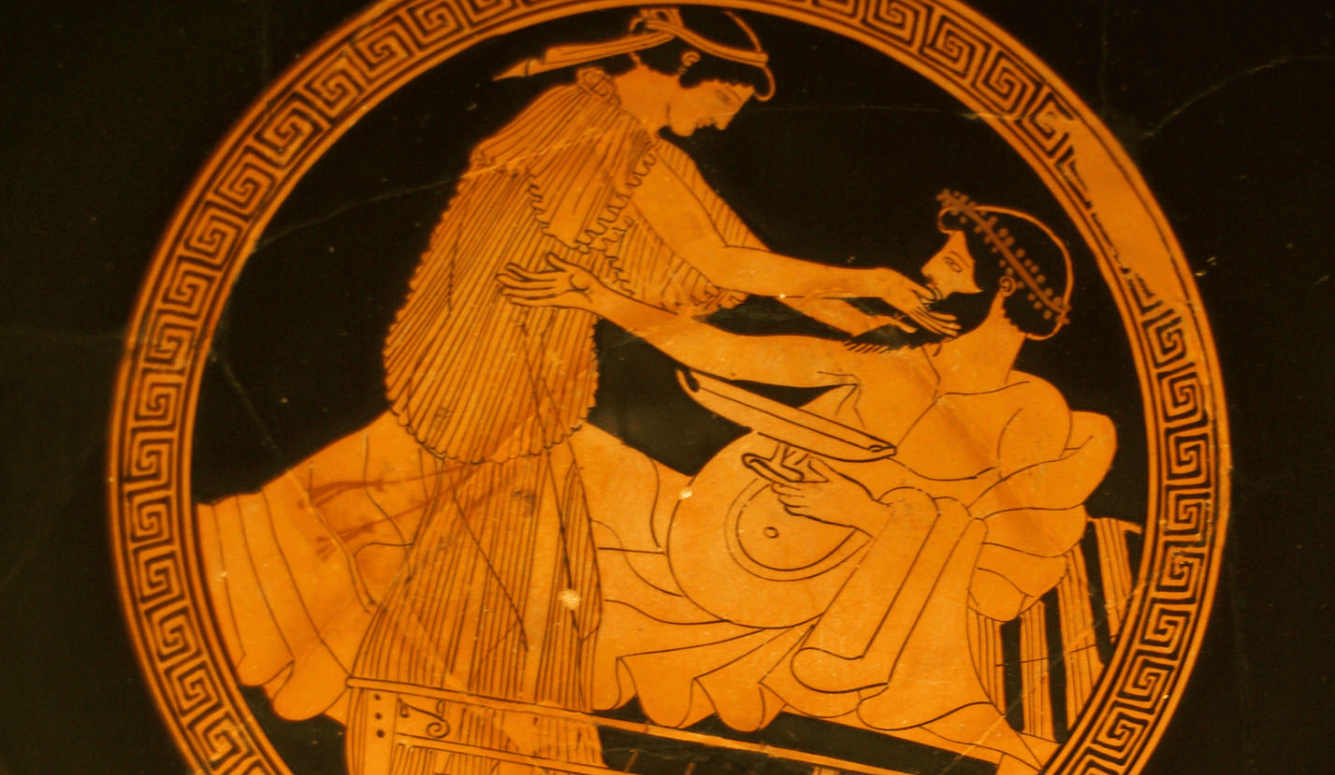
ZB: Yeah, and I highly recommend everyone read James’s piece on that in Quillette. It’s fascinating. I learned a lot from your piece on monogamy—what did we title it? How Monogamy Built the West or something like that.
I never knew that monogamy was seen as an egalitarian thing: that both elites and ordinary men should have one wife, rather than one elite man getting greedy and controlling all the women, which inevitably happens.
JK: Yeah. I’m sorry to say this, given what it suggests about male human nature, but it seems to be very common in human history that the guy who gets all the power and becomes king or emperor tends to do a very predictable set of things. He monopolises all the shiny metal, builds pointy buildings, claims to be best friends with the gods, and has sex with as many women as possible.
Often there’s a dual strategy where he has a harem producing illegitimate children, while also having a wife—or several wives—through whom he can invest more heavily in legitimate offspring.
So it’s very striking that, in the West, you don’t really get that. You start not getting it in ancient Greek times, when many of the city-states were democratic or moderate oligarchies. They saw kings as something foreign, at least in the classical period.
The only exceptions to ancient Greek monogamy tend to be figures on the fringes of the Greek world, like some of the tyrants of Syracuse, or ultimately the Macedonians. Philip—Alexander the Great’s father—had multiple wives.
ZB: And that was seen as barbaric, right? Having multiple wives was considered disgusting.
JK: That’s right. I would argue that, for most of Western history—up until maybe five years ago, when all this talk about polyamory became fashionable—the normative culture was still very strongly monogamous.
When I was in college, for example, some people slept around, but basically if you were in a relationship with a girl, you weren’t supposed to cheat on her. That was simply how it was seen, even if people joked about having “arrangements”.
There was still a strong emphasis on one partner and, ultimately, marriage. By the way, I’m not necessarily preaching or advocating any of these things. I’m just trying to describe, like a sociologist, how Western society has historically differed. And I think this is one of the main ways in which it has differed for a very long time.
ZB: Don’t worry, I definitely don’t get a preachy vibe. I’m very interested in women—we have that in common with men. And I’ve just finished watching this Netflix series about the FLDS—the Fundamentalist Latter-day Saints—who broke away from the Mormons because they wanted to continue practising polygamy.
And it’s exactly what you said. One guy, Warren Jeffs, got a little bit of power. His father died, he took over, declared himself the new prophet, and what did he do? Straight away he started collecting women. Just collecting and collecting. I think he had around seventy-two wives. Maybe twenty-four of them were underage.
He was essentially a paedophile, really. These girls were very young—prepubescent, twelve years old, right on the cusp. That definitely is paedophilia. It’s not like they were all sixteen- or seventeen-year-olds, which at least historically or biologically makes a little more sense.
That’s an interesting topic too, actually. But I did want to ask about women, and how monogamy affects women. It’s traditionally been a very good thing for women, hasn’t it? If you look at women living in monogamous societies and cultures, they generally do much better than women living in polygynous societies.
JK: Yes, I think that’s true. I said in my article that nowadays, within the polyamorous community, there are certainly feminists who say, “It’s my right to have multiple boyfriends.” But in human history there’s been an overwhelming polygynous skew. Most forms of plural marriage have involved one man with multiple women, rather than one woman with multiple men.
ZB: Are there historical examples of the inverse?
JK: I think there are some cases among the Inuit or certain northern societies. But really, you only tend to get it either in very modern, affluent Western subcultures, or in the complete opposite situation: extremely sparse populations where people simply need to band together to survive harsh conditions.
ZB: That’s interesting. But biologically, you can only really be pregnant once a year, so it’s harder to have multiple husbands in the same meaningful sense. You can obviously have sex with multiple men, but to really have a husband figure—a father figure—you’re making one choice each year, essentially. And if it works well the first time, you’d probably want to keep the same one.
JK: Going back to your point about monogamy being better for women, historically that probably has been true because the woman effectively monopolises the resources of the man. That’s the cold economic way of putting it.
You could also say it’s easier to have a loving relationship when you’re not competing for attention.
And I do think that, if you look at Western civilisation—which again I think is a real thing—you can see that monogamy and women’s rights seem to go hand in hand. Maybe we don’t fully understand why that’s the case, but the civilisation that pioneered rights for women, eventually extending even to voting rights, was also historically monogamous.
ZB: Even extending to men who identify as women. We’ve gone that far.
JK: Well, exactly. Maybe we’ve gone too far in some ways now. But in another sense, it’s not coincidental that we have those ideas too, because Western civilisation has, at least for the past few centuries, been so thoroughly egalitarian.
The whole woke movement, or extreme progressivism, is in a way also a child of Western civilisation. If you read Tom Holland’s Dominion, he argues that wokeness is kind of an offshoot of Christianity, and I can see why he thinks that.
But I’d actually say that both Christianity and wokeness are offshoots of a broader Western egalitarianism that we can trace back to ancient Greece.
ZB: Okay, so there’s a connection between Western egalitarianism and wokeness?
JK: Yes, although perhaps I overstated it before. What I’m saying is that some of the things we associate with Christianity—like monogamy—may actually have deeper roots.
Joseph Henrich argues that monogamy comes out of Christianity, but I think you can already see strong monogamous norms in ancient Greece. In classical Athens, monogamy applied even to elites.
The main difference is that Athenian husbands didn’t necessarily have to be sexually faithful in the same way wives did. Men could only have one legitimate wife, but they could also have relationships with prostitutes, flute girls, or younger men.
ZB: What about homosexuality? Or pederasty?
JK: Right. And Christianity comes along and says no to those things too—or at least that’s how it was interpreted in the early Church. The Bible passages in Romans and Leviticus were read as condemning those practices.
As a modern liberal, I actually think that’s a bad thing. I think it’s good that gay people can live as they want nowadays. And perhaps even that impulse toward equality comes out of Western egalitarianism too.
ZB: So what was it about ancient Greece that made it such an influential culture? Why there? Why not somewhere else? I know you’ve studied the connection between ancient Greece and ancient Egypt. Why was Greece more influential? Or is it simply more influential in our culture and history?
JK: That’s another really interesting issue in Classics right now, because I think progressive academics are trying to argue that Greece actually wasn’t so special. People used to talk about “the Greek miracle”, capital G, capital M, and I think if you wrote that in a job application nowadays they’d probably throw it straight out. At least they seem to be throwing out a lot of my job applications these days.
But I actually do believe in the Greek miracle, in the sense that I think Greece was an example of what some historians call an “efflorescence”: a period in human history where you get economic growth—albeit at a relatively low level—and an extraordinary flourishing of culture.
You get the beginnings of Western philosophy, political thought, music, drama, tragedy, comedy, architecture—all the rest. Athens was obviously a hotbed of intellectual activity. I think that’s a measurable reality. It really was unusually creative and intellectually productive.
One of the reasons it was special, besides the obvious things we can see on the surface, is that it was astonishingly egalitarian. It’s funny, because nowadays in the field I’m often seen as some kind of right-wing weirdo, but actually, when I think about Greek history, I’m often at my most left-wing.
I think Greek civilisation, and the Western civilisation that inherited many of its mores and traditions, are both profoundly egalitarian.
At the end of the Bronze Age, around 1200 BC, you have all these great Near Eastern civilisations, and then there’s this huge collapse. Nobody fully knows why. There are references to these “Sea Peoples” sweeping across the region, but essentially the whole system collapses.
When the Near Eastern civilisations recover—like the Assyrians—they basically go back to doing what they did before: you get a big ruler who monopolises the metals, builds pointy buildings, impales people, monopolises women, and so on. That’s what most civilisations do for most of human history.
But the Greeks don’t do that. They start building these city-states where, yes, sometimes they’re oligarchies and sometimes democracies, but they are much more egalitarian and governed by laws. These city-states compete with one another and remain autonomous.
So classical Greece looks very strange and distinctive if you compare it with something like Achaemenid Persia, one of its main rivals.
ZB: Why don’t they do that? Why don’t they follow the same pattern?
JK: One theory is the so-called “bronze shortage hypothesis”. Bronze was deeply tied to elite power because you needed tin from Anatolia and elsewhere. Once the trade networks collapse, you can’t get the flashy metal anymore.
Instead, people turn to iron, which is much more plentiful in Greece and easier to obtain without being part of a distant elite trade network. So a more egalitarian culture grows up alongside that technological shift.
Personally, though, I think a better theory—drawing partly on Walter Scheidel’s work—is that the most egalitarian societies in history often emerge after everything has gone catastrophically wrong. When civilisation collapses, old elite families can’t preserve and pass down wealth in the same way. Everyone becomes poorer, often close to equally poor.
One reason Greece becomes more egalitarian after the Bronze Age collapse is that Greece wasn’t particularly developed beforehand. It was something of a fringe area of the civilised world, and it collapsed especially hard.
We can see in the archaeological record that people start building walls around their settlements, piling up stones to throw at enemies, and moving their towns high into the mountains because they’re terrified of raiders coming from the sea.
Oddly enough, that becomes the origin point of the Greek miracle later on. They have to rebuild from scratch in a very different way. And within a few centuries they produce this extraordinary civilisation that we still talk about today—and one that eventually defeats Achaemenid Persia, which at that point was probably the biggest and most formidable empire the world had ever seen.
ZB: Wow. I have so many questions, but I’ve just forgotten the one I was going to ask.
JK: Well, I can tell your Greek background is feeling proud.
But one thing I’d like to add is that Joseph Henrich’s theory is particularly interesting because he links Western family structure to broader patterns of economic growth and institutional development.
His argument is that most civilisations are very clan-based. They depend heavily on kinship networks, and there are few restrictions on marrying within your own extended family. People build up these large clan systems through cousin marriage and similar practices.
Christianity, according to Henrich, imposed severe restrictions on who you could marry or have sexual relations with, which made it much harder to sustain these extensive kinship networks.
As a result, Western societies had to build forms of social organisation outside the family. You get civil society, universities, guilds, voluntary associations—all these institutions that encourage cooperation beyond kinship ties.
ZB: And it reduces violence.
JK: Exactly. It enables what Henrich calls impersonal pro-sociality—cooperation with people who are not your relatives. Then, according to his theory, you eventually get markets and economic growth emerging out of that.
ZB: Are you interested in these ideas about honour cultures versus dignity cultures?
JK: Yes, definitely. Why do you ask?
ZB: Because I see it playing out in Australia, especially among men. Going back to what we were saying earlier about pro-social behaviour, and not having to compete violently for women because we live in monogamous societies where men aren’t trying to build harems—
I don’t know if this is racist or just a generalisation, but with some Muslim men from cultures where men can have multiple wives, there seems to be more competition and aggression.
My husband was in Egypt once, talking to a taxi driver about having multiple wives. My husband jokingly said, “One wife is enough stress already.” And the driver slammed on the brakes, turned around, and said, “Not if you are a real man. A real man can handle multiple wives.”
He was genuinely offended.
So I can imagine that, if you grow up in a culture like that—or your parents or grandparents did—there’s simply more competition between men. More to fight over.
JK: Right. This is the polygamist nightmare, isn’t it? The fantasy is the harem, but the reality is that only a small number of powerful men actually get one.
In traditional Islamic societies, the Qur’an is generally interpreted as allowing up to four wives if a man can support them financially. But even if only the top ten or twenty per cent of men have multiple wives, mathematically you very quickly create a situation where a significant proportion of lower-status men have no wives at all.
Historically, that meant many men had little or no chance to form families. And that’s a recipe for instability.
ZB: Jihad.
JK: Exactly. Those frustrated energies have to go somewhere.
ZB: No sex makes men very angry. It’s true. It can drive men crazy.
JK: [Laughs] Is that a peer-reviewed finding?
ZB: It’s just a fact!
JK: Well, there actually is scientific research showing that men’s testosterone tends to decline once they settle down and have children. Presumably that has advantages if you’re trying to help raise a baby and maintain a stable household, rather than constantly competing for mates.
So the societies with the highest levels of male competition and status anxiety are probably also the least stable.
That’s why I think some of the online rhetoric about becoming “high-testosterone societies” misses the point. The Greeks and Romans may actually have been successful not because they were all hyper-masculine warriors, but because they were able to cooperate with one another more effectively. And one reason for that cooperation may have been that most men could realistically expect to marry and form families.
ZB: Yeah. And I think this is how modern sociologists describe dignity culture, right? It’s more individualistic and focused on living according to your own standards and values. If another man insults you or slights your ego, it’s not about getting revenge through violence, which men from honour cultures might do. It’s more about living according to your principles.
JK: Yes, it’s very interesting. There’s a lot of recent work by experimental anthropologists and sociologists using cooperation games and moral psychology experiments. They look at what people do when they think nobody is watching—who they give money to, how they behave anonymously, and so on.
One thing they often find is that Protestants tend to have this enormous internalised guilt complex. We usually think of Catholics as guilt-ridden, but it seems to be something about Protestantism in particular: this idea that even if nobody else knows what you’ve done, God still knows.
I think that’s deeply embedded in Anglo psychology at this point. In more shame-based cultures, morality is often more external. It’s about social reputation and public standing. That still influences behaviour, of course, but perhaps not in quite the same deeply internalised way.
And not everything about Western civilisation is necessarily good. Some of the things that make Western cultures distinctive are harmful. For example, this Protestant guilt culture also seems to correlate with higher suicide rates among Protestants, even in countries like Australia and Canada where the populations are historically mixed.
ZB: What about Japanese culture? I know you were just there. They famously have seppuku.
JK: That’s true. I don’t remember whether the studies I read compared Protestants specifically with Japan, but obviously Japan has historically had an extremely strong suicide culture, extending right through to the kamikaze pilots in the Second World War.
Yukio Mishima — Japan’s Cultural Martyr | Quillette
Mishima’s reputation has grown in the new century and today there is more serious interest in his work than ever before.

Actually, Japan is fascinating in this discussion because, as we said earlier, it modernised extraordinarily successfully while still remaining culturally distinct in many ways.
I was recently in Kamakura with Cody Ellingham, who has a great podcast. We were talking about this exact issue. There’s a historian called Felipe Fernández-Armesto who quotes an early modern Japanese thinker saying something like: “We will modernise Japan and adopt everything the West does, except that we will continue revering our ancestors.”
Fernández-Armesto comments that ancestor worship may actually be the one thing you can’t keep if you want to become fully Western in the psychological sense.
In a way, Japan modernised technologically, but culturally it remained much more hierarchical and shame-oriented. That may partly explain some of the darker aspects of Japanese imperial culture in the twentieth century.
ZB: Yeah. I think the taxonomy is usually face culture, honour culture, and dignity culture. Most Asian cultures are classified as face cultures.
And speaking of suicide, I wanted to ask about ancient Greece. You mentioned earlier that Greek culture eventually becomes very egalitarian and almost modern in some respects, but wasn’t early Greek culture much more honour-based?
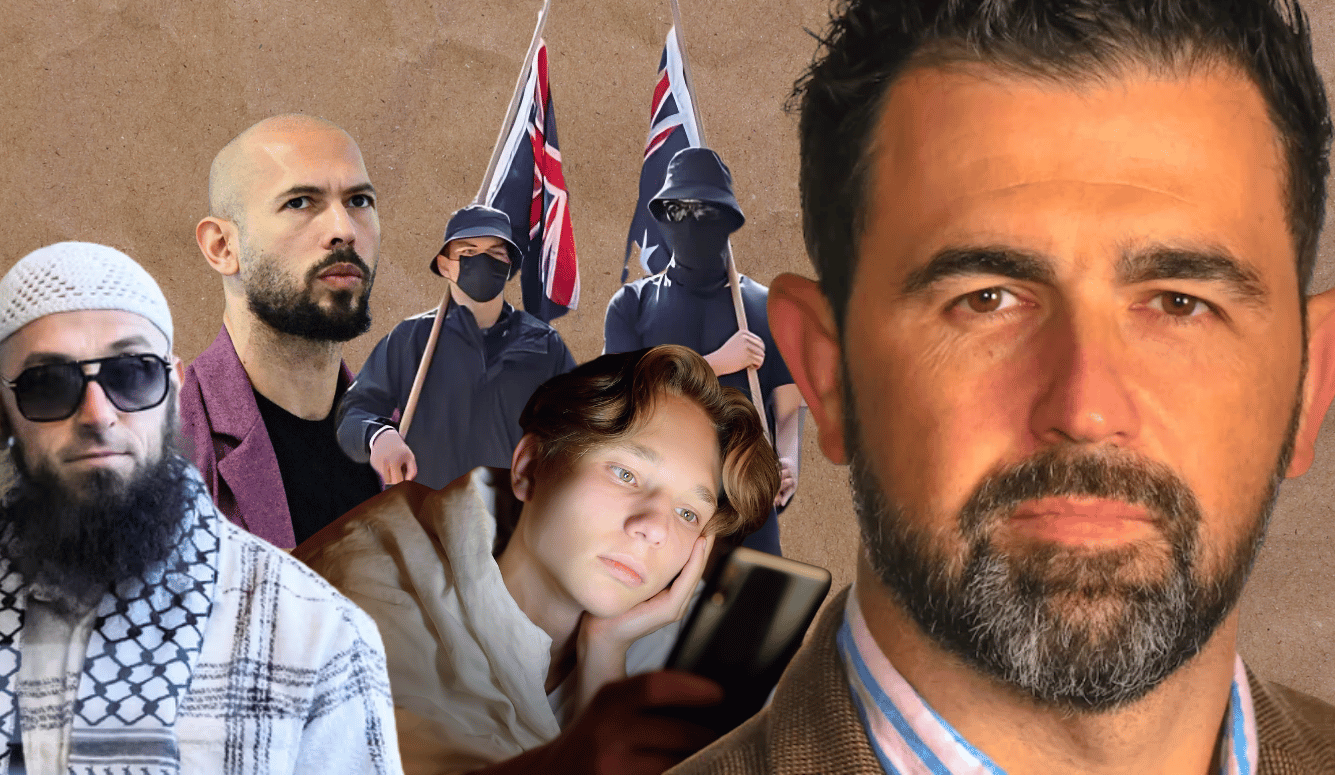
Masculinity and Political Extremism: Josh Roose on Honour Cultures and Radicalisation
As more young men search for meaning in a fragmented world, political sociologist Joshua Roose joins Zoe to explore how masculinity, disaffection, and the lure of belonging draw some toward Islamism, others to the far right.
JK: Yes. If you go right back to Homer—the very beginnings of Greek civilisation as we know it—you see these warrior aristocrats obsessed with honour and glory. Scholars used to debate whether Homeric culture was fundamentally a shame culture.
The old stereotype among Northern Europeans and Anglo-Protestants was that Mediterranean peoples were all emotional, boastful, honour-obsessed, and so on. Some scholars projected that back onto Homeric Greece.
But I think it’s better understood as one phase of Greek civilisation rather than some permanent Mediterranean essence. Once more egalitarian social norms start developing in the classical period, things change dramatically.
Classical Greeks begin to look strangely familiar to modern Europeans in certain respects. They’re relatively monogamous. They’re comparatively literate. They’re economically competitive. Their societies are more stable.
That’s why I see the Greek miracle as almost a first draft of the later European miracle that culminates in the Industrial Revolution.
Interestingly, though, Henrich’s story is that all of this depends on Christianity sociologically—not necessarily theologically. I agree with him to some extent, but I also think the Greeks were already moving down a similar path long before Christianity appeared. They just did it without Christianity.
ZB: So this brings us to the idea of Judeo-Christian values. It sounds as though you’d argue that many of the values we associate with modern Western society aren’t necessarily Judeo-Christian so much as ancient Greek.
JK: Yes, that’s broadly my view. Though I’d also say Henrich is mostly right that a lot of these ideas reached modern Europe through Christianity.
Christianity is, after all, an ancient religion. It emerges out of this Greco-Jewish and Roman context. That’s obvious even if you simply go to church at Christmas and hear about Caesar Augustus in the Nativity story.
So Christianity became the vehicle through which many egalitarian norms from the Greek and Roman world were transmitted into medieval and modern Europe.
At the same time, Christianity also tightened things up morally in ways that weren’t always pleasant. For example, attitudes toward homosexuality became much harsher.
With monogamy, classical Greek men could only have one legitimate wife, but they could still sleep around outside the household. A few centuries later, under Christianity, the expectation becomes complete sexual fidelity.
Eventually you get to someone like Jimmy Carter saying, in that famous Playboy interview, that he had committed adultery “in his heart” simply by thinking lustful thoughts. That’s Protestantism.
ZB: Can you talk more about the Greek and Jewish context of early Christianity? I know this is complicated.
JK: It is complicated, and honestly I’m not really a specialist in early Jewish history. But what were you specifically getting at?
ZB: I suppose I’m interested in how Christianity emerges from Judaism, and how Jewish ideas interacted with Greek ideas. You mentioned before that the Romans wanted Jews simply to participate in imperial religious rituals, like putting up statues to the emperor, and the Jews refused.
You also talked about orthopraxy versus orthodoxy.
JK: Right. This is actually one of the more negative aspects of Christianity, though it’s also part of the reason Christianity and Judaism have survived so successfully.
Both Judaism and Christianity are, in a technical sense, quite intolerant religions. The Ten Commandments say that God is a jealous God. You’re not supposed to worship other gods alongside Him.
Throughout the Old Testament, kings who start worshipping Baal or other gods are punished. So as a Jew or Christian, traditionally you aren’t supposed to hedge your bets spiritually.
That was very unusual in the ancient world. Most ancient religions were extremely syncretic. The Romans had what scholars call interpretatio Romana: if they encountered another culture with a sky god or thunder god, they simply identified that god with Jupiter or Zeus and carried on.
They’d say, “Fine, these local barbarians call Jupiter by a different name,” and everybody just sacrificed together anyway.
Then the Romans encounter the Jews, who refuse to participate in emperor worship. The Romans ask, “Can’t you just pay cultic honours to the emperor like everyone else?” and the Jews say, “No.”
That refusal contributed to a series of Jewish revolts, which the Romans brutally suppressed.
Later, Christianity emerges out of that same environment. Christians are heavily persecuted at first, but eventually Christianity takes over the empire itself.
Part of Christianity’s success may actually have been the fact that people admired Christians for refusing to compromise, even under persecution. And from a memetic perspective, religions survive very effectively when membership is exclusive and commitment is total.
Islam arguably does this even more strongly, because apostasy is so severely condemned in traditional Islamic societies. Those mechanisms help religions survive.
ZB: And Christianity and Islam are easy to join, unlike Judaism.
JK: Christianity, yes—or is it?
ZB: Christianity and Islam. Islam is even easier. You just say the shahada a few times.
JK: The declaration that Allah is the true God and Muhammad is his prophet?
ZB: Yes, essentially that.
JK: I’ve probably just converted to Islam without realising it.
ZB: Oops. Take it back.
JK: But yes, you’re right. From what I understand, Orthodox Judaism still makes conversion very difficult. More liberal branches are different, but among traditional rabbis there’s still debate about how acceptable conversion really is.
ZB: You can definitely convert, but it takes years and it’s difficult. And from what I remember in Tom Holland’s Dominion, Christianity seemed attractive to many people in the ancient world partly because it was easier. You didn’t have to get circumcised, you could eat pork, and so on.
JK: Yes, and Christianity was also a universal religion. Tom Holland stresses this. There’s that famous line from Paul that there is “neither Jew nor Greek” in Christ. The point is that Christianity wasn’t tied to one ethnic or tribal identity. It was open to everyone.
ZB: Earlier you mentioned this Greco-Jewish civilisation or inheritance. I’m interested in how specifically Jewish values—things like the Ten Commandments—interacted with Greek values. Were they compatible with each other?
JK: That’s a very complicated question, and I’d need to know much more about early Christianity to answer it fully.
Honestly, if you simply read the Bible and look at what Jesus is talking about, it doesn’t support my thesis quite as neatly as I might like. I think the Greek egalitarianism really becomes influential once Christianity spreads throughout the Greek-speaking world—the oikoumene, the inhabited Mediterranean world full of Greek city-states.
It’s also been debated for centuries—to the point where people were literally burned at the stake over it—to what extent Jesus was continuing Judaism and to what extent he was transforming it.
Jesus says contradictory things. At one point he says he has not come to change the law “one jot or tittle”. But then, when asked what matters most, he effectively reduces the law to loving God and loving your neighbour.
That at least changes the emphasis quite dramatically.
So after a certain point you get this fusion between city-state egalitarian culture and this new mystery religion emerging from what the Romans saw as the distant eastern fringe of their empire.
That religious-cultural synthesis eventually spreads across Europe and the Mediterranean.
This is where I disagree with Naoíse Mac Sweeney’s argument again. She says Greco-Roman influence “sprays chaotically” in all directions. And yes, there are interesting side influences and interactions. But the main river of influence is very clearly from Greece and Rome into medieval Europe, then Renaissance Europe, then modern Europe.
ZB: Do you think it’s fair to say that this part of the world—the Levant, the eastern Mediterranean, and surrounding regions—has had the single greatest influence on the modern global world? Or does it only seem that way because I live in the West?
JK: That’s difficult to quantify. In terms of sheer numbers of people, you could argue Confucianism has been more influential simply because so many people live in China.
But I do think that the Western tradition—which emerged out of this Greek, Roman, Jewish, and Christian synthesis—has probably had the greatest impact on world history overall. Once you get to the Industrial Revolution in England at the end of the eighteenth century, you’re looking at arguably the single most important transformation in human history.
The difference between the pre-industrial and post-industrial world is just staggering in terms of living standards, productivity, and technology.
To the extent that Christianity contributed to that process, then Christianity has obviously been enormously influential. Though of course other things contributed too, including scientific scepticism, empirical inquiry, and even challenges to traditional Christianity itself.
That’s why there are so many books asking why the Industrial Revolution happened first in Europe rather than Asia.
ZB: Okay, final few questions. I want your top book recommendations. I feel like you’re going to recommend Dominion. Everybody recommends Dominion. I liked it. I got a lot out of it.
JK: Right—book recommendations specifically about the West, not just in general?
ZB: Yes, about this topic.
JK: Otherwise I’d give you an entire Classics reading list.
Yes, definitely Dominion by Tom Holland. A few years ago I read Dominion around the same time as Joseph Henrich’s The WEIRDest People in the World. I’d already written my Quillette series on Western civilisation before reading them, and my earlier work focused more on high culture and intellectual traditions.
The WEIRDest People in the World—A Review
WEIRD individuals are psychologically peculiar in a number of ways.

Those two books really changed my thinking because they made me think much more seriously about family structure as one of the key drivers of Western development.
I think Dominion is more readable and exciting, while Henrich’s book is more data-heavy and academic. So it depends what you want.
There are also older-style books about Western civilisation that people nowadays might call chauvinistic. Victor Davis Hanson, who’s one of the rare openly conservative classicists, wrote some very good ones. Carnage and Culture is excellent. You won’t agree with everything he says, but it’s extremely engaging and very well written.
Then there are the classic geography-based explanations for Western development. Jared Diamond’s Guns, Germs, and Steel is essential reading. And similarly Ian Morris’s Why the West Rules—For Now, which is this huge big-picture history of civilisation.
Those books should keep people busy for a while.
ZB: At my reading speed, that’ll probably cover the next five years.
Okay, last question. Given everything we’ve talked about—history, empires, the rise and fall of civilisations, societies collapsing and then producing something new and egalitarian—where are we now? What do you think is coming next?
JK: If you read the opening chapters of Ian Morris’s book, he points out that throughout history you get these huge surges of growth followed by collapse. Species do the same thing: populations boom, then collapse, and eventually go extinct.
So there’s always the fear that this great upward surge in human prosperity might end with nuclear war or some other catastrophe.
Personally, though, I’m not quite that pessimistic. I think the systems we’ve built are fairly resilient, and I suspect global civilisation will endure.
The really interesting question for me concerns the West specifically. If Henrich and others are right that many of the distinctive features of the West ultimately emerged from Christianity, then can those features survive after Christianity itself declines?
Because religious belief clearly is declining throughout most Western countries.
Some religious people argue that higher birth rates among believers will reverse that trend eventually, but broadly speaking religious faith has been weakening for decades.
So the big question is whether Western societies—and societies elsewhere that have adopted Western norms—can continue to sustain things like democracy, liberalism, economic dynamism, and egalitarianism once they become much less Christian than they historically were.
ZB: Fascinating. That’s something I’ve wondered about too, as a non-religious person myself.
Well, thank you so much, James. I know it’s late for you and I need to get back to work, but thank you. I think we should definitely do this again. We’ve barely scratched the surface.
JK: Indeed.
ZB: Thanks again. Bye-bye.
JK: Thank you so much.
Read the full article here
Fact Checker
Verify the accuracy of this article using AI-powered analysis and real-time sources.