Close Menu
FSNN | Free Speech News NetworkFSNN | Free Speech News Network
  • Home
  • News
    • Politics
    • Legal & Courts
    • Tech & Big Tech
    • Campus & Education
    • Media & Culture
    • Global Free Speech
  • Opinions
    • Debates
  • Video/Live
  • Community
  • Freedom Index
  • About
    • Mission
    • Contact
    • Support
Trending

A Tale of Two Waiting Periods

5 minutes ago

DTCC, Wall Street’s clearinghouse, works with blockchains to tokenize corporate actions

25 minutes ago

Stablecoin Industry Opposes Bank of England’s Unhosted Wallet Ban

26 minutes ago
Facebook X (Twitter) Instagram
Facebook X (Twitter) Discord Telegram
FSNN | Free Speech News NetworkFSNN | Free Speech News Network
Market Data Newsletter
Thursday, May 7
  • Home
  • News
    • Politics
    • Legal & Courts
    • Tech & Big Tech
    • Campus & Education
    • Media & Culture
    • Global Free Speech
  • Opinions
    • Debates
  • Video/Live
  • Community
  • Freedom Index
  • About
    • Mission
    • Contact
    • Support
FSNN | Free Speech News NetworkFSNN | Free Speech News Network
Home»News»Media & Culture»The Spirit of the Declaration, Part 2
Media & Culture

The Spirit of the Declaration, Part 2

News RoomBy News Room2 hours agoNo Comments5 Mins Read1,324 Views
Share Facebook Twitter Pinterest Copy Link LinkedIn Tumblr Email VKontakte Telegram
The Spirit of the Declaration, Part 2
Share
Facebook Twitter Pinterest Email Copy Link

Listen to the article

0:00
0:00

Key Takeaways

Playback Speed

Select a Voice

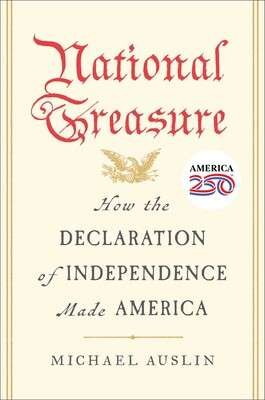
[This post is excerpted from the new book, National Treasure: How the Declaration of Independence Made America (Avid Reader Press/Simon & Schuster).]

To the delegates of the Continental Congress, the Declaration of Independence did not reflect abstract ideas. To begin with, it was a pressing piece of administrative business after the vote for Independence on July 2, necessary for legitimizing the American struggle against King and Parliament, as well as a means of garnering foreign support, primarily from France. Yet it also was a covenant invoking the Creator and identifying a people that it hoped to unite. This covenant was instituted to defend against tyranny and maintain a specific political community in its traditional rights. Its sanction came from a righteous cause, and as Congress began to edit Thomas Jefferson’s draft on July 2 and 3, it found itself not only tightening his argument, but also making more explicit the divine sanction that underpinned the document.

Grounded in natural rights theory, English common law, classical thought, and Judeo-Christian theology, the Declaration expressed the specific kinds of liberty and equality understood by eighteenth-century men of property and learning. It eloquently asserted the traditional liberties of Englishmen, drawing the distinction between positive rights granted by governments and natural rights derived from God. This was a defense of man “in virtue of his nature,” as later expressed by the political philosopher Harry Jaffa. The Declaration described rights that could not be “alienated” or surrendered to any person or government, especially one failing to uphold its responsibilities to the people it sought to control.

A document so radical as to indict a king and declare all men equal was also extremely conservative. Liberty seemed a straightforward idea, but equality was a far more complicated concept than Jefferson’s famous phrase expressed. Equality was not an end in itself, but was a feature of liberty, in the sense that humans had equal rights that had to be protected. In the political sphere, equality was necessary to the preservation of those God-given liberties that were both individual and communal.

Such arguments in favor of equality were not absolute, especially when it came to the question of slavery. The most passionate section in Jefferson’s draft was a long condemnation of the slave trade, though not of slavery itself, but with undeniable moral tones. Chattel slavery was deplored as both a political and a moral evil by almost all the Founding Fathers, including slaveholders like George Mason, who in 1765 had written that it was the cause of the “destruction” of the Roman republic, being “an Evil very pathetically described by Roman historians.” Jefferson himself had written in his Summary View of the Rights of British America that “the abolition of domestic slavery is the great object of desire in those colonies where it was unhappily introduced in their infant state.” The hypocrisy of a slaveowning society demanding its own freedom had long been commented on in the colonies, often from the pulpit. It was well understood that holding fellow humans in bondage degraded both the enslaved and the enslaver, and Patrick Henry hoped for the time when the colonists would “abolish this lamentable evil.”

Such laudable sentiments were not followed by action, nor did they spare the Americans from the barbed criticism of foreigners like the great Samuel Johnson, who famously asked, “how is it that we hear the loudest yelps for liberty among the drivers of negroes?” Yet in the interests of colonial unity, this passage was cut, to Jefferson’s disgust. In cutting Jefferson’s critique of the slave trade, Congress revealed the moral failing that would bedevil the new nation and eventually threaten its very survival.

What later generations would see as the silences, errors, or hypocrisy of the Declaration cannot detract from its bold, indeed revolutionary, nature. Jefferson’s broad vision, largely unaltered by Congress, pointed toward freedoms not entirely brought into focus, but never lost sight of. In condemning the King, the Declaration condemned any who would trample on the liberty of others, even if it did not—could not—yet follow its own logic to the inevitable end. It thus served a double role: first, in making explicit the rights and claims of the political community in whose name it had been created; second, in providing a transcendent vision of both individual and communal life that would inspire groups and people who did not yet partake of all (or any) of the freedoms enumerated in the document. This “open door,” so to speak, is what ultimately gave the Declaration its capaciousness and greatness, keeping it a living document in the minds of Americans of future generations.

Seen in its totality, the Declaration of Independence was audacious yet prudent, visionary yet sober. It was infused with a “spirit of pragmatic idealism,” to borrow the words of the great historian Bernard Bailyn. Though a compromise among different regions and interests, the Declaration was far from reflecting the lowest common denominator. It expressed the mind of a growing society more dynamic than the mother country and the moral certitude of those who refused to accept subordination.

Read the full article here

Fact Checker

Verify the accuracy of this article using AI-powered analysis and real-time sources.

Get Your Fact Check Report

Enter your email to receive detailed fact-checking analysis

5 free reports remaining

Continue with Full Access

You've used your 5 free reports. Sign up for unlimited access!

Already have an account? Sign in here

#MediaAndPolitics #MediaEthics #PoliticalCoverage #PublicDiscourse #PublicOpinion
Share. Facebook Twitter Pinterest LinkedIn Tumblr Email Telegram Copy Link
News Room
  • Website
  • Facebook
  • X (Twitter)
  • Instagram
  • LinkedIn

The FSNN News Room is the voice of our in-house journalists, editors, and researchers. We deliver timely, unbiased reporting at the crossroads of finance, cryptocurrency, and global politics, providing clear, fact-driven analysis free from agendas.

Related Articles

Media & Culture

A Tale of Two Waiting Periods

5 minutes ago
Cryptocurrency & Free Speech Finance

Ondo, JPMorgan, Mastercard and Ripple Team to Settle Tokenized Treasuries on XRP Ledger

32 minutes ago
Media & Culture

Restricting Speech By Purportedly Protecting Children

1 hour ago
Cryptocurrency & Free Speech Finance

Sandisk Is Mooning Like a Meme Coin. Here’s Why

2 hours ago
Debates

Playing Gad Gad Saad’s new book tackles an interesting topic. Unfortunately, the author’s narcissistic ramblings make it almost impossible to read.

2 hours ago
Cryptocurrency & Free Speech Finance

Bitcoin, Ethereum ‘Q-Day’ Quantum Threat Could Arrive as Soon as 2030: Report

3 hours ago
Add A Comment
Leave A Reply Cancel Reply

Editors Picks

DTCC, Wall Street’s clearinghouse, works with blockchains to tokenize corporate actions

25 minutes ago

Stablecoin Industry Opposes Bank of England’s Unhosted Wallet Ban

26 minutes ago

Ondo, JPMorgan, Mastercard and Ripple Team to Settle Tokenized Treasuries on XRP Ledger

32 minutes ago

Restricting Speech By Purportedly Protecting Children

1 hour ago
Latest Posts

Nasdaq’s president says the SEC’s new crypto stance is letting markets ‘build’ again

1 hour ago

ETH Stuck Below $2.4K Despite Wider Crypto Market Recovery

1 hour ago

Sandisk Is Mooning Like a Meme Coin. Here’s Why

2 hours ago

Subscribe to News

Get the latest news and updates directly to your inbox.

At FSNN – Free Speech News Network, we deliver unfiltered reporting and in-depth analysis on the stories that matter most. From breaking headlines to global perspectives, our mission is to keep you informed, empowered, and connected.

FSNN.net is owned and operated by GlobalBoost Media
, an independent media organization dedicated to advancing transparency, free expression, and factual journalism across the digital landscape.

Facebook X (Twitter) Discord Telegram
Latest News

A Tale of Two Waiting Periods

5 minutes ago

DTCC, Wall Street’s clearinghouse, works with blockchains to tokenize corporate actions

25 minutes ago

Stablecoin Industry Opposes Bank of England’s Unhosted Wallet Ban

26 minutes ago

Subscribe to Updates

Get the latest news and updates directly to your inbox.

© 2026 GlobalBoost Media. All Rights Reserved.
  • Privacy Policy
  • Terms of Service
  • Our Authors
  • Contact

Type above and press Enter to search. Press Esc to cancel.

🍪

Cookies

We and our selected partners wish to use cookies to collect information about you for functional purposes and statistical marketing. You may not give us your consent for certain purposes by selecting an option and you can withdraw your consent at any time via the cookie icon.

Cookie Preferences

Manage Cookies

Cookies are small text that can be used by websites to make the user experience more efficient. The law states that we may store cookies on your device if they are strictly necessary for the operation of this site. For all other types of cookies, we need your permission. This site uses various types of cookies. Some cookies are placed by third party services that appear on our pages.

Your permission applies to the following domains:

  • https://fsnn.net
Necessary
Necessary cookies help make a website usable by enabling basic functions like page navigation and access to secure areas of the website. The website cannot function properly without these cookies.
Statistic
Statistic cookies help website owners to understand how visitors interact with websites by collecting and reporting information anonymously.
Preferences
Preference cookies enable a website to remember information that changes the way the website behaves or looks, like your preferred language or the region that you are in.
Marketing
Marketing cookies are used to track visitors across websites. The intention is to display ads that are relevant and engaging for the individual user and thereby more valuable for publishers and third party advertisers.