Close Menu
FSNN | Free Speech News NetworkFSNN | Free Speech News Network
  • Home
  • News
    • Politics
    • Legal & Courts
    • Tech & Big Tech
    • Campus & Education
    • Media & Culture
    • Global Free Speech
  • Opinions
    • Debates
  • Video/Live
  • Community
  • Freedom Index
  • About
    • Mission
    • Contact
    • Support
Trending

Bank of Italy Deputy Governor Urges EU to Evaluate Tokenized SEPA Payments

1 second ago

Bitcoin’s $81K Rally Comes Amid 66-Day Negative Funding Streak: Here’s Why

6 minutes ago

Congrats Everyone: U.S. Now Ranked 64th In Global Press Freedom

42 minutes ago
Facebook X (Twitter) Instagram
Facebook X (Twitter) Discord Telegram
FSNN | Free Speech News NetworkFSNN | Free Speech News Network
Market Data Newsletter
Tuesday, May 5
  • Home
  • News
    • Politics
    • Legal & Courts
    • Tech & Big Tech
    • Campus & Education
    • Media & Culture
    • Global Free Speech
  • Opinions
    • Debates
  • Video/Live
  • Community
  • Freedom Index
  • About
    • Mission
    • Contact
    • Support
FSNN | Free Speech News NetworkFSNN | Free Speech News Network
Home»News»Media & Culture»Congress Gave Away Its Authority To Declare War and Enabled Trump’s Iran War
Media & Culture

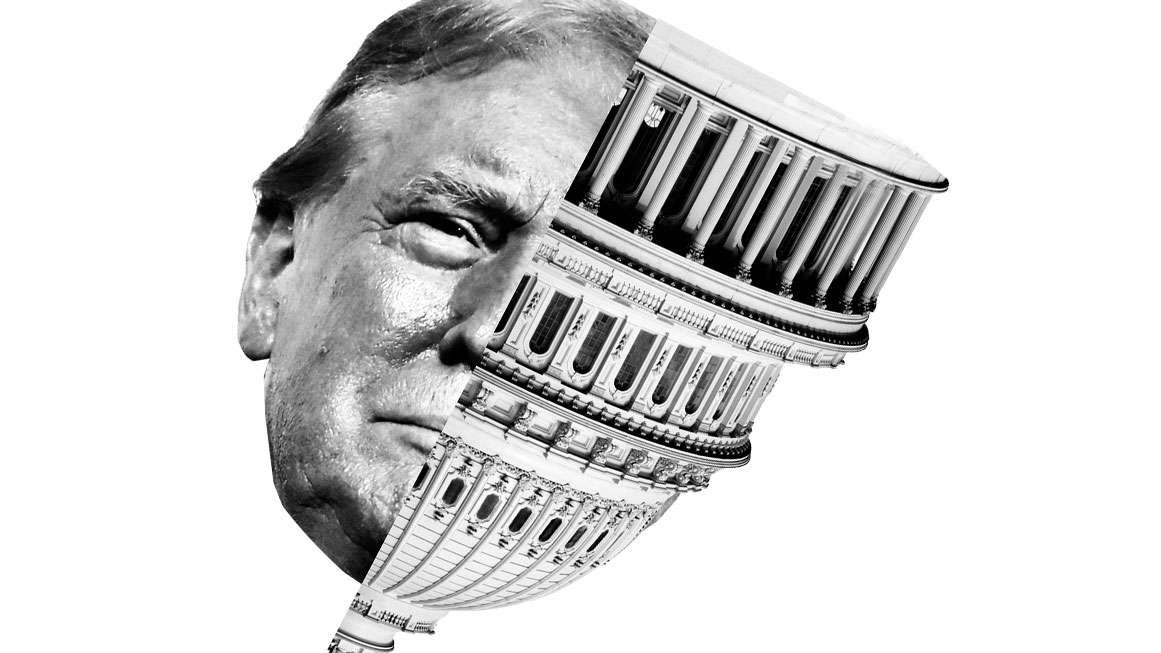
Congress Gave Away Its Authority To Declare War and Enabled Trump’s Iran War

News RoomBy News Room3 hours agoNo Comments5 Mins Read1,612 Views
Share Facebook Twitter Pinterest Copy Link LinkedIn Tumblr Email VKontakte Telegram
Congress Gave Away Its Authority To Declare War and Enabled Trump’s Iran War
Share
Facebook Twitter Pinterest Email Copy Link

Listen to the article

0:00
0:00

Key Takeaways

Playback Speed

Select a Voice

President Donald Trump and his administration have long claimed that he wants to chart a more restrained path for America’s foreign policy. Before the 2024 presidential election, running mate J.D. Vance dubbed Trump the “candidate of peace.” Trump broke with Republican Party orthodoxy during a 2016 presidential debate when he called the war in Iraq “a big, fat mistake.” Yet a decade later, his administration is embroiled in a conflict that looks a lot like the one he decried.

The U.S. and Israel launched strikes against several targets in Iran on February 28, killing Ayatollah Ali Khamenei, the country’s supreme leader. Since then, Iran has struck several U.S. diplomatic offices and military facilities in the Middle East, while the U.S. has hit missile and oil sites across Iran. As of mid-April, 13 American service members had died in the war, which showed few signs of slowing down. The U.S. reportedly was weighing larger deployments to the region, and at press time Trump had not ruled out putting American boots on the ground.

The Trump administration offered a wide range of justifications for its military actions in Iran, which Congress did not authorize. As Reason‘s Matthew Petti wrote in March, officials said they sought “to preempt a possible Iranian attack (which other officials say wasn’t real), to join in an Israeli attack that was going to happen ‘with or without the United States,’ to take advantage of a fleeting opportunity to kill Iranian leadership, or to punish Iran for failing to give in to U.S. demands [for nuclear concessions] in time.”

The Constitution grants Congress the sole power to declare war. But constitutional control of warmaking has fallen so far to the wayside that presidents no longer feel obliged to present a coherent case for military action to Congress. Congress, meanwhile, has helped render itself toothless on matters of war.

Congress last voted to declare war in 1942, when it authorized action against Bulgaria, Hungary, and Romania during World War II. Since then, U.S. military action has been approved via congressional authorizations for the use of military force (AUMFs) or unilateral presidential decisions.

AUMFs are joint resolutions that give the president broad discretion to involve U.S. military assets in conflicts. Without sunset provisions, they remain on the books for decades and can be invoked to justify military skirmishes far beyond their intended purposes. The 2001 AUMF, which authorized the president “to use all necessary and appropriate force” against any “nations, organizations, or persons” involved in the September 11 attacks, had been cited to justify counterterrorism activities in 22 countries as of 2020, Brown University’s Costs of War project reported.

Presidents have additional tools at their disposal to use and misuse. The 1973 War Powers Resolution “opens the door for presidents to engage in smaller-scale or short operations,” Rochester Institute of Technology political scientist Sarah Burns notes. But presidents have tried to flout some of the law’s requirements.

President Barack Obama “claimed the War Powers Resolution did not apply” to “his bombing campaign in Libya in 2011,” Burns writes. “President George H.W. Bush deployed hundreds of thousands of U.S. troops to the Persian Gulf region before Congress had taken a vote to authorize it,” NPR’s Ron Elving noted in 2020. Other examples of congressionally unauthorized military action include President Bill Clinton’s interventions in Bosnia and Kosovo, Obama’s battles with ISIS in Iraq and Syria, Trump’s first-term interventions in the Middle East, and his second-term operation in Venezuela.

Since passing the War Powers Resolution more than 50 years ago, Congress typically has not even attempted to reclaim its war authority. And on the rare occasions when Congress does try, the president can resist. Trump vetoed a 2019 congressional resolution calling for an end to U.S. involvement in Yemen’s civil war, and a 2020 resolution challenging his unilateral action in Iran met the same fate.

“Both parties have been feckless in allowing the growth of the power of the presidency,” Sen. Cory Booker (D–N.J.) observed during a March appearance on CNN. “At this scale, at this magnitude, at this cost, why is Congress just laying down and doing nothing?”

In February, Sens. Tim Kaine (D–Va.) and Rand Paul (R–Ky.) filed a resolution challenging the Trump administration’s war in Iran. It failed by a nearly party-line 47–53 vote in early March. Reps. Ro Khanna (D–Calif.) and Thomas Massie (R–Ky.) spearheaded a similar effort in the House, which would have been nonbinding and “merely would have stated Congress’s view that the president could not initiate major combat operations against Iran on his own authority,” as Council on Foreign Relations senior fellow James M. Lindsay notes. That faltered too.

Under constitutional constraints, a president has to justify military action to Congress. He must convince democratically elected representatives to publicly back that action in ways their constituents can track and challenge. Trump’s actions in Iran circumvent those important checks. They remind us that it is far easier to prevent an unjustified war from starting than it is to stop one in its tracks.

This article originally appeared in print under the headline “Congress and the Executive Enabled Illegal War in Iran.”

Read the full article here

Fact Checker

Verify the accuracy of this article using AI-powered analysis and real-time sources.

Get Your Fact Check Report

Enter your email to receive detailed fact-checking analysis

5 free reports remaining

Continue with Full Access

You've used your 5 free reports. Sign up for unlimited access!

Already have an account? Sign in here

#CivicEngagement #Democracy #InformationWar #MediaBias #NewsAnalysis
Share. Facebook Twitter Pinterest LinkedIn Tumblr Email Telegram Copy Link
News Room
  • Website
  • Facebook
  • X (Twitter)
  • Instagram
  • LinkedIn

The FSNN News Room is the voice of our in-house journalists, editors, and researchers. We deliver timely, unbiased reporting at the crossroads of finance, cryptocurrency, and global politics, providing clear, fact-driven analysis free from agendas.

Related Articles

Cryptocurrency & Free Speech Finance

Bitcoin’s $81K Rally Comes Amid 66-Day Negative Funding Streak: Here’s Why

6 minutes ago
Media & Culture

Congrats Everyone: U.S. Now Ranked 64th In Global Press Freedom

42 minutes ago
Media & Culture

Today in Supreme Court History: May 5, 1992

44 minutes ago
Cryptocurrency & Free Speech Finance

Morning Minute: Crypto VC Haun Raises $1B Despite Market Slump

1 hour ago
Media & Culture

Gorsuch Says SCOTUS Is Doing ‘Pretty Darn Well’ in Handling the ‘Hardest Cases’

2 hours ago
Cryptocurrency & Free Speech Finance

Ripple to Share North Korean Threat Intelligence With Crypto Industry

2 hours ago
Add A Comment
Leave A Reply Cancel Reply

Editors Picks

Bitcoin’s $81K Rally Comes Amid 66-Day Negative Funding Streak: Here’s Why

6 minutes ago

Congrats Everyone: U.S. Now Ranked 64th In Global Press Freedom

42 minutes ago

Today in Supreme Court History: May 5, 1992

44 minutes ago

Standard Chartered expands further into crypto with stake in GSR at $1 billion valuation

1 hour ago
Latest Posts

Bitcoin Long-Term Holders Ramp Up 330,000 BTC as the Next Big Resistance Sits at $84K

1 hour ago

Morning Minute: Crypto VC Haun Raises $1B Despite Market Slump

1 hour ago

EFF and 18 Organizations Urge UK Policymakers to Prioritize Addressing the Roots of Online Harm

2 hours ago

Subscribe to News

Get the latest news and updates directly to your inbox.

At FSNN – Free Speech News Network, we deliver unfiltered reporting and in-depth analysis on the stories that matter most. From breaking headlines to global perspectives, our mission is to keep you informed, empowered, and connected.

FSNN.net is owned and operated by GlobalBoost Media
, an independent media organization dedicated to advancing transparency, free expression, and factual journalism across the digital landscape.

Facebook X (Twitter) Discord Telegram
Latest News

Bank of Italy Deputy Governor Urges EU to Evaluate Tokenized SEPA Payments

1 second ago

Bitcoin’s $81K Rally Comes Amid 66-Day Negative Funding Streak: Here’s Why

6 minutes ago

Congrats Everyone: U.S. Now Ranked 64th In Global Press Freedom

42 minutes ago

Subscribe to Updates

Get the latest news and updates directly to your inbox.

© 2026 GlobalBoost Media. All Rights Reserved.
  • Privacy Policy
  • Terms of Service
  • Our Authors
  • Contact

Type above and press Enter to search. Press Esc to cancel.

🍪

Cookies

We and our selected partners wish to use cookies to collect information about you for functional purposes and statistical marketing. You may not give us your consent for certain purposes by selecting an option and you can withdraw your consent at any time via the cookie icon.

Cookie Preferences

Manage Cookies

Cookies are small text that can be used by websites to make the user experience more efficient. The law states that we may store cookies on your device if they are strictly necessary for the operation of this site. For all other types of cookies, we need your permission. This site uses various types of cookies. Some cookies are placed by third party services that appear on our pages.

Your permission applies to the following domains:

  • https://fsnn.net
Necessary
Necessary cookies help make a website usable by enabling basic functions like page navigation and access to secure areas of the website. The website cannot function properly without these cookies.
Statistic
Statistic cookies help website owners to understand how visitors interact with websites by collecting and reporting information anonymously.
Preferences
Preference cookies enable a website to remember information that changes the way the website behaves or looks, like your preferred language or the region that you are in.
Marketing
Marketing cookies are used to track visitors across websites. The intention is to display ads that are relevant and engaging for the individual user and thereby more valuable for publishers and third party advertisers.