

 Freedom Index
Listen to the article
Amena found out about the war when air raid alarms woke her. Hossein first heard it when fighter jets blew up a radio station as he listened to it. Jad found out about it on the news, two hours before the bombs fell on his neighborhood. And the parents of several volleyball players found out when their daughters were pulled from the burning wreckage of a school gym.
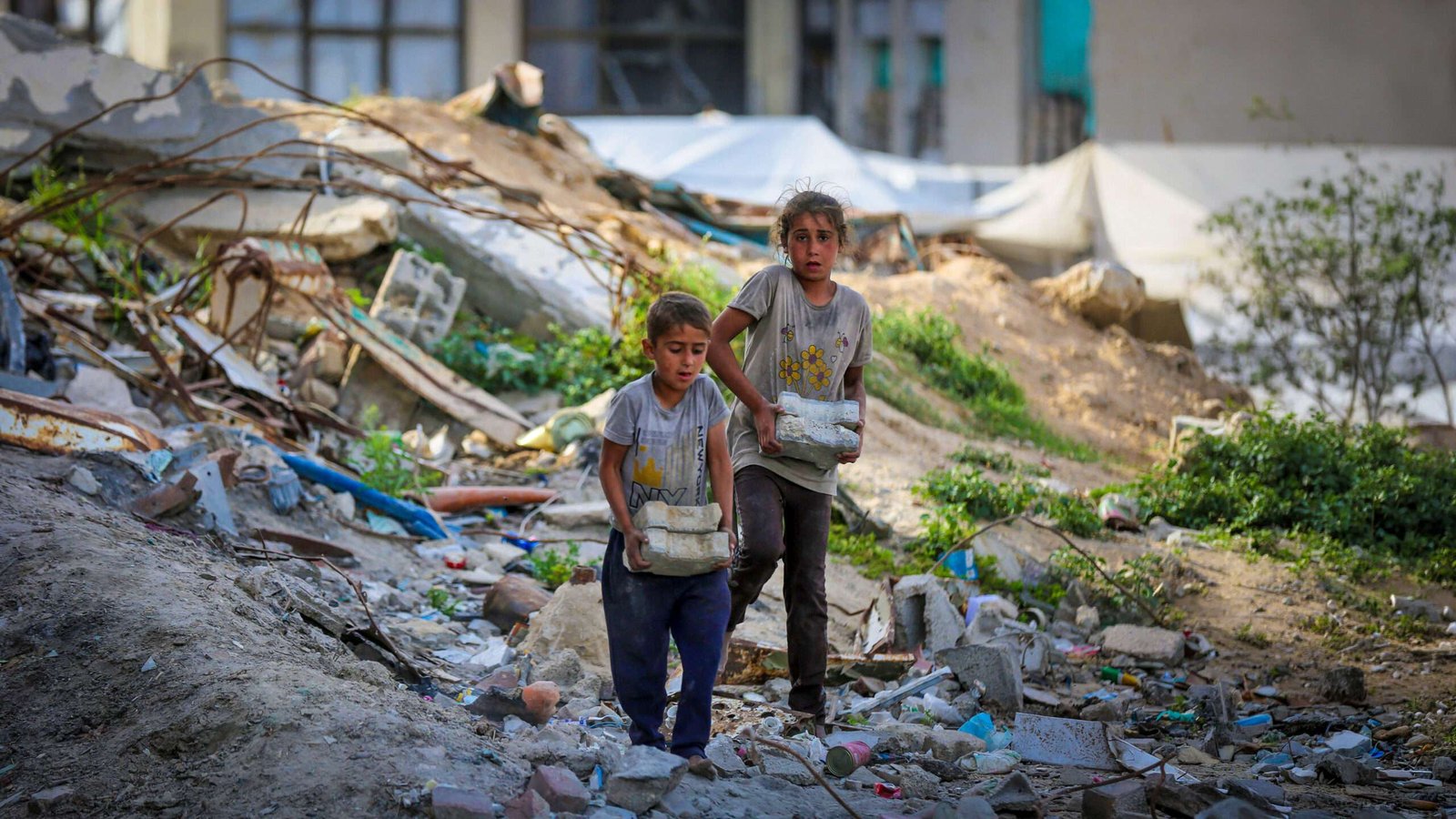
Most Americans have fortunately never seen war firsthand, and most of those who have were troops sent to fight far away. War in your hometown is a strange experience, especially a modern air war without front lines. Things you take for granted, from electricity to the freedom to go outside, disappear. Life’s soundtrack becomes sirens and explosions. The danger feels distant until it isn’t. Death comes seemingly at random.
On February 28, during a U.S.-Israeli surprise attack, missiles hit an elementary school in Minab and a gym in Lamerd, two towns on the Iranian coast. Mir Dehdasht, whose daughter Robab’s high school volleyball team was practicing at the gym, rushed over when a neighbor told him about the attack. “The injured were bleeding heavily, some had lost consciousness on the ground, others were screaming without stopping. Their voices were deafening,” he told Drop Site News after learning Robab had died.
Since then, war has touched almost every corner of the Middle East. Reason spoke to civilians from all sides of the conflict in March and April about life under the bombs and the human cost of war. Most of their names have been changed to protect their safety.
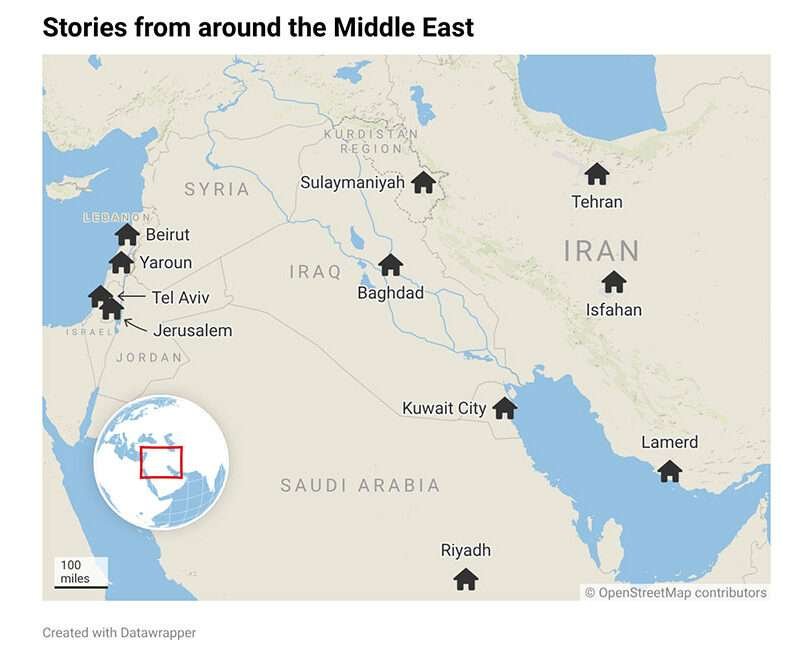
Hossein, a young Iranian man who lives with his parents in Isfahan, Iran, awoke on February 28 to hear his family talking about a foreign attack. They tried to leave the city but turned around when a warplane bombed the radio tower along the highway. Hossein heard the sound of the explosion and the radio cut out simultaneously.
“They are bombing really hard. Today at noon they hit a mosque at the end of our street, but thank God we are okay. Love and kisses,” Sepideh, an Iranian woman in Tehran, texted her American relative, who showed Reason the screenshots. “Now they are hitting everything. Nowhere is safe. But don’t worry, we are okay.”
Amena, a Palestinian-American woman living in Jerusalem, was jolted awake on the first morning of the war by a phone alert for incoming Iranian missile fire. “How do I explain to my sister sitting in California what it sounds like when bombs go off and your windows shake? There’s a fear that settles in your heart and never leaves. We live in a constant state of stress, it just doesn’t go away,” she says. “You can’t really go anywhere because you don’t know when you’ll get an alert to find a protective area to go to, you don’t know if there is one at the location you’re going to.”
War is lonely. New security checkpoints make it harder for Amena to visit her adult son in another part of Jerusalem. Her husband has been stuck in America for weeks because flights to the Middle East were canceled until the mid-April ceasefire.
Fuad, a Lebanese-American man, was planning to visit his aunt in Yaroun, his familial village in Lebanon near the Israeli border, on February 27. But his wife asked to stay an extra day in Beirut, the capital. The morning they were supposed to drive down to the village, Fuad turned on the news to see Israel and Iran were at war. A few days later, the war came to Lebanon, and Yaroun was evacuated.
“I’m not sure there’s anything left now,” Fuad says. “I miss my village.”
Jad, a Lebanese man from the Dahiyeh suburb of Beirut, was holding out hope that Lebanon would be spared. At 1 a.m. on March 2, he saw the news that the Dahiyeh-based militia Hezbollah was joining the war on Iran’s side. Two hours later, Israel began bombing the area. “After that, it was around two to three hours of chaos in Dahiyeh, people trying to evacuate while strikes were ongoing,” Jad says.
Jad was lucky enough to reach a relative’s house elsewhere in Beirut, but many others were left homeless or paying exorbitantly for temporary shelter. “The government’s not doing much,” says Fuad. “Mostly it’s independent organizations helping the refugees.”
In other countries, the disruption has not been quite as intense. Most of the air raids in Saudi Arabia and Kuwait have been aimed at military bases and industrial parks rather than cities. Salman, a Saudi man, describes the war as “a background noise you couldn’t shut off,” between new restrictions on daily life and constant rumors. “You mostly forget that you’re at war, but then you remember in moments,” says Jasim, a Kuwaiti man, who describes empty store shelves, intermittent sirens, and faraway booms.
Anas, another Kuwaiti man, says he actually slept through the opening attacks of the war. He woke up to his mother scolding him about sleeping in so late while sirens were blaring.
Even in places under heavy bombardment, some people have become desensitized to danger. Yahya, an Iranian-Canadian man who returned to Tehran after the war started, was startled by the sound of an explosion while walking to the Tehran subway early in the morning. “The crowd at the entrance of the underground station looked up nonchalantly and continued walking,” Yahya wrote in a message forwarded to Reason by a friend.
“In Kurdistan we say, ‘If you heard it, thank God, that means it wasn’t for you,'” says Meghan Bodette, an American researcher in Iraqi Kurdistan with whom I have collaborated on projects for the Kurdish Peace Institute. Iraq has the dubious honor of being bombed by both sides of the conflict, with dozens killed.
A video that went viral early in the war shows Iraqis filming and laughing at a rooftop bar in Baghdad while an Iranian drone flies overhead toward the U.S. Embassy. Jad says some Lebanese have similarly started spectating Israeli airstrikes from their rooftops.
David, an Israeli man near Tel Aviv, had been expecting the war to come for a while. “Psychologically speaking it’s intense, but nothing compared to the early Gaza War, especially immediately following October 7,” he says. “I think this time everyone saw it coming on some level.” He compares wartime life to the COVID-19 pandemic, when “everyone need[ed] to hunker down.”
On March 1, an Iranian missile punctured a bunker in the Jerusalem suburbs, killing four people sheltering inside. David says it was “unsettling” to Israelis at first, but people “handwaved” the danger by chalking it up to “shoddy” bunker construction.
In what could have been a festive omen, several holidays lined up this year. For the first time in decades, the Eid al-Fitr holiday at the end of the Islamic lunar month Ramadan coincided with Nowruz (New Years) on the Iranian and Kurdish solar calendars. Passover for Jews and Easter for Christians came right after. This holiday season was another reminder of how abnormal things were.
Hossein’s family Nowruz dinner was interrupted by the sounds of a “massive attack” that frightened the guests. On the last day of Nowruz break, typically a time for family picnics, the city held a war memorial service, which Hossein says was “packed” with relatives of the dead from wars “old and new.”
Passover “was a pain since it was a constant stream of alarms. Quite scary especially when you’re with your family or on the road,” says David. “A lot of Israelis have big families too so wrangling the kids to the shelter or safe room is pretty complicated.”
He adds that the situation near the Lebanese border was much more intense. David knows people in northern Israel who did their entire Seder, the traditional Passover service, inside a bunker due to rocket fire.
Citing a lack of protected areas and difficulty of access for rescue workers, Israeli police closed major holy sites in Jerusalem. The Jewish prayer for Passover at the Western Wall was restricted to a few dozen people at a time, Catholic Cardinal Pierbattista Pizzaballa celebrated Easter Mass in an empty Church of the Holy Sepulchre, and Muslims were unable to hold traditional Eid prayers at Al-Aqsa Mosque. “This is no comparison, but imagine Christmas without a tree, presents, or Santa,” says Amena.
The situation in Kuwait also worsened around Eid, when “the Iranians started hitting critical infrastructure instead of military installations,” according to Anas. “People are distressed because it’s not whether you get hit by a drone or fragments, but whether electricity shuts down,” he says.
That kind of economic damage is how most people in the world will feel this war. India is suffering severe cooking gas shortages, forcing families to cook with firewood. Slovenia, Indonesia, and Bangladesh are rationing fuel.
The longer the blockade of Hormuz drags on, the more likely these problems will cascade into America. U.S. gas prices jumped from around $3 per gallon before the war to over $4 per gallon after a month of war. CNN and USA Today have already found Americans skipping meals to pay for fuel.
There are typically 40,000 American troops in the Middle East, with another 10,000 deployed to fight this war, leaving hundreds of thousands of loved ones worried. “Who wants war?” Charles Simmons, father of fallen U.S. airman Tyler Simmons, told NBC. “Sometimes it’s a necessity, and I just don’t know what’s going on.” Other military families are suffering “a good amount of stress and anxiety…just around the unknowns right now,” Shannon Razsadin, head of the Military Family Advisory Network, told the Associated Press.
That was a common feeling from ordinary people on all sides of the war—not knowing what risks they will be exposed to, for how long, or why. “It has mildly disrupted work life for many, travel plans, et cetera, but a sense of foreboding has definitely set in,” Salman, the Saudi man, said before the ceasefire kicked in. “Fear and expectation that the situation will only escalate.”
This article originally appeared in print under the headline “‘A Fear That Settles in Your Heart’.”
Read the full article here
Fact Checker
Verify the accuracy of this article using AI-powered analysis and real-time sources.