Close Menu
FSNN | Free Speech News NetworkFSNN | Free Speech News Network
  • Home
  • News
    • Politics
    • Legal & Courts
    • Tech & Big Tech
    • Campus & Education
    • Media & Culture
    • Global Free Speech
  • Opinions
    • Debates
  • Video/Live
  • Community
  • Freedom Index
  • About
    • Mission
    • Contact
    • Support
Trending

ICE Is Or Isn’t Cutting Back On Courthouse Arrests, Depending On Who You Ask

25 minutes ago

Bankers Scouring Porn Sites. Payment Processors Punishing Journalists. Here’s How ‘Big Finance’ Is Chilling Speech

29 minutes ago

Ahmed Shihab-Eldin, subjected to ‘grave violations’ of fundamental rights, has Kuwaiti citizenship revoked

37 minutes ago
Facebook X (Twitter) Instagram
Facebook X (Twitter) Discord Telegram
FSNN | Free Speech News NetworkFSNN | Free Speech News Network
Market Data Newsletter
Wednesday, April 29
  • Home
  • News
    • Politics
    • Legal & Courts
    • Tech & Big Tech
    • Campus & Education
    • Media & Culture
    • Global Free Speech
  • Opinions
    • Debates
  • Video/Live
  • Community
  • Freedom Index
  • About
    • Mission
    • Contact
    • Support
FSNN | Free Speech News NetworkFSNN | Free Speech News Network
Home»Cryptocurrency & Free Speech Finance»DeFi Exploits Push Builders to Rethink Emergency Controls
Cryptocurrency & Free Speech Finance

DeFi Exploits Push Builders to Rethink Emergency Controls

News RoomBy News Room3 hours agoNo Comments5 Mins Read515 Views
Share Facebook Twitter Pinterest Copy Link LinkedIn Tumblr Email VKontakte Telegram
DeFi Exploits Push Builders to Rethink Emergency Controls
Share
Facebook Twitter Pinterest Email Copy Link

Listen to the article

0:00
0:00

Key Takeaways

Playback Speed

Select a Voice

Andre Cronje says much of decentralized finance is “no longer DeFi” in the strict sense, as builders debate whether circuit breakers and other emergency controls are now necessary to protect users from exploits.

The Flying Tulip founder told Cointelegraph in an interview that many protocols are no longer immutable public goods, but rather “teams running for-profit businesses” with upgradeable contracts, offchain infrastructure and operational controls.

That shift changes the security model, he said. While early DeFi protocols were mostly defined by immutable smart contracts, newer systems often depend on proxy upgrades, multisigs, infrastructure providers, admin processes and human response teams, according to Cronje. 

“I think what we have today, Flying Tulip included, is no longer DeFi. It’s not decentralized finance. It’s not immutable code,” Cronje said. “It’s teams running for-profit businesses.” 

The comments come as April’s DeFi exploits pushed security narratives beyond smart contract audits and into questions of operational risk. On Thursday, Flying Tulip added a withdrawal circuit breaker designed to delay or queue withdrawals during abnormal outflows. The move follows major incidents involving decentralized exchange Drift Protocol and restaking platform Kelp, with estimated losses of about $280 million and $293 million, respectively. 

Flying Tulip’s Andre Cronje (left) and Cointelegraph’s Ezra Reguerra (right). Source: Cointelegraph

DeFi risks move beyond smart contracts

Cronje said the industry focuses on audits when many systems can be changed by developers or controlled through administrative processes. 

“The focus over all of the industry is still very much so on the contract side and not sort of the more TradFi side,” Cronje told Cointelegraph, adding that many recent exploits have involved “traditional Web2 stuff” such as infrastructure access, compromises and social engineering.

He said protocols with upgradeable contracts need traditional checks and balances around who can upgrade code, who approves changes and whether there are proper timelocks and multisig controls. 

Related: Ethereum backers pledge up to 30,000 ETH to rsETH recovery after bridge incident

Curve Finance and Yield Basis founder Michael Egorov shared the view that recent incidents show the risks are increasingly tied to centralization and offchain dependencies rather than only smart contract bugs.

“The vast majority of the most recent DeFi exploits happened not due to errors in code,” Egorov told Cointelegraph. “They happened because of centralization risks — single points of failure which live off-chain.”

Egorov said Aave, Kelp and LayerZero smart contracts were not hacked in the recent rsETH incident, arguing that the compromise came from offchain infrastructure. He said DeFi protocols can be exposed to “a whole tree of risks,” with the largest risks often tied to humans rather than code. 

Circuit breakers divide DeFi builders

Cronje said Flying Tulip’s circuit breaker is not designed to permanently block withdrawals, but to create a response window when outflows exceed normal parameters. “Our circuit breaker isn’t actually designed so that we can stop or prevent anything from happening,” he said. “It’s to give us time to react.”

Flying Tulip’s system gives the team about six hours, although Cronje said smaller or less geographically distributed teams may need 12 to 24 hours, or even longer. He said the tool makes sense for contracts that hold user funds, but should be viewed as one layer among audits, distributed multisigs, timelocks and other controls.

“Security is always a layered approach,” Cronje said. “It’s never a ‘this is the one thing’ that makes you invulnerable.”

Related: Aave asks Arbitrum to send 30K ETH from Kelp exploiter to ‘DeFi United’

Egorov was more cautious. He said circuit breakers can make sense in theory, but only if they are implemented in a way that does not create a new privileged attack surface. “The circuit breakers are controlled by humans, which means they could become a potential vulnerability themselves,” Egorov told Cointelegraph. 

He warned that if emergency controls allow signers to change contract code or block withdrawals, compromised signers could turn the safeguard into a drainer or a centralized freeze mechanism. In his view, the better long-term answer is to design systems that can keep running safely without manual intervention. 

“The goal of DeFi design should be to minimize human-centric points of failure, not add to them,” Egorov said. “DeFi needs to be safe, and safety comes from decentralization.” 

Standard Chartered says Kelp episode shows DeFi resilience 

Standard Chartered framed the Kelp episode as a sign of DeFi’s growing pains rather than a fatal failure. 

In a Wednesday research note seen by Cointelegraph, the bank said the April 18 theft exposed systemic risks after the impact spread to Aave, but said the more than $300 million raised by the DeFi United coalition and structural changes such as Aave V4 and the Ethereum Economic Zone suggest the sector is developing stronger defenses. 
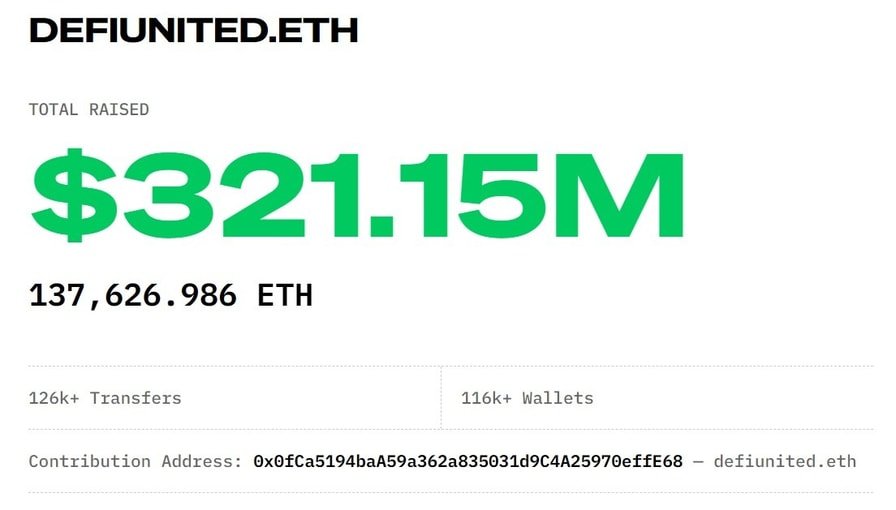
DeFi United site shows over $321 million raised or committed. Source: DeFi United

The bank said those upgrades could reduce reliance on bridges, which it described as a major attack vector in recent crypto hacks.

Magazine: AI-driven hacks could kill DeFi — unless projects act now

Cointelegraph is committed to independent, transparent journalism. This news article is produced in accordance with Cointelegraph’s Editorial Policy and aims to provide accurate and timely information. Readers are encouraged to verify information independently.

Read the full article here

Fact Checker

Verify the accuracy of this article using AI-powered analysis and real-time sources.

Get Your Fact Check Report

Enter your email to receive detailed fact-checking analysis

5 free reports remaining

Continue with Full Access

You've used your 5 free reports. Sign up for unlimited access!

Already have an account? Sign in here

Share. Facebook Twitter Pinterest LinkedIn Tumblr Email Telegram Copy Link
News Room
  • Website
  • Facebook
  • X (Twitter)
  • Instagram
  • LinkedIn

The FSNN News Room is the voice of our in-house journalists, editors, and researchers. We deliver timely, unbiased reporting at the crossroads of finance, cryptocurrency, and global politics, providing clear, fact-driven analysis free from agendas.

Related Articles

Cryptocurrency & Free Speech Finance

Mythos forces crypto industry to rethink security practices

50 minutes ago
Cryptocurrency & Free Speech Finance

MoonPay Launches Institutional Unit After Sodot Acquisition

51 minutes ago
Cryptocurrency & Free Speech Finance

MoonPay Launches Institutional Division, Acquires Crypto Key Management Firm Sodot

54 minutes ago
Cryptocurrency & Free Speech Finance

Bitcoin ETFs fuel institutional surge, 21Shares’ CIO sees $100K possible by year-end

2 hours ago
Cryptocurrency & Free Speech Finance

KuCoin EU Hires AML Chief After Austria MiCA Business Ban

2 hours ago
Cryptocurrency & Free Speech Finance

Polymarket Eyes US Return for Crypto Exchange as Lone CFTC Chair Weighs Approval​​​​​​​​​​​​​​​​

2 hours ago
Add A Comment
Leave A Reply Cancel Reply

Editors Picks

Bankers Scouring Porn Sites. Payment Processors Punishing Journalists. Here’s How ‘Big Finance’ Is Chilling Speech

29 minutes ago

Ahmed Shihab-Eldin, subjected to ‘grave violations’ of fundamental rights, has Kuwaiti citizenship revoked

37 minutes ago

Mythos forces crypto industry to rethink security practices

50 minutes ago

MoonPay Launches Institutional Unit After Sodot Acquisition

51 minutes ago
Latest Posts

MoonPay Launches Institutional Division, Acquires Crypto Key Management Firm Sodot

54 minutes ago

Is Ukraine Helping Al Qaeda Conquer West Africa?

1 hour ago

Bitcoin ETFs fuel institutional surge, 21Shares’ CIO sees $100K possible by year-end

2 hours ago

Subscribe to News

Get the latest news and updates directly to your inbox.

At FSNN – Free Speech News Network, we deliver unfiltered reporting and in-depth analysis on the stories that matter most. From breaking headlines to global perspectives, our mission is to keep you informed, empowered, and connected.

FSNN.net is owned and operated by GlobalBoost Media
, an independent media organization dedicated to advancing transparency, free expression, and factual journalism across the digital landscape.

Facebook X (Twitter) Discord Telegram
Latest News

ICE Is Or Isn’t Cutting Back On Courthouse Arrests, Depending On Who You Ask

25 minutes ago

Bankers Scouring Porn Sites. Payment Processors Punishing Journalists. Here’s How ‘Big Finance’ Is Chilling Speech

29 minutes ago

Ahmed Shihab-Eldin, subjected to ‘grave violations’ of fundamental rights, has Kuwaiti citizenship revoked

37 minutes ago

Subscribe to Updates

Get the latest news and updates directly to your inbox.

© 2026 GlobalBoost Media. All Rights Reserved.
  • Privacy Policy
  • Terms of Service
  • Our Authors
  • Contact

Type above and press Enter to search. Press Esc to cancel.

🍪

Cookies

We and our selected partners wish to use cookies to collect information about you for functional purposes and statistical marketing. You may not give us your consent for certain purposes by selecting an option and you can withdraw your consent at any time via the cookie icon.

Cookie Preferences

Manage Cookies

Cookies are small text that can be used by websites to make the user experience more efficient. The law states that we may store cookies on your device if they are strictly necessary for the operation of this site. For all other types of cookies, we need your permission. This site uses various types of cookies. Some cookies are placed by third party services that appear on our pages.

Your permission applies to the following domains:

  • https://fsnn.net
Necessary
Necessary cookies help make a website usable by enabling basic functions like page navigation and access to secure areas of the website. The website cannot function properly without these cookies.
Statistic
Statistic cookies help website owners to understand how visitors interact with websites by collecting and reporting information anonymously.
Preferences
Preference cookies enable a website to remember information that changes the way the website behaves or looks, like your preferred language or the region that you are in.
Marketing
Marketing cookies are used to track visitors across websites. The intention is to display ads that are relevant and engaging for the individual user and thereby more valuable for publishers and third party advertisers.