Close Menu
FSNN | Free Speech News NetworkFSNN | Free Speech News Network
  • Home
  • News
    • Politics
    • Legal & Courts
    • Tech & Big Tech
    • Campus & Education
    • Media & Culture
    • Global Free Speech
  • Opinions
    • Debates
  • Video/Live
  • Community
  • Freedom Index
  • About
    • Mission
    • Contact
    • Support
Trending

Automatic Selective Service Registration Keeps the Threat of Conscription Alive

13 minutes ago

The token supercycle: everything of value is becoming programmable

39 minutes ago

Sui DeFi Project Full Sail Shuts Down After Oracle Incident

44 minutes ago
Facebook X (Twitter) Instagram
Facebook X (Twitter) Discord Telegram
FSNN | Free Speech News NetworkFSNN | Free Speech News Network
Market Data Newsletter
Wednesday, September 2
  • Home
  • News
    • Politics
    • Legal & Courts
    • Tech & Big Tech
    • Campus & Education
    • Media & Culture
    • Global Free Speech
  • Opinions
    • Debates
  • Video/Live
  • Community
  • Freedom Index
  • About
    • Mission
    • Contact
    • Support
FSNN | Free Speech News NetworkFSNN | Free Speech News Network
Home»News»Global Free Speech»Bahrain sentences photographer Sayed Baqer Al-Kamel to 10 years in prison
Global Free Speech

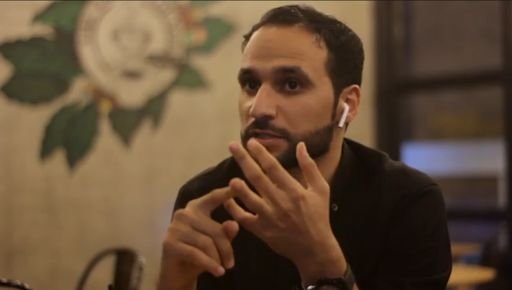
Bahrain sentences photographer Sayed Baqer Al-Kamel to 10 years in prison

News RoomBy News Room4 months agoNo Comments2 Mins Read2 Views
Share Facebook Twitter Pinterest Copy Link LinkedIn Tumblr Email VKontakte Telegram
Bahrain sentences photographer Sayed Baqer Al-Kamel to 10 years in prison
Share
Facebook Twitter Pinterest Email Copy Link

Listen to the article

0:00
0:00

Key Takeaways

Playback Speed

Select a Voice

Washington, D.C., April 28, 2026 — The Committee to Protect Journalists is appalled by the ten-year prison sentence handed down to Bahraini photographer Sayed Baqer Al-Kamel after reportedly posting a video of the aftermath of an Iranian attack on the Gulf nation. 

 The photojournalist was convicted on charges including allegedly promoting content deemed supportive of Iran during the war, filming and sharing images of sensitive infrastructure during a conflict, and unlawfully publishing defense-related material, according to a Bahraini rights defender who requested anonymity for fear of reprisal.

“Sayed Baqer Al-Kamel’s ten-year sentence and confiscation of his equipment for documenting events during a time of regional conflict underscores how Bahraini authorities are criminalizing routine journalistic activity under the guise of national security,” said Regional Director Sara Qudah.  “Authorities must immediately release Al-Kamel and ensure that vague wartime restrictions are not used to silence independent reporting.”

Al-Kamel, a freelance photojournalist who has been arrested several times in the past, was arrested on March 1, 2026, following a raid on his home by plainclothes officers. Prior to his arrest, he posted a video showing a high-rise building on fire in the Seef district and called for prayers for Bahrain. The video was later deleted, according to Middle East Eye (MEE).

His arrest comes amid a broader wave of detentions and restrictions on expression in Bahrain and across the Gulf.

On March 4, Bahrain’s Defense Force banned the filming, photographing, or sharing of any military operations, movements, or sites, as well as related content on social media, citing national security concerns. It warned that violations could lead to legal action.

Sayed Alwadaei, director of the Bahrain Institute for Rights and Democracy, told MEE that Al-Kamel “didn’t post footage of a military facility” and was detained hours after sharing the video while documenting the scene nearby.

Al-Kamel also posted condolences on Instagram following the killing of Iranian Supreme Leader Ali Khamenei during reported U.S.–Israeli airstrikes on Iran.

CPJ emailed the Bahraini embassy in Washington, D.C., but did not receive a response at the time of publication.


Read the full article here

Fact Checker

Verify the accuracy of this article using AI-powered analysis and real-time sources.

Get Your Fact Check Report

Enter your email to receive detailed fact-checking analysis

5 free reports remaining

Continue with Full Access

You've used your 5 free reports. Sign up for unlimited access!

Already have an account? Sign in here

Share. Facebook Twitter Pinterest LinkedIn Tumblr Email Telegram Copy Link
News Room
  • Website
  • Facebook
  • X (Twitter)
  • Instagram
  • LinkedIn

The FSNN News Room is the voice of our in-house journalists, editors, and researchers. We deliver timely, unbiased reporting at the crossroads of finance, cryptocurrency, and global politics, providing clear, fact-driven analysis free from agendas.

Related Articles

Global Free Speech

Journalist İrem Delice arrested in Turkey on suspicion of ‘spreading disinformation’

1 hour ago
Global Free Speech

Guidance on public photography should be shared with everyone in the UK not just asylum seekers. Photo: Getty Images for Unsplash+ Asylum seekers in the UK are being misled by the Home Office over laws about photographing people in public places and are being threatened that their asylum claims might be refused and could be kicked out of the country. On 19 August, the Home Office issued a poster entitled “Do not photograph or film people in public” as part of a series of guidance over consequences of behaviour for those seeking asylum. The poster is part of a nine-page booklet that aims to help asylum seekers understand what is expected of them when living in the UK and covers issues such as sexual consent and domestic abuse. The release of the booklet is controversial because the guidance it contains applies to everyone in the UK and not just asylum seekers. Its publication now could be seen as a politically motivated sop to those who want to crack down on all immigration, even though Britain is legally bound to admit genuine refugees. In the introduction, the Home Office says, “We understand that coming to a new country can be difficult, and that laws and customs here may be different from your home country.” The poster says, “In the UK, you should not take pictures or videos of someone without their permission. This includes taking pictures or videos in public spaces, like streets of parks, or in private spaces, like at home.” However, the poster is misleading. There is a common misconception that photographing people in public places without their consent is illegal. It is not. There are some situations where there are restrictions, for example where photography is restricted by law, such as outside military facilities where photography is prohibited because of national security concerns. Photography is also not permitted where an individual has a reasonable expectation of privacy, such as in the changing room of a clothes shop. Many commercial, privately owned spaces also have rules regarding photography. Sheffield’s Meadowhall shopping centre, for example, says filming and photography is not permitted unless authorised. Where there are no restrictions, consent is not required by law but many legitimate street photographers follow codes of conduct where they might seek consent. The Royal Society of Photographers, for example, recommends that “particular care should be taken when photographing children and vulnerable people, with consideration given to consent, safeguarding, privacy and the potential impact of making or sharing an image”. It adds, “Photographers should also consider how images of identifiable people are subsequently used, especially where their use could imply endorsement or raise concerns about commercial exploitation.” Repeated photography of a person without their consent could be illegal if it crosses into harassing behaviour that is likely to cause alarm or intimidation. This is banned by the Protection from Harassment Act 1997. Photographers must also not share pictures of a sexual nature, for example upskirting, without the subject’s permission. This is banned under the Criminal Justice and Courts Act 2015. When asked about the poster, a Home Office spokesperson said: “We expect everyone who comes to the UK to abide by our laws. If they do not, they will face consequences, including the refusal of their asylum claim and removal from the UK.” They added, “These resources were produced for asylum seekers so there can be no possible misunderstanding of what we expect. The poster is designed to communicate two separate messages: Firstly, that individuals should not take photographs of others without their consent. Secondly, that sharing photographs or videos of a sexual nature without someone’s permission is a serious criminal offence.” There are subtle indications that the Home Office knew that what it was publishing was incorrect. Looking at the poster closely, it appears that the word “should” has been added later, suggesting that it previously said “must” – the font used is subtly different (see below). The information contained in a new Home Office poster is incorrect The Home Office did not respond to our request for comment when we asked about this. The spokeperson said of the poster, “It does not suggest that you can go to prison for taking someone’s photo in public.” There are nuances of English grammar at play here. One person who commented on the BPPA’s statement on Instagram said, “It doesn’t say there’s a legal requirement not to? It says you shouldn’t which to be quite frank is good, if simplified, advice for asylum speakers for whom English is not a first language.” However the heading of the poster is unequivocal. It says, “Do not”. Anyone, even those using English as a second language, would be unlikely to misconstrue that. The original wording still appears to be on the Home Office website. In the booklet’s introduction it says: “In the UK, we respect people’s privacy. This means you must not take photographs or videos of someone without their consent.” (emphasis mine). Photographers and photojournalists and their unions have been quick to call on the Home Office to clarify the poster. The British Press Photographers’ Association (BPPA) has commented on the document. It said, “Recently issued Home Office guidance that states permission is needed to photograph people in public is incorrect and harmful. There is no legal requirement to seek permission when photographing in public. The BPPA hopes an immediate correction will be issued.” Séamus Dooley, NUJ assistant general secretary, said: “This communication not only runs the risk of misleading asylum seekers, it could also have serious consequences for our members – particularly photographers and videographers who regularly carry out their work in public places. It also spreads public confusion that could serve to inhibit public interest journalism. Press photographers and other lens-based journalists perform a legitimate and important function in reporting and recording events in public spaces. “The union is very concerned that the spread of inaccurate information around the right to photograph and film people in public without permission could expose our members to increased hostility and harassment as well as wrongful accusations of criminality and unjustifiable stops by the police. This would undermine journalists’ right to report and the public’s right to know. READ MORE

22 hours ago
Global Free Speech

CPJ urges Benin’s president to strengthen press freedom

23 hours ago
Global Free Speech

CPJ calls on Tunisia to release imprisoned journalists amid deadly heatwave

2 days ago
Global Free Speech

CPJ, partners demand answers on disappeared Yemeni journalist Waheed al-Sufi

3 days ago
Global Free Speech

Cuban journalist given 2 months to leave country for practicing journalism

5 days ago
Add A Comment

Comments are closed.

Editors Picks

The token supercycle: everything of value is becoming programmable

39 minutes ago

Sui DeFi Project Full Sail Shuts Down After Oracle Incident

44 minutes ago

AI Billionaires Fund Ad Blitz as Data Center Opposition Hits 61%

47 minutes ago

Third Circuit Rejects Facial Challenge to Ban on Nonimmigrant Aliens’ Gun Possession

1 hour ago
Latest Posts

Journalist İrem Delice arrested in Turkey on suspicion of ‘spreading disinformation’

1 hour ago

CrowdStrike and federal authorities dismantle Russian malware that secretly stole crypto for 8 years

2 hours ago

Hashkey Joins DTCC Working Group as First Asian Crypto Service Provider

2 hours ago

Subscribe to News

Get the latest news and updates directly to your inbox.

At FSNN – Free Speech News Network, we deliver unfiltered reporting and in-depth analysis on the stories that matter most. From breaking headlines to global perspectives, our mission is to keep you informed, empowered, and connected.

FSNN.net is owned and operated by GlobalBoost Media
, an independent media organization dedicated to advancing transparency, free expression, and factual journalism across the digital landscape.

Facebook X (Twitter) Discord Telegram
Latest News

Automatic Selective Service Registration Keeps the Threat of Conscription Alive

13 minutes ago

The token supercycle: everything of value is becoming programmable

39 minutes ago

Sui DeFi Project Full Sail Shuts Down After Oracle Incident

44 minutes ago

Subscribe to Updates

Get the latest news and updates directly to your inbox.

© 2026 GlobalBoost Media. All Rights Reserved.
  • Privacy Policy
  • Terms of Service
  • Our Authors
  • Contact

Type above and press Enter to search. Press Esc to cancel.

🍪

Cookies

We and our selected partners wish to use cookies to collect information about you for functional purposes and statistical marketing. You may not give us your consent for certain purposes by selecting an option and you can withdraw your consent at any time via the cookie icon.

Cookie Preferences

Manage Cookies

Cookies are small text that can be used by websites to make the user experience more efficient. The law states that we may store cookies on your device if they are strictly necessary for the operation of this site. For all other types of cookies, we need your permission. This site uses various types of cookies. Some cookies are placed by third party services that appear on our pages.

Your permission applies to the following domains:

  • https://fsnn.net
Necessary
Necessary cookies help make a website usable by enabling basic functions like page navigation and access to secure areas of the website. The website cannot function properly without these cookies.
Statistic
Statistic cookies help website owners to understand how visitors interact with websites by collecting and reporting information anonymously.
Preferences
Preference cookies enable a website to remember information that changes the way the website behaves or looks, like your preferred language or the region that you are in.
Marketing
Marketing cookies are used to track visitors across websites. The intention is to display ads that are relevant and engaging for the individual user and thereby more valuable for publishers and third party advertisers.