Close Menu
FSNN | Free Speech News NetworkFSNN | Free Speech News Network
  • Home
  • News
    • Politics
    • Legal & Courts
    • Tech & Big Tech
    • Campus & Education
    • Media & Culture
    • Global Free Speech
  • Opinions
    • Debates
  • Video/Live
  • Community
  • Freedom Index
  • About
    • Mission
    • Contact
    • Support
Trending

BTC price hits wall at $80,000, one analyst says the pullback is temporary: Crypto Daily

6 minutes ago

Kbank Tests Ripple Wallet For Remittances In South Korea

9 minutes ago

Morning Minute: NFTs Storm Back, Led by Bored Apes

10 minutes ago
Facebook X (Twitter) Instagram
Facebook X (Twitter) Discord Telegram
FSNN | Free Speech News NetworkFSNN | Free Speech News Network
Market Data Newsletter
Monday, April 27
  • Home
  • News
    • Politics
    • Legal & Courts
    • Tech & Big Tech
    • Campus & Education
    • Media & Culture
    • Global Free Speech
  • Opinions
    • Debates
  • Video/Live
  • Community
  • Freedom Index
  • About
    • Mission
    • Contact
    • Support
FSNN | Free Speech News NetworkFSNN | Free Speech News Network
Home»News»Media & Culture»Long Before the Canal, Global Trade Built Panama City
Media & Culture

Long Before the Canal, Global Trade Built Panama City

News RoomBy News Room2 hours agoNo Comments4 Mins Read1,093 Views
Share Facebook Twitter Pinterest Copy Link LinkedIn Tumblr Email VKontakte Telegram
Long Before the Canal, Global Trade Built Panama City
Share
Facebook Twitter Pinterest Email Copy Link

Listen to the article

0:00
0:00

Key Takeaways

Playback Speed

Select a Voice

Panama City is often reduced to a canal. That’s understandable: The Panama Canal is one of the most consequential pieces of infrastructure ever built. But that’s also a misunderstanding. The canal didn’t create Panama City’s identity as a trading hub; it formalized it. Long before steel ships crossed from ocean to ocean, the isthmus functioned as a corridor for exchange, connection, and movement.

Arriving in Panama City today feels like landing in a more tropical version of Miami. Glass towers line the coast. Luxury malls sit beside logistics offices. Container ships hover offshore, waiting their turn to go through the canal’s locks. A massive airport connects continents. The city looks global because it has always been oriented outward, and because it doubled down on trade even as much of the world turned inward.
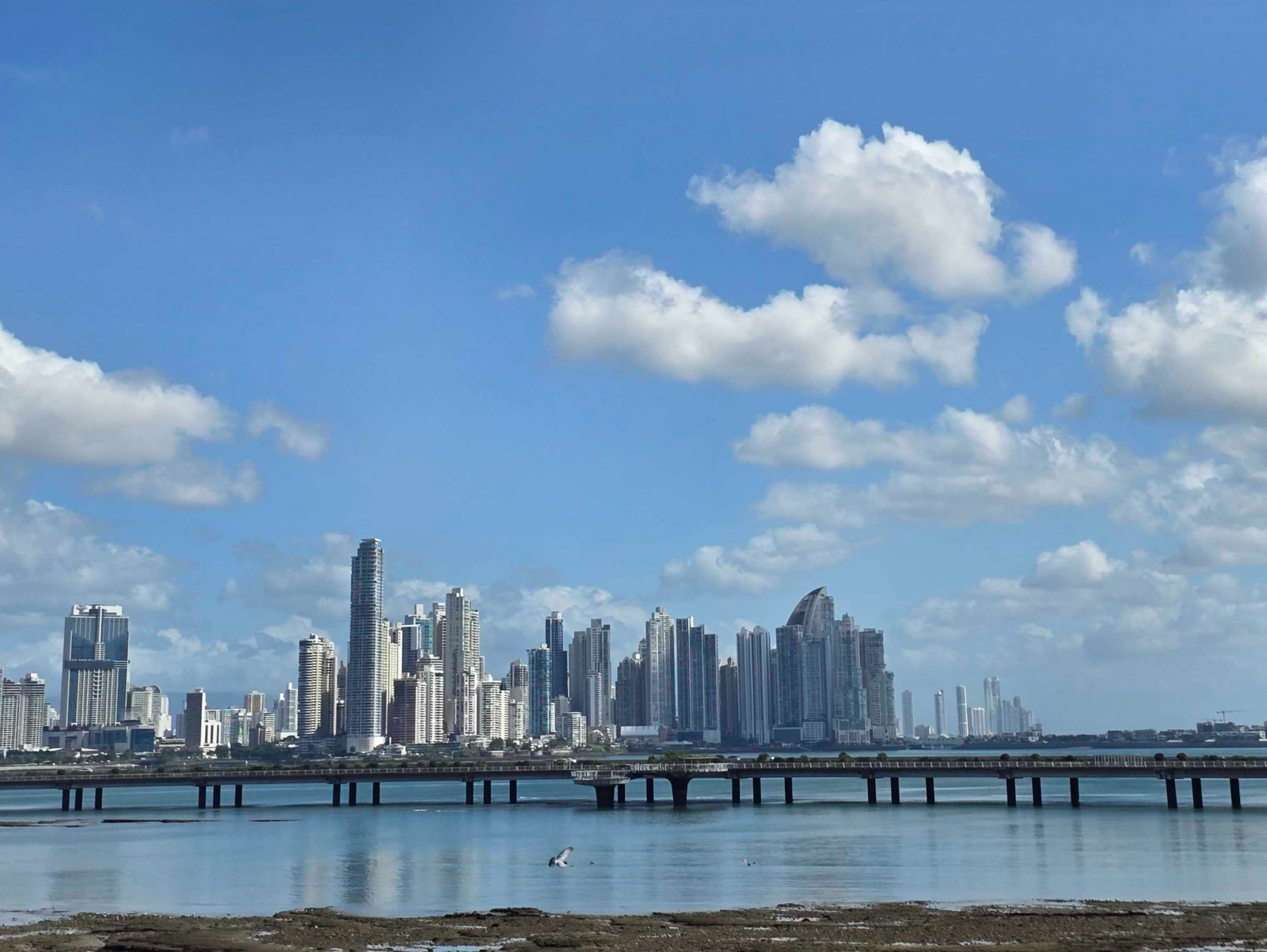
Katarina Hall

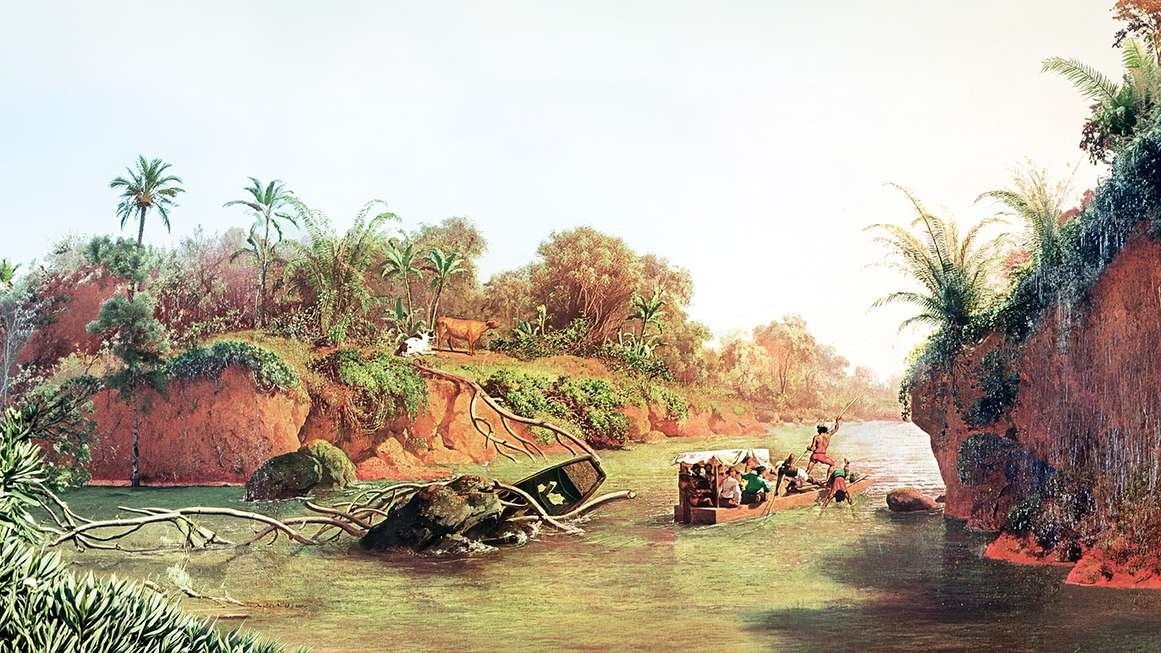
Long before modern borders, indigenous peoples used the narrow 50-mile isthmus to move goods between the Atlantic and Pacific. Trade networks followed rivers and overland routes, linking communities and facilitating the exchange of goods such as salt, cacao, feathers, ceramics, and obsidian.

The narrow geography defined Panama’s value. The Spanish recognized this almost immediately. After arriving in the 16th century, they built directly on existing indigenous trade routes, transforming the isthmus into a central artery of imperial commerce. Gold and silver from Peru crossed from the Pacific to Caribbean ports, where galleon ships waited to carry the goods to Europe. Later on, goods from Asia also crossed the isthmus, linking the Far East to European markets.

When imperial trade declined in the 18th century, Panama declined with it. Its next revival came not from ideology, but from demand. In the mid-19th century, the California Gold Rush created an urgent need for faster Atlantic-Pacific crossings, and Panama’s geography again made it indispensable.

The Panama Railroad, completed in 1855, connected the two oceans in hours rather than weeks. It was the first true transcontinental railroad in the Americas. Passengers, cargo, and capital flooded the region, reinforcing a familiar lesson: The movement of goods and people was Panama’s comparative advantage.

The canal was the next logical step.

French engineers failed to build it in the late 19th century, undone by disease, landslides, and technical limits. The United States took over after Panama separated from Colombia in 1903, beginning construction in 1904. When the canal opened in 1914, it rewired global trade. Shipping routes shortened and costs fell. Panama once again anchored itself to the movement of the world.

For much of the 20th century, the Canal Zone functioned as a U.S. enclave, limiting Panama’s control over its most valuable asset. Domestic politics were often unstable, culminating in the military dictatorship of Manuel Noriega in the 1980s and the economic isolation that resulted.

Even so, Panama’s role as a trading crossroads proved more resilient than its politics. The Colón Free Trade Zone, established in 1948, grew into one of the world’s largest free trade zones, while ports, reexport businesses, and financial services developed around the canal.

After Noriega’s removal and the restoration of civilian rule, the 1990s marked a period of institutional stabilization. When the canal was transferred back to Panamanian control in 1999, Panama gained the ability to align control of the waterway with an economic model already in place.

What followed was integration and scale. Ports, logistics parks, free trade zones, and an airline hub coalesced into a single connective platform for the Americas. The canal’s expansion in 2016, with new locks allowing larger ships to pass through, accelerated that model. Panama developed one of the highest gross domestic products per capita in Latin America by leaning harder into trade.

More than a century after it opened, the Panama Canal still carries roughly 5 percent of global maritime trade, including 40 percent of U.S. container traffic. That scale explains why the canal keeps resurfacing in geopolitical debates.

In recent years, trade routes have been reframed as strategic assets, and openness as a liability. Tariffs, industrial policy, and protectionism have returned to the center of political life. President Donald Trump’s suggestion that the U.S. should take back the canal on the grounds that China now operates it fits squarely within that unfortunate shift.

Panama City offers a different model. Its economy was not built by shielding domestic industry or weaponizing access, but by making movement of goods, capital, and people easier. The city’s skyline, ports, and constant flow of ships reflect an economy designed around connection rather than control.

This article originally appeared in print under the headline “Panama City: Made by Trade.”

Read the full article here

Fact Checker

Verify the accuracy of this article using AI-powered analysis and real-time sources.

Get Your Fact Check Report

Enter your email to receive detailed fact-checking analysis

5 free reports remaining

Continue with Full Access

You've used your 5 free reports. Sign up for unlimited access!

Already have an account? Sign in here

#NarrativeControl #OpenDebate #PoliticalDebate #PublicDiscourse #PublicOpinion
Share. Facebook Twitter Pinterest LinkedIn Tumblr Email Telegram Copy Link
News Room
  • Website
  • Facebook
  • X (Twitter)
  • Instagram
  • LinkedIn

The FSNN News Room is the voice of our in-house journalists, editors, and researchers. We deliver timely, unbiased reporting at the crossroads of finance, cryptocurrency, and global politics, providing clear, fact-driven analysis free from agendas.

Related Articles

Cryptocurrency & Free Speech Finance

Morning Minute: NFTs Storm Back, Led by Bored Apes

10 minutes ago
Media & Culture

America Is Losing Its Allure for the World’s Migrants

35 minutes ago
Cryptocurrency & Free Speech Finance

Western Union to Launch Solana-Based Stablecoin Plus ‘Stable Card’ Next Month

1 hour ago
Media & Culture

Brickbat: Partners in Crime

4 hours ago
Media & Culture

What To Do With AI-Generated Legal Scholarship?: Part 2

6 hours ago
Debates

What Really Causes Recessions?

10 hours ago
Add A Comment
Leave A Reply Cancel Reply

Editors Picks

Kbank Tests Ripple Wallet For Remittances In South Korea

9 minutes ago

Morning Minute: NFTs Storm Back, Led by Bored Apes

10 minutes ago

America Is Losing Its Allure for the World’s Migrants

35 minutes ago

EU releases 20th sanctions package against Russia introducing specific crypto bans

1 hour ago
Latest Posts

Western Union to Launch Solana-Based Stablecoin Plus ‘Stable Card’ Next Month

1 hour ago

Long Before the Canal, Global Trade Built Panama City

2 hours ago

88 people charged over 12 crypto wrench attacks in France

3 hours ago

Subscribe to News

Get the latest news and updates directly to your inbox.

At FSNN – Free Speech News Network, we deliver unfiltered reporting and in-depth analysis on the stories that matter most. From breaking headlines to global perspectives, our mission is to keep you informed, empowered, and connected.

FSNN.net is owned and operated by GlobalBoost Media
, an independent media organization dedicated to advancing transparency, free expression, and factual journalism across the digital landscape.

Facebook X (Twitter) Discord Telegram
Latest News

BTC price hits wall at $80,000, one analyst says the pullback is temporary: Crypto Daily

6 minutes ago

Kbank Tests Ripple Wallet For Remittances In South Korea

9 minutes ago

Morning Minute: NFTs Storm Back, Led by Bored Apes

10 minutes ago

Subscribe to Updates

Get the latest news and updates directly to your inbox.

© 2026 GlobalBoost Media. All Rights Reserved.
  • Privacy Policy
  • Terms of Service
  • Our Authors
  • Contact

Type above and press Enter to search. Press Esc to cancel.

🍪

Cookies

We and our selected partners wish to use cookies to collect information about you for functional purposes and statistical marketing. You may not give us your consent for certain purposes by selecting an option and you can withdraw your consent at any time via the cookie icon.

Cookie Preferences

Manage Cookies

Cookies are small text that can be used by websites to make the user experience more efficient. The law states that we may store cookies on your device if they are strictly necessary for the operation of this site. For all other types of cookies, we need your permission. This site uses various types of cookies. Some cookies are placed by third party services that appear on our pages.

Your permission applies to the following domains:

  • https://fsnn.net
Necessary
Necessary cookies help make a website usable by enabling basic functions like page navigation and access to secure areas of the website. The website cannot function properly without these cookies.
Statistic
Statistic cookies help website owners to understand how visitors interact with websites by collecting and reporting information anonymously.
Preferences
Preference cookies enable a website to remember information that changes the way the website behaves or looks, like your preferred language or the region that you are in.
Marketing
Marketing cookies are used to track visitors across websites. The intention is to display ads that are relevant and engaging for the individual user and thereby more valuable for publishers and third party advertisers.