Close Menu
FSNN | Free Speech News NetworkFSNN | Free Speech News Network
  • Home
  • News
    • Politics
    • Legal & Courts
    • Tech & Big Tech
    • Campus & Education
    • Media & Culture
    • Global Free Speech
  • Opinions
    • Debates
  • Video/Live
  • Community
  • Freedom Index
  • About
    • Mission
    • Contact
    • Support
Trending

A Flashback On The Two-Year Clause

26 minutes ago

Angolan journalist harassed, illegally detained for 4 days for protest coverage

39 minutes ago

Journalist’s lawsuit prompts FAA to abandon no fly zone near DHS vehicles

52 minutes ago
Facebook X (Twitter) Instagram
Facebook X (Twitter) Discord Telegram
FSNN | Free Speech News NetworkFSNN | Free Speech News Network
Market Data Newsletter
Friday, April 17
  • Home
  • News
    • Politics
    • Legal & Courts
    • Tech & Big Tech
    • Campus & Education
    • Media & Culture
    • Global Free Speech
  • Opinions
    • Debates
  • Video/Live
  • Community
  • Freedom Index
  • About
    • Mission
    • Contact
    • Support
FSNN | Free Speech News NetworkFSNN | Free Speech News Network
Home»News»Media & Culture»Will the Eleventh Circuit Allow the Endangered Species Act to Commandeer the Florida Department of Environmental Protection?
Media & Culture

Will the Eleventh Circuit Allow the Endangered Species Act to Commandeer the Florida Department of Environmental Protection?

News RoomBy News Room1 hour agoNo Comments5 Mins Read1,849 Views
Share Facebook Twitter Pinterest Copy Link LinkedIn Tumblr Email VKontakte Telegram
Will the Eleventh Circuit Allow the Endangered Species Act to Commandeer the Florida Department of Environmental Protection?
Share
Facebook Twitter Pinterest Email Copy Link

Listen to the article

0:00
0:00

Key Takeaways

Playback Speed

Select a Voice

New Hampshire is not the only state subject to court-ordered commandeering. Next week, the U.S. Court of Appeals for the Eleventh Circuit will hear oral argument in Bear Warriors United v. Lambert, in which Florida is appealing a district court order effectively commandeering the state under the Endangered Species Act.

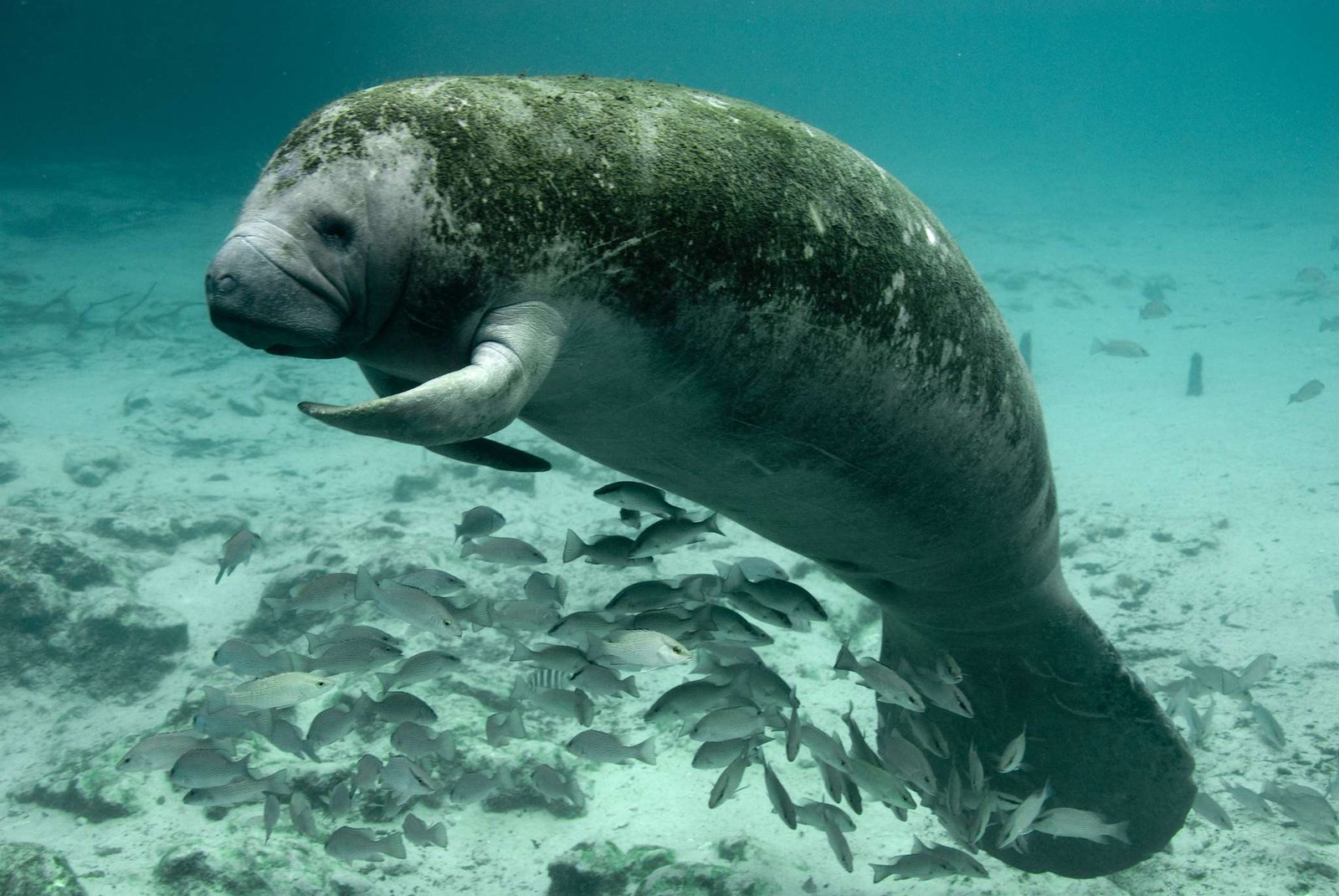
Bear Warriors United (BWU) is an environmental organization “dedicated to defending Florida’s wildlife and serving as a powerful voice for nature.” Among the species BWU seeks to protect is the manatee, which is currently listed as a “threatened” species under the Endangered Species Act (ESA).

In 2022, BWU filed suit against the Florida Department of Environmental Protection (FDEP) alleging that it was violating the ESA by failing to adopt and enforce sufficiently stringent regulations governing nitrogen discharges from septic tanks and wastewater treatment plants into the Indian River Lagoon, which is frequented by manatees. This failure, BWU alleges, contributes to eutrophication and the loss of seagrasses upon which the manatees rely and is thus a “take” under Section 9 of the ESA, which prohibits actions that “harm” listed species.

At heart, BWU’s claim is that the FDEP is “taking” manatees because it is failing to control the private and other activities that threaten manatee populations. As the district court noted, it is “FDEP’s ongoing failure to use its authority to regulate” more stringently that is at issue. Therein lies the problem.

There is reasonable debate about the extent to which the ESA’s definition of harm encompasses conduct that affects species indirectly. The Supreme Court embraced a relatively broad definition of “harm” in the Sweet Home decision that encompasses habitat modification that, in turn, impairs the feeding, breeding or nesting activity of listed species. Relying upon this definition, some courts have concluded that omissions–in this case, failure to prevent activities that could adversely affect species–qualify as “harm.” This is a controversial conclusion, however, and the Trump Administration has proposed narrowing that definition.

Whatever the proper definition of “harm” is under the ESA, BWU’s claim has a larger problem: Under its theory, state governments are obligated to use their regulatory authority to enforce a federal regulatory scheme. This is not a case in which effluent from a state-run sewage treatment plant or other state activities are allegedly harming a listed species. It instead involves a state failing to use its sovereign regulatory authority in a manner that serves the federal government’s goals. This is textbook commandeering. Thus even if one is inclined to accept the broad definition of “harm” that some courts have accepted, it cannot be enforced against state governments in this fashion.

The district court dismissed Florida’s commandeering concerns in a cavalier (and somewhat incoherent) fashion. After noting in one order that “the anticommandeering doctrine does not bar federal laws that ‘regulate state activities, rather than seeking to control or influence the manner in which States regulate private parties'” (quoting Reno v. Condon), the court proceeded to accept BWU’s argument that the ESA’s take prohibition could be used to control how FDEP regulates private parties. In another order the court correctly noted that “the anticommandeering doctrine does not apply when Congress evenhandedly regulates an activity in which both States and private actors engage” (quoting Murphy v. NCAA), but somehow missed that regulating private septic systems and wastewater treatment plants is not “an activity in which both States and private actors engage.” It is, rather, precisely the sort of exercise of sovereign authority that only governments engage in, and is thus precisely what the anticommandeering doctrine protects from federal control.

This is not the first time a lower court has interpreted the ESA in a manner that violates the anticommandeering doctrines. In Strahan v. Coxe (1997), the U.S. Court of Appeals for the First Circuit concluded Massachusetts could be required to revoke licenses and permits for gillnet and lobster pot fishing under the ESA and Marine Mammal Protection Act without violating the anticommandeering doctrine. In the First Circuit’s view, this was just federal supremacy in action, and the state was merely required to comply with federal law. But this misunderstands the dynamic. There is no question a state cannot immunize private action from federal prohibition, but this does not mean a state can be required to regulate or inhibit activity the federal government wishes to control, and this is true even if the state chooses to act within the relevant policy space. This is as true of gillnets and nitrogen discharges as it is of marijuana and gambling.

Although Strahan was wrong (as I discussed here at pp. 428-30), district courts have largely followed the First Circuit’s reasoning. This has occurred even though, in 2018, in Murphy v. NCAA, the Supreme Court expressly held that the anticommandeering doctrine prevents the federal government from barring states from permitting a federally targeted activity (in that case, gambling) under state law.

The same principle applies in the environmental context. The federal government is free to regulate nitrogen discharges and other activities that harm listed species, and even to authorize citizen suits to assist in federal law’s enforcement. It cannot require states to prohibit such activities, however. And just because a state has chosen to create its own regulatory apparatus, that apparatus cannot be required to apply standards dictated by federal law. Thus however expansively one is inclined to interpret the ESA’s take prohibition, it cannot be applied as the district court did here.

I will be curious to hear how the Eleventh Circuit engages with these arguments next week, and whether it recognizes the errors of the First Circuit’s analysis. There seems to be lots of confusion about commandeering these days.  I also have a draft manuscript (“Conservation Commandeering”) which goes into these arguments in greater depth. It will go up on SSRN soon. Until then, stay tuned.

Read the full article here

Fact Checker

Verify the accuracy of this article using AI-powered analysis and real-time sources.

Get Your Fact Check Report

Enter your email to receive detailed fact-checking analysis

5 free reports remaining

Continue with Full Access

You've used your 5 free reports. Sign up for unlimited access!

Already have an account? Sign in here

#Journalism #MediaBias #NarrativeControl #OpenDebate #PoliticalCoverage
Share. Facebook Twitter Pinterest LinkedIn Tumblr Email Telegram Copy Link
News Room
  • Website
  • Facebook
  • X (Twitter)
  • Instagram
  • LinkedIn

The FSNN News Room is the voice of our in-house journalists, editors, and researchers. We deliver timely, unbiased reporting at the crossroads of finance, cryptocurrency, and global politics, providing clear, fact-driven analysis free from agendas.

Related Articles

Media & Culture

A Flashback On The Two-Year Clause

26 minutes ago
Legal & Courts

Journalist’s lawsuit prompts FAA to abandon no fly zone near DHS vehicles

52 minutes ago
Cryptocurrency & Free Speech Finance

AI Agents Already Run a Fifth of DeFi, But Still Lose to Humans at Trading

57 minutes ago
Cryptocurrency & Free Speech Finance

Kraken Parent Payward Agrees to Acquire Derivatives Exchange Bitnomial for $550 Million

2 hours ago
Media & Culture

FISA Reform Blues

2 hours ago
Cryptocurrency & Free Speech Finance

SEC Officials Push US Crypto Ambitions in Debut Podcast Episode

3 hours ago
Add A Comment
Leave A Reply Cancel Reply

Editors Picks

Angolan journalist harassed, illegally detained for 4 days for protest coverage

39 minutes ago

Journalist’s lawsuit prompts FAA to abandon no fly zone near DHS vehicles

52 minutes ago

Stellar (XLM) gains 1.5%, leading index higher

53 minutes ago

Record Stocks Highs And Cooling Volatility Spark $88K Bitcoin Price Target

54 minutes ago
Latest Posts

AI Agents Already Run a Fifth of DeFi, But Still Lose to Humans at Trading

57 minutes ago

Will the Eleventh Circuit Allow the Endangered Species Act to Commandeer the Florida Department of Environmental Protection?

1 hour ago

Michael Saylor’s MSTR bitcoin (BTC) holdings are back in profit

2 hours ago

Subscribe to News

Get the latest news and updates directly to your inbox.

At FSNN – Free Speech News Network, we deliver unfiltered reporting and in-depth analysis on the stories that matter most. From breaking headlines to global perspectives, our mission is to keep you informed, empowered, and connected.

FSNN.net is owned and operated by GlobalBoost Media
, an independent media organization dedicated to advancing transparency, free expression, and factual journalism across the digital landscape.

Facebook X (Twitter) Discord Telegram
Latest News

A Flashback On The Two-Year Clause

26 minutes ago

Angolan journalist harassed, illegally detained for 4 days for protest coverage

39 minutes ago

Journalist’s lawsuit prompts FAA to abandon no fly zone near DHS vehicles

52 minutes ago

Subscribe to Updates

Get the latest news and updates directly to your inbox.

© 2026 GlobalBoost Media. All Rights Reserved.
  • Privacy Policy
  • Terms of Service
  • Our Authors
  • Contact

Type above and press Enter to search. Press Esc to cancel.

🍪

Cookies

We and our selected partners wish to use cookies to collect information about you for functional purposes and statistical marketing. You may not give us your consent for certain purposes by selecting an option and you can withdraw your consent at any time via the cookie icon.

Cookie Preferences

Manage Cookies

Cookies are small text that can be used by websites to make the user experience more efficient. The law states that we may store cookies on your device if they are strictly necessary for the operation of this site. For all other types of cookies, we need your permission. This site uses various types of cookies. Some cookies are placed by third party services that appear on our pages.

Your permission applies to the following domains:

  • https://fsnn.net
Necessary
Necessary cookies help make a website usable by enabling basic functions like page navigation and access to secure areas of the website. The website cannot function properly without these cookies.
Statistic
Statistic cookies help website owners to understand how visitors interact with websites by collecting and reporting information anonymously.
Preferences
Preference cookies enable a website to remember information that changes the way the website behaves or looks, like your preferred language or the region that you are in.
Marketing
Marketing cookies are used to track visitors across websites. The intention is to display ads that are relevant and engaging for the individual user and thereby more valuable for publishers and third party advertisers.