

 Freedom Index
Listen to the article
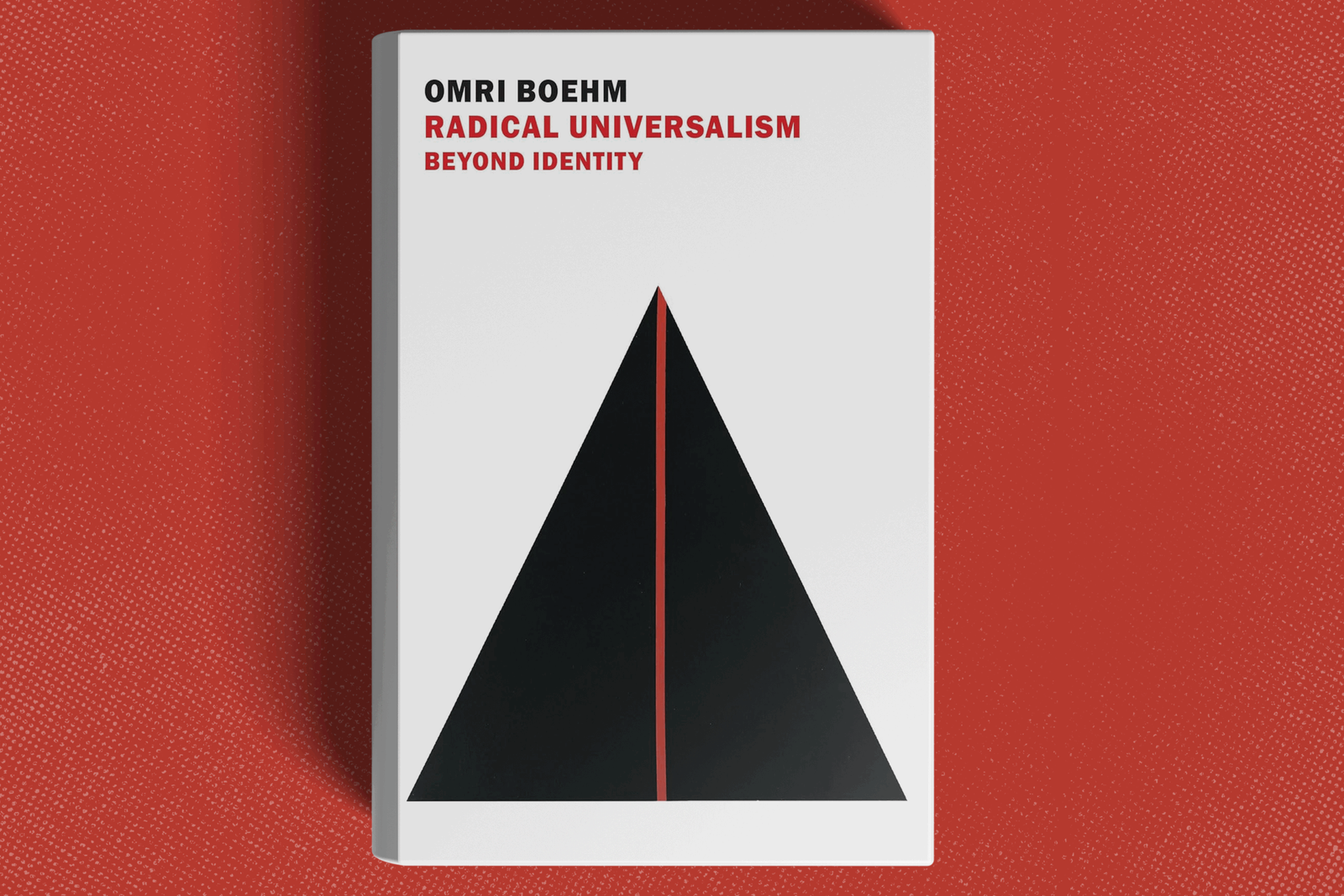
Radical Universalism: Beyond Identity, by Omri Boehm, New York Review Books, 192 pages, $17.95
“We hold these truths to be self-evident,” the Declaration of Independence famously announces: “that all men are created equal, that they are endowed by their Creator with certain unalienable Rights, that among these are Life, Liberty and the pursuit of Happiness.”
“What grounds the truths in the declaration’s legendary second sentence, let alone their self-evidence?” asks Omri Boehm, a philosopher at the New School for Social Research. He sets out to answer that question in Radical Universalism: Beyond Identity, a philosophically dense but intellectually rewarding book.
Boehm’s inquiry into the moral foundations of universal human dignity is all the more urgent as both right and left embrace the politics of identity. The neo-reactionary right speaks of blood, soil, and heritage; the politically correct left of sex, gender, and race. They are ideological antagonists, but each seeks to slice humanity into warring minitribes. Boehm also takes to task progressive liberals whose affirmation of universal human dignity rests unsteadily on a fickle democratic consensus.
To make his case for universal human dignity, Boehm delves into the moral philosophy of Immanuel Kant, the meaning of the Declaration of Independence, and the biblical story of the binding of Isaac. He concludes that there is a fundamental moral freedom—and duty—to disobey unjust commands.
Libertarians certainly embrace the preeminent importance of human dignity. “In the liberal tradition, the principle of human dignity is the bedrock upon which all other tenets rest,” the Institute for Humane Studies proclaims. “This radical equality is what separates classical liberalism from other schools of thought and serves as the moral justification for its broader principles.”
The late Cato Institute scholar David Boaz agreed: “Libertarian thought emphasizes the dignity of each individual, which entails both rights and responsibility.” Libertarians will also appreciate Kant’s conclusion in his The Metaphysics of Ethics: “The law or universal rule of right is, So act that the use of thy freedom may not circumscribe the freedom of any other.”
Human dignity, Kant argues, rests on the fact that we are the only rational creatures on Earth; as such, we can be guided by and can subject ourselves to moral claims. People are “free because reasons and justifications can determine their behavior, not just causes,” explains Boehm. “Moral precept can motivate them, not just interest.”
Because people are free moral agents, it is therefore illegitimate for anyone to treat other human beings as mere objects that can be used and commanded. Kant famously encapsulated this insight in the second version of his categorical imperative: “So act as to treat humanity, whether in thine own person or in that of any other, in every case as an end withal, never as means only.” In other words, we should recognize and honor the intrinsic value, autonomy, and rational agency of our fellow human beings.
Boehm cites Kant’s critical distinction between a price and a dignity. Objects can be priced, whereas moral capability endows human beings with an inner worth that is beyond pricing. Put differently: Commodities or tools possess value only in relation to human needs or desires, while things with dignity possess worth in themselves, regardless of utility.
“Radical universalism,” Boehm argues, rests on the truth that human dignity deriving from the fact of an individual’s free moral agency stands above any concrete anthropological, historical, sociological, psychological, or biological facts. In other words, human dignity transcends any claims based on mere identity.
Boehm then offers a Kantian reading of the Declaration of Independence and its self-evident truths that “all men are created equal” and are endowed with “certain unalienable rights.” Unalienable rights mean rights that cannot be taken away, denied, or transferred to another person. Logically speaking, this precludes slavery—and Boehm traces how the force of the declaration’s moral claims led eventually to the recognition of slavery’s evils and to its violent abolition in the United States.
While Kant retained some of the racist beliefs of his 18th century contemporaries, he also argued that “there can be nothing more horrendous than that the action of a human being shall stand under the will of another. Hence no antipathy can be more natural than that which a human being has towards slavery.”
In his esoteric interpretation of the biblical story of the binding of Isaac, Boehm makes an even more radical claim about moral universalism. In the traditional reading, which Kant accepted and criticized, Abraham’s willingness to sacrifice his son is the ultimate example of obedience to God. Boehm offers an alternative interpretation, arguing that language choices in the verses suggest that the part of the story where an angel intervenes to forestall Isaac’s sacrifice was interpolated into the text later. In the original version, he concludes, Abraham rejects God’s command to kill his son as unjust and disobeys, releasing Isaac and sacrificing a ram.
In other words, Abraham chooses justice over an unjust command. As free moral agents, we have a duty to disobey when we are commanded to violate human dignity, even if those commands come from God. “The capacity to think freely—to think for oneself—replaces God or nature as the ground for radical universalism,” writes Boehm.
Boehm believes that modern progressive liberals have made a profound error in replacing Kant’s duty to moral truth with appeals to “consensus, interest and opinion.” Boehm is particularly critical of the views of the pragmatist philosopher John Dewey. Another philosopher, Lowell Nissen, summarized Dewey’s theory of truth as the notion “that an idea is true if it works and that truth is determined by its consequences.” Current versions of progressivism may “work” to seem inclusive by purporting to extend particular rights to racial, ethnic, and sexual minorities. But making moral “truth” contingent on what works ultimately subjects minorities and outsiders to authority wielded in the name of the “majority’s common sense, shared experience, interests, or consensus-based legitimate laws.”
From time immemorial, convention and alleged common sense “worked” to justify slavery, patriarchy, imperialism, religious persecution, genocide, and innumerable wars of conquest and plunder. To the extent that moral consideration existed, it was frequently meant only for members of the in-group.
If we don’t recognize the principle of universal human dignity, Boehm warns, identitarian politics will lead us back to a world of perpetually warring tribes.
Read the full article here
Fact Checker
Verify the accuracy of this article using AI-powered analysis and real-time sources.