

 Freedom Index
Listen to the article
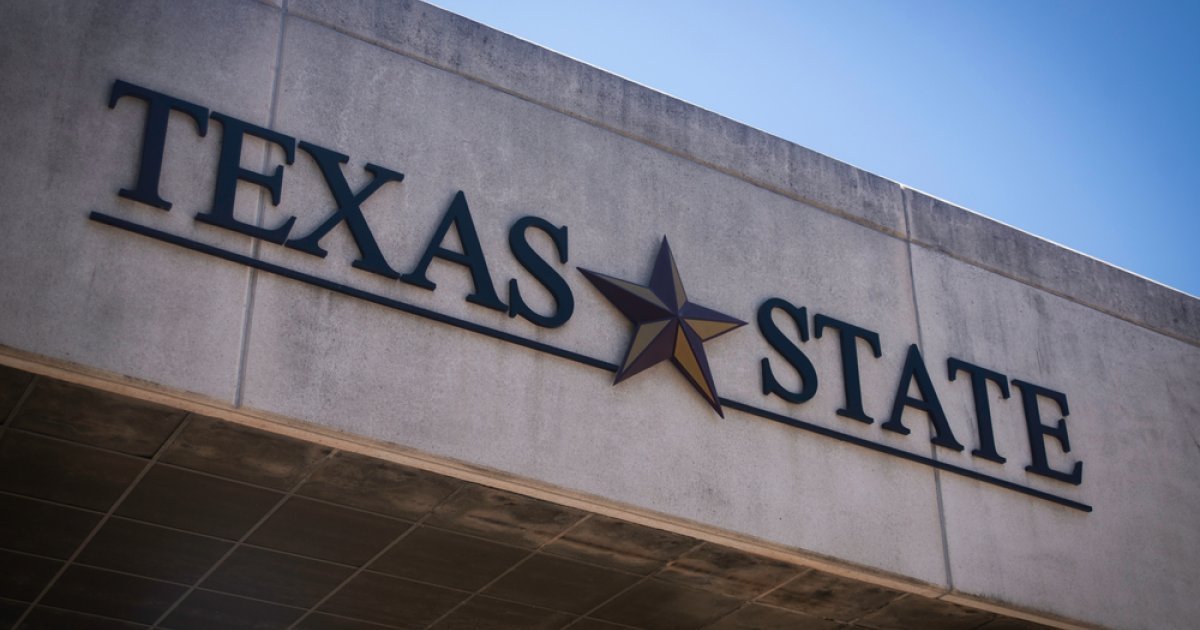
In June 2024, the philosopher Idris Robinson traveled from Texas to North Carolina to give a talk on Palestinian resistance. Nearly a year later, Texas State University fired him for it. When historian Thomas Alter spoke at an online socialist conference, the school fired him too, reinstated him, and then fired him again. Now, in separate First Amendment lawsuits, the two professors are taking Texas State to court.
Robinson delivered his 2024 talk, “Strategic Lessons on the Palestinian Resistance,” at the Another Carolina Anarchist Bookfair (ACAB) in Asheville, North Carolina. During his talk, Robinson described “terrorism murder” as “divine violence” and praised the October 7 attacks on Israel. When the audience noticed three people livestreaming the event, two of them Jewish, the crowd attacked them and kicked them out. Robinson was giving his talk when the fight broke out. Whether Robinson told the crowd to stop, said nothing and just watched, or made jokes as the situation unfolded, his speech was protected by the First Amendment.
Local police investigated and three attendees later pleaded guilty to assault. But the police investigation did not name Robinson as a suspect or even a witness.
It took nearly a year, but eventually one of the three victims’ livestream appeared on Instagram. Texas State put Robinson on administrative leave shortly afterwards, saying it had received “multiple complaints and allegations regarding an incident that occurred in the summer of 2024.” One month later, they told him his contract would not be renewed.
It’s the end of internet anonymity as we know it (and I don’t feel fine)
Turkey’s push to end online anonymity is a warning that governments everywhere are inching toward a real-name internet.
Read More
Now, represented by First Amendment attorney Samantha Harris of the law firm Allen Harris, Robinson has filed suit against Texas State University, alleging a violation of his constitutional free-speech rights. JT Morris, a supervising senior attorney here at FIRE, is serving as local counsel. The lawsuit’s argument is simple: Robinson consistently received positive reviews and was on track for tenure. But after sharing his views off campus and as a private citizen, Texas State pushed him out over a social media pile-on.
Under the law, state universities don’t get to punish faculty simply for saying things that make people uncomfortable, r for attracting negative attention to the school. Universities, especially large public institutions like Texas State University, should encourage the robust discussion of public issues, even if they offend those off campus. To begin with, public schools are funded by taxpayers and therefore function as state actors. If a public school silences a professor, that’s government censorship and a direct violation of the First Amendment. But a university also exists to pursue truth. Indeed, “Truth” is one of the four words in Texas State University’s own motto. Pursuing truth wherever it leads means one must tolerate different perspectives. As John Stuart Mill wisely pointed out in On Liberty, even wildly incorrect views and opinions are critical to that process for one unavoidable reason: if you never examine alternative views, you have no way of knowing whether your own views are actually correct.
Robinson’s lawsuit comes on the heels of fellow faculty member Thomas Alter’s lawsuit against Texas State, which was filed last September. As mentioned above, Alter was fired (then reinstated, then fired again) after a video of him speaking at an online socialist conference went viral. In his talk, Alter said workers must organize so they are ready to “take power” when the revolution comes. “Without organization,” he asked, “how can anyone expect to overthrow the most bloodthirsty, profit-driven, mad organization in the history of the world — that of the U.S. government?”
The only possible category of unprotected speech this might call into is that of incitement–and it falls far, far short of the bar. The First Amendment protects most anti-government speech, even when it is really ugly or aggressive, and the only time “incitement” loses protection is when someone intends to spark immediate illegal action right now through their expression, and that said illegal action is actually likely to happen. Merely encouraging violence in general, in the future, or in some set of potential circumstances does not typically qualify. Famously, in Hess v. Indiana, the Supreme Court said that a protester’s controversial line that got him arrested — “we’ll take the fucking street later” — was protected. The speaker wasn’t calling for immediate action, but at some unspecified time in the future–“later.”
Earlier this week, Texas State community members protested in support of Robinson. In an absurd twist, an administrator confronted Alter, who was also there to support Robinson, and told him he was not allowed to protest on campus because he’s no longer affiliated with the university. Under a university policy adopted last September, individuals who are not affiliated with the university or sponsored by a student group are not allowed to protest on campus, except in very specific free speech zones. The same policy also prohibits expressive activities on campus between the hours of 10 p.m. and 8 a.m. (FIRE has argued that this policy violates the First Amendment, as it is unnecessarily broad and empowers administrators to censor protected speech, and last October we also successfully obtained a preliminary injunction issued preventing the University of Texas System from enforcing this ban on expressive activities between 10 p.m. and 8 a.m.)
Is it safe to use Signal?
The encrypted messaging app Signal is back in the news — and this time, people are asking: Will using it get me arrested?
Read More
Alter argued that the First Amendment trumped university policy. (It does.) The administrator eventually allowed him to stay, but took away his sign and told him not to participate in the protest. So the official position of the state was that he could stay in the free speech zone and be near the protest, but he just couldn’t participate. This makes no sense, but is the sort of absurd outcome that can happen when a university institutes such sweeping restrictions on free speech on campus. Public universities cannot wave a magic wand and severely restrict anyone unaffiliated with the university from demonstrating in public areas on campus. As public institutions bound by the First Amendment, they must respect the rights of members of the public to demonstrate in certain areas on campus, and they cannot arbitrarily cabin those demonstrations to one or two small places on campus.
Sadly, these two lawsuits are shocking but not at all surprising. Texas universities have been flouting the First Amendment for months. And while people are fighting back, there’s still no end in sight. Now faculty members must go to court to vindicate their First Amendment rights–and the rights of generations of students and faculty to come.
Read the full article here
Fact Checker
Verify the accuracy of this article using AI-powered analysis and real-time sources.