

 Freedom Index
Listen to the article
On March 26, the International Olympic Committee (IOC) announced a new policy that ensures female Olympic sports categories will be reserved for actual female athletes, as opposed to trans-identified men. Under the new policy, women will be required to prove their eligibility with a cheek swab or blood test—a simple one-time procedure that’s less intrusive than the drug-testing regimens that Olympians have submitted to for decades.
The new policy will be warmly greeted by the substantial majority of ordinary people—on both sides of the political spectrum—who embrace the common-sense view that men should not be allowed to steal roster and podium spots from women. As the IOC notes in its new policy document, at high levels of competition,
there is a 10-12 percent male performance advantage in most running and swimming events… a 20+ percent male performance advantage in most throwing and jumping events, [and a] male performance advantage [that] can be greater than 100 per cent in events that involve explosive power, e.g. in collision, lifting and punching sports.
Unfortunately, this common-sense majority view isn’t the fashionable one—at least not in Canada, where former prime minister Justin Trudeau turned the nonsensical slogan “trans women are women” into state policy. Even now that Trudeau’s gone, his social-justice postures are still echoed by Canadian activist groups and academics, many of whom went apoplectic in recent months, following the decision of Alberta’s provincial government to finally step in and protect female sports categories—something the federal government has refused to do.
And with a disturbing rise in anti-transgender hate here in Canada and around the world recently, I want to be very clear about one more thing: Trans women are women. We will always stand up to this hate – whenever and wherever it occurs.
— Justin Trudeau (@JustinTrudeau) March 8, 2023
Numerous academics have tried to argue that the male competitive advantage in sports is a “myth.” Egale, a state-funded group mandated to support what Canada now calls “2SLGBTQI people,” suggested that excluding trans-identified men from female sports is really just a “grotesque” (and possibly even prurient) pretext to scrutinize young women’s bodies. Meanwhile, the CBC, Canada’s state-funded national broadcaster, has spent years instructing Canadians that the whole idea of separating humans into male and female categories is fuzzy to begin with—juxtaposing discussion of a “hermaphroditic ginger plant” and “sex-changing clownfish” with social-justice lectures from (human) “trans historians.”
Thankfully, Trudeau’s successor, Mark Carney, is much more interested in boosting trade, building pipelines, and strengthening Canada’s military than appearing on Canada’s Drag Race or babbling about the inspiring feats of “non-binary” athletes. And it was notable that when the IOC announced its new policy, the official response from Carney’s Secretary of State for Sport—a 2004 Olympic gold-medal sprint kayaker named Adam van Koeverden—was so muted and restrained as to be effectively meaningless.
Statement from Secretary of State van Koeverden on the International Olympic Committee decision regarding transgender women athletes
The Government of Canada believes in a sport system that provides opportunities for all Canadians, including the transgender community, to participate in sport and excel without discrimination
“We are aware of the International Olympic Committee’s recent policy decision,” van Koeverden wrote in a media release. “We will work closely with our sport partners to review the impact of this decision…Our priority is to ensure there is a path forward for sport in Canada that preserves the integrity and fairness of sport categories while promoting equal opportunities and respecting human rights.”
Van Koeverden pretty much said nothing, in other words. But given the garment-rending one might have expected from the genderwang clique that Trudeau had in his Cabinet (one of whom held an all-ages drag show on Parliament hill back in 2023), this nothing-burger of a press release seemed like a win.
Male or Female: There’s Nothing In Between
Since the dawn of our species, the evolution of two distinct sexes has been fundamental to human reproduction. There is no such thing as a ‘sex spectrum.’
It now appears that van Koeverden was biting his tongue on his boss’s orders. On Facebook, the Secretary of State for Sport went on something of a rant, accusing the IOC’s defenders of succumbing to the “notion that scary drag queens are winning women’s volleyball games”—an idea that he called “a stupid conservative pseudo fantasy.”
Van Koeverden also said that efforts to protect female sports categories were actually misogynistic, because they are about “policing women’s bodies.” And lest readers accuse him of mansplaining this whole issue, he told everyone that he constantly meets female athletes who say they agree with him.
🇨🇦 Secretary of State (Sport) @vankayak has not read Devine/Howe – actual @SportCanada_EN research? While Adam enjoys his status as an Olympic gold medallist, 🇨🇦 Melissa Bishop lost her chance coming 4th behind 3 male DSD athletes in 2016. That’s reality, not stupid fantasy Adam. pic.twitter.com/VbNcYTSJnO
— Alison Sydor 😈👻🐸 (@AlisonSydor) March 30, 2026
Given that van Koeverden’s department controls a $323-million budget that gets doled out to sports programs all across Canada, this latter claim sounds plausible: No doubt, subordinates and grant supplicants are more than happy to tell the boss just how wonderful his opinions are on a vast multitude of issues—including this one.
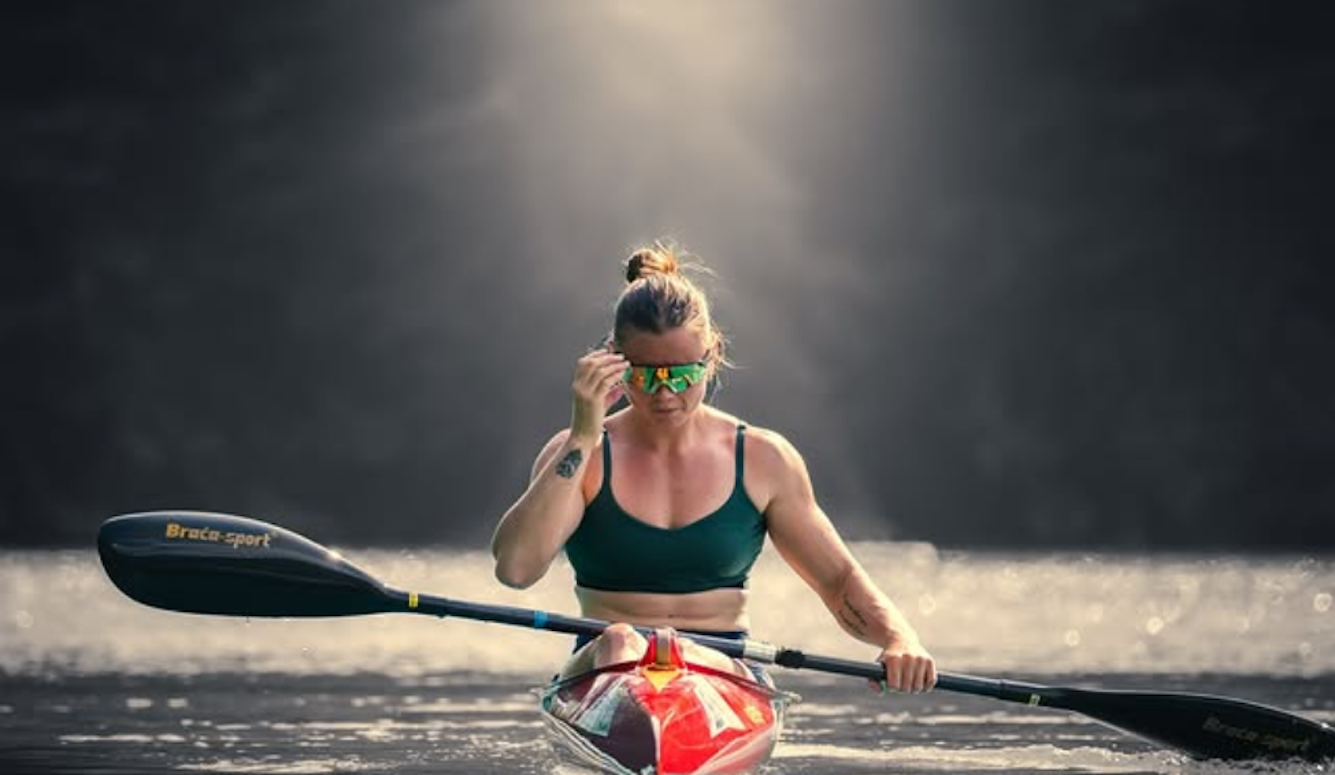
That said, it’s worth revisiting that magical moment at the 2004 Summer Olympics in Athens when van Koeverden won the olympic gold medal that would, in time, yield a high-profile public career.

His specialty event was the 500m sprint kayak, in which athletes use double-bladed paddles to propel narrow-beamed racing canoes. In the final round of the 2004 Olympic individual (K1) male competition, van Koeverden won with a time of 1:37.9, a half second faster than second-place Nathan Baggaley of Australia. The bronze medalist, Ian Wynne of the UK, was just a tenth of a second slower. Three other racers also broke the 1:40 mark.
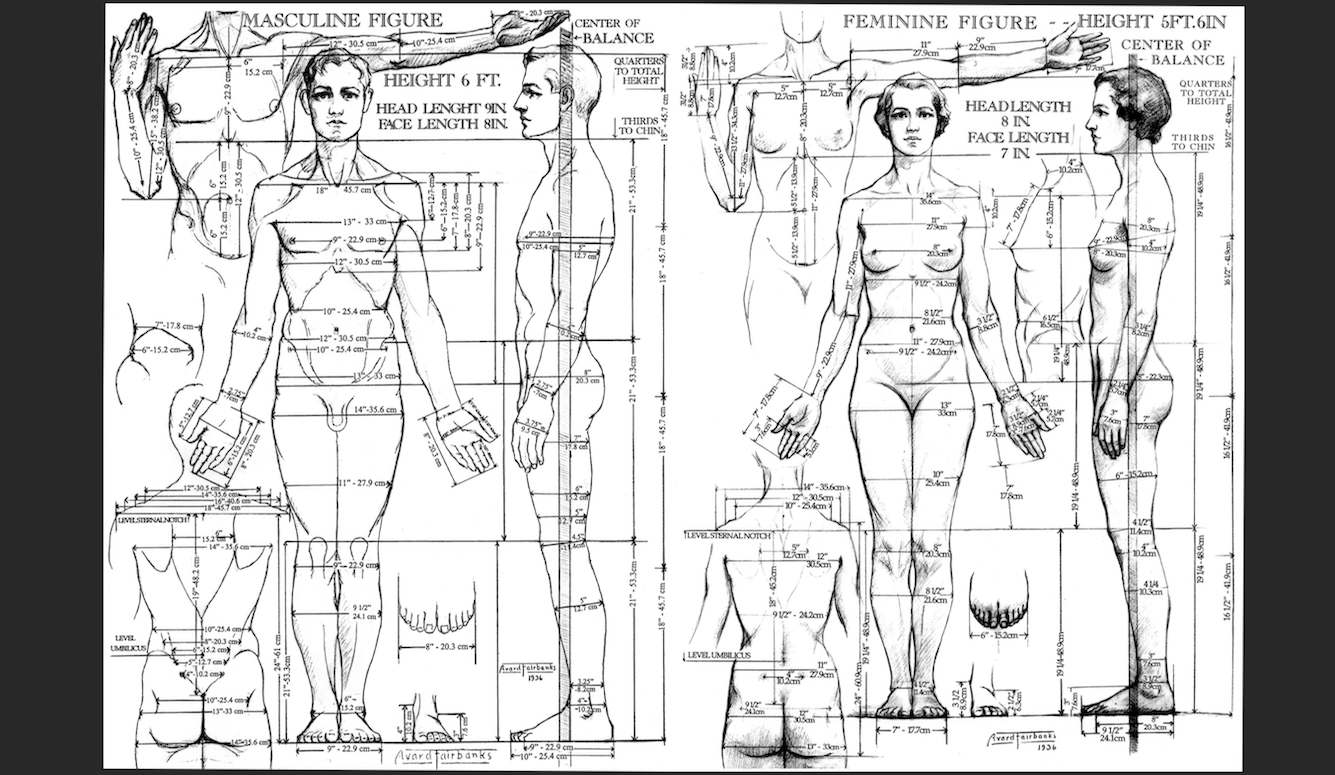
The Olympics also feature a women’s 500m sprint kayak event. And if the male athletic difference were indeed a “myth“—as many purported experts pretend to believe—one would expect the winning times in the two categories to be similar. But of course, they’re not. The 2004 gold medal winner in the women’s 500m sprint kayak was Natasa Janic of Hungary, with a time of 1:47.1—more than nine seconds (or almost 10%) slower than van Koeverden.
Which makes sense, given the enormous physical advantages that men have over women in a sport such as this, as summarized in the recent IOC policy statement. In a recently published paper titled, Performance Trends in Women and Men’s Canoe Sprint and Track Sprint Cycling, six Australian researchers examined results from 1,284 international events going back to the mid-2000s. They observed that women have participated in sprint kayak events at an elite level for generations; and yet the average male-female difference for such events has flatlined over the last 20 years at about 14%—even larger than the 9% gap in the 2004 500m sprint kayak results reported above.
Gee I wonder why “male athletes face no equivalent test”
Let’s think about that https://t.co/Ok6YGGWM0C
— Jonathan Kay (@jonkay) April 1, 2026
Nothing has changed since 2005. The men’s individual 500m sprint kayak world record, held by Tom Liebscher of Germany, is 1:35. For the women, it’s Aimee Fisher of Germany with a time of about 1:46—eleven seconds off the male world-record pace, and about eight seconds slower than the time van Koeverden recorded in Athens 22 years ago.
Sprint kayakers typically peak in their mid-to-late 20s. But it’s notable that even elite male teenagers who compete in the sport’s junior category finish races in times that would easily blow away the world’s best women. At last year’s K1 Junior Men 500m Canoe-Kayak Sprint World Championships, the top four finishers—all teenagers—posted faster times than any female competitor (of any age) had ever achieved in the sport’s history.
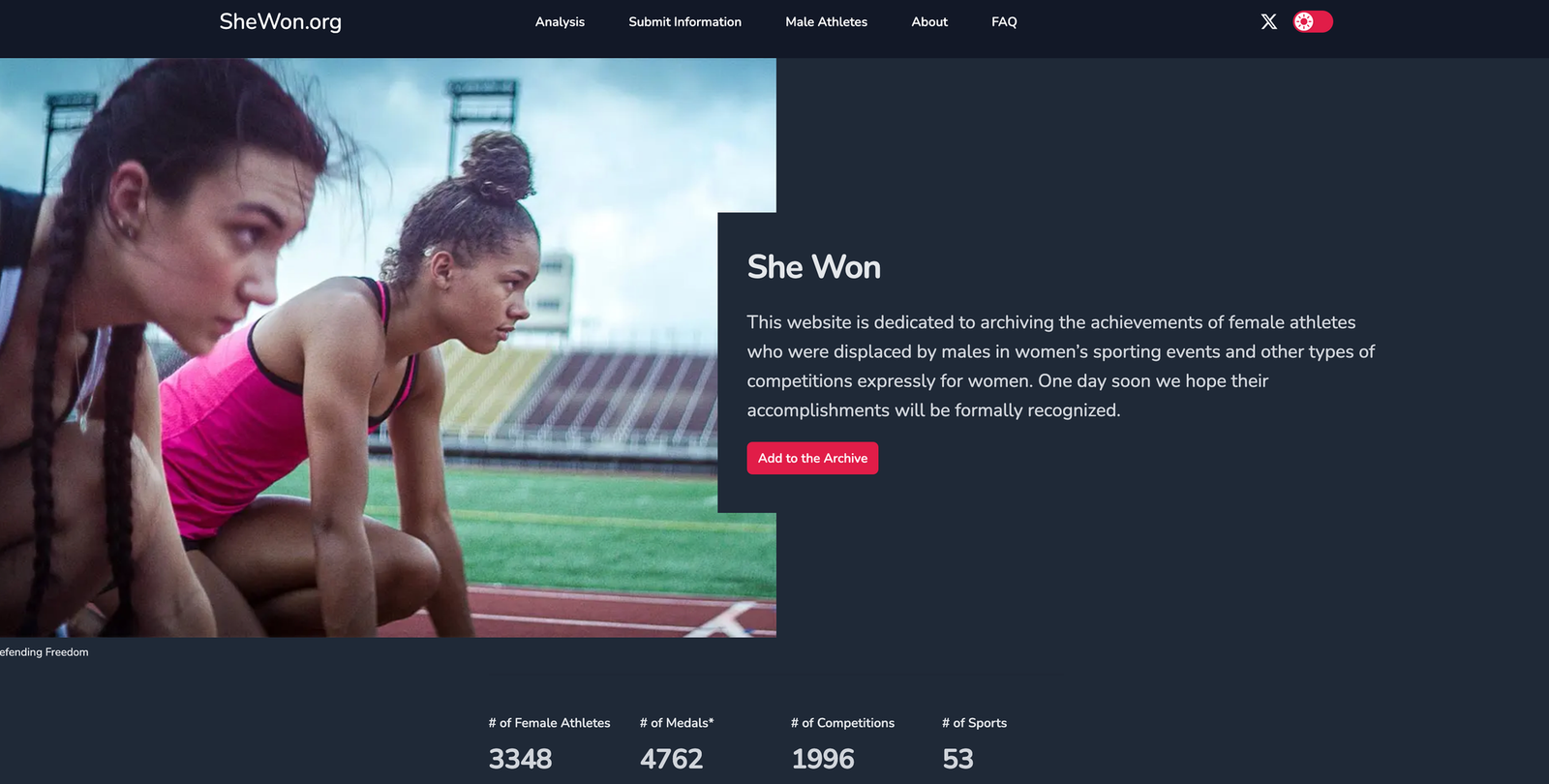
These are numbers that Canada’s Secretary of State for Sport might want to think about the next time he demeans the efforts of those seeking to protect the sanctity of female athletics. It’s wonderful that he’s been able to build a successful political career on the strength of his youthful athletic prowess. But women deserve the same opportunity. And we now know of more than 3,000 female athletes who’ve been displaced thanks to men who call themselves women.
Consider the case of the above-referenced Natasa Janic, the female gold-medal winner in the 2004 Olympic 500m spring kayak event. That year, she was named Hungarian Sportswoman of the Year, and developed a significant public profile, just like van Koeverden. But few people would know her name if even a small fraction of van Koeverden’s male teammates (or, theoretically, even van Koeverden himself) had declared themselves to be trans women, and taken the necessary steps to enter (and, of course, win) the female competition.
From what I can tell, van Koeverden not only thinks this outcome would be just fine—which is troubling enough. He also claims to be surrounded by women who think likewise—which is flat out absurd.
(Since 2022, the International Canoe Federation, the sport’s governing body, has been assembling “a dedicated working group of experts” to establish its first policy “on transgender athletes,” with a view toward aligning its rules with IOC standards. Given the IOC’s recent announcement, that task should now be extremely straightforward.)
Van Koeverden is perfectly correct to say that very few of these trans-identified men have made it as far as the Olympics. But that’s not for lack of trying. Lia Thomas, the trans-identified male swimmer who turned the 2022 NCAA swimming championships into a farce, gushed to media about her Olympic dreams. And she very might have achieved it had World Aquatics not changed its policies in ensure the female category is aligned with human biology. Other sports federations—such as the International Cycling Union, World Boxing Organization, and the World Athletics Council—have made similar moves.
What the IOC has done is hardly revolutionary: It’s effectively just an Olympic-level codification of rule changes being made at the sports-federation level. These rules are needed to keep men from cheating women out of the honours they deserve. And it’s a disgrace that the man who wears the title of “Secretary of State for Sport” has a problem with that.
Quillette invites thoughtful responses to its essays.
Selected responses are published once per week as part of a curated Letters to the Editor feature. If selected, letters appear under the contributor’s real name and may be edited for clarity and length.
To submit a letter for consideration, please email [email protected].
Read the full article here
Fact Checker
Verify the accuracy of this article using AI-powered analysis and real-time sources.