Close Menu
FSNN | Free Speech News NetworkFSNN | Free Speech News Network
  • Home
  • News
    • Politics
    • Legal & Courts
    • Tech & Big Tech
    • Campus & Education
    • Media & Culture
    • Global Free Speech
  • Opinions
    • Debates
  • Video/Live
  • Community
  • Freedom Index
  • About
    • Mission
    • Contact
    • Support
Trending

Jacob Siegel’s Error-Filled Book On ‘Censorship’ Got Fact-Checked. He’s Calling It Censorship.

5 minutes ago

Trump’s College Sports Executive Order Adds Chaos to an Already Wild Legal War

11 minutes ago

OpenAI CEO urges U.S. to prepare for AI ‘superintelligence’ risks and gains

28 minutes ago
Facebook X (Twitter) Instagram
Facebook X (Twitter) Discord Telegram
FSNN | Free Speech News NetworkFSNN | Free Speech News Network
Market Data Newsletter
Monday, April 6
  • Home
  • News
    • Politics
    • Legal & Courts
    • Tech & Big Tech
    • Campus & Education
    • Media & Culture
    • Global Free Speech
  • Opinions
    • Debates
  • Video/Live
  • Community
  • Freedom Index
  • About
    • Mission
    • Contact
    • Support
FSNN | Free Speech News NetworkFSNN | Free Speech News Network
Home»Cryptocurrency & Free Speech Finance»IMF Warns Tokenized Finance, Stablecoins Could Amplify Financial Crises
Cryptocurrency & Free Speech Finance

IMF Warns Tokenized Finance, Stablecoins Could Amplify Financial Crises

News RoomBy News Room2 hours agoNo Comments4 Mins Read1,566 Views
Share Facebook Twitter Pinterest Copy Link LinkedIn Tumblr Email VKontakte Telegram
IMF Warns Tokenized Finance, Stablecoins Could Amplify Financial Crises
Share
Facebook Twitter Pinterest Email Copy Link

Listen to the article

0:00
0:00

Key Takeaways

Playback Speed

Select a Voice

In brief

  • The IMF called tokenization a “structural reallocation of trust” in finance.
  • Governments should anchor tokenized settlement in safe assets, the report argued.
  • The report carries weight but lacks a comparative baseline, Decrypt was told.

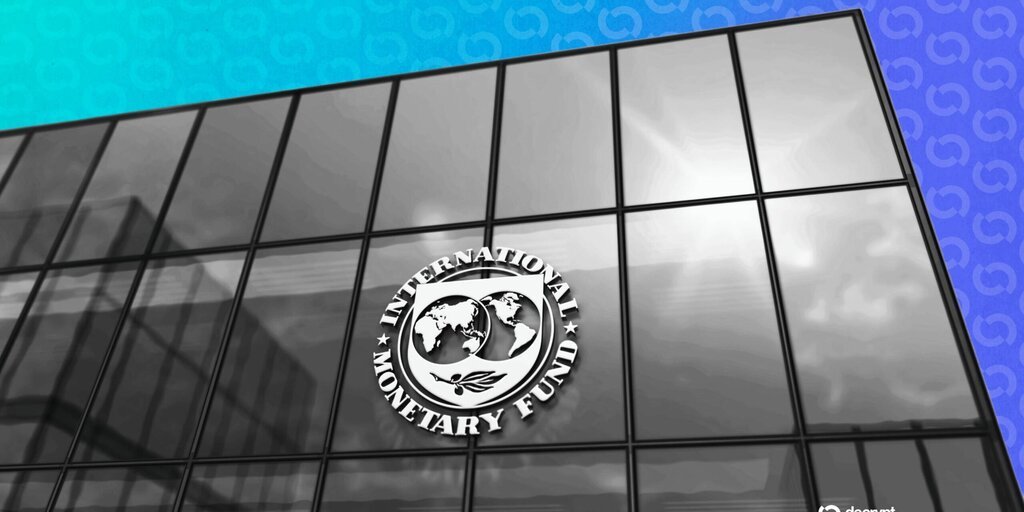
The International Monetary Fund has warned that stablecoins resemble money market funds more than actual money and could face confidence-driven runs as tokenized finance scales.

Tokenization “constitutes a structural reallocation of trust within the financial system,” Tobias Adrian, financial counsellor and director of the monetary and capital markets unit of the IMF, wrote in the report.

Traditional financial systems rely on delays like end-of-day settlement and batch processing that give regulators time to intervene before problems spread, Adrian explained. Tokenization eliminates those delays by making settlement continuous and automated, meaning liquidity crises could materialize instantly.

This creates what the report calls a mismatch between tokenized systems operating across borders at machine speed and crisis management frameworks built around national jurisdictions.

Key levers of control in tokenized finance may lie in code and governance keys rather than in institutions regulators can reach, the IMF argued.

Adrian outlined a five-pillar policy roadmap calling on governments to anchor tokenized settlement in safe assets like wholesale central bank digital currencies, apply consistent regulation across similar activities, and adapt central bank liquidity tools to operate automated environments.

The note also argued that legal mandates for financial stability “must ultimately prevail over automated execution,” recommending mandatory audits and override mechanisms for systemically important smart contracts that would allow pauses under emergency conditions.

The note is the latest in a series of escalating warnings from the IMF on digital assets, going as far back as calling private cryptocurrencies an “inadvisable shortcut” to financial inclusion, a joint roadmap with the Financial Stability Board to address risks crypto poses to financial stability, and most recently in late 2025, warning that stablecoin adoption could stifle central bank control.

Correcting the narrative

Observers in conversation with Decrypt said the report’s assessment carries weight, though gaps remain.

“By treating the current system as an implicit safe baseline and highlighting only tokenization’s incremental risks, the report can leave policymakers with the impression that the status quo is safe,” Siwon Huh, a researcher at crypto research firm Four Pillars, told Decrypt.

The report’s weakness is that it lacks a comparative baseline against the risks already embedded in traditional finance, Huh explained. Standard settlement delays and opaque OTC derivatives carry their own systemic vulnerabilities, he added.

Major stablecoins like USDT and USDC hold reserves composed of Treasuries, reverse repos, and cash, making them “essentially identical” to a prime money market fund minus the regulatory safeguards, Huh said.

Still, the IMF’s comparison serves as “an important corrective to the industry narrative that stablecoins are money,” he argued.

“Stablecoins aren’t trying to be central bank money,” Alan Qureshi, CEO and co-founder of financial technology firm Black Lake, told Decrypt. “On the investor side, they provide curated access to high-quality liquid assets as a store of value. On the issuer and bank side, they function as a liquidity mechanism.”

Regulated stablecoins backed by high-quality assets act as localized liquidity pools that distribute collateral across the system, Qureshi explained.

While cross-border resolution gaps and the speed-versus-intervention tradeoff are legitimate concerns, the risks amount to a “feature, not a bug” of a system designed to move faster than traditional finance, he added.

Neil Staunton, CEO and co-founder of fintech firm Superset, largely agreed with the report’s framing, but warned its caution could backfire.

“The real risk is that policymakers read these warnings, get spooked, and slow down the very infrastructure buildout that would deliver the stability outcome the report calls for,” Staunton told Decrypt.

Tokenized systems swap slow settlement for cryptographic safeguards like smart contracts and real-time verification, which are “different tools, not weaker ones,” Staunton said. Exchanges like the NYSE and Nasdaq are already building the coordinated infrastructure the IMF calls for, he noted.

Daily Debrief Newsletter

Start every day with the top news stories right now, plus original features, a podcast, videos and more.


Read the full article here

Fact Checker

Verify the accuracy of this article using AI-powered analysis and real-time sources.

Get Your Fact Check Report

Enter your email to receive detailed fact-checking analysis

5 free reports remaining

Continue with Full Access

You've used your 5 free reports. Sign up for unlimited access!

Already have an account? Sign in here

Share. Facebook Twitter Pinterest LinkedIn Tumblr Email Telegram Copy Link
News Room
  • Website
  • Facebook
  • X (Twitter)
  • Instagram
  • LinkedIn

The FSNN News Room is the voice of our in-house journalists, editors, and researchers. We deliver timely, unbiased reporting at the crossroads of finance, cryptocurrency, and global politics, providing clear, fact-driven analysis free from agendas.

Related Articles

Media & Culture

Jacob Siegel’s Error-Filled Book On ‘Censorship’ Got Fact-Checked. He’s Calling It Censorship.

5 minutes ago
Media & Culture

Trump’s College Sports Executive Order Adds Chaos to an Already Wild Legal War

11 minutes ago
Cryptocurrency & Free Speech Finance

OpenAI CEO urges U.S. to prepare for AI ‘superintelligence’ risks and gains

28 minutes ago
Cryptocurrency & Free Speech Finance

Price Prediction for SPX, DXY, BTC, ETH, BNB, XRP, SOL, DOGE, HYPE, ADA

30 minutes ago
Cryptocurrency & Free Speech Finance

Circle’s Arc Network Reveals Quantum Resistance Plans as Bitcoin, Ethereum Face Threat

32 minutes ago
Media & Culture

Ro Khanna: Congress Has Surrendered on War

1 hour ago
Add A Comment
Leave A Reply Cancel Reply

Editors Picks

Trump’s College Sports Executive Order Adds Chaos to an Already Wild Legal War

11 minutes ago

OpenAI CEO urges U.S. to prepare for AI ‘superintelligence’ risks and gains

28 minutes ago

Price Prediction for SPX, DXY, BTC, ETH, BNB, XRP, SOL, DOGE, HYPE, ADA

30 minutes ago

Circle’s Arc Network Reveals Quantum Resistance Plans as Bitcoin, Ethereum Face Threat

32 minutes ago
Latest Posts

Ro Khanna: Congress Has Surrendered on War

1 hour ago

Solo bitcoin (BTC) miner overcomes 1-in-28,000 odds to secure $210,000 block reward

1 hour ago

New AI Cybercrime Tool Targets Crypto, Bank KYC Systems via Deepfakes

2 hours ago

Subscribe to News

Get the latest news and updates directly to your inbox.

At FSNN – Free Speech News Network, we deliver unfiltered reporting and in-depth analysis on the stories that matter most. From breaking headlines to global perspectives, our mission is to keep you informed, empowered, and connected.

FSNN.net is owned and operated by GlobalBoost Media
, an independent media organization dedicated to advancing transparency, free expression, and factual journalism across the digital landscape.

Facebook X (Twitter) Discord Telegram
Latest News

Jacob Siegel’s Error-Filled Book On ‘Censorship’ Got Fact-Checked. He’s Calling It Censorship.

5 minutes ago

Trump’s College Sports Executive Order Adds Chaos to an Already Wild Legal War

11 minutes ago

OpenAI CEO urges U.S. to prepare for AI ‘superintelligence’ risks and gains

28 minutes ago

Subscribe to Updates

Get the latest news and updates directly to your inbox.

© 2026 GlobalBoost Media. All Rights Reserved.
  • Privacy Policy
  • Terms of Service
  • Our Authors
  • Contact

Type above and press Enter to search. Press Esc to cancel.

🍪

Cookies

We and our selected partners wish to use cookies to collect information about you for functional purposes and statistical marketing. You may not give us your consent for certain purposes by selecting an option and you can withdraw your consent at any time via the cookie icon.

Cookie Preferences

Manage Cookies

Cookies are small text that can be used by websites to make the user experience more efficient. The law states that we may store cookies on your device if they are strictly necessary for the operation of this site. For all other types of cookies, we need your permission. This site uses various types of cookies. Some cookies are placed by third party services that appear on our pages.

Your permission applies to the following domains:

  • https://fsnn.net
Necessary
Necessary cookies help make a website usable by enabling basic functions like page navigation and access to secure areas of the website. The website cannot function properly without these cookies.
Statistic
Statistic cookies help website owners to understand how visitors interact with websites by collecting and reporting information anonymously.
Preferences
Preference cookies enable a website to remember information that changes the way the website behaves or looks, like your preferred language or the region that you are in.
Marketing
Marketing cookies are used to track visitors across websites. The intention is to display ads that are relevant and engaging for the individual user and thereby more valuable for publishers and third party advertisers.