Close Menu
FSNN | Free Speech News NetworkFSNN | Free Speech News Network
  • Home
  • News
    • Politics
    • Legal & Courts
    • Tech & Big Tech
    • Campus & Education
    • Media & Culture
    • Global Free Speech
  • Opinions
    • Debates
  • Video/Live
  • Community
  • Freedom Index
  • About
    • Mission
    • Contact
    • Support
Trending

AI Giant Anthropic Files to Launch ‘AnthroPAC’ Amid Clash With Trump Administration

21 minutes ago

Birth-Right Citizenship as a Second-Best Policy

57 minutes ago

Why Bearish Bets and ETF Flows May Spark a Rally

1 hour ago
Facebook X (Twitter) Instagram
Facebook X (Twitter) Discord Telegram
FSNN | Free Speech News NetworkFSNN | Free Speech News Network
Market Data Newsletter
Saturday, April 4
  • Home
  • News
    • Politics
    • Legal & Courts
    • Tech & Big Tech
    • Campus & Education
    • Media & Culture
    • Global Free Speech
  • Opinions
    • Debates
  • Video/Live
  • Community
  • Freedom Index
  • About
    • Mission
    • Contact
    • Support
FSNN | Free Speech News NetworkFSNN | Free Speech News Network
Home»News»Media & Culture»The Labor Department Just Freed Contractors—Again. Congress Still Needs To Act.
Media & Culture

The Labor Department Just Freed Contractors—Again. Congress Still Needs To Act.

News RoomBy News Room4 hours agoNo Comments4 Mins Read633 Views
Share Facebook Twitter Pinterest Copy Link LinkedIn Tumblr Email VKontakte Telegram
The Labor Department Just Freed Contractors—Again. Congress Still Needs To Act.
Share
Facebook Twitter Pinterest Email Copy Link

Listen to the article

0:00
0:00

Key Takeaways

Playback Speed

Select a Voice

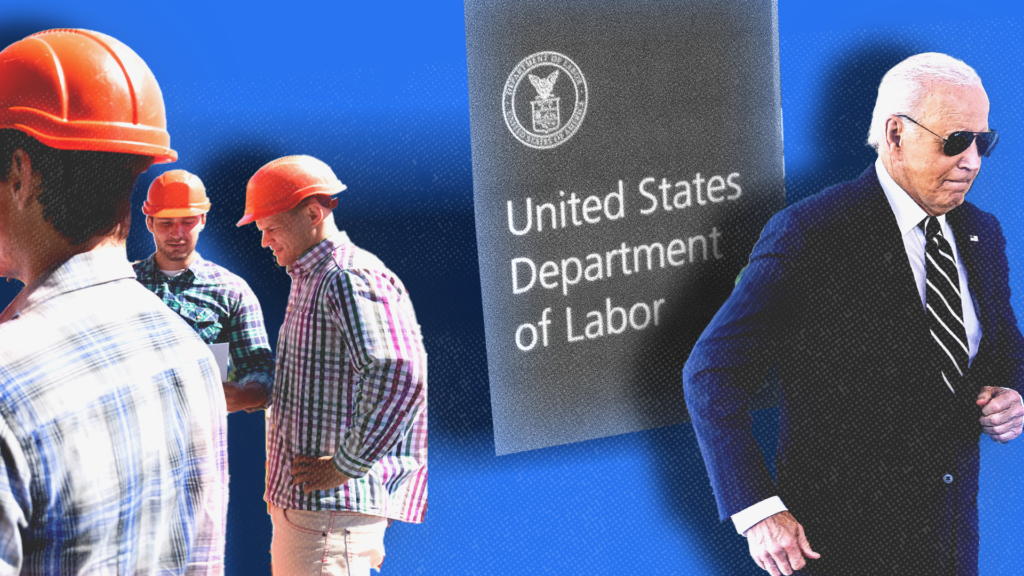
The debate over independent contractors is taking off again. In recent weeks, the Department of Labor issued its long-awaited independent contractor rule. The new directive reverses a Biden-era anti-contractor rule and thereby returns federal law to a more contractor-friendly posture. But as this federal regulatory seesaw plays out, state governments—and even Congress—provide the best hope for long-term change.

The debate over how to classify independent contractors dates far back in time. A 1947 U.S. Supreme Court case, Rutherford Food Corp. v. McComb, grappled with the issue of whether slaughterhouse workers were employees or contractors, and in the nearly 80 years since, the debate has never fully resolved. But in 2018, it received renewed attention in the aftermath of a decision by the California Supreme Court that created a new stringent three-part test that made it extremely difficult for workers to be classified as contractors.

This state court decision was eventually expanded through the now-notorious A.B. 5 law in California, which was a thinly-veiled attempt to prevent gig companies from classifying their drivers and deliverers as independent contractors. The argument in favor of worker reclassification is that independent contractors lack employment benefits such as health insurance, paid sick time, and more. California voters rejected the effort to reclassify gig workers as full-scale employees in a 2020 ballot referendum, but by that point independent contractor reclassification had already become a cause célèbre for the modern political left, with numerous states seeking to follow California’s lead.

The Labor Department issued anti-contractor guidance during former President Barack Obama’s second term, only to see the first iteration of the Trump administration issue a pro-contractor rulemaking at the very beginning of 2021. Once President Joe Biden took office shortly thereafter, the government suspended the Trump rule and eventually issued its own rulemaking that again had an anti-contractor bent. Now, to complete this bureaucratic whiplash, the Trump 2.0 Department of Labor suspended enforcement of the Biden-era rule last year and has issued a new proposed rule that essentially reinstates the Trump 1.0 rule.

The new rule concentrates on two key factors when it comes to determining whether a worker can be classified as an independent contractor under the Federal Labor Standards Act: first, the nature and degree of control over the work, and second, the worker’s opportunity for profit or loss.

If a worker has substantial control over things like his or her work schedule, selection of projects, and ability to work for competitors, then this would lean toward a contractor-based rather than employee-based relationship. Likewise, if a worker has the opportunity to earn profits or incur losses based on his or her initiative (such as their business acumen and judgment), then this would again militate in favor of a contracting relationship. This type of pro-contractor legal standard would largely shield gig companies from federal attempts to reclassify their workers as full-scale employees.

The importance of maintaining independent contractor flexibility extends far beyond the gig context, too. Everyone from real estate agents to barbers have long operated under contracting models, and attempts to reclassify these workers as employees would create massive disruption across a broad swatch of industries.

One often overlooked example is financial advisors, many of which are independent contractors. Reclassifying them as employees could make these advisors less willing to work with lower-net-worth clients, which in turn would have underappreciated and widespread impacts on the potential retirement savings of millions of Americans

But while the latest rulemaking is sufficiently pro-contractor to protect against such negative impacts—at least at the federal level—it’s worth noting that in our hyper-polarized era, it could well be reversed by subsequent administrations, just like its predecessor rules. The result is more uncertainty and paralysis for businesses and industries, which must endure a substantial rewriting of American labor law every four to eight years.

Fortunately, at the state level, more durable change is happening. Rather than trying to reclassify workers as employees, numerous states have begun experimenting with what’s known as a portable benefits model. Under this framework, independent contractors in the gig economy are given access to SEP IRA–style accounts in which both they and gig companies can contribute. The funds from these accounts follow the contractors from job to job, rather than being tied to a single company, and they can be used for benefits like health insurance, retirement funds, or paid time off.

States as ideologically diverse as Pennsylvania, Utah, and Maryland have pursued this model in recent years, with more states set to join the ranks this year. The idea has even made its way to Congress in the Unlocking Benefits for Independent Workers Act that was introduced last year by Sen. Bill Cassidy (R–La.).

The Department of Labor’s new rule is a boon to independent contractors. But the real change is happening in the states. And, ultimately, it’s up to Congress to step in any prevent this regulatory teeter-totter from becoming fully unhinged.

Read the full article here

Fact Checker

Verify the accuracy of this article using AI-powered analysis and real-time sources.

Get Your Fact Check Report

Enter your email to receive detailed fact-checking analysis

5 free reports remaining

Continue with Full Access

You've used your 5 free reports. Sign up for unlimited access!

Already have an account? Sign in here

#FreePress #IndependentMedia #InformationWar #Journalism #MediaAccountability
Share. Facebook Twitter Pinterest LinkedIn Tumblr Email Telegram Copy Link
News Room
  • Website
  • Facebook
  • X (Twitter)
  • Instagram
  • LinkedIn

The FSNN News Room is the voice of our in-house journalists, editors, and researchers. We deliver timely, unbiased reporting at the crossroads of finance, cryptocurrency, and global politics, providing clear, fact-driven analysis free from agendas.

Related Articles

Cryptocurrency & Free Speech Finance

AI Giant Anthropic Files to Launch ‘AnthroPAC’ Amid Clash With Trump Administration

21 minutes ago
Media & Culture

Birth-Right Citizenship as a Second-Best Policy

57 minutes ago
Cryptocurrency & Free Speech Finance

Anthropic Spots ‘Emotion Vectors’ Inside Claude That Influence AI Behavior

3 hours ago
Media & Culture

Today in Supreme Court History: April 4, 1861

5 hours ago
Media & Culture

Trump Realized He Can Just Do Things. Who Can Stop Him?

6 hours ago
Media & Culture

Minnesota Kicks Off Legal Battle With Trump Administration To Hold ICE Shooters Accountable

13 hours ago
Add A Comment
Leave A Reply Cancel Reply

Editors Picks

Birth-Right Citizenship as a Second-Best Policy

57 minutes ago

Why Bearish Bets and ETF Flows May Spark a Rally

1 hour ago

Experts say 24/7 markets will stop brokers from ‘hunting’ your stop losses after-hours

2 hours ago

Nevada Judge Extends Kalshi Ban, Rules Event Contracts Unlicensed Gambling

2 hours ago
Latest Posts

Bitcoin whales are selling the most aggressively on record while ETFs and Strategy keep buying

3 hours ago

Prediction Markets Are Testing Legal Limits in Strict Asian Markets

3 hours ago

Anthropic Spots ‘Emotion Vectors’ Inside Claude That Influence AI Behavior

3 hours ago

Subscribe to News

Get the latest news and updates directly to your inbox.

At FSNN – Free Speech News Network, we deliver unfiltered reporting and in-depth analysis on the stories that matter most. From breaking headlines to global perspectives, our mission is to keep you informed, empowered, and connected.

FSNN.net is owned and operated by GlobalBoost Media
, an independent media organization dedicated to advancing transparency, free expression, and factual journalism across the digital landscape.

Facebook X (Twitter) Discord Telegram
Latest News

AI Giant Anthropic Files to Launch ‘AnthroPAC’ Amid Clash With Trump Administration

21 minutes ago

Birth-Right Citizenship as a Second-Best Policy

57 minutes ago

Why Bearish Bets and ETF Flows May Spark a Rally

1 hour ago

Subscribe to Updates

Get the latest news and updates directly to your inbox.

© 2026 GlobalBoost Media. All Rights Reserved.
  • Privacy Policy
  • Terms of Service
  • Our Authors
  • Contact

Type above and press Enter to search. Press Esc to cancel.

🍪

Cookies

We and our selected partners wish to use cookies to collect information about you for functional purposes and statistical marketing. You may not give us your consent for certain purposes by selecting an option and you can withdraw your consent at any time via the cookie icon.

Cookie Preferences

Manage Cookies

Cookies are small text that can be used by websites to make the user experience more efficient. The law states that we may store cookies on your device if they are strictly necessary for the operation of this site. For all other types of cookies, we need your permission. This site uses various types of cookies. Some cookies are placed by third party services that appear on our pages.

Your permission applies to the following domains:

  • https://fsnn.net
Necessary
Necessary cookies help make a website usable by enabling basic functions like page navigation and access to secure areas of the website. The website cannot function properly without these cookies.
Statistic
Statistic cookies help website owners to understand how visitors interact with websites by collecting and reporting information anonymously.
Preferences
Preference cookies enable a website to remember information that changes the way the website behaves or looks, like your preferred language or the region that you are in.
Marketing
Marketing cookies are used to track visitors across websites. The intention is to display ads that are relevant and engaging for the individual user and thereby more valuable for publishers and third party advertisers.