

 Freedom Index
Listen to the article
I was always gifted in a few specific domains. I started to speak very late, but almost immediately in complete sentences. I learned numbers by watching the weather channel at age three. I started reading the Yellow Pages at that age, too. (This was the early 1990s, when people still used printed phone books.) I knew all the world’s countries and their capitals at age four. I read at an adult level by about age six. My parents were excellent at stimulating me intellectually. We went to the local public library a lot, and our house was always full of books.
At the age of eleven or twelve (I forget which), I was able to guide a group of adults through Athens by public transport. This was in the era before smartphones, when the only good way to learn transit systems was by studying paper maps.
In fall 1996, when I was seven, my parents took me to New York City for Thanksgiving. We went up the Empire State Building and did a cruise circling Manhattan. Because I was very excited for this trip, I memorised a travel book about New York. So I was able to guide my parents through the city. I still have that book, along with thousands of other travel books in my collection.
Autism is often fuelled by a passion for certain specific topics. In my case, I have always loved maps. I see them as windows to the world.
I am also a big fan of subways. For a long time, I tried to understand why I am so passionate about them. My best explanation is that it’s partly about structure and routine. There is something comforting about how a subway line is predictable: the stops, the schedules, the maps with clear, predetermined paths. The sights and smells associated with transit fascinate me, too. Every time I travel to a new large city, I try to take the subway at least once.
There is something comforting about how a subway line is predictable: the stops, the schedules, the maps with clear, predetermined paths.
I am also quite interested in economics, and have a wide knowledge of psephology—the study of elections and voting patterns. This was useful in completing my four-year university degree in the field of international development.
I collect things like coins and sports cards—as well as television-listings magazines from around the world (though I am not a big fan of collecting old television listings, such as American copies of TV Guide or British Radio Times from, say, forty or fifty years ago).
I have television-listing publications from almost fifty countries. In certain places such as Southern Spain, which are resort areas visited by people from across Europe, it’s possible to find specimens from a dozen different countries.
My experience in Vietnam was memorable. This was 2005. I remember seeing a “newsstand”—basically a folding table with someone selling magazines on the sidewalk near our hotel in Hanoi. That’s when I found a magazine with “VTV” on the cover, which is the Vietnamese state television service.
Helping Children with Autism | Quillette
Since then, the ‘autism’ landscape has changed: In the early 1970s, autism had not quite emerged from its Dark Ages.
When I was in Bulgaria, I did research online to determine which television-listing magazine was available. It turned out to be more of a weekly newspaper. I remember finding a copy in the northern border city of Ruse.
Like many other people with autism, I love timetables. I collect transport timetables—even though they are becoming rare thanks to the rise of the internet. I hypothesise that I love them because I like order and data, but it’s hard to know. Just seeing them makes me happy.
It used to be quite easy to get them at airports, transit stations, or travel agencies. In Japan, a society where being on time is seen as very important, they were still somewhat common in the mid-2010s, when I visited. I remember well how Fukuoka’s main train station had a lot of these printed timetables, which you could find at a counter where you could also book domestic flights. Alas, they are now quite difficult to find—though they are still apparently popular among older Japanese people.
Many Japanese commuters have an obsession with time management—especially strategies to minimise their commuting time. This is why one can find entire books with plans of train stations and subway platforms in big cities such Tokyo, Osaka, or Nagoya—so people can save time and better organise their commute. Big bookstores in Japan have special sections for such books.
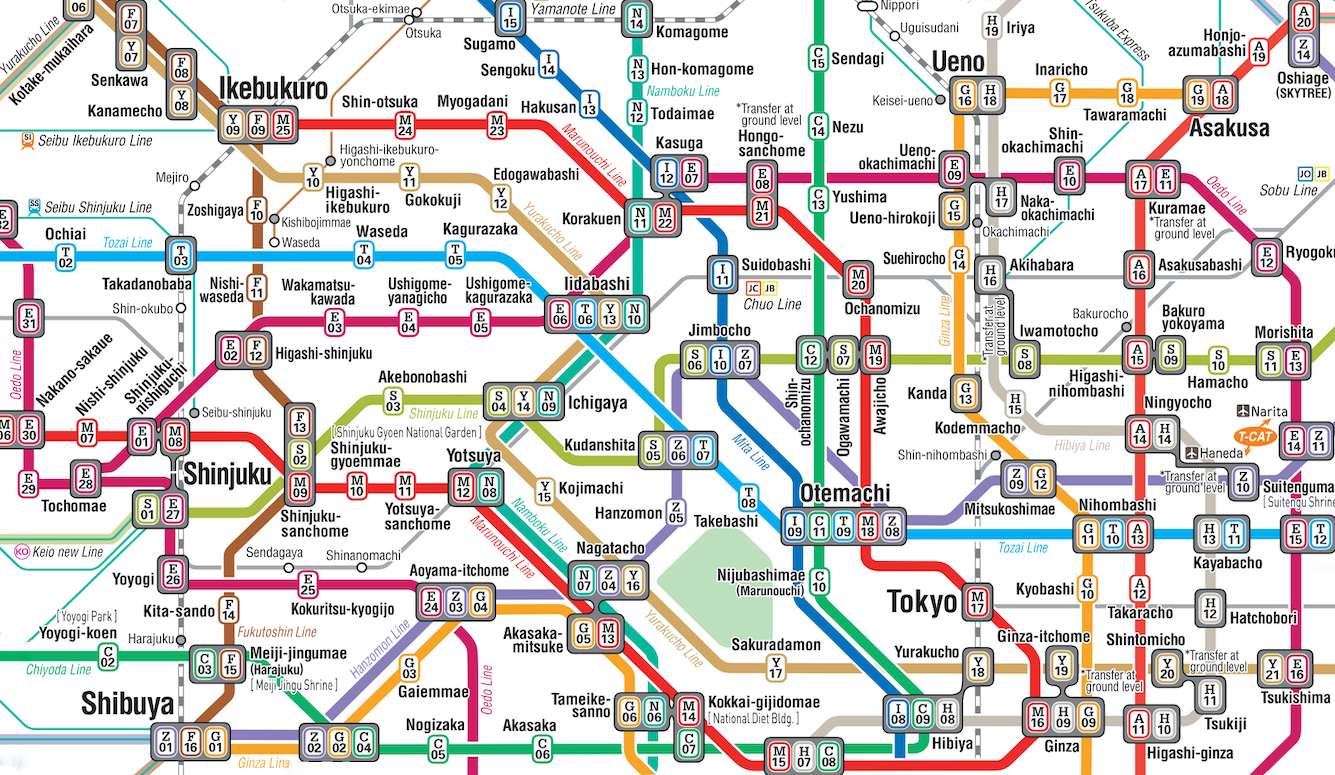
These can be useful, I travelled through Shinjuku Station in Tokyo—which is the busiest station in the world. And if you don’t study the station map, you may well get lost. The place is a maze.
Adapted with permission from Finding Patterns—The Story Of My Life on the Spectrum: How a Very Premature Autistic Man Who Was Predicted by a Specialist Not to Pass First Grade Made His Way in the World, by Mathieu Vaillancourt.
Quillette invites thoughtful responses to its essays.
Selected responses are published once per week as part of a curated Letters to the Editor feature. If selected, letters appear under the contributor’s real name and may be edited for clarity and length.
To submit a letter for consideration, please email [email protected].
Read the full article here
Fact Checker
Verify the accuracy of this article using AI-powered analysis and real-time sources.