

 Freedom Index
Listen to the article
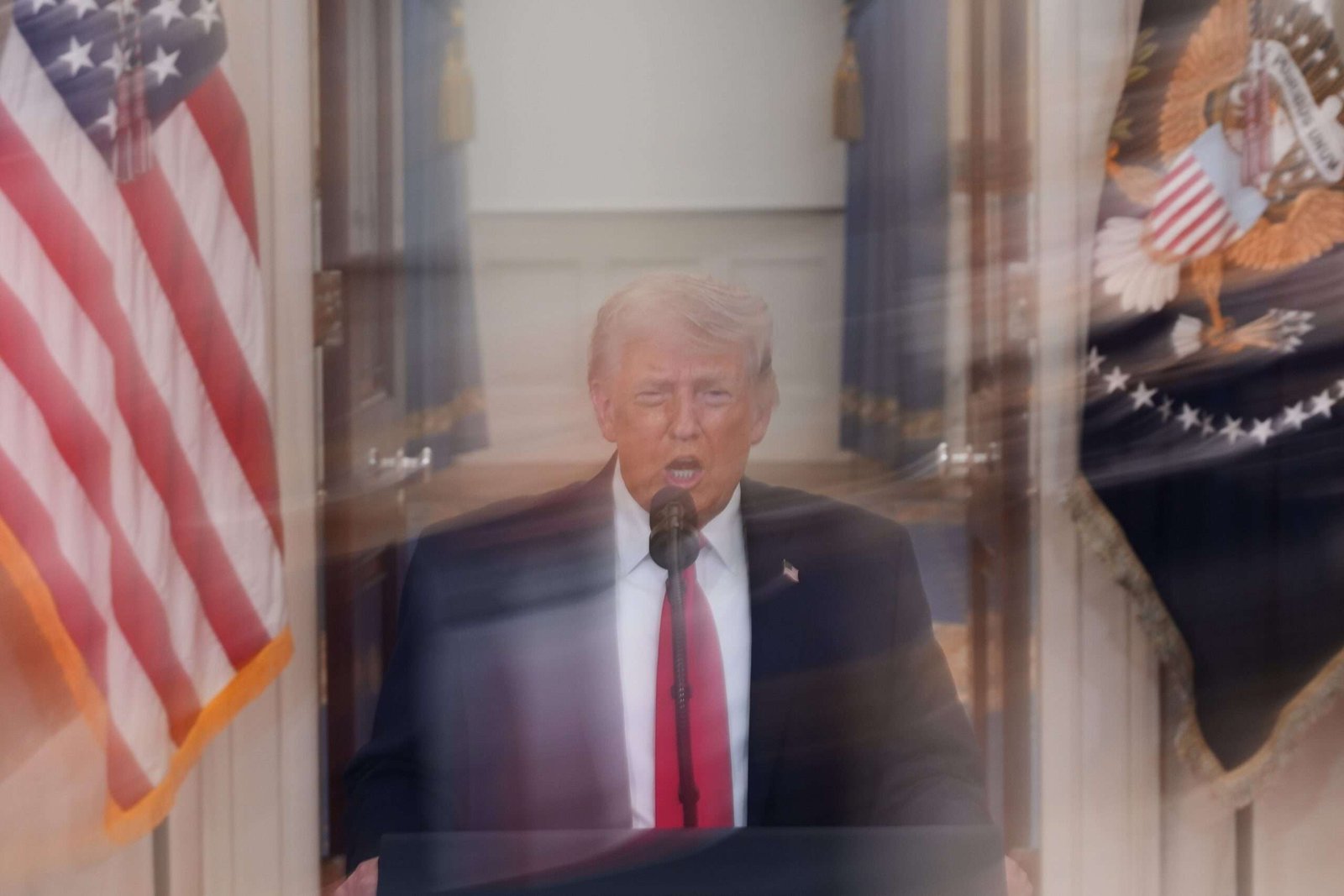
President Donald Trump delivered a prime-time address about the Iran War that could have been a Truth Social post.
The rambling 19-minute speech resembled Trump’s frequent social media posts: vaguely belligerent and at times contradictory.
The U.S. will continue to hit Iran “extremely hard over the next two to three weeks,” Trump threatened, while simultaneously promising that “discussions are ongoing” to end the war. As he’s done in recent weeks, he threatened to target Iran’s civilian infrastructure, including power plants, which would be a war crime. However, he seemed to downplay the significance of Iran’s nuclear weapons program, which is ostensibly the reason why the war was launched in the first place.
As for the Strait of Hormuz, which Iran now fully controls, Trump simply said “it will just open up naturally.”
Well, I guess we can hope so.
The Reason Roundup Newsletter by Liz Wolfe Liz and Reason help you make sense of the day’s news every morning.
That’s what the speech included. Here’s what was missing: any indication that the Trump administration has a functional plan to end the war and/or restore freedom of navigation in the Strait of Hormuz. There were no details about what a prospective peace deal might look like (significant, since U.S. intelligence agencies have reportedly determined that the Iranian government is not currently willing to negotiate with Trump, despite what the president has said). There was no acknowledgement of the fact that the war still lacks congressional authorization.
A speech like this might have helped sell the American public on the necessity of this war before it began. A month in, however, I don’t get the sense that it will move the needle on the war, which is deeply unpopular:
Only 62 percent of Republicans and 79 percent of MAGA support the Iran war. Sounds like a lot but Republican support for the Iraq war was much higher. And other polls show even these Iran war supporters have concerns.
Oh, and only 28 percent of Americans support the war. pic.twitter.com/Fx8hlDEEGD
— Andrew Day (@AKDay89) April 1, 2026
At least 13 Americans have already died in this conflict, which is costing billions of dollars every day and disrupting global markets for oil, helium, and more. What are the American people gaining to offset all that? If Trump has an answer to that question, he didn’t articulate it on Wednesday night.
“We’re going back to the fuckin’ moon.” We sure are. The Artemis II mission blasted off from Cape Canaveral, Florida, on Wednesday night, beginning a planned 10-day, 240,000-mile journey that will take four astronauts around the moon and back to Earth.
Liftoff.
The Artemis II mission launched from @NASAKennedy at 6:35pm ET (2235 UTC), propelling four astronauts on a journey around the Moon.
Artemis II will pave the way for future Moon landings, as well as the next giant leap — astronauts on Mars. pic.twitter.com/ENQA4RTqAc
— NASA (@NASA) April 1, 2026
The first manned mission into Lunar orbit since 1972, Artemis is the culmination of a very expensive, decade-plus effort to get there. “It marks the first time astronauts will fly aboard NASA’s Space Launch System (SLS) rocket and Orion spacecraft, and it is the first real test of Orion‘s life-support systems with humans on board,” writes Reason’s Natalie Dowzicky. “It is less a triumphant return to the moon than a high-stakes systems check.”
One problem has already cropped up: The ship’s fancy zero-gravity toilet wasn’t working, but was quickly fixed.
This whole thing strikes me as pretty wasteful—strip away the romance of going to space, and this is just another way for government contractors to milk taxpayers.
But it is also undeniably cool that humans can do this:
The coolest orbital animation I’ve seen of Artemis 2
Just really shows you how far away they’re flying today and also how precise they need to be to go to the moon pic.twitter.com/fBTYHbcGoQ
— delian (@zebulgar) April 1, 2026
Scenes from D.C.: Unhappy first anniversary to this bit of insanity, when Trump stood outside the White House to announce a policy even more poorly planned than the war in Iran, if you can believe that.
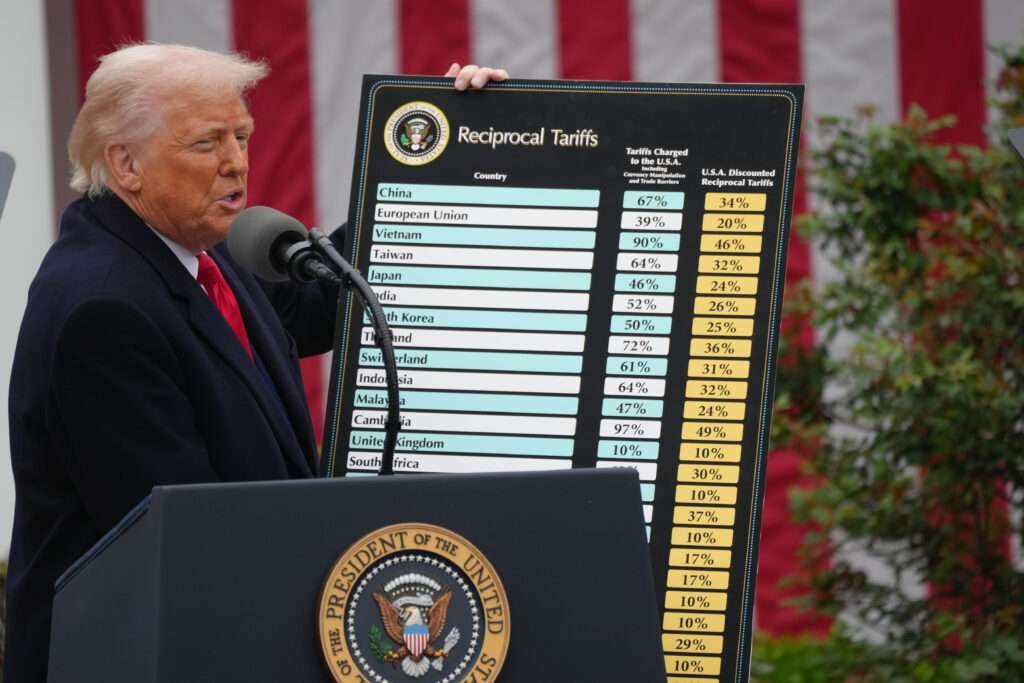
Yes, it’s Liberation Day. Every day is a good day to remember that tariffs are taxes paid by Americans, but we’ve got extra coverage of the topic to mark the occasion:
- Jacob Sullum notes that there has been little rhyme or reason to the president’s tariff scheme, which fluctuated wildly depending on his mood.
- Jack Nicastro reviews the impact that tariffs had on blue-collar jobs, including the decline of 89,000 manufacturing jobs. Hey, didn’t Trump promise that tariffs would cause the opposite of that to happen?
- And I wrote about why Trump should take a lesson from his role model, former President William McKinley, and put his tariff proposal up for a vote in Congress.
If that’s not enough tariff content for you—and, really, is there ever enough?—then let me also recommend Phil Gramm’s and Don Boudreaux’s take in The Wall Street Journal: “Most economists predicted that the economy’s performance would be negatively affected. Thus far data overwhelmingly indicate that is what has happened,” they conclude.
QUICK HITS
Read the full article here
Fact Checker
Verify the accuracy of this article using AI-powered analysis and real-time sources.