Close Menu
FSNN | Free Speech News NetworkFSNN | Free Speech News Network
  • Home
  • News
    • Politics
    • Legal & Courts
    • Tech & Big Tech
    • Campus & Education
    • Media & Culture
    • Global Free Speech
  • Opinions
    • Debates
  • Video/Live
  • Community
  • Freedom Index
  • About
    • Mission
    • Contact
    • Support
Trending

Aspyr: Hey, Those Crappy Tomb Raider Remastered Outfits Were Made By Our Artists, Not AI!

13 minutes ago

Judge Leon Blocked The East Wing Ballroom Based on Offended Observer Standing

16 minutes ago

Hong Kong hasn’t issued a single HKD stablecoin license after March target

45 minutes ago
Facebook X (Twitter) Instagram
Facebook X (Twitter) Discord Telegram
FSNN | Free Speech News NetworkFSNN | Free Speech News Network
Market Data Newsletter
Wednesday, April 1
  • Home
  • News
    • Politics
    • Legal & Courts
    • Tech & Big Tech
    • Campus & Education
    • Media & Culture
    • Global Free Speech
  • Opinions
    • Debates
  • Video/Live
  • Community
  • Freedom Index
  • About
    • Mission
    • Contact
    • Support
FSNN | Free Speech News NetworkFSNN | Free Speech News Network
Home»Cryptocurrency & Free Speech Finance»Watch Out Bitcoin: Cryptography-Breaking Quantum Computers May Be Closer Than Expected, Says Caltech
Cryptocurrency & Free Speech Finance

Watch Out Bitcoin: Cryptography-Breaking Quantum Computers May Be Closer Than Expected, Says Caltech

News RoomBy News Room3 hours agoNo Comments4 Mins Read571 Views
Share Facebook Twitter Pinterest Copy Link LinkedIn Tumblr Email VKontakte Telegram
Watch Out Bitcoin: Cryptography-Breaking Quantum Computers May Be Closer Than Expected, Says Caltech
Share
Facebook Twitter Pinterest Email Copy Link

Listen to the article

0:00
0:00

Key Takeaways

Playback Speed

Select a Voice

In brief

  • Caltech researchers say quantum computers may require just 10,000–20,000 qubits to crack modern cryptography.
  • The work outlines a new error-correction approach for neutral-atom quantum computers.
  • The advance could accelerate timelines for machines capable of running Shor’s algorithm, which threatens widely used cryptography.

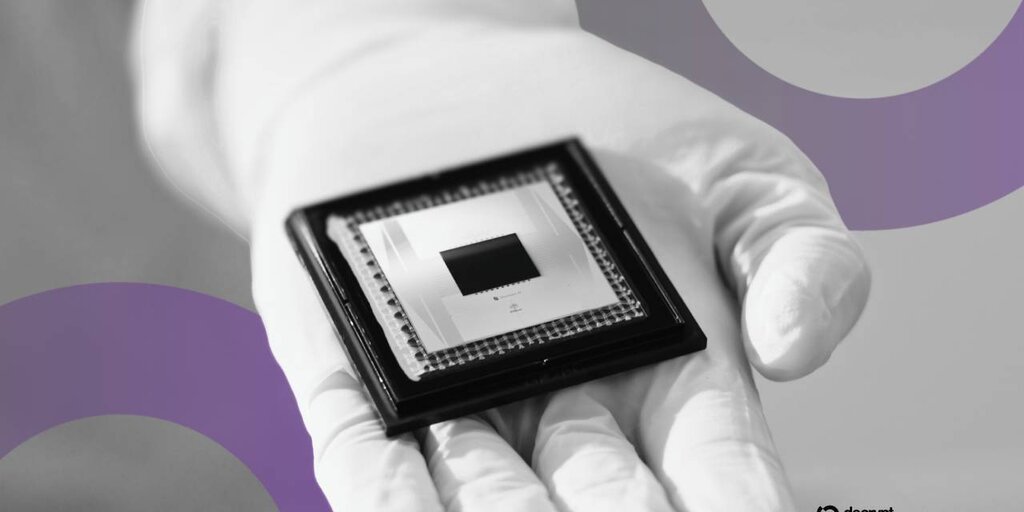
Quantum computers capable of breaking modern cryptography may require far fewer qubits than previously believed, according to new research from the California Institute of Technology.

In the study published Monday, Caltech worked with Pasadena-based Oratomic, a quantum computing startup founded by Caltech researchers, to develop a new neutral-atom system in which individual atoms are trapped and controlled with lasers to act as qubits. Doing so could allow a fault-tolerant quantum computer to run Shor’s algorithm, which could derive private keys from the public keys used in Bitcoin’s elliptic-curve cryptography, with as few as 10,000 reconfigurable atomic qubits.

Oratomic co-founder and CEO Dolev Bluvstein, a visiting associate in physics at Caltech, said advances in quantum computing are accelerating the timeline for practical machines and increasing pressure to migrate to quantum-resistant cryptography.

“People are used to quantum computers always being 10 years away,” Bluvstein told Decrypt. “But when you look at where we were a little over ten years ago, the best estimates of what would be required for Shor’s algorithm were one billion qubits at a time when the best systems we had in the lab were roughly five qubits.”

Today’s most common error-correction systems often require about 1,000 physical qubits to create a single reliable, logical qubit, the error-corrected unit used to perform calculations. That overhead has helped push estimates for practical fault-tolerant systems into the million-qubit range, slowing progress toward machines capable of running algorithms that could threaten RSA and elliptic-curve cryptography used by Bitcoin and Ethereum.

Bluvstein noted that current lab systems are already approaching—and in some cases exceeding—6,000 physical qubits. In other words, the cryptography risk may be much sooner than experts previously expected.

“You can really see the system size and controllability increasing over time as the required system size goes down,” he said.

In September, Caltech researchers revealed a neutral-atom quantum computer operating 6,100 qubits with 99.98% accuracy and 13-second coherence times. It was a milestone toward error-corrected quantum machines that also renewed concerns about future threats to Bitcoin from Shor’s algorithm.

The threat has prompted governments and technology firms to begin migrating to post-quantum cryptography, or encryption designed to withstand quantum attacks. Researchers, however, caution that major engineering challenges remain, including scaling quantum systems while maintaining extremely low error rates.

“Just having 10,000 physical qubits is something that could happen within a year,” Bluvstein said. “But that’s really not the goalpost people think it is. It’s not like when you design a computer, you just put the transistors on the chip, wash your hands, and say you’re done. It’s a highly non-trivial, extremely complicated task to actually go and build one of these.”

Despite this, Bluvstein said a practical quantum computer could emerge before the end of the decade.

The news comes as Google researchers reported new findings on Tuesday, suggesting future quantum computers could break elliptic curve cryptography with fewer resources than previously thought. That added urgency to calls for a transition to post-quantum cryptography before such machines become viable.

Although the cryptocurrency industry has increasingly begun to focus on quantum risk, Bluvstein said that risk extends far beyond blockchain networks and requires changes across much of the modern digital world.

“I think the whole world’s digital infrastructure. It’s not just blockchain. It’s internet of things devices, internet communication, routers, satellites,” he said. “It spans the entire global digital infrastructure, and it’s complicated.”

Daily Debrief Newsletter

Start every day with the top news stories right now, plus original features, a podcast, videos and more.


Read the full article here

Fact Checker

Verify the accuracy of this article using AI-powered analysis and real-time sources.

Get Your Fact Check Report

Enter your email to receive detailed fact-checking analysis

5 free reports remaining

Continue with Full Access

You've used your 5 free reports. Sign up for unlimited access!

Already have an account? Sign in here

Share. Facebook Twitter Pinterest LinkedIn Tumblr Email Telegram Copy Link
News Room
  • Website
  • Facebook
  • X (Twitter)
  • Instagram
  • LinkedIn

The FSNN News Room is the voice of our in-house journalists, editors, and researchers. We deliver timely, unbiased reporting at the crossroads of finance, cryptocurrency, and global politics, providing clear, fact-driven analysis free from agendas.

Related Articles

Media & Culture

Aspyr: Hey, Those Crappy Tomb Raider Remastered Outfits Were Made By Our Artists, Not AI!

13 minutes ago
Media & Culture

Judge Leon Blocked The East Wing Ballroom Based on Offended Observer Standing

16 minutes ago
Cryptocurrency & Free Speech Finance

Hong Kong hasn’t issued a single HKD stablecoin license after March target

45 minutes ago
Cryptocurrency & Free Speech Finance

SOL Price Drop To $75 Possible As DEX Volumes Plummet

48 minutes ago
Cryptocurrency & Free Speech Finance

Anthropic Accidentally Leaked Claude Code’s Source—The Internet Is Keeping It Forever

50 minutes ago
Media & Culture

10 Years Ago Today, Trump Promised To Eliminate the National Debt. Instead, It Has Doubled.

1 hour ago
Add A Comment
Leave A Reply Cancel Reply

Editors Picks

Judge Leon Blocked The East Wing Ballroom Based on Offended Observer Standing

16 minutes ago

Hong Kong hasn’t issued a single HKD stablecoin license after March target

45 minutes ago

SOL Price Drop To $75 Possible As DEX Volumes Plummet

48 minutes ago

Anthropic Accidentally Leaked Claude Code’s Source—The Internet Is Keeping It Forever

50 minutes ago
Latest Posts

10 Years Ago Today, Trump Promised To Eliminate the National Debt. Instead, It Has Doubled.

1 hour ago

Coinbase’s Base unveils strategy to focus on tokenized markets, stablecoins and developers

2 hours ago

Bitfarms Shares Soar Despite Net Loss Amid AI Transition

2 hours ago

Subscribe to News

Get the latest news and updates directly to your inbox.

At FSNN – Free Speech News Network, we deliver unfiltered reporting and in-depth analysis on the stories that matter most. From breaking headlines to global perspectives, our mission is to keep you informed, empowered, and connected.

FSNN.net is owned and operated by GlobalBoost Media
, an independent media organization dedicated to advancing transparency, free expression, and factual journalism across the digital landscape.

Facebook X (Twitter) Discord Telegram
Latest News

Aspyr: Hey, Those Crappy Tomb Raider Remastered Outfits Were Made By Our Artists, Not AI!

13 minutes ago

Judge Leon Blocked The East Wing Ballroom Based on Offended Observer Standing

16 minutes ago

Hong Kong hasn’t issued a single HKD stablecoin license after March target

45 minutes ago

Subscribe to Updates

Get the latest news and updates directly to your inbox.

© 2026 GlobalBoost Media. All Rights Reserved.
  • Privacy Policy
  • Terms of Service
  • Our Authors
  • Contact

Type above and press Enter to search. Press Esc to cancel.

🍪

Cookies

We and our selected partners wish to use cookies to collect information about you for functional purposes and statistical marketing. You may not give us your consent for certain purposes by selecting an option and you can withdraw your consent at any time via the cookie icon.

Cookie Preferences

Manage Cookies

Cookies are small text that can be used by websites to make the user experience more efficient. The law states that we may store cookies on your device if they are strictly necessary for the operation of this site. For all other types of cookies, we need your permission. This site uses various types of cookies. Some cookies are placed by third party services that appear on our pages.

Your permission applies to the following domains:

  • https://fsnn.net
Necessary
Necessary cookies help make a website usable by enabling basic functions like page navigation and access to secure areas of the website. The website cannot function properly without these cookies.
Statistic
Statistic cookies help website owners to understand how visitors interact with websites by collecting and reporting information anonymously.
Preferences
Preference cookies enable a website to remember information that changes the way the website behaves or looks, like your preferred language or the region that you are in.
Marketing
Marketing cookies are used to track visitors across websites. The intention is to display ads that are relevant and engaging for the individual user and thereby more valuable for publishers and third party advertisers.