

 Freedom Index
Listen to the article
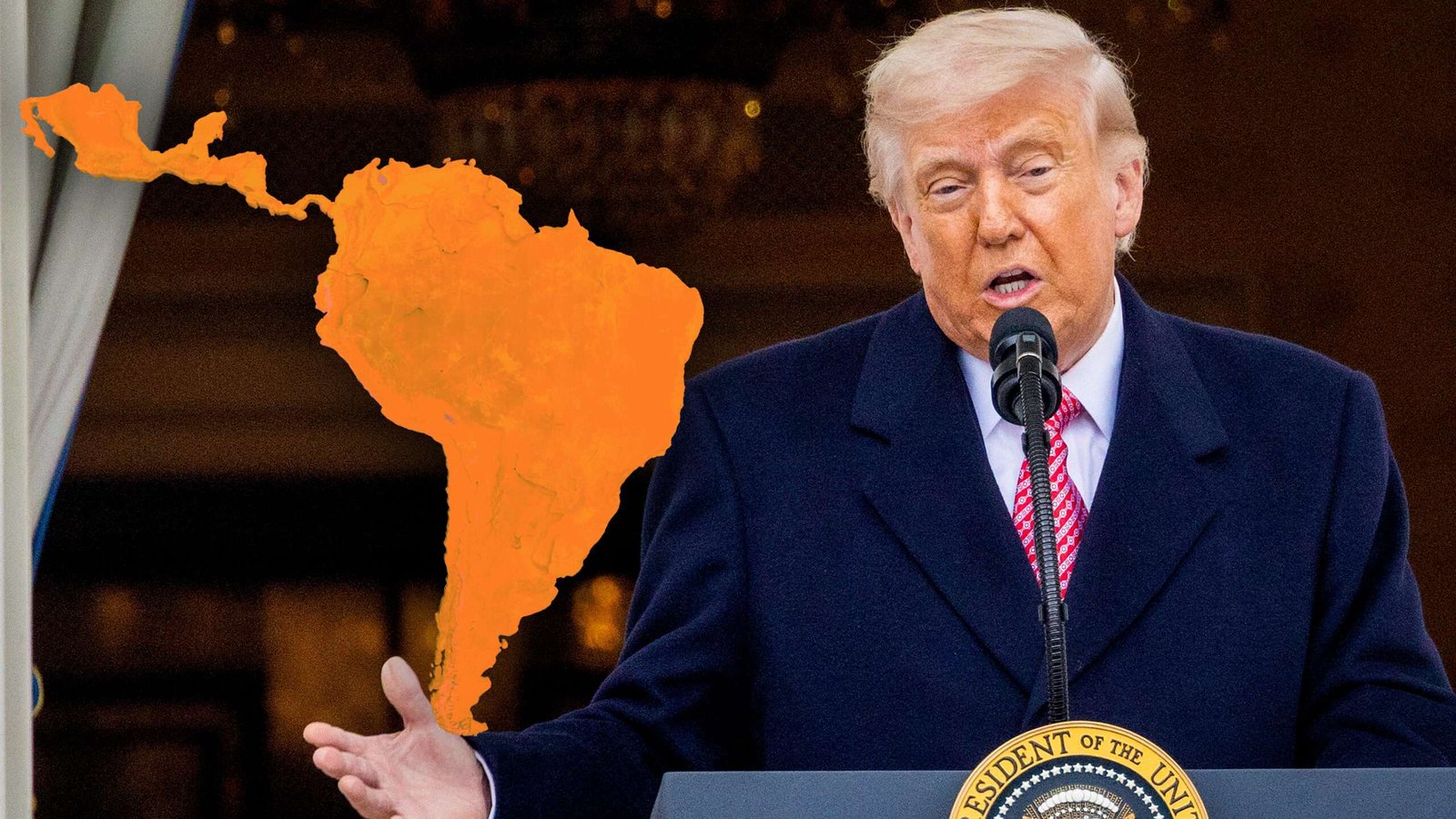
Dressed in a navy-blue suit and a light blue tie, with Secretary of State Marco Rubio flanking him on one side and Defense Secretary Pete Hegseth on the other, President Donalf Trump strolled to the podium on January 3 to deliver a stark message: “Under our new national security strategy, American dominance in the Western Hemisphere will never be questioned again.”
Trump had a reason for bragging. Hours earlier, U.S. special operations forces, with the support of U.S. air power, had nabbed Venezuelan dictator Nicolás Maduro and his wife from their residence.
Maduro, a former union boss and bus driver, had ascended to the presidency when his mentor, President Hugo Chávez, died from cancer in 2013. Maduro had been a constant irritant to the United States, and he informed anyone who listened that Washington was the region’s, if not the world’s, principal menace. For years, he had survived against all odds, despite an economic collapse that lopped off about three-quarters of Venezuela’s economy and caused about 20 percent of its population to migrate to greener pastures. The first Trump administration had tried to isolate Maduro diplomatically and economically by recognizing Juan Guaidó, the leader of the Venezuelan national assembly, as the country’s rightful interim president, and by instituting sanctions against Venezuela’s oil industry. That strategy failed. The Biden administration had taken a different tack by negotiating with Maduro on everything from prisoner releases to scheduling presidential elections, only to discover that Maduro pocketed the concessions and failed to meet his end of the bargain.
Trump’s decision to nab Maduro and prosecute him on drug trafficking charges wasn’t a given. In the first few months of his second term, Trump opted to send his senior envoy, Richard Grenell, to Caracas to determine whether a grand deal with the Venezuelan despot was possible. The early outreach produced some deliverables for the Trump administration, including freedom for six Americans. For Maduro, that decision was a low-cost, potentially high-reward move to ingratiate himself with the mercurial U.S. president. “President Donald Trump, we have made a first step, hopefully it can continue,” Maduro said on January 31, 2025. “We would like it to continue.”
Instead, Maduro is now in a Brooklyn prison cell awaiting trial for narcoterrorism and drug trafficking. His capture is the most visible demonstration of how Trump views the Western Hemisphere in his second term: as America’s exclusive domain, where partners are rewarded with economic goodies, adversaries are coerced into submission, and the region’s governments are expected to cater to Trump’s demands without the slightest reservation.
In the short term, this strategy of coercion over cooperation and the pursuit of total dominance may seem to be working. But over time, the U.S. risks overplaying its hand, creating problems close to home, and driving neighbors into China’s arms.
If Trump’s first administration saw Latin America largely through the prism of combatting illegal migration, Trump is using his second bite at the presidential apple to turn the area into essentially his own personal playground. He wasted little time before flexing his muscles and throwing verbal grenades towards the region’s leaders. In his inauguration speech, he threatened to retake the Panama Canal, ostensibly because China had gained effective control over the strategic waterway.
Although Trump and his national security advisers like to explain current U.S. policy as a modern-day version of the 1823 Monroe Doctrine—the White House even marked the 202nd anniversary of the doctrine with a presidential proclamation—Trump is proving to be far more interventionist than President James Monroe ever was. His actions in Washington’s near abroad can perhaps best be described as an elastic mix of nationalism and quasi-colonialism, where James Polk’s Manifest Destiny meets the 1904 Roosevelt Corollary.
The so-called Trump Corollary, as articulated in the U.S. National Security Strategy, “is a common-sense and potent restoration of American power and priorities” in the Western Hemisphere, with the overall objective being the reassertion of U.S. primacy there. “The United States will no longer cede access to or influence over key terrain in the Western Hemisphere,” the corresponding U.S. National Defense Strategy adds. China, which often threatens to respond to U.S. military buildups in East Asia by doing the same in Latin America, has been put on notice.
Combatting or limiting the influence of a near-peer rival in your own sphere of influence is as old as time itself. No great power wants to see another great power encroaching on its neighborhood. But Trump’s aim here is more than just to push nonhemispheric powers out of America’s traditional backyard. The bigger driving factor is his belief that the U.S., as the hemisphere’s sole hegemon, has both the right and the responsibility to throw its weight around regardless of how other countries might feel about it. The threats, the economic coercion, the meddling in another country’s domestic politics, the financial inducements, the outright military invasion are all in service of a wider goal: the U.S. getting what it wants, when it wants it.
In the first 15 months of Trump’s second term, his administration has repeatedly bullied, cajoled, or otherwise compelled the region’s small and mid-sized states to bend to Washington’s will.
Despite Trump’s positive relationship with Mexican President Claudia Sheinbaum, he had turned Mexico into his personal pinata. In February 2025, weeks after being sworn in, Trump signed an executive order instituting 25 percent tariffs on Mexican imports, arguing that the Mexican government wasn’t doing enough to crack down on the smuggling of drugs, chiefly fentanyl, across the U.S.-Mexico border. The Mexican government quickly deployed an additional 10,000 troops to the border, and was rewarded with a tariff delay. Trump’s incessant flirtations with bombing cartels in Mexico has scared Sheinbaum’s administration enough to do things—such as handing over more than 90 high-profile narcotraffickers to U.S. custody and permitting the Central Intelligence Agency to increase overhead surveillance in cartel-infested areas of the country—that her predecessors would have quickly dismissed as violations of Mexican sovereignty.
Or take Venezuela, a country that was once a chief antagonist to U.S. power in the region but is now essentially a captive to Trump’s whims. Instead of removing Maduro’s regime in full and seeking to replace it with a democratic system, Trump chose to keep the existing regime in place, working through it and using coercion—namely U.S. control over Venezuela’s oil revenues and a still-hefty U.S. military presence in the Caribbean—to enforce compliance.
That strategy has paid off for Trump, at least so far. Delcy Rodriguez, Maduro’s former foreign minister and vice president, is now ruling in an interim capacity with the explicit U.S. support. While the Chavismo political system is still intact and many of the same people hold the same exact jobs, Rodriguez has nevertheless agreed to several big legal changes to mollify Trump’s wishes, the most significant being a law easing the burdens on foreign oil companies. Trump is pleased with her work, calling the former diehard Chavista an effective leader who is “doing a very good job,” even as the administration doesn’t hesitate to remind her government that stonewalling U.S. demands could result in more economic or military pressure.
Recent U.S. presidents have tried to distance themselves from the ugly history of Washington-sponsored coups, covert actions, and outright occupations before and during the Cold War. Not so with Trump. For him, interceding in another country’s political processes or tipping the scales of an election is just the cost of doing business. When Argentine president and Trump ally Javier Milei’s political party looked like it was cooked during the fall 2025 legislative elections, Trump not only floated a $20 billion currency swap to help his friend but threatened to pull the offer if Argentines voted out Milei’s lawmakers. Milei’s party would go on to win a plurality of votes and more seats in both houses of the legislature.
Similarly, in Honduras, Trump endorsed conservative politician Nasry Asfura for president—and made it clear that if Asfura didn’t win, all U.S. foreign assistance to Honduras would likely go away. While it would be inaccurate to attribute Asfura’s win solely to Trump’s endorsement, his actions likely had an impact on the outcome, given that the U.S. accounts for more than 45 percent of Honduras’s exports and a significant portion of the country’s nearly $10 billion in remittances every year. The incumbent party of outgoing President Xiomara Castro was livid at the intrusion. But for Trump, the ends justified the means.
Trump’s hardball tactics have produced tactical wins. Mexico is now implementing a more assertive security strategy against the cartels, as the February 22 killing of top cartel kingpin Nemesio “El Mencho” Oseguera demonstrated. Panama has moved away from further Chinese economic dealings and withdrawn from Beijing’s Belt and Road infrastructure initiative. And the post-Maduro regime in Venezuela is opening up its oil industry to Americans like never before.
But tactical victories don’t necessarily equate to long-term benefits. Over time, the states encompassing the Western Hemisphere may grow tired of hostile U.S. behavior and respond accordingly. While no individual country can do much on its own to retaliate against the United States, all of them together can have an effect by complicating U.S. policy goals in the region and weakening Washington’s power there as well.
No country likes to be pushed around. And all countries, no matter how small, have a degree of agency. Small and middle powers that find themselves under pressure from a larger, stronger neighbor will often resort to hedging, one of the oldest geopolitical insurance policies on the books. That is, instead of sitting still and allowing themselves to be victimized, they will broaden relationships with rival powers, thus reducing their vulnerability to coercion and creating more flexibility for themselves. If that fails to change the dynamic, then balancing—partnering with another great power with a shared interest in cutting the hegemon down to size—is an option.
Right now, outright siding with China is neither preferable nor advisable for many countries in the Western Hemisphere. Hedging, though, is already occurring. When the Trump administration slapped Brazil with a 40 percent tariff in July 2025—for, among other things, prosecuting former Brazilian president and Trump friend Jair Bolsonaro—President Luiz Inácio Lula da Silva responded not by ordering the judiciary to drop the case but rather expanding Brazil’s trading relationship with China. Just as the U.S. tariffs were being prepared, Brazil and China announced a construction project that would link Brazil with Peru’s Pacific coastline, speeding up Brazilian exports to Asia. Brazil’s exports of soybeans to China also increased, putting a dent in the U.S. soybean business. Trump eventually saw the futility of the tariffs and dropped most of them months later.
Canada, one of the closest U.S. allies, is also trying to decrease its reliance on the United States, thanks to Trump’s territorial fantasies, his erratic use of tariffs, and his disdain for the Canadian political leadership. This January, at roughly the same time Trump was engaging in a war of words with NATO allies about the status of Greenland, Canadian Prime Minister Mark Carney traveled to China and struck a deal to lower some of each country’s tariffs on the other one’s products. The Canadians are increasing their military collaboration with the European Union, lessening their dependency on U.S. military companies for equipment, and re-routing trade flows to Asia. While none of these moves are threats to U.S. prosperity and security at the present, the fact that Ottawa feels compelled to keep a wary eye on Washington in the first place should serve as a wake-up call.
Unlike Russia and China, the United States has been blessed with advantageous geography and benevolent neighbors. Both have been sources of strength. The so-called Donroe Doctrine risks throwing it all away.
Read the full article here
Fact Checker
Verify the accuracy of this article using AI-powered analysis and real-time sources.