

 Freedom Index
Listen to the article
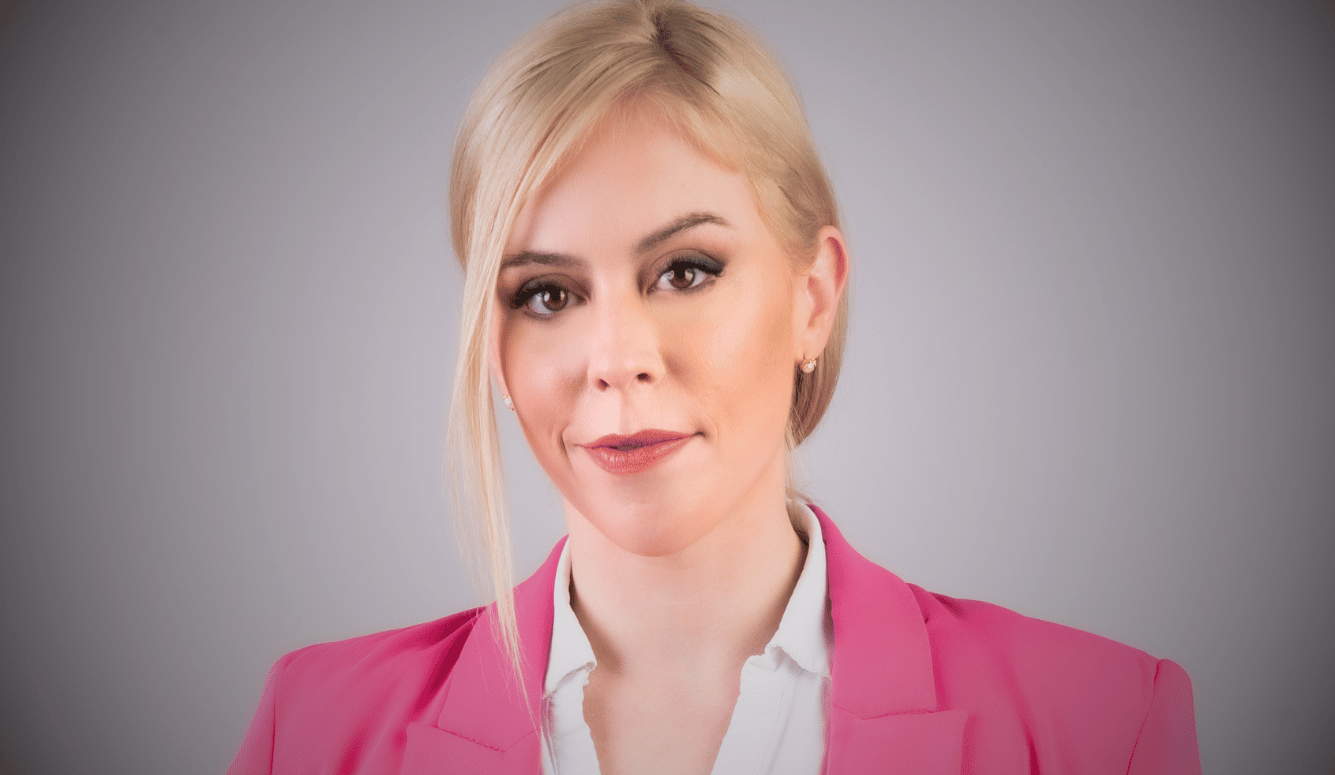
For Quillette, Pamela Paresky speaks with journalist and analyst Emily Schrader about the Islamic Republic of Iran—its ideological foundations, power structure, and the growing signs of internal instability.
Drawing on her reporting and regional experience, Schrader explains how the Iranian regime operates both domestically and internationally, from the central role of the IRGC to the suppression of protest movements and the use of narrative warfare abroad. The conversation explores the limits of reform within the current system, the legacy of the 2009 Green Movement, and the resurgence of popular resistance following the death of Mahsa Amini.
They also discuss the role of Western media in shaping perceptions of Iran, the global reach of the regime’s influence networks, and the prospects for political transition. What would a post-Islamic Republic Iran look like—and what role, if any, might external actors play in that process?
Transcript
The following transcript has been lightly edited for readability.
Pamela Paresky: How did you get involved in this particular region—not the Middle East in general, but Iran specifically?
Emily Schrader: I got involved with Iran because of my background—and no, I’m not Iranian. I’m from Los Angeles originally—which is dubbed “Tehrangeles” because there’s a very large Iranian community, both Jewish and non-Jewish. So I was always very familiar with this issue. And being someone who has always cared a lot about international political issues, even when I was living in the United States, it was only natural for me to talk about this,
As a professional, I started reporting on a lot of women’s issues, especially in the Middle East. Obviously one of the issues at the forefront here is the treatment of women by the Islamic Republic. Uh, I also did a lot of coverage of Afghanistan and what women face there with gender apartheid under the Taliban.
Definitely a worse situation for the women there under the Taliban. But similar in terms of the approach from the regime itself. The biggest difference between the two, however, is that in Iran, you have a history of progress and modernisation and stability. And also, frankly, historically speaking, Iran was colonised by Islam. Islam was not one of the countries that was originally Islamic. They have a very different mentality and approach. It’s not an Arab country like the others. So it’s a different way of thinking.
I think part of the reason that there’s such a solidarity between Israelis and Iranians is also because of that. Because despite the fact that within Iran, they’re not a minority, they view themselves as a minority in the Middle East—and one that’s persecuted by Islamist supremacy. This is something that’s missing from the equation [the way many in the West look at the situation in Iran].
The other thing is the narrative framing, which we’re in the middle of right now. All of these stories of what’s happening in this war that are being told are incredibly skewed in Western media. I was just recently saying to a friend that I’ve never seen the media so biased on an issue—even Israel. It’s even more extreme than the bias against Israel because the situation of the Iranian people forces them to reject parts of the default thinking about how they view the world: the fact that there are 92 million people who are trying to get out from the oppression of this regime, and the lengths that they’ve gone to in pushing back against it. It doesn’t fit some of the narratives that we hear, especially those the fringe Left are promoting.
PP: How exactly does the IRGC impact the US, Canada, Australia, the UK, and people in the West in general?
ES: I think that in the West there’s a tendency to underestimate the threat because you don’t see it in front of you and you don’t deal with it the same way as you might if you lived in the Middle East—not just Israel. As we see today, Bahrain, UAE, Saudi Arabia, Kuwait, all of these countries are being actively attacked by the Islamic Republic with ballistic missiles.
But beyond that, one of the things about which the regime has been so effective for 47 years is the narrative warfare game. And they’ve been doing that intentionally on foreign soil. Because the purpose of what they did in 1979 wasn’t just overthrowing the Shah, it was the Islamic Revolution. And their goal is to export that revolution. This is their language: exporting the revolution. That’s why they have put so many professors and academics in foreign universities and built partnerships with specific people.
There are former regime officials working as professors in leading American universitiES: Princeton University had Seyed Hossein Mousavian, who is the former ambassador for the Islamic Republic in Germany. And during his tenure as ambassador, dozens of Iranian German dissidents were assassinated—on foreign soil. Not formally executed in the country of Iran. This is all done through the IRGC, the networks that they’ve created there that start with ideological subversion, but go into something much greater.
They build partnerships with criminal organisations in Europe. They build partnerships with cartels in South America. They have established and worked to establish propertiES: they’ve purchased property in Venezuela—which was part of the motivation for what we saw President Trump do in Venezuela. Because it was becoming such an issue. The IRGC has its tentacles in many, many countries.
And they have billions of dollars—stolen from sovereign Iran and laundered through other countries. The UK is one of the primary places they do that. The UAE is another (which is ironic since they’re bombing it right now). We see a little bit less of this in the United States because the United States designated the IRGC as a terrorist organisation before other countries did. But in Canada, this is a longstanding issue. And even beyond that, the immigration issue in Europe, the UK, Australia, and Canada in particular are extremely dangerous in relation to Iranians. We heard MP Melissa Lantsman in Canada this week speaking about how dangerous Canada has become because of who they’ve allowed to come into the country: People who are known IRGC officers have been allowed into the country. Passports and citizenship have somehow been granted to many of these people and their children, their families. There are also companies that have schemes—they work with the IRGC to falsify documents to make it appear as though people are dissidents and are under threat from the regime when in fact, they are the children or relatives of actual regime officials.
I have to give it to them on this. They’re incredibly smart and they’ve played a brilliant long-term game right under the nose of the West. And despite the fact that, you know, people like me and others have been warning about this and have been speaking about this, it’s all coming to fruition now.
The reason that’s so dangerous, especially right now, is because this regime is on the verge of falling and they’re kind of like a wounded, wild animal. And, and when an animal is wounded that way, it lashes out in crazy ways. And we expect that this will continue to happen until this regime is actually taken out. And we’ve seen exactly that in the last week.
We’ve seen terror attacks in Belgium. We’ve seen synagogues targeted in Norway where an attack was thwarted, and attacks in Amsterdam just a few days ago. So there are numerous things going on here.
And it’s not just Europe. In the United States, we saw incidents in New York City with an ISIS supporter throwing an IED at a crowd of people in a protest. We saw an attack in Austin, Texas where someone was wearing a shirt, I believe it said, property of Allah. And under that he had another shirt with the flag of the Islamic Republic on it. So it was a supporter taking action there, whether associated formally or not.
This is part of the problem of the Islamic Republic of Iran: It’s not just one leader. It’s not even just one entity—the IRGC. It’s an entire system. It’s an ideology, Khomeinism, which overthrew the Shah in 1979. It’s that ideology that they’ve been exporting onto foreign soil. And they have been able to build up cells of radicals in some of these countries that are willing to carry out some of these insane actions against average people who have nothing to do with what’s happening in a conflict thousands of miles away.
And the most prominent example that comes to mind right now is the terror attack in Michigan against the Temple Israel synagogue: A Lebanese American man who had family members in Hezbollah—at least one brother was a Hezbollah commander—and who died as a result of Israeli airstrikes. After that, he apparently tried to kill American Jewish children at the Temple Israel synagogue who were in the school there. The only reason he didn’t succeed was because the security guard was able to successfully stop him.
That’s just another example of how this radicalised rhetoric has been successful in integrating itself in Western society. And that’s a very, very scary place to be. It makes the threat more relevant to everybody. And it also makes it harder and more painful to tackle. Because there are many different elements to this conflict. It’s not as simple as taking out Maduro in Venezuela. It’s a lot greater than that. It’s the entire system, both inside and outside the Islamic Republic.
PP: How do you mean? What’s the system?
ES: The system that rules the Islamic Republic internally is in English called “The Guardianship of the Islamic Jurist.” That’s the overarching ideology that guides the decisions of the Islamic Republic. Everything circles back to the decision and guidance—the “guardianship”—of the Ayatollah: The Supreme leader. Every government body ultimately refers back to his decisions. Every candidate for office is ultimately who IRGC pre-approves. That’s why it was so ridiculous when discussing the presidential election that took place not long ago, that people were saying, “Will it be Pezeshkian or will it be Jalili the more extreme, hardliner candidate”? It ended up being Pezeshkian. But it’s so funny to hear people speak about this in the Western media because they don’t understand that it’s not a real election. They had a tiny, tiny turnout. In fact, the regime actually lied about how many people came out to vote, and they threatened Iranians who refused to vote. Because the biggest campaign of that election was Iranian citizens saying, “I’m not voting as a matter of principle.” Because democracy isn’t respected there. It’s bogus. The person most advantageous for the regime itself to put in the position of president at that time was Pezeshkian. Why? Because Pezeshkian is from one of the two primary political camps inside Iran today: One is the reformist camp and one is the hardliner camp.
The now-deceased Ayatollah Khamenei is obviously from the hardliner camp. (And is his son, the new Supreme leader, even worse?)
The reformist camp gets misrepresented. Because people hear “reformist” and they think they should support that person because there’s a chance for change in Iran. This is a total misreading of the situation. I think almost any Iranian would agree, especially post-2009 given what happened in the Green Revolution: There were a lot of Iranians who were willing to try, who wanted to work with people on the ground inside Iran and thought that perhaps there were some leaders to work with to make a better future inside of Iran.
After 2009, that myth was shattered because there is no difference between reformists and hardliners in terms of how they govern. First of all, because the reformists don’t have any ability to do anything—all of the decisions ultimately, as I said, circle back to the Supreme Leader. So it doesn’t matter what policies they believe in. And if they were someone who believed in democracy and freedom at their core, the IRGC would never allow them to run in the first place.
So part of the idea of having “reformists” is to have controlled opposition within the country. This is hugely advantageous to the IRGC because they’re able to give the impression that they will consider reforms, or that they’ll make small concessions here and there. And that takes the attention off of them, especially when it comes to human rights abuses.
This is what they’ve done with the hijab issue. There was a lot of international pressure after the murder of Mahsa Amini, the 22-year-old Kurdish Iranian woman, by the regime’s morality police, which set off the Woman, Life, Freedom protests: millions of protestors rising up against the regime, calling for regime change. In response to this, after the “election” of the president—and Pezeshkian, the reformist, won this election—all over the West, they were saying, “Is there potential for change?”
No, absolutely not. And I’ll explain why. Pezeshkian himself is a medical doctor. When he was put into a position of power in a hospital, the very first thing that he did was mandate hijab for all women in the hospital before it was law in the Islamic Republic.
That’s a “reformist” in the Islamic Republic of Iran. So there is no actual difference. He’s part of the system. He’s part of the ideology. And that is actually the core reason why today you see Iranians saying, we cannot trust anybody inside Iran to lead a transition.
It’s a huge part of the motivation for many people, whether or not they like the Shah—including some of the minority groups inside Iran—to be chanting for the return of Pahlavi to lead the transition to a national referendum, after which they will decide on a system of government. Even people who didn’t like his father are coming out in support of him because they understand that no one inside the system can be trusted to oversee such a transition—because they’re too embedded in the regime. It’s a mafia-style regime. Even people who don’t really support it are oftentimes forced to be involved if they’re in Iran.
More evidence of that can be found in what happened with the Iranian women’s football team in Australia this past week where they were at the Asia Cup. They refused to sing the anthem of the Islamic Republic. They were threatened by officials inside of Iran as a result, and five or six of them, I believe, applied for asylum in Australia and decided to stay. The rest of the team went back. The most recent update is that I believe four or five of those who originally applied for asylum, have decided to go back to Iran. All the reports indicate that the regime was threatening their families. And at least in one case, for one of the athletes, they don’t know where her family is. It’s very concerning what’s happening on the ground.
But I have to say, it’s not new. This is what the Islamic Republic has done for years. They’ve politicised sport and used it as something to legitimise their international acceptance. And that’s a total perversion of what sports should be. The way that they’ve persecuted their athletes is criminal, obviously. But also, it shouldn’t be accepted by the international sporting agencies. The refusal to compete against Israeli athletes, for example, is a longstanding tradition of the regime. These are athletes in Iran who worked their whole lives for these opportunities. And it’s taken away in an instant because the Islamic Republic doesn’t want them to face off against an Israeli. It’s ridiculous.
Beyond that, they have executed some of their top athletes for protesting—for opposition to the regime—going all the way back to the early 1980s. Dozens of athletes have been executed. Football players on the national team, executed. The women’s volleyball captain was executed in the 1980s. In recent years, we saw Navid Afkari, a champion wrestler in Iran executed for taking part in protests. The list goes on and on. It’s a criminal, savage regime that cares very much about their perception, but not enough to actually do the right thing in any of these cases. Just enough to try to cover it up and to use some of these opportunities in international sport to advance their own agenda and to exert control and pressure on their own citizens. It’s disgraceful.
PP: Say more about the 2009 Green Revolution. What was it about? What happened?
ES: The 2009 protests were about election fraud basically. I won’t go into too much detail because there have been so many uprisings. I mean, we saw student uprisings before that. We saw that in the 1980s as well. And every time there have been uprisings, there have been mass executions as a result. The most horrific being what we saw two months ago with the execution or murder on the streets of around 30 to 40,000 people, we believe.
Every time there’s an uprising, the reactions are similar. The Iranian people are unarmed. They don’t really have the ability to combat the strength and the scale of the regime, especially when we’re talking about a regime that prioritises repression even over their own well-being. They’ve completely destroyed their own currency, which is one of the many factors that contributed to this last wave of protest. They have sent the Iranian people’s money all over the world to terror proxies, to destabilise other countries. To take up territory in some of those countries, occupy it and carry out terror attacks both against others in the region and of course against Israel. And all of this while the Iranian people don’t have basic resources or infrastructure to carry out their everyday lives because it’s not being kept up by the regime. I mean, the economy is in shambles. There isn’t proper electricity. The water crisis is almost existential: Tehran has no water.
The mismanagement of the regime is what contributes—initially, at least—to a lot of these protest movements. In some cases, it’s triggered by an incident of cruelty such as the murder of Mahsa Amini. But there are also a host of other factors that go into these efforts. And I think people saw the green movement, the Green Revolution, as an opportunity for reform. As I mentioned, they thought that if they all voted a certain way, perhaps the reality could be different in the coming years. And what they received was a stolen election again.
This was a huge part of the momentum, both in terms of making the public realise that there is no reforming the Islamic Republic, and also in terms of showing the world again how this regime reacts time and time again to opposition. They’re shameless. We’re talking about a regime that literally shot down a commercial airliner, Ukraine International Airlines flight PS752, and then tried to frame another country for it before they got caught. This is an airliner that had zero American citizens on it, by the way, but many, many Iranian citizens. And the regime’s purpose in shooting down this airliner was to accuse the United States of doing it, because of the assassination of Qasem Soleimani.
Obviously, that didn’t succeed, but that’s the scale of depravity that we’re talking about when it comes to dealing with this regime. And the West doesn’t really understand this. The Iranians have had to learn the hard way that there really is no other option. I think that’s why you see such a difference today in the responses to the war of your average person on the street in the West and your average Iranian, whether in the West or in Iran, who will have a very strong positive response. Everyone I have spoken to—everyone—including those who don’t really like America so much, were all positive about the US and Israeli efforts against the regime inside of Iran.
Nobody wants war. Nobody wants their country to be invaded. But the fact that you see so many Iranians at the point of desperation where they are begging another country to bomb their regime, that should tell you how bad the situation is.
PP: You mentioned Reza Pahlavi, what do you think is the trajectory?
ES: It’s hard to say at this point because, you know, I’m not in Iran and it’s not up to me to decide. I’m hopeful that he will be able to mobilise the Iranian people. Assuming that the bombing subsides—I don’t want them in the streets while there’s bombing—the next step would be for the Iranian people to rise up. I hope that we see that. I know right now the IDF is working to target some of the IRGC checkpoints that have been set up around the cities. This is one of the ways in which the regime operates in real time to prevent large scale protests from forming. We saw them most recently moving to operate checkpoints in tunnels and under overpasses because they’re afraid.
PP: The Basij? [The Islamic Regime’s volunteer paramilitary force.]
ES: Yes, because they’re afraid of IDF drones. Hopefully we’ll see more support from Israel on that front, because the Iranian people need it. But in terms of Pahlavi, he’s been consistent in his messaging in alignment (not sure whether it’s formally in alignment) with the United States in terms of positioning and working with the public. And there’s a lot of support on the ground.
For context, when the protest was just beginning, you would see on social media that Reza Pahlavi would have 20-30 million views on every video addressing the Iranian people. And the second the internet was shut off, all those views dropped to about 2 million, 4 million, 6 million. Not even close to the same range. He has a very, very large following inside Iran. People are paying attention. People are looking to him at least for the transition. Whether or not they see him as a future leader of Iran, that’s up to them to decide, but there is definitely more support for him than for any other candidate by far.
PP: Have you heard anything about members of the IRGC or the military inside Iran turning?
ES: Yes, there have been a lot of reports that at least lower-level Basij and IRGC as well as some in the military have defected. But there haven’t been a lot of public declarations for obvious reasons. I know that the Crown Prince, Reza Pahlavi, has also been working for many months on a secure platform to sign people up to work with members of these forces who want to defect, to give them a place and to discuss how to strategise. I don’t know the inner workings of that and I don’t know how formalised they are, whether they have a plan for something like this—I hope that they do. Most recently, I think they reported 20 or 30,000 people that they had signed up for that platform. Now, at what levels and with what capacities, I don’t know. But we are seeing more and more every day. And there have also been more reports from both Israeli and US intelligence, as well as others who have been looking into the issue, that defections are increasing.
It’s just a matter of time for the regime, I believe. I don’t think it’s going to stand. I think we’re at the beginning of the end. But there needs to be more, deterrence. There needs to be more cutting down of the Islamic Republic and its resources in order for people to understand that this is really game over.
I want to qualify that by saying that there’s no internet in Iran right now, and we’re on day seventeen of a complete internet shutdown. But there is intranet. So within Iran, they have been able to talk to each other only on specific apps (like banking apps) within the intranet system, and certainly not on any international social media platform. However, in recent days, that too has been subverted in one way or another. We don’t know yet by whom. But that also isn’t working right now, just as of the last 24 hours.
We also know that the Islamic Republic has whitelist certain people and certain types of people to give them internet access. So this is drastically affecting the way that the West is perceiving what Iranians are saying—which is intentional, of course. No internet in Iran, and yet you see people tweeting from Iran about what’s happening or sharing videos. Many of the videos are ai. We can’t verify them in any way because there’s no internet or connectivity for your average person in Iran. And yet some people are whitelisted: they’re allowed to interact with the outside world. Now, why do you think that is? Could it be possibly because of the positions that they take about the Islamic Republic? We’ve seen this also with actual officials of the regime. We saw the foreign minister, Abbas Araghchi, in an interview yesterday be asked point blank on CBS. “There’s no internet for the Iranian people. Why are you talking with us on Zoom on the internet?” And his response was, “I’m the voice of the people.”
You’re not the voice of the people. That’s for sure. And I might not know a lot of things about the inner workings of what Abbas Araghchi is doing, but I know that he is not the voice of the Iranian people. It’s ridiculous and insulting that they think they can come on Western media and speak this way—and that anyone is actually going to believe it. But the horrific part about all of this is that there are people who actually believe that. They don’t understand what’s really happening.
And this in and of itself is a form of censorship of the people of Iran. It’s really, really pitiful what’s happening and how much of the Western media is allowing the entire story to be framed as if it’s an internal American political debate—as if it’s about Democrats and Republicans. This isn’t about Trump. It’s not about Donald Trump. Okay? He can say what he wants. He can run his mouth about what he’s doing and how he’s great and how we’re winning. Okay, fine. But at the end of the day, he’s doing what he’s doing because this is the modern day Nazi regime. And not only are they dangerous inside of Iran, like North Korea is very dangerous to North Koreans, but unlike North Korea, they’re actively exporting it. They’re spending whatever resources and money they have in order to export “the revolution”, this ideology, “globalise the Intifada”. All of these concepts are coming from this same ideology of Khomeinism. And despite the fact that it is Shia regime, they work very closely with Sunni terrorist regimes as well, and they have for a very long time.
The first “world leader”, if you can call him that, to visit the new Iran after the Shah fell was Yasser Arafat. The PLO was closely allied with Khomeini at the time of the revolution, and they continued that partnership for a long time. I’ve interviewed people who were in the Iranian military in 1979, who personally witnessed PLO terrorists on the ground inside of Iran during the revolution.
So these ties are longstanding and it is rooted in extremism, this Marxist, communist ideology that is at its core what Khomeinism is.
PP: I want to get back to the connection between Marxism, communism, and the Islamism of Khomeinism. But first, what are the messages that are getting out on social media from these whitelisted people? What is it that they want us to think?
ES: A lot of the messages that we’re seeing from the Islamic Republic lobbyists and fan club is that this war is illegal, that this war is unjust, that it’s carpet-bombing Iranians, that Iranian civilians are being genocided or massacred. I just want to note that I don’t know of any intentional civilian targeting inside of Iran. Both for the US and Israel, they are exclusively IRGC and military targets. Obviously, there are civilians who die in war. There was the incident in Minab. I know it’s still under formal investigation. But even if it was the United States, unfortunately this is something that sometimes happens in war.
PP: You’re talking about the girls’ school?
ES: Yes, the girls’ school that was actually part of an IRGC base. It was in a building that had been used by the IRGC until, I believe it was nine or 10 years ago. I spoke to someone in Minab around the time that that happened. Now granted, there could be a bias because it’s someone who’s against the regime, however, he said that they didn’t even know there was a school there. It wasn’t common knowledge. We’re talking about a school that welcomed the children of IRGC officers and officials who were operating there on that base.
Obviously, that doesn’t make them a target. We don’t want to kill children. It just explains why there was a school in such close proximity to a military base. And that’s a terrible, terrible thing. I wish that it hadn’t happened, and I hope that there are no other civilian casualties at all, no matter who is responsible. However, this is a war. This is what happens in war. And it doesn’t mean that the goal and what needs to happen in this war goes away simply because a mistake was made. This regime still needs to be dealt with. It poses a very, very serious threat—obviously to Iranians, but outside of Iran as well.
PP: Say more about the connection between Marxism and this form of Islamism. It can seem like the communists were just used and discarded as opposed to it continuing to be part of the philosophy.
ES: Well, Khomeinism at its core does have elements of Marxism. It always has. It was part of the reason they worked with the PLO. I mean, I would say the PLO is more communist than they are Islamist, strictly, despite the fact that they’re a terror organisation. So that was a natural match ideologically. But the groups that supported Khomeini at the time of the revolution also include the mujahideen: MEK, as they’re known. They also have a lobbying group in the United States, known as the National Council of Resistance of Iran—the NCRI is what they call themselves—where they pretend to be democratic.
This is an organisation that actively helped the Ayatollah come to power in 1979. And then after the Islamist faction took over, they did persecute the communists, including the MEK, which is why MEK now claims that they are “opposition” to the regime—something totally rejected by the Iranian people. Nobody really likes MEK. They distrust them probably just as much, if not more than the regime itself. It is not a credible opposition to the regime. But despite that, something that MEK continues to parrot in international media is the idea that there are multiple options for opposition, when in reality there really aren’t.
Right now, as I mentioned, you can love the guy, you can hate the guy, but Reza Pahlavi is really the only person who Iranians—the most important people in this equation right now—would accept as a transition leader. There’s another narrative by the way, that they continue to promote in Western media to attack Reza Pahlavi and minimise his influence: that he doesn’t have any support when clearly, he does. There’s a real, visceral hatred that MEK has of Reza Pahlavi, despite the fact that he’s never done anything to them. His father, maybe. But they’re projecting that onto Reza Pahlavi himself.
PP: Is MEK also Shia?
ES: MEK is a Shia organisation, but the emphasis with them is less on religion and more on, ultimately, communism and Marxism.
PP: And what does the National Council of Resistance of Iran do?
ES: The NCRI is a lobbying front for MEK that spends hundreds of thousands of dollars buying off mostly has-been politicians (for lack of a better way of explaining it) in the United States and Europe as well as several other places, in order to exert influence and get these people to speak out about MEK. Rudy Giuliani is one of them. He’s been paid quite a bit of money to speak at MEK events and he’s been parroting all the usual talking points, obsessively anti-Pahlavi. Another politician that they’re working with a lot is Mike Pompeo, unfortunately. He’s been very involved. I believe they paid him maybe even six figures to speak at one of their events. And he has been promoting them a little bit here and there throughout this past two-week campaign.
But the reality at the end of the day is they don’t have any support. The Iranian people hate this group. They don’t even want them to be part of their protests. It’s not like a mainstream Iranian opposition group at all.
And the other thing that regime whitelisted accounts continue to promote in the West is both separatism and that the West is promoting separatism. Separatism is this idea that Iran can be divided into different ethnic territories (or even religious territories in some cases). Iran has a huge population of minority ethnicities. They have Azaris, they have Balochis, they have Kurds, they have all different kinds of groups inside Iran. And despite that, the majority of these communities want to be part of Iran. They’re not really interested in dividing the country. But there’s a small fringe minority in some of these groups that does want that. Some Kurdish, separatists. Some Azari. It exists. It’s minimal, but it exists.
The problem is that there’s a large Kurdish faction outside of Iran—the Syrian Kurds and the Iraqi Kurds—who have different goals and do not have the same vision as most of the Iranian Kurds. And the West doesn’t understand the difference between them. The regime has successfully used this as a tool to scare Iranians inside by saying that the West wants to promote separatism: they want to divide Iran. This is an extremely sensitive issue for Iranians. If there’s anything that could push them towards the regime, it would be this. It’s something that they viscerally oppose. It’s the same way a lot of Israelis would react if you told them, we should divide Jerusalem.
So this is how Iranians view the idea of dividing Iran. So anything or anyone who promotes this idea of an invasion of Iran or working with Azaris to overthrow the regime triggers a lot of sensitivities in the Iranian public to unite against the West. That’s why the regime has used that narrative. They’ll promote separatism in the West, and then inside Iran, they’ll say the West is promoting separatism. They use that to scare people and to manipulate public opinion.
PP: What is the ultimate goal of the regime outside of Iran?
ES: The ultimate goal is to establish dominance all over the entire world in an Islamic caliphate of some kind. They are a doomsday-scenario, extremist Twelver Shia version of Islam. It is a radical ideology. It’s not something mainstream, which even your average person in the West would support if they really knew what Khomeinism was all about. They want to impose those same rules and style of life everywhere. And that’s exactly what we’ve seen.
Do you think the situation for women in Hezbollah or women in in the Houthis is any better than what’s going on for the women of Iran? If anything, it’s worse. We’re talking about an even more radical community in those places. We see all kinds of egregious human rights violations of women and children happening in all of those organisations. Hamas, Hezbollah, the Houthis, the proxies in Iraq, the proxies that were operating in Syria. This is what they do.
PP: What’s the fundamental belief system? I mean, aside from the basics of Islam, what’s the Khomeinism part of it?
Part of Khomeinism is the state version. It’s combining political power with an extremist religious ideology. Obviously, there are specifics about who took the succession from the Prophet Muhammad and who came after that and who killed. There’s a long history of conflict between Sunni and Shia, but basically Twelver Shia Islam says that the 12th imam will come. And that’s what all of the ideology is based on. But that itself isn’t the extreme part. The extreme part is the implementation of this ideology as a system of formal government. It is political Islam at its core, and not Islam like: let’s all be friends and talk about interfaith diversity. No. It’s extreme, hardcore Sharia law. All the stuff that you think is a conspiracy—that is the Islamic Republic, sadly.
I know that some people will dismiss me even for saying this, but that is the reality. And that’s why you see Iranians, even in the United States, sounding like conspiracy theorists to your average Western person. Because they have seen this and they’ve experienced it firsthand.
I only have a taste of this living in the Middle East, being on the receiving end of ballistic missiles here in Israel and dealing with the terror proxies of the regime. But to live under a system like this for 47 years, it’s a very, very different reality. It’s a dystopian reality that many people in the West could not comprehend living under. It is the real-life Handmaid’s Tale.
PP: What is that you’re talking about when you say that if you hear Iranian refugees or dissidents in the US who know what it’s like in Iran—what is it that they say that sounds so crazy?
ES: I think there’s been a very vocal opposition to Islam. A lot of them speak out very strongly against it because they’ve lived under political Islam and they know what the dangers are. That’s why you saw a lot of Iranians also speaking out very strongly about New York City Mayor Zohran Mamdani. Because he, himself, is a Shia Muslim, and beyond that, he’s someone who’s explicitly been in support of pro-terror groups. He was marching in New York City in these protests that were calling to globalise the Intifada. This is someone who is an extremist. These are protests that were burning American flags. That’s who’s running New York City? He campaigned on cutting off funding to the NYPD, and also cutting off cooperation on counter-terrorism intelligence sharing with Israel. Because he doesn’t like Israel. Cutting off your nose to spite your face. It’s just stupidity.
But the Iranians saw that this is a soft power campaign to put somebody in political office, even if it’s a lower office, to exert that sort of influence and to mainstream those radical ideas. It’s the same thing that they saw happen in Iran in the lead-up to the revolution in 79, particularly in universities. Iranians have been very vocal about the pro-Hamas protests after October 7th. In some cases, even more vocal than Jewish communities in the area because Jews can identify what’s happening incorrectly, sadly. But Iranian Americans identify what’s happening with the disinformation and the subversion and the pro-Islamism on campuses in the United States in order to radicalise youth to misrepresent the situation globally. In that case, it was with the Gaza War. In this case it’s with the war in Iran. And they want to get Americans divided on this issue
PP: What do you think the biggest misconception is in the West and in the US in particular?
ES: I think the biggest misunderstanding and misconception that Americans have about the Islamic Republic is that they [those in the regime] think like we do; that they are motivated by the same things, and that this is an entity that can be reasoned with. This is a mistake that both the Right and the Left have made in the United States and all the Western world with Iran for many years.
This is not a regime that acts in what we would consider to be rational interest. They are motivated primarily by ideology. And even when an individual within the regime is not motivated by ideology, he is stopped by those who are motivated by ideology. As I mentioned, everything goes back to the Supreme Leader and the Islamic political rule over that country. That’s what guides all the decision making, all the candidates, all the policies—everything. So until you deal with that, you can’t really see real change on the ground. But Americans often don’t understand that this is the reality, and that’s why we’ve seen so many failed attempts at negotiations.
There’s no negotiating with a regime that’s fundamentally dedicated to destroying the United States, and they’ve been very explicit about that from day one. But they’re not coming in (yet) with a nuclear weapon to blow up America. So Americans say, “what’s the threat?” The threat is 47 years of subversion that we’ve already seen. The threat is attacking American troops on foreign soil. The threat is bombing American bases in the Middle East. It’s murdering over 200 Marines in Lebanon. It’s pouring billions of dollars into Hezbollah in Lebanon that has killed American citizens all over the world. It’s pouring money and resources into dictatorships in Venezuela and building partnerships with drug cartels to bring drugs and other materials into the United States.
That’s the threat from Iran, not to mention the fact that they’ve been developing ICBMs that would be capable of reaching the United States directly. And if, God forbid, the Islamic Republic of Iran had a nuclear weapon, you think that they wouldn’t use it? This is a regime that just murdered 40,000 citizens—their own citizens in the streets of Iran for protesting.
Not only that, but we’re seeing reports of mass rape from those who survived and witnessed some of these incidents. There were gang rapes of some of the young women protesters who were arrested. There was also an attack on some of the nurses who provided medical care to the protestors.
We saw protestors getting shot in hospitals where they were receiving treatment. The scale of barbarism is almost beyond comprehension. And that’s what I mean when I say it sounds “conspiratorial”. It sounds almost ridiculous.
But I watched a film the other day about one of the righteous among the nations who, I believe, worked in the Swedish government. He rescued a lot of Jewish people during WWII. And when he first learned about the “final solution”, the response that he had, and the response of almost everyone he spoke to was incredulous: What? They’re going to kill all the Jews that they rounded up? It doesn’t even make sense. How can that be true? Who could do that?
It was something unimaginable. Nobody had ever done something like that. And why? For most people then, even if they didn’t like Jews, it was not the same thing as being willing to murder all the Jews in the world. They couldn’t believe it. They just couldn’t believe it. And I see some of that same sentiment today, that people are unable to comprehend what is actually happening and how cruel some of humanity can be to other people. They don’t understand that that’s the case because they’re coming from a place of comparative privilege where they haven’t had to deal with wars on their soil, and they haven’t had to deal with the same threat to their immediate safety that many people in other countries have. So it’s easy to sit back and say, “That doesn’t concern us. That’s not our problem” when it very much is your problem. Because we’re not talking only about the direct military threat, which is an issue. We’re also talking about the ideological threat, which is something that, frankly, is much more sinister and they’re much more successful at doing. If there’s one thing the Islamic Republic wins at, it’s narrative warfare.
PP: What’s an example of the success of narrative warfare?
ES: An example of the success of narrative warfare is the Gaza War. If you look at the way that things were so woefully misrepresented—the mental gymnastics required to even in some cases condone the actions of Hamas on October 7th. I mean, it should be a pretty low bar to say that you shouldn’t kidnap innocent people, especially children, or you shouldn’t use rape as a method of war. And yet, at every stage of what happened in this war, we saw pundits and even some mainstream media giving platform, giving air to this conspiracy that there was in fact no rape, that that was a hoax, and that Israel is targeting children. That Israel is committing genocide. All these accusations have been levied against the state of Israel in this conflict.
When you look at the actual policies of the IDF, whether you agree with them or don’t agree with them, they are actually significantly more careful in terms of warfare, especially urban warfare than other Western actors have been in the past few decades in their conflicts. If you look at the United States, the UK, other countries as well that were operating in Iraq and Afghanistan, their civilian to combatant ratio is significantly worse in terms of more civilians than what we have seen in Gaza.
Now, we don’t have a final count. We don’t have total numbers that have been formally released by the IDF. And obviously, there are a lot of casualties. It’s a densely populated area. But all logic and all reasoning point to the fact that this is a legally justified war. It is a declared state of war by the actors involved. And in wars, People die. It seems like people don’t understand that this is what happens in war.
That’s why we didn’t want this war. We didn’t start this war. Hamas started this war on October 7th. It wasn’t Israel that went into Gaza and kidnapped a bunch of kids and started raping people in the street. And instead, all of that has been inverted on media and social media—without evidence—that Israel is the aggressor. Israel has been accused of rape. Israel been accused of murdering children. Israel has been accused of mass graves. We’ve been accused of all number of things. And then when it comes down to it, when you get into the actual evidence: Oh, there isn’t any. And oh, actually it wasn’t Israel that bombed Ahi hospital. It was an Islamic jihad rocket that misfired and landed in the parking lot. But not before the entire world reported that 500 Palestinians (which isn’t even the number) had been killed by Israeli airstrikes on a hospital. So, all of that framing: Israel attacking schools and hospitals, Israel committing genocide, all of this rhetoric, this storytelling, is from the Islamic Republic and its supporters.
Qatar was also a huge part of it with Al Jazeera, but if you notice, Al Jazeera is still doing the bidding of the Islamic regime in their reporting and how they’re covering what’s happening now on the Iran War, even while Qatar is being attacked by the Islamic Republic, and even while Qatar is condemning the Islamic Republic for their attacks on other Arab countries.
PP: Isn’t Al Jazeera Qatar’s State-sponsored media?
ES: Yes, Al Jazeera is absolutely Qatari state-sponsored media, and that’s the reason why nobody should trust them when it comes to Middle East reporting. And it’s really a shame because I think Al Jazeera does some good work everywhere else in the world. But when it comes to specifically Al Jazeera Arabic—and any coverage in any language of the Middle East, particularly Israel—they are incredibly, criminally biased.
In some cases with the Gaza was, they even published completely fabricated stories. Shortly after October 7th, they ran a four or five minute segment about how the photo of a baby that had been killed on October 7th was actually AI and was in fact a picture of a dog. This is absolutely false. Other independent AI experts (from France, I believe) examined the photos and determined that, that the photo of the dog that Al Jazeera used was AI, not the reverse.
But to cast doubt and to make the focus whether something is or isn’t AI instead of the fact that Hamas had just killed babies—that’s what the Islamic Republic does well. Instead of the fact that we just murdered 40,000 protestors in the streets, let’s talk about the fact that a hundred people died in airstrikes on Minab: “Oh, they’re bombing a school. Look how evil they are.” Never mind the fact that the Islamic Republic forces have been taking over schools and mosques for months now, and in particular in the last two weeks, as their base of operations. Never mind the fact that they’ve taken over hospitals during the protests—both to kill protestors and to keep doctors and nurses from providing treatment to those in need.
So we never talk about that. No. Let’s look over here at some mistake that was made by the West because we don’t want to talk about what the actual issue is—which is the awful oppression by the Islamic Republic of Iran.
PP: As far as the West goes. What you’ve been saying makes me think of what you call here, the “conceptzia”: How people thought about containment in Gaza before October 7th. You’re making me think that how people in the West have been thinking about containment with Iran has that same sort of flavour.
ES: I agree with you. I thought it was misguided with Gaza and I think it’s misguided with the Islamic Republic as well. How long are we going to do the same thing and expect different results? The Islamic Republic, as I explained before, can’t really be reformed. Negotiations are not something that we can rely on. They’re not motivated by the same things. They’re not going to be, despite the fact that they will lie to your face and tell you they are.
And that makes it difficult, I think, from the Western perspective, to understand. Because they’re saying they want to negotiate. But this is a tactic that they’ve used for decades to buy time or to receive some sort of small concession, perhaps sanctions relief.
The approach has always been containment because it’s costly and it’s difficult and it’s bloody and it’s painful to fight wars. No one wants a war. Well, perhaps the Islamic Republic does. But not the West and not the Iranian people. But the reality is that if you don’t deal with it now, it will be more bloody, more painful and much more costly in the future. So a containment strategy is never going to work with an expansionist Islamic Republic. It’s the ideology that’s the problem.
Morally you can’t make a case for non-interference and containment. But maybe practically you could make a case for it if it’s a country that doesn’t do anything to other countries; that isn’t actively trying to destabilise the Middle East. That’s not what we’ve seen with the Islamic Republic. They’ve been exporting their ideology and their activists for many, many decades, and they have been causing real harm all over the world, including in lives. Who’s funding the Houthis? Prior to Israel, they were fighting with Saudi Arabia. There was a major humanitarian crisis in Yemen surrounding the fight with the Houthis.
So this is the Islamic Republic. They are responsible for the majority of instability in the West. They’re responsible for the majority of casualties in the West. They played a huge role in the Syrian civil War where half a million Syrians were killed on both sides fighting with each other. Both sides were bad and that equation, but that doesn’t change the fact that the main instigator causing and contributing to all of these conflicts in the Middle East is the Islamic Republic of Iran. You get rid of that, you’re going to see a very different reality on the ground here in the Middle East, and perhaps a much brighter future.
So it’s about how much you’re willing to invest in changing the reality today for the sake of the future versus containment. Containment doesn’t work with regimes like this. It’s never going to. It reminds me again of World War II when we’re talking about appeasing Hitler. It’s never going to work. The crocodile just, just eats you last.
PP: In a way, what you’re also saying is that Iran has been responsible for the flood of refugees into Europe.
ES: You could definitely look at it that way, indirectly. The Islamic Republic has definitely played a part in the major refugee influx from Syrian and from other countries in the Middle East as a result of all of these conflicts. That’s definitely a factor, although I have to say that the immigration policy of these countries, particularly Europe, has been abysmal. I mean, they’ve really brought it on themselves. When you look at the immigrants that are coming, it’s not like it’s the women and children getting out of harm’s way. It’s been primarily male and of military age. How does that make sense when you talk about Syrian refugees? But nobody paid attention to this—or they just don’t want to deal with it because it’s not politically correct. Or maybe they don’t know how to talk about it.
But to their own demise, they are allowing the most extreme of extreme. It’s to the point where officials from Arab states like the UAE and Saudi Arabia and many others have spoken out, saying, “what are you doing to Europe? These aren’t the good immigrants who are going to contribute to your society and just happen to be Muslim.” They’re bringing in the worst of society: the most extreme people. And this is just foolishness. They’re signing their own death warrants.
One more thing I think it’s important for Americans to know is that the Islamic Republic has an extensive network of lobbyists and even some journalists that work with them, even if they’re not the formally paid lobbyists, they are people who are known to be associated with the Islamic Republic through think tanks or through third party organisations, and a lot of that rhetoric is how they get into mainstream media.
Trita Parsi is one of the biggest names that we see across Western media. This is someone who is a co-founder of NIAC, considered by the Iranian community to be the lobby of the Islamic Republic, though formally they are not. They claim to represent Iranian Americans. They do not. They’re very much hated by the Iranian people, loved by the regime.
This is one of the ways that they’ve been effective in lobbying because they present themselves as being critical of the regime, but only to a certain point. And that’s where we circle back to the reform narrative: the idea that we can change certain things, we can negotiate, that there’s progress to be made here, when there really isn’t progress to be made and all that really does is allow the regime to continue their really cruel rule over 92 million people.
This greatly convolutes the reality of what’s happening inside of Iran on the humanitarian issue, and also beyond that, in terms of how aggressive this regime is, what their intentions are, what their activities are in the region and beyond. This is a regime that’s negotiating at the same time they’ve been violating sanctions and, attempting to develop nuclear weapons as well. Also evading sanctions, massively working with China and other actors to evade sanctions throughout all of the time that they’re claiming to the West that they’re willing to negotiate. It’s craziness.
Even at the time of the recent protests, when President Trump came out in support and warned them not to execute protestors, and famously bragged how he halted 800 executions—you think they weren’t executing people every day? Okay, so they didn’t do 800 public executions. They are still, every single day executing people both extrajudicially and judicially.
PP: What’s the sort of recap of where we are? Where is the Supreme Leader? Who’s really in charge? What, have we hit? What is there still left to do?
ES: I think we’ve seen extraordinary progress, um, from the United States and Israel in terms of breaking down the Islamic Republic. Obviously, at first, we saw a slew of successful assassinations of major leaders, including the now former Supreme Leader by bombing his bunker. And a lot of senior officials were taken out with him. I think that beyond that, we are also seeing the targeting of the ballistic missile program and various sites affiliated with that. We’ve also seen something we didn’t see before: the targeting of the arms of repression internally inside of Iran; the bombing of the Basij bases, IRGC headquarters, the checkpoints that I mentioned earlier. There’s also been significant cyberattacks on some of these industries. They’ve targeted the pseudo-private companies that supply materials for drone-making, spying, intelligence… They’re targeting all of these different corporations.
And that’s important because when you, you asked about who’s running Iran right now and where is the new Supreme Leader, Mojtaba Khamenei, we know that he’s injured. There are reports that he went to Russia to receive some sort of advanced treatment because of how injured he was. Unclear if that’s confirmed or not. We don’t even know if he’s alive. He hasn’t been seen since the strike in which he was injured. It’s very possible that the IRGC itself is running the country.
There seems to be a disconnect between the IRGC military actions and what some of the leadership is saying. For example, we saw the president, Pezeshkian, apologise to Arab states for attacking them, saying that those attacks would not continue. Meanwhile, a few hours later, attacks continued on UAE, Bahrain, Saudi, all these other countries. So the left hand doesn’t know what the right hand is doing when it comes to the Islamic Republic. And there’s a lot of disconnect in the chain of command—which isn’t a bad thing. It’s applying pressure where it needs to be applied, but it is an unstable situation for sure.
The last thing that we would want is to abandon what we’re doing now and allow the IRGC to continue to control the entire country by themselves. Right now, they’re really operating, I guess, at the command or the instruction of Ali Larijani, the National Security Advisor. [Note: Ali Larijani was eliminated shortly after this interview.]
Larijani is a very, very dangerous person. Another one is considered “reformist” by the West, but a very, very dangerous person who has been sanctioned for his involvement with this regime, as has his brother, who also is a regime official who was more involved in the direct suppression of the green movement that we spoke about earlier.
This is a very bad family. We need to ensure that the IRGC doesn’t have the ability to take control of the country this way. Obviously, we need to take out Mojtaba Khamenei when given the opportunity—he’s even more dangerous than his father, and even more extreme. But the whole system needs to go. There won’t be any change if we’re not able to successfully do that. And the weird situation we’re in today is that we can achieve the military objectives of this war, both Israel’s stated goals and the goals of United StatES: removing the potential for a nuclear weapon, removing the threat of the ballistic missile program and the development of ICBMs, halting the funding of terror proxies and supplying those terror organisations in the Middle East that are endangering so many people. And also taking out specific leadership. All of those things can be accomplished militarily.
But at the end of the day, it’s the Iranian people who have to take back their institutions, who have to take back their country. And that’s a very difficult thing to do, especially when you’re talking about a regime like this. I’m hopeful that either Israel or the United States or both are working, whether behind the scenes or publicly, with the Iranian people to provide them the minimal amount of chaos and bloodshed possible. To oversee a transition into something more productive, which by the way, greatly benefits the West.
We have all these energy crises as a result of Russia. The conflict with Russia and Ukraine and the sanctions that exist. And to see a free Iran that is friendly to the Democratic West would truly be a game-changer in terms of oil and energy and partnerships and a whole host of fields. We’re talking about the largest single market in the Middle East. The opportunities are truly, truly endless.
That’s actually why one of the other projects that I’m doing now is with the Cyrus Fund, a new startup that I’m working with, which is, for the first time as an Iranian/Israeli joint project, bringing some of these ventures to help the people of Iran through this situation. For example, one of the ventures that we have now that was developed by Iranians in the tech field for many, many years, as well as Israeli tech experts is a device to expand internet connectivity to a wider base using mesh net technology across Iran. This is something that obviously can also be used in other places as well, not just in times of war, but in places that have not a lot of connectivity or ability. It’s an inexpensive, small device that can expand connectivity and help people in those kinds of situations. Another venture that we’re working on is the development of digital currency so that there is some degree of stability, some options for the Iranian people through this chaotic period.
This is something that the Crown Prince Reza Pahlavi has also spoken about. He put together a plan for the first 100 days after the regime falls. He has all these things in mind, the challenges that are in front of the people of Iran and how to resolve them with the least negatively impactful way.
I think that’s also something that the West should understand differentiates it a lot from Iraq. Iraq was a maximalist intervention where everything was the responsibility of the party that was invading. Even building the concept of democracy was something foreign to Iraq. And it’s not so foreign in the same way to the Iranian people. Certainly not the idea of having a Western friendly, progressive, modernised society. That’s something that they want. It’s a highly educated country that was on par with anywhere in the West until this regime came into power. And I think that is the future that we can see there.
It won’t be something like Iraq. It will be something very, very different. And there are a lot of players doing everything they can, including myself with the ventures that I talked about, to minimise the negative impacts of instability and chaos that invariably comes with revolution. But sometimes things are worth fighting for and there’s nothing you can do other than stand up for what’s right and refuse to tolerate and merely contain a bully who has murdered countless people across the Middle East and has sworn to continue to do so in perpetuity for all of time.
That’s not something that anyone should accept, regardless of whether they’re Right or Left or capitalist or socialist or religious or secular—it doesn’t matter.
This is something that all of humanity should be united against.
PP: Emily, thank you very much.
ES: Thank you.
Read the full article here
Fact Checker
Verify the accuracy of this article using AI-powered analysis and real-time sources.