Close Menu
FSNN | Free Speech News NetworkFSNN | Free Speech News Network
  • Home
  • News
    • Politics
    • Legal & Courts
    • Tech & Big Tech
    • Campus & Education
    • Media & Culture
    • Global Free Speech
  • Opinions
    • Debates
  • Video/Live
  • Community
  • Freedom Index
  • About
    • Mission
    • Contact
    • Support
Trending

What Would Have Been Justice Scalia’s Legacy If He Survived Into The Trump Presidency?

8 minutes ago

Robert Trivers and the Roots of Human Suffering Character

22 minutes ago

Sky-backed Obex spreads $1 billion across credit, energy and AI assets to expand stablecoin yield

25 minutes ago
Facebook X (Twitter) Instagram
Facebook X (Twitter) Discord Telegram
FSNN | Free Speech News NetworkFSNN | Free Speech News Network
Market Data Newsletter
Thursday, March 26
  • Home
  • News
    • Politics
    • Legal & Courts
    • Tech & Big Tech
    • Campus & Education
    • Media & Culture
    • Global Free Speech
  • Opinions
    • Debates
  • Video/Live
  • Community
  • Freedom Index
  • About
    • Mission
    • Contact
    • Support
FSNN | Free Speech News NetworkFSNN | Free Speech News Network
Home»News»Media & Culture»Politicians Want To Fix the Economy. So Why Do They Keep Making It Worse?
Media & Culture

Politicians Want To Fix the Economy. So Why Do They Keep Making It Worse?

News RoomBy News Room3 hours agoNo Comments4 Mins Read369 Views
Share Facebook Twitter Pinterest Copy Link LinkedIn Tumblr Email VKontakte Telegram
Politicians Want To Fix the Economy. So Why Do They Keep Making It Worse?
Share
Facebook Twitter Pinterest Email Copy Link

Listen to the article

0:00
0:00

Key Takeaways

Playback Speed

Select a Voice

Politicians say they can “make the economy work better.”

I once believed they could.

But years of reporting taught me that politicians’ attempts to “fix” the economy usually make things worse.

Twenty years ago, Republicans and Democrats helped create the Great Recession by telling government-backed Fannie Mae and Freddie Mac to buy more peoples’ mortgages because, as President George W. Bush put it, “Owning a home is a part of [the American] dream.”

But that guarantee inspired lenders to approve dubious mortgages, given to riskier borrowers.

Housing prices shot up in a government-created bubble. When many people stopped making mortgage payments and the housing bubble burst, we got the Great Recession.

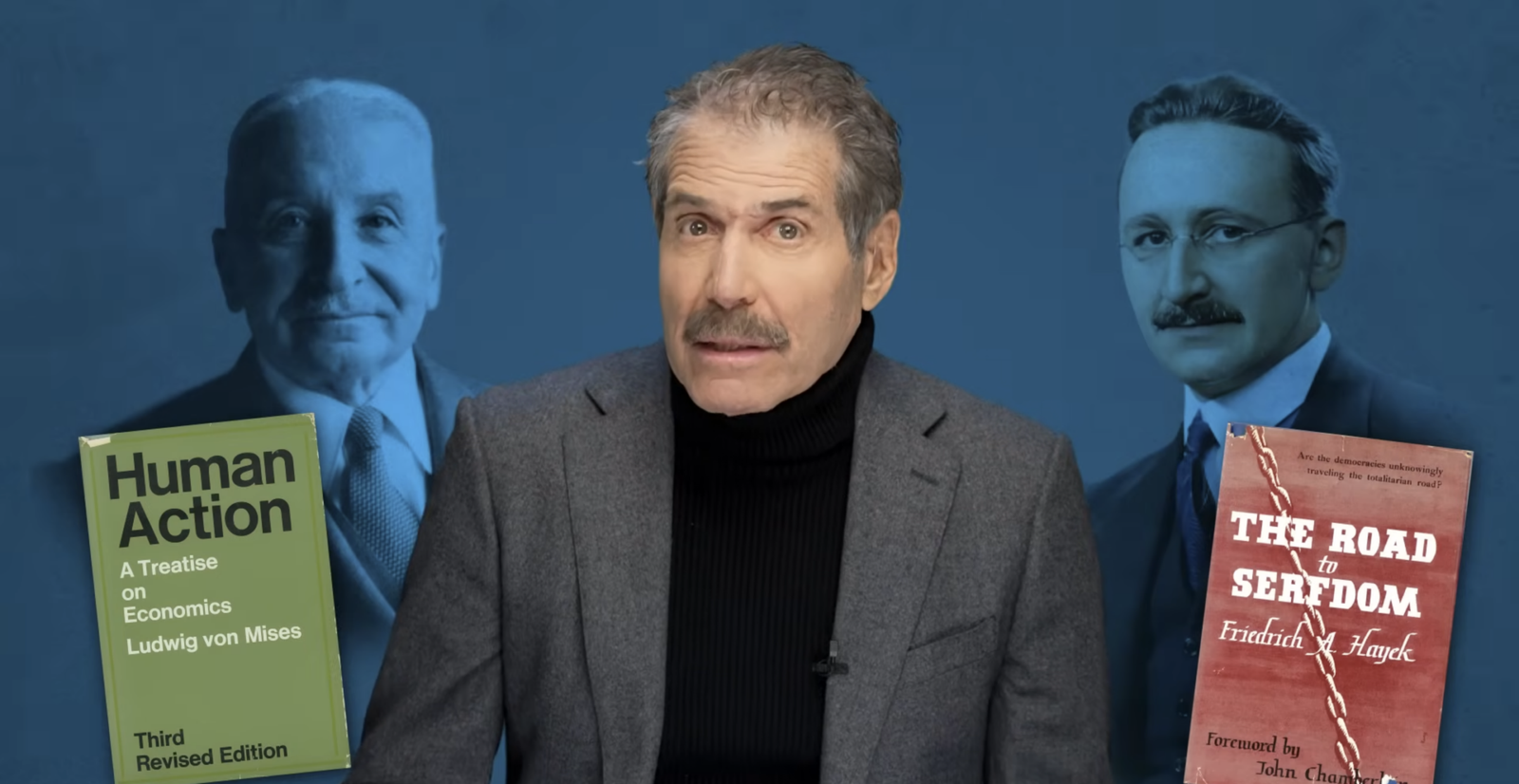
It’s just one example of what Austrian economists Friedrich Hayek and Ludwig von Mises wrote about years ago.

In The Fatal Conceit, Hayek writes, “The curious task of economics is to demonstrate to men how little they really know about what they imagine they can design.”

Mises’ Human Action points out that all economics start with individuals making purposeful choices. That “human action” determines prices, and markets coordinate the most efficient use of resources.

But the media believed the socialists. The New Republic wrote: “The major task of our civilization is…to organize our great economic organs.”

On the contrary, wrote Hayek: “To follow socialist morality would destroy much of present humankind and impoverish much of the rest.”

He was right. Every socialist government, everywhere, has failed. They fail because no political leader can ever know as much as millions of individuals doing our own thing.

“That’s the idea that Mises’ introduced to the world,” says Ryan McMaken of the Mises Institute. “Central planning doesn’t work because everybody has different ideas for themselves, wants to do different things with their property. If you take away their ability to do what they want, it eventually causes great impoverishment.”

I assumed belief in socialism would die when the Soviet Union did—but bizarrely, it hasn’t. Recently, young people helped elect socialist mayors in Seattle and New York City.

They promise rent control and government-run grocery stores.

“We don’t have to look any further than Mises to find an excellent explanation of why that doesn’t work,” says McMaken in my new video.

Unfortunately, Mises and Hayek were never as popular as economists pushing central planning and government spending.

“There’s a big advantage that the people who are in favor of inflation and more government regulation have. Everyone in government wants that same thing,” says McMaken. “‘Like to spend? Like to regulate the economy? Boy, have we got an economic theory for you.’ [That] of course became instantly popular with people in government.”

And popular with the public.

“Because the public wants government to spend on them as well!” says McMaken. “Here was an economic theory telling them the government can give you boatloads of welfare nonstop forever and there’s no downside….The reality is that there is a downside: recessions, unemployment, inflation, and falling real wages.”

We got that in the 1970s, after years of spending on President Lyndon B. Johnson’s “Great Society” programs. In total, American taxpayers have spent $30 trillion in the name of reducing poverty. Politicians said government agencies would spend the money efficiently.

They rarely did, and the deficit spending contributed to 15 percent inflation.

“People then saw, ‘Everything we’ve been told for the last 30 years about managing the economy isn’t really true,'” says McMaken. “When you start to inflate the money supply, it sows the seeds for a future economic collapse. That is the cause of everything we’ve seen over the last century. It is Mises’ work that explains why the Great Depression happened….We have to study the economic side of things because if we don’t…we can’t see the ways that the state is ripping us off.”

Hayek and Mises were right. The socialist planners are wrong.

Books like The Fatal Conceit, The Road to Serfdom, and Human Action, although I couldn’t get through all of it, are well worth reading today.

COPYRIGHT 2026 BY JFS PRODUCTIONS INC.

Read the full article here

Fact Checker

Verify the accuracy of this article using AI-powered analysis and real-time sources.

Get Your Fact Check Report

Enter your email to receive detailed fact-checking analysis

5 free reports remaining

Continue with Full Access

You've used your 5 free reports. Sign up for unlimited access!

Already have an account? Sign in here

#Journalism #MediaBias #NewsAnalysis #PoliticalNews #PublicDiscourse
Share. Facebook Twitter Pinterest LinkedIn Tumblr Email Telegram Copy Link
News Room
  • Website
  • Facebook
  • X (Twitter)
  • Instagram
  • LinkedIn

The FSNN News Room is the voice of our in-house journalists, editors, and researchers. We deliver timely, unbiased reporting at the crossroads of finance, cryptocurrency, and global politics, providing clear, fact-driven analysis free from agendas.

Related Articles

Media & Culture

What Would Have Been Justice Scalia’s Legacy If He Survived Into The Trump Presidency?

8 minutes ago
Debates

Robert Trivers and the Roots of Human Suffering Character

22 minutes ago
Cryptocurrency & Free Speech Finance

Google Shrinks AI Memory With No Accuracy Loss—But There’s a Catch

32 minutes ago
Media & Culture

Ex-Law-Student’s Defamation Claim Against Howard University Can Proceed in Part

1 hour ago
Cryptocurrency & Free Speech Finance

Australia Lays Groundwork for Tokenized Asset Markets After RBA Project

2 hours ago
Media & Culture

Politicians Want To Ban Gambling Ads To Stop Youth Addiction. What Do the Data Say About Teens and Betting?

2 hours ago
Add A Comment
Leave A Reply Cancel Reply

Editors Picks

Robert Trivers and the Roots of Human Suffering Character

22 minutes ago

Sky-backed Obex spreads $1 billion across credit, energy and AI assets to expand stablecoin yield

25 minutes ago

Franklin Templeton, Ondo bring tokenized ETFs to crypto wallets

28 minutes ago

Google Shrinks AI Memory With No Accuracy Loss—But There’s a Catch

32 minutes ago
Latest Posts

Ex-Law-Student’s Defamation Claim Against Howard University Can Proceed in Part

1 hour ago

Foundation says network is becoming core infrastructure for ‘agentic’ internet

1 hour ago

US Lawmakers Hold Hearing on Tokenized Real-World Assets

1 hour ago

Subscribe to News

Get the latest news and updates directly to your inbox.

At FSNN – Free Speech News Network, we deliver unfiltered reporting and in-depth analysis on the stories that matter most. From breaking headlines to global perspectives, our mission is to keep you informed, empowered, and connected.

FSNN.net is owned and operated by GlobalBoost Media
, an independent media organization dedicated to advancing transparency, free expression, and factual journalism across the digital landscape.

Facebook X (Twitter) Discord Telegram
Latest News

What Would Have Been Justice Scalia’s Legacy If He Survived Into The Trump Presidency?

8 minutes ago

Robert Trivers and the Roots of Human Suffering Character

22 minutes ago

Sky-backed Obex spreads $1 billion across credit, energy and AI assets to expand stablecoin yield

25 minutes ago

Subscribe to Updates

Get the latest news and updates directly to your inbox.

© 2026 GlobalBoost Media. All Rights Reserved.
  • Privacy Policy
  • Terms of Service
  • Our Authors
  • Contact

Type above and press Enter to search. Press Esc to cancel.

🍪

Cookies

We and our selected partners wish to use cookies to collect information about you for functional purposes and statistical marketing. You may not give us your consent for certain purposes by selecting an option and you can withdraw your consent at any time via the cookie icon.

Cookie Preferences

Manage Cookies

Cookies are small text that can be used by websites to make the user experience more efficient. The law states that we may store cookies on your device if they are strictly necessary for the operation of this site. For all other types of cookies, we need your permission. This site uses various types of cookies. Some cookies are placed by third party services that appear on our pages.

Your permission applies to the following domains:

  • https://fsnn.net
Necessary
Necessary cookies help make a website usable by enabling basic functions like page navigation and access to secure areas of the website. The website cannot function properly without these cookies.
Statistic
Statistic cookies help website owners to understand how visitors interact with websites by collecting and reporting information anonymously.
Preferences
Preference cookies enable a website to remember information that changes the way the website behaves or looks, like your preferred language or the region that you are in.
Marketing
Marketing cookies are used to track visitors across websites. The intention is to display ads that are relevant and engaging for the individual user and thereby more valuable for publishers and third party advertisers.