Close Menu
FSNN | Free Speech News NetworkFSNN | Free Speech News Network
  • Home
  • News
    • Politics
    • Legal & Courts
    • Tech & Big Tech
    • Campus & Education
    • Media & Culture
    • Global Free Speech
  • Opinions
    • Debates
  • Video/Live
  • Community
  • Freedom Index
  • About
    • Mission
    • Contact
    • Support
Trending

EFF Sues for Answers About Medicare’s AI Experiment

8 minutes ago

FCC Bans Nearly All Wireless Routers Sold in the U.S.

16 minutes ago

SBI, Sony back Startale’s $63 million push to expand Japan’s tokenized finance stack

34 minutes ago
Facebook X (Twitter) Instagram
Facebook X (Twitter) Discord Telegram
FSNN | Free Speech News NetworkFSNN | Free Speech News Network
Market Data Newsletter
Wednesday, March 25
  • Home
  • News
    • Politics
    • Legal & Courts
    • Tech & Big Tech
    • Campus & Education
    • Media & Culture
    • Global Free Speech
  • Opinions
    • Debates
  • Video/Live
  • Community
  • Freedom Index
  • About
    • Mission
    • Contact
    • Support
FSNN | Free Speech News NetworkFSNN | Free Speech News Network
Home»News»Global Free Speech»CPJ, partners call for release of Turkish journalist İsmail Arı
Global Free Speech

CPJ, partners call for release of Turkish journalist İsmail Arı

News RoomBy News Room3 hours agoNo Comments1 Min Read163 Views
Share Facebook Twitter Pinterest Copy Link LinkedIn Tumblr Email VKontakte Telegram
CPJ, partners call for release of Turkish journalist İsmail Arı
Share
Facebook Twitter Pinterest Email Copy Link

Listen to the article

0:00
0:00

Key Takeaways

Playback Speed

Select a Voice

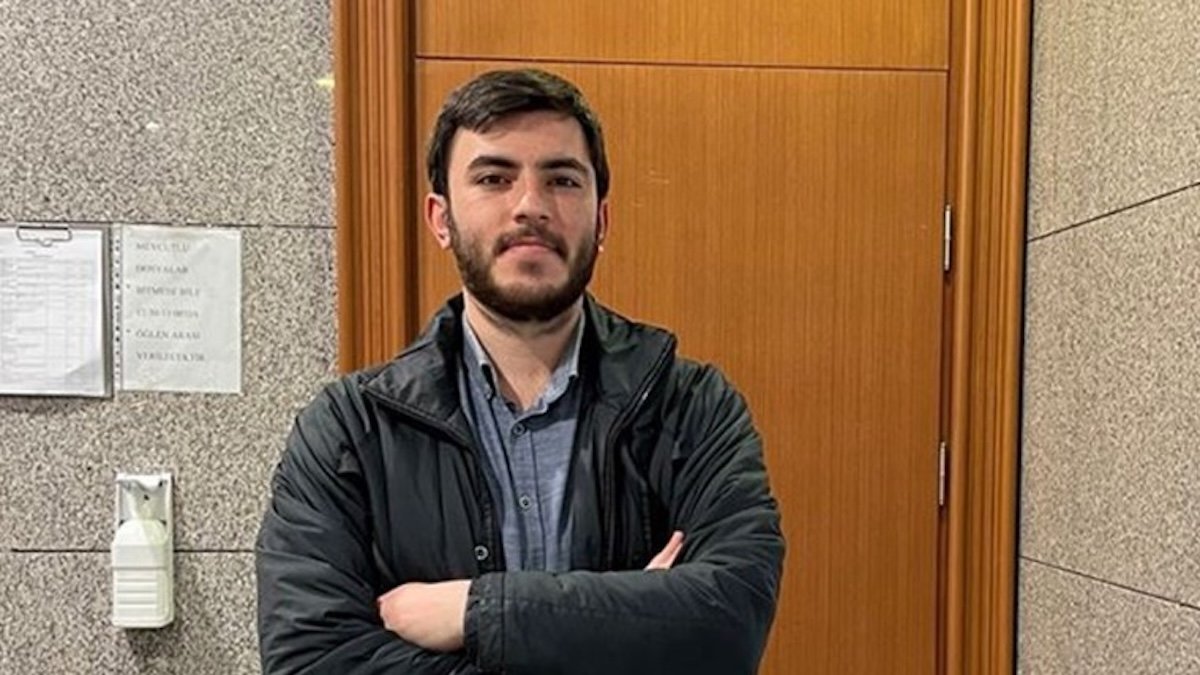
The Committee to Protect Journalists joined eight other local and international press freedom and human rights organizations in calling on Turkish authorities to release daily BirGün reporter İsmail Arı, who was arrested pending trial last week.

Arı’s arrest was based on a 2022 disinformation law that introduced prison sentences of up to three years for spreading false information about security, public order, and the general health of the country that causes concern, fear, or panic.

“The fact that the investigation file is built around Arı’s journalistic output — his published reports, social media posts, and attendance at public events — makes clear that routine journalistic activity is being treated as criminal evidence,” the statement said. “Covering stories, speaking with sources and investigating matters of public interest are not criminal acts.”

Read the full statement in Turkish and English here.

Read the full article here

Fact Checker

Verify the accuracy of this article using AI-powered analysis and real-time sources.

Get Your Fact Check Report

Enter your email to receive detailed fact-checking analysis

5 free reports remaining

Continue with Full Access

You've used your 5 free reports. Sign up for unlimited access!

Already have an account? Sign in here

Share. Facebook Twitter Pinterest LinkedIn Tumblr Email Telegram Copy Link
News Room
  • Website
  • Facebook
  • X (Twitter)
  • Instagram
  • LinkedIn

The FSNN News Room is the voice of our in-house journalists, editors, and researchers. We deliver timely, unbiased reporting at the crossroads of finance, cryptocurrency, and global politics, providing clear, fact-driven analysis free from agendas.

Related Articles

Global Free Speech

Malak Mattar is a Gazan artist based in London This article first appeared in the Winter 2025 issue of Index on Censorship, Gen Z is revolting: Why the world’s youth will not be silenced, published on 18 December 2025. The tortuous process that led to the signing of the 1993 Oslo Accords only came about after sustained Palestinian resistance to Israel’s occupation of the West Bank and Gaza, beginning with the First Intifada of 1987-91. This pushed the international community into action, the subsequent negotiations including several Arab countries alongside Israel and representatives of the Palestinian nation. But the Oslo Accords did not live up to their promise, and did not end the conflict between Israel and Palestine. Thirty-two years on, and two years into Israel’s genocidal war in Gaza, President Trump’s 20-point peace plan similarly seeks to bring about a new Middle East. The cessation of hostilities presents an opportunity for comparing the two plans, and to ask a crucial question: Will this new initiative fare any better in bringing peace, justice and security to the region? Two groups were opposed to the Oslo Accords from the start: Israel’s right wing, and the Islamic resistance group Hamas. Today, the two groups are in control of their respective territories. Hamas holds sway in Gaza, and the ultra-nationalist religious parties have held the Israeli government hostage since the last parliamentary elections in 2022. In 1991, as the International Peace Conference that ultimately led to the Oslo Accords convened in Madrid, I was visiting Geneva, attending a meeting of the Palestinian Welfare Association. In different ways, many of us living in the Occupied Territories had struggled to bring an end to Israel’s occupation of our land. I took the path of human rights, exposing Israel’s repeated violations of international law. The Intifada of 1987-91 was Palestine’s war of liberation; collectively, we were proud of our success in bringing Israel to negotiate with the Palestinians. After my meetings in Geneva, I travelled to the town of Brunnen, to begin a three-day walk around Lake Lucerne. I needed to be by myself and to have some time to reflect. I was expecting that we were at the cusp of a period of peace and an end to our long-lasting struggle. I wanted to think about where this would leave us. Passing through the attractive city of Lausanne, I recalled visiting there with my parents in 1971, when I was 20. My father had often mentioned visiting the city in 1949, when he took part in the conference of the UN Palestine Conciliation Commission. Of the conference itself I knew very little, and I didn’t think to ask him more. As we entered the city, I could tell that my father was wistful, yet I still did not try to inquire what was going on in his mind. How I regret this, especially as the struggle for the right of return of Palestinian refugees forced out of their homes between 1948 and 1949 is still continuing. I was more interested in visiting the prison dungeon in the Château de Chillon, near Montreux on Lake Geneva. It was more than half a century before I learned fully about my father’s role while writing my book, We Could Have Been Friends, My Father and I. I left on the nine o’clock boat from Brunnen to Treib, and then started my hike. The Swiss, I had heard, would be doing their traditional annual walk around the lake, this year commemorating the 700th anniversary of their federation. I expected to find many walkers along the path but soon realised that those who had wanted to walk the route had already done so and gone. I was the only one hiking, and so I had the path to myself. Forty-two years after my father’s participation in the conference at Lausanne, another conference was taking place, this time in Madrid. Perhaps because the earlier conference in Lausanne had failed, the organisers of this new initiative wanted it to take place somewhere else. Spain, with its famous history of Arabs and Jews producing a rich civilisation together, was certainly a more auspicious venue. I did not know what one could reasonably expect from Madrid. James Baker, US Secretary of State, had consumed public attention with his lengthy deliberations about the procedure to be followed. At the time, it was claimed that Baker did not show the list of Palestinian participants to Israel in advance of the conference. A small gesture, but enough for Faisal Husseini, a recognised local leader, to claim a meaningful victory. We, he said, had the final say about our representatives, not Israel. But these were hollow words. Israel had, after all, excluded the Palestine Liberation Organization (PLO) and Palestinians from Jerusalem. But somehow, it was deemed good for morale if the Palestinians believed that Israel had not chosen their delegation for them. I hoped that this was not indicative of what was to come. On the eve of the Madrid conference, Israeli Prime Minister Yitzhak Shamir addressed the European Parliament. Highlights from his speech were broadcast on Israeli television’s evening news programme. It was not Palestinian self-determination that was an obstacle to peace, he told the parliamentarians, but rather the refusal of the Arab states to recognise Israel. Benjamin Netanyahu, more recently, has repeated similar claims. The broadcast then cut to Yigal Karmon, an adviser to Shamir on counter-terrorism affairs. No one – no one – would get to Madrid without Israel’s approval, he declared. “It is man by man,” he added, in his bad English. Karmon’s depressing words notwithstanding, the conference did take place. The floodgates of hope were ready to burst, and Israeli intransigence could not stop this. After Saddam Hussein’s defeat in the First Gulf War, a massive defence mechanism against the very notion of hope had emerged. And yet. The Palestinian Land Registration Department was packed with people buying land. Palestinians who were living in Kuwait were in Amman, waiting for the return. Before the selection of delegates, we had felt a long way from the march of events. Everything seemed to be happening above our heads. It is much the same today, the disillusion that has emerged from negotiations over Trump’s plan seeming very much like it did in 1991. But then, every peace conference must seem like a letdown. What war has ever brought satisfaction to everyone? Peace conferences, at best, are compromise agreements. Thereafter, everything depends on what the parties are able to make of them. Even so, there were objective indicators in the Oslo Accords pointing to disaster. First, the illegal Jewish settlements on our land were to remain in place, with no agreement on freezing their expansion. And then, there were no guarantees concerning the creation of an independent Palestinian state at the end of the process. Trump’s plan echoes these uncertainties. The withdrawal of the Israeli Defence Force (IDF) from Gaza is to be “based on standards, milestones, and timeframes linked to demilitarisation”, to be agreed upon by the IDF and the International Stabilisation Force created for Gaza. What does this mean in fact? That “Israel will retain security responsibility, including a security perimeter for the foreseeable future”. It also means that as of now, there is no end envisaged to the siege of Gaza. This means, amongst other things, that Gaza will not be able to import machinery required for reconstruction. The other problematic area in the plan relates to Palestinian statehood. The plan states that “while Gaza re-development advances and when the PA reform program is faithfully carried out, the conditions may finally be in place for a credible pathway to Palestinian self-determination and statehood”. Translation: even if the Palestinian Authority carried out the prescribed reforms, there is no guarantee that these will be followed by a Palestinian state. Palestinian interests, once again, were being determined without the input of Palestinians themselves. Back to 1991 and Lake Lucerne. Having reached the top of the first ascent, I began the descent. The lake was framed by steep cliffs, and the walk was not as easy as I had anticipated. But at least I had no worries about finding the path, as this was well marked. A refreshing wind blew as I walked and breathed in the crisp clean air. How different it was, I thought, to walk in this Swiss terrain rather than the familiar hills of Ramallah. Around Lake Lucerne, nature is washed and rejuvenated regularly. The rains collect in streams and waterfalls, or remain on the peaks in the form of snow or glaciers. I remembered, on my first visit to the region with my parents, being impressed with the rushing water. I was nervous, but also emboldened, by the powerful thrust of the water, gushing down forcefully. In Ramallah, where the rains are far less frequent, everything remains in place for years. A thin layer of lichen grows on rocks, giving them a leaden and ancient presence. But the most striking difference between Lake Lucerne and Ramallah is that their mountains are majestic: imposing, remote, safe from human domination. Ours are mere hills, easily reached, vulnerable to the greed of jealous suitors. As I continued my descent, the words of Haidar Abdul Shafi, head of the Palestinian delegation to Madrid, came back to me. In his speech he was addressing, “the Israeli people with whom we have had a prolonged exchange of pain.” What a brilliant way to put it. The tragedy, as I felt it, was that even if peace should be reached it would be impossible to undo the pain that had been inflicted and suffered up to this point. Before the whole world, Haider had pronounced: “We, the people of Palestine, stand before you in the fullness of our pain.” He was offering our adversary hope, by declaring that the Palestinian nation was willing to live side by side with them in peace, sharing the land as equals. Now that my wife Penny and I are older, I no longer think that everything is possible. Time has become a pivotal factor in my life. Sometimes one succeeds, and sometimes not. I have had my share of both. Either way, I have had to learn how to accept failure as failure, rather than as a temporary setback that I may still get a second chance to rectify. Will the wheels finally turn, I wondered? Abdul Shafi had indeed said what the Israelis claimed that they were hoping to hear. I wanted to believe that peace, in some form, was on its way. I was already beginning to think about what would come next.But while Abdul Shafi was speaking, Yitzhak Shamir had looked on with cold eyes. Most of what Abdul Shafi had said was forward-looking. The deeply-felt pain of the Palestinians had been given ample expression, but he had also paid recognition to the solidarity of those Israelis who had shared our pain with us. There was a reaching-out for the Israelis, and for the world, to accept our aspirations for self-determination, to correct the injustices caused to generations of Palestinians. But all the while Shamir looked on with a deadpan face, unimpressed and unmoved. But while Abdul Shafi was speaking, Yitzhak Shamir had looked on with cold eyes. Most of what Abdul Shafi had said was forward-looking. The deeply-felt pain of the Palestinians had been given ample expression, but he had also paid recognition to the solidarity of those Israelis who had shared our pain with us. There was a reaching-out for the Israelis, and for the world, to accept our aspirations for self-determination, to correct the injustices caused to generations of Palestinians. But all the while Shamir looked on with a deadpan face, unimpressed and unmoved. When it was his turn to speak, the Israeli prime minister began by decrying the attempts of others to re-write history. But then, he went on to do exactly that. He repeated the famous Zionist claim, that “hundreds of thousands of Arabs who lived in Mandatory Palestine were encouraged by their own leaders to flee from their homes.” He did not even deign to call us Palestinians. And then to what he deemed to be the “root cause of the conflict”: “Arab refusal to recognise the legitimacy of the State of Israel”. Shamir denied the Occupation, refused to acknowledge either the fundamental rights of the Palestinian nation or their suffering. The West Bank, for Shamir, was Judea and Samaria; he belittled our aspirations for a nation, declaring that while “the Arab nations” controlled a landmass of 14 million square kilometres, Israel (in his estimation including the Occupied Territories) controlled a mere 28,000 square kilometres. “The issue is not territory but our existence,” Shamir concluded There was nothing new in Shamir’s speech. If anything, it merely served as proof of Israel’s intransigence, the only difference being that it was now being proclaimed from the podium at the opening of the historic peace conference. This did not bode well for the future. Today, this same Israeli intransigence persists, Shamir’s rhetoric replaced with Netanyahu’s bluster.After my return from Switzerland that winter of 1991, a third snow of the year fell on Ramallah. I decided to take a walk on a street behind the Evangelical Home, on a path that ran parallel to Tireh Road. The hill ahead seemed colossal, as though the houses on it were perched atop a huge edifice. It was engulfed in fog, permitting only a blurred view of the limestone houses and the dark rock of the gardens behind. Towards the east, the sun (which I could see blurred like a shiny chalk ball in the west) was reflected in the clearing sky. Beneath that clear cap, the clouds and the fog below were still thick. The features of the familiar landscape were altered, the horizon redefined as a line slicing the eastern sky into thick stratus clouds and the clear sky. Beneath, one could spot here and there the hills behind, covered by a shimmering sheath of fog, milky white clouds shrouding the familiar hills in mystery. On my way back, I could not resist walking down towards the wadi. Every level I reached opened up the view, the fog receding. But the mystery ahead remained, elusive and out of reach. What, I wondered, would be the future of these hills if Israel were to get its way? What would happen if negotiations could not stop the Israeli intentions that even then I knew so well? Twenty-five years on, I now know this future. The hills where I had once enjoyed walking have now been militarised, with Israeli settlements perched atop. Armed settlers in balaclavas brandish machine guns, attacking farmers and peaceful villagers in their homes. There is nothing in Trump’s plan that is likely to alter any of this depressing reality. Apartheid has only been given a boost, and the new initiative will not bring peace to the Middle East. The Trump plan has been described as “sugar-coated neocolonialism” – not only a moral atrocity but a policy one, too. Like the earlier experiment of the Oslo Accords, the 20-point Trump peace plan is likely to only mark another dismal failure. And so, we will continue to suffer war after war, without hope of reprieve. All illustrations by Malak Mattar, a Gazan artist based in London READ MORE

5 hours ago
Global Free Speech

Malian journalist given 2-year prison sentence for insulting Niger’s president

21 hours ago
Global Free Speech

Jafar Panahi’s 2025 thriller It Was Just an Accident. Photo: Handout “We are worried about what is going to happen. Every morning, we wake up to the sound of explosions. Many places have been destroyed, and I know that some civilians have been killed as well. However, the Islamic Republic does not give us any accurate information, and the domestic news agencies are only propaganda centres for the regime. Because of this, we truly don’t know what is really happening or what awaits us.” These are the words of an Iranian dissident who has managed to contact us from inside the country after Israel and the USA started bombing Iran. They are too concerned for their safety to be named. Iran’s internet has been blocked for days now. There are reports of people protesting from their homes being shot at. The UN has warned that imprisoned Iranian protesters face “expedited” executions. There are fears about conditions deteriorating in Evin prison where a lot of political opponents of the regime are being held. Nobel Peace Prize winner Narges Mohammadi is currently in a jail in Zanjan, a city northwest of Tehran, and her situation is unknown. It is impossible to know exactly what is happening. In war the truth only comes out later – if at all – and disinformation is king. What is worrying is that there is such uncertainty about the outcome, and concern now that the USA and Israel don’t much care about the freedom of the people of Iran. Tens of thousands who bravely came out on the streets earlier this year to protest the regime were brutally murdered, many more arrested. Most shockingly, verified accounts have documented how the Revolutionary Guard swarmed hospitals, prevented medical care, took people off ventilators. Some doctors have even reported that wounded protesters who were being treated were later found with bullet holes in their heads. On Monday Index screened Jafar Panahi’s new film It was Just an Accident in advance of it coming out on Mubi this Friday, 6 March. It is a must-see if you want to understand the varying points of view of ordinary people in Iran. One of the people who talked on our panel discussion after the screening, Tara Aghdashloo, an Iranian writer, director and poet, wrote on Instagram of the current dilemma of those watching what is happening from afar: “Whoever we blame – this moment is overwhelming. There is pain, hoping for something good out of it, more pain, terror, remembering the mass murders by the regime yet fearing what these missiles and bombs could do to family and friends and innocent people, to our environment, infrastructure, our historic sites. Elation, even daring to hope that this fascist dictatorship might be gone once and for all. But remembering that the safety of my people is now in the hands of the same leaders, and that we’re expected to bet that our liberation is in a series of missiles that is shaking the city.” To be an Iranian dissident must be profoundly lonely and confusing. The autocratic ayatollah has been killed. But there is no succession plan for democracy. At Index we have always stood up for the people who want Iran to be finally free, for the women and young people, for the rappers, poets, artists and writers and all those who have put have themselves again and again in the firing line for the right to express their full selves without fear of torture and death. READ MORE

2 days ago
Global Free Speech

Investigative journalist Saddia Mazhar (right) documenting women arrested on International Women’s Day. Photo: Saddia Mazhar All over the world, International Women Day is celebrated to recognise the achievements and rights of women. But unfortunately, in Pakistan, that recognition means nothing. The reason: on that same International Women’s Day, in Islamabad, the federal capital of Pakistan, 44 women taking part in the annual Aurat March (a non-violent demonstration by women’s rights activists demanding social and economic rights) were detained by the police. The were held simply because they were planning to celebrate and put on a rally in the capital to recognise the achievements and challenges of women in Pakistan. The Aurat March activists were picked up by the police under Section 144 of the Criminal Procedure Code (CrPC), which was imposed in the federal capital Pakistan is a deeply patriarchal society where women lag behind in everything, which is why women face discrimination, violence, and sexual harassment on a daily basis. Perhaps unsurprisingly Pakistan was ranked bottom amongst 148 countries such as Sudan, Chad, Iran, and Guinea in the World Economic Forum’s (WEF) Global Gender Gap Report 2025, with only 56.7% gender parity. This is even worse than in 2022, when it ranked 145th out of 146 countries, above only Afghanistan. The Aurat March organisers stated on X that they “were peacefully exercising their right to protest.” Three women journalists who had gone to cover the protests, including investigative reporter Saddia Mazhar (pictured), were also arrested. Reports suggest the women marchers, before being arrested, were dragged, beaten up, and had their arms twisted by the police. Shahbana Zafar, the wife of Harris Khaliq, Secretary General of the Human Rights Commission of Pakistan (HRCP), and others went to the Women Police and Child Station to meet the arrested marchers and they too were detained After their release, the Aurat March organisers held a press conference at the National Press Club. They stated that the theme of Aurat March Islamabad was a feminist constitution, among other things. As a result of the arrests, Prime Minister Shehbaz Sharif’s message on International Women’s Day drew strong criticism from female social media users. His message on X read: “On International Women’s Day, I wish to reiterate my government’s commitment to ensuring a safe, equal and enabling environment for women. The government is taking steps to empower women, protect their rights and provide them opportunities to excel in every field.” READ MORE

2 days ago
Global Free Speech

CPJ, partners highlight threats to public broadcaster’s  independence in Lithuania

2 days ago
Global Free Speech

Access to the global internet is now restricted to loyal servants of the Iranian regime. Photo: Rahadiansyah/Unsplash In wartime Iran, connecting to the internet is now a perilous act, viewed as a crime against the state. Since hostilities erupted between Iran, Israel, and the United States on 28 February 2026, authorities have unleashed one of the most comprehensive internet shutdowns in history, cutting off millions from the rest of the world. Iranian authorities are now warning citizens that sharing photos of bombed locations or even trying to access the global internet could get you prosecuted for “collaborating with the enemy”. Against this backdrop, using a search engine or VPN is no longer innocent – it can be seen as a threat. Following massive airstrikes that killed the Supreme Leader and senior commanders, the state responded not only with anti-aircraft fire, but also activated a “kill switch” – severing international internet infrastructure. According to NetBlocks, connectivity dropped to just 1% of normal levels. For more than 280 hours, 90 million people have endured enforced silence, with over 40% of 2026 so far (up to 10 March) spent under internet shutdown. This calculated effort intends to isolate the population from information, not just a simple malfunction. A text message from an Iranian mobile operator calling on users to report people sharing images or information In a climate of heightened state paranoia, the SMS has become a tool of direct psychological warfare. Most frequently, messages from mobile operators to Iranian users characterise the sharing of images from bombing sites or “anti-government” sentiment as a “security violation”, effectively deputising mobile phones as tracking devices for dissent. More alarming are the rare reports of messages carrying direct judicial weight. These warn that “repeated connection to the international internet” will result in the immediate suspension of the phone line and referral to the judiciary. By criminalising attempts to bypass a firewall, authorities equate digital access with espionage. Notably, while these systems are used to threaten citizens, they have remained silent when issuing air-raid or public safety warnings. The architecture of the “class-based internet” The blackout is not total. Instead, authorities have enforced a “whitelisting” system that grants global web access only to pre-approved, loyal users. This system works because Iran has built its own internal internet, separating local traffic from the rest of the world. When the government turns on the whitelist, most people can only use local sites, while a small, approved group can still access the global internet. Instead of just blocking certain websites, the government now blocks most people entirely, letting only trusted insiders through. On 10 March, government spokesperson Fatemeh Mohajerani – representing an administration that, ironically, had campaigned on a pledge to reduce filtering – confirmed this graded reality. She stated that the government is working to provide limited access specifically for those who can “convey the voice of the system to the world”. This allows the regime to dominate the narrative reaching the outside world, drowning out civilian experiences with state propaganda. The digital underground: Configs and cat-and-mouse Despite threats, the Iranian people have not surrendered their right to speak. An underground network of “configs” now sustains resistance. Software like V2Ray, Xray, or Trojan is essentially an engine that does nothing on its own. To function, they require a specially formatted text file that specifies which server, protocol, and path to use. What users receive as links or files in private Telegram channels are actually encoded versions of these settings. Because the state’s deep packet inspection technology is constantly hunting for these connections, these files often have a very short lifespan. The challenge of keeping connections alive has created a high-risk black market. Short-lived configs are bought at high prices, making communication expensive and risky. For many users, especially those with limited technical knowledge, the situation creates new vulnerabilities. People searching for a way to contact relatives abroad often rely on unknown sellers or unverified software, exposing them to scams, malware, and surveillance risks. Some turn to Starlink, but owning such hardware adds further dangers of arrest and confiscation. Doxing as statecraft: The “spy hunters” The crackdown isn’t just online. Some Telegram channels linked to security forces now encourage people to report on each other, calling it an effort to find spies. These channels employ open-source intelligence tactics to identify citizens. When a video of an airstrike is posted, these groups inspect metadata and visual details to pinpoint the photographer’s location. Their personal information is then exposed, and they are labelled as enemy collaborators. This vigilante-style digital hunting is supported by the highest levels of the judiciary. Chief Justice Gholam-Hossein Mohseni-Ejei has publicly warned of “no leniency”, while state television has discussed punishments ranging from property confiscation to the death penalty for media actions that “damage national security”. The humanitarian cost of silence The human rights implications are catastrophic. Human Rights Watch has warned that the shutdown violates international law. When the IDF issues evacuation warnings on social media, those warnings fall into a digital vacuum. Because the general population cannot access the global web, they cannot see the maps or the warnings intended to save their lives. Centuries ago, the Persian Empire pioneered the Chapar-khaneh, a sophisticated postal system that revolutionised communication. Today, the heirs of that civilisation are being forced into a digital dark age. This is not the first time a nation has been stripped of its right to the global digital commons, nor will it be the last. But this crisis must serve as a provocation for the next generation of internet giants. As satellite-to-mobile technology advances, internet providers face the question of whether global access should be guaranteed in places where governments restrict connectivity. Preventing the criminalisation of communication may require new technical solutions. Securing open access remains a challenge for the global community. READ MORE

2 days ago
Add A Comment
Leave A Reply Cancel Reply

Editors Picks

FCC Bans Nearly All Wireless Routers Sold in the U.S.

16 minutes ago

SBI, Sony back Startale’s $63 million push to expand Japan’s tokenized finance stack

34 minutes ago

These 4 Bitcoin Onchain Metrics Point to ‘Weaker Demand’ for BTC

35 minutes ago

Visa Becomes First Major Payments Company to Join Canton Network as Super Validator

39 minutes ago
Latest Posts

👓 Who’s Really Watching What Smartglasses See? | EFFector 38.6

1 hour ago

AI Might Be Our Best Shot At Taking Back The Open Web

1 hour ago

On Scholarly Engagement

1 hour ago

Subscribe to News

Get the latest news and updates directly to your inbox.

At FSNN – Free Speech News Network, we deliver unfiltered reporting and in-depth analysis on the stories that matter most. From breaking headlines to global perspectives, our mission is to keep you informed, empowered, and connected.

FSNN.net is owned and operated by GlobalBoost Media
, an independent media organization dedicated to advancing transparency, free expression, and factual journalism across the digital landscape.

Facebook X (Twitter) Discord Telegram
Latest News

EFF Sues for Answers About Medicare’s AI Experiment

8 minutes ago

FCC Bans Nearly All Wireless Routers Sold in the U.S.

16 minutes ago

SBI, Sony back Startale’s $63 million push to expand Japan’s tokenized finance stack

34 minutes ago

Subscribe to Updates

Get the latest news and updates directly to your inbox.

© 2026 GlobalBoost Media. All Rights Reserved.
  • Privacy Policy
  • Terms of Service
  • Our Authors
  • Contact

Type above and press Enter to search. Press Esc to cancel.

🍪

Cookies

We and our selected partners wish to use cookies to collect information about you for functional purposes and statistical marketing. You may not give us your consent for certain purposes by selecting an option and you can withdraw your consent at any time via the cookie icon.

Cookie Preferences

Manage Cookies

Cookies are small text that can be used by websites to make the user experience more efficient. The law states that we may store cookies on your device if they are strictly necessary for the operation of this site. For all other types of cookies, we need your permission. This site uses various types of cookies. Some cookies are placed by third party services that appear on our pages.

Your permission applies to the following domains:

  • https://fsnn.net
Necessary
Necessary cookies help make a website usable by enabling basic functions like page navigation and access to secure areas of the website. The website cannot function properly without these cookies.
Statistic
Statistic cookies help website owners to understand how visitors interact with websites by collecting and reporting information anonymously.
Preferences
Preference cookies enable a website to remember information that changes the way the website behaves or looks, like your preferred language or the region that you are in.
Marketing
Marketing cookies are used to track visitors across websites. The intention is to display ads that are relevant and engaging for the individual user and thereby more valuable for publishers and third party advertisers.