

 Freedom Index

Listen to the article
Stripe’s newly launched Machine Payments Protocol (MPP) could mark a turning point for micropayments — a long-promised but underutilized use case in crypto and beyond — as AI agents reshape how transactions are made.
That’s the key takeaway from newly published analysis by Forrester senior analyst Meng Liu, who argues that MPP may succeed where decades of earlier efforts failed.
Introduced earlier this month, MPP enables AI agents to execute transactions automatically, removing the need for human approval at each step. It is described as an open protocol for coordinating payments between AI agents and services. Liu frames this as a structural shift from human-initiated payments to machine-to-machine transactions.
Micropayments, which are typically small transactions worth a few cents or dollars, have long been seen as a way to monetize digital content, services and data, but have struggled to gain traction at scale.
A major barrier to adoption has been human behavior, including cumbersome digital checkout processes and reluctance to approve small charges, Liu said.
By contrast, AI agents executing payments as part of task completion, such as paying to access data or use online services, eliminate those constraints.
“Payment becomes a programmatic step, not a discrete decision,” Liu wrote. “There’s no checkout moment, no cart abandonment risk, and no mental transaction cost.”
Importantly, MPP is not a new settlement network. Instead, it acts as a coordination layer for automated payments, designed to work across existing infrastructure, including traditional rails, digital wallets and, where supported, crypto rails.
Related: AI agent payment volumes lower than reported, but adoption is growing: a16z
AI payments push extends beyond Stripe
Stripe is a payments company that has expanded into digital assets, including support for stablecoins, crypto on-ramps and blockchain-based payment tools. While MPP itself is not inherently blockchain-based, other companies are also developing infrastructure for AI-driven payments, particularly in areas such as micropayments and autonomous transactions.
One recent example is MoonPay, which released an open-source wallet standard designed for AI agents. The framework allows agents to hold, send and receive digital assets, enabling them to transact independently without human intervention.
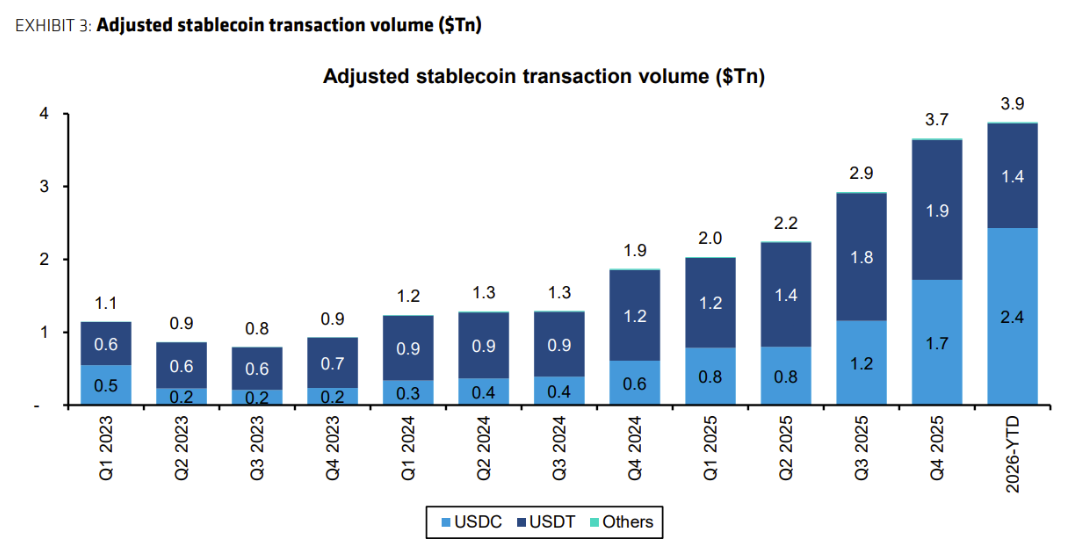
Meanwhile, analysts at Bernstein believe AI agents could boost demand for stablecoins, as they are well-suited for handling frequent, low-value payments. Like Forrester’s Liu, Bernstein also pointed to Coinbase’s x402 protocol, which enables automatic internet payments between machines.
Related: Crypto Biz: Institutions aren’t waiting for the bottom
Read the full article here
Fact Checker
Verify the accuracy of this article using AI-powered analysis and real-time sources.