Close Menu
FSNN | Free Speech News NetworkFSNN | Free Speech News Network
  • Home
  • News
    • Politics
    • Legal & Courts
    • Tech & Big Tech
    • Campus & Education
    • Media & Culture
    • Global Free Speech
  • Opinions
    • Debates
  • Video/Live
  • Community
  • Freedom Index
  • About
    • Mission
    • Contact
    • Support
Trending

Backpack Exchange launches BP token with 25% airdrop, no insider allocation

51 seconds ago

Bitcoin Traders Warn BTC Price Bear Market Is Set to Resume Toward $46K

3 minutes ago

Arrest Made in Violent Kidnapping of Ledger Founder for Crypto Ransom: Report

6 minutes ago
Facebook X (Twitter) Instagram
Facebook X (Twitter) Discord Telegram
FSNN | Free Speech News NetworkFSNN | Free Speech News Network
Market Data Newsletter
Monday, March 23
  • Home
  • News
    • Politics
    • Legal & Courts
    • Tech & Big Tech
    • Campus & Education
    • Media & Culture
    • Global Free Speech
  • Opinions
    • Debates
  • Video/Live
  • Community
  • Freedom Index
  • About
    • Mission
    • Contact
    • Support
FSNN | Free Speech News NetworkFSNN | Free Speech News Network
Home»News»Global Free Speech»Reporter İsmail Arı imprisoned in Turkey for spreading ‘disinformation’
Global Free Speech

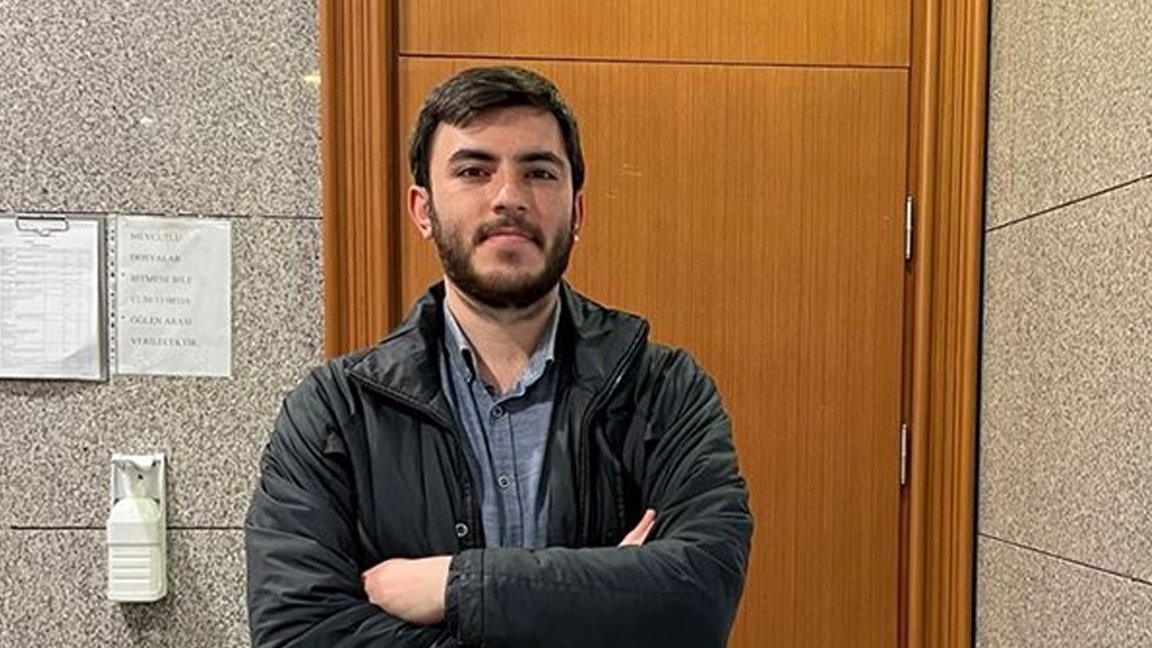
Reporter İsmail Arı imprisoned in Turkey for spreading ‘disinformation’

News RoomBy News Room2 hours agoNo Comments2 Mins Read164 Views
Share Facebook Twitter Pinterest Copy Link LinkedIn Tumblr Email VKontakte Telegram
Reporter İsmail Arı imprisoned in Turkey for spreading ‘disinformation’
Share
Facebook Twitter Pinterest Email Copy Link

Listen to the article

0:00
0:00

Key Takeaways

Playback Speed

Select a Voice

Istanbul, March 23, 2026—Turkish authorities must immediately release journalist İsmail Arı and stop misusing the disinformation law, the Committee to Protect Journalists said Monday. 

Arı, a reporter for the leftist daily BirGün, was taken into custody in the northern province of Tokat, where he was visiting family on March 21. He was taken to Ankara the next day and arrested by a court, pending trial on the suspicion of publicly spreading disinformation. Arı was questioned about his work by Ankara police for hours, BirGün reported.

A 2022 disinformation law introduced prison sentences of up to three years for spreading false information about security, public order, and the general health of the country that causes concern, fear, or panic.

“Rights defenders who expressed worries that the ‘false information’ law would be abused to silence journalism were told that journalists wouldn’t be prosecuted unless the reporting causes concern, fear, or panic,” said Özgür Öğret, CPJ’s Turkey representative. “Who is scared of İsmail Arı’s reporting? The authorities must release Arı without delay and put an end to the misuse of this law.” 

Arı released a message via his lawyers while he was in custody. He said his social media posts and videos are being used as evidence against him.

“My only crime is practicing journalism in this country,” he said. “Journalism is not a crime.”

Arı’s reporting on allegedly unlawful construction work at a cultural heritage location in Istanbul led to his arrest, according to BirGün. He is at Sincan Prison in Ankara awaiting trial. Turkish journalists arrested pending trial may spend months behind bars before an indictment is written and a court date is set, CPJ research has found. 

CPJ emailed Turkey’s justice ministry for comment but did not receive an immediate reply.

Read the full article here

Fact Checker

Verify the accuracy of this article using AI-powered analysis and real-time sources.

Get Your Fact Check Report

Enter your email to receive detailed fact-checking analysis

5 free reports remaining

Continue with Full Access

You've used your 5 free reports. Sign up for unlimited access!

Already have an account? Sign in here

Share. Facebook Twitter Pinterest LinkedIn Tumblr Email Telegram Copy Link
News Room
  • Website
  • Facebook
  • X (Twitter)
  • Instagram
  • LinkedIn

The FSNN News Room is the voice of our in-house journalists, editors, and researchers. We deliver timely, unbiased reporting at the crossroads of finance, cryptocurrency, and global politics, providing clear, fact-driven analysis free from agendas.

Related Articles

Global Free Speech

CPJ welcomes Kyrgyzstan’s release of journalist Makhabat Tajibek kyzy, calls for charges to be dropped

56 minutes ago
Global Free Speech

Journalists from the state broadcaster RTK will meet members of the mission. Photo: Arianselmani From 24 to 25 March 2026, partner organisations of the Council of Europe Platform on the Safety of Journalists and other organisations will conduct a two-day fact-finding mission to Prishtina, Kosovo. The purpose of the mission is to assess the challenges to media freedom in the country and to discuss the possible solutions with media stakeholders and authorities. During the mission, the delegation will address political pressure on the media; the safety of journalists; journalists’ working conditions; legislation, including the media law and proposed amendments; the public broadcaster and the Independent Media Commission; journalists’ access to public information; legal threats, including abusive lawsuits (SLAPPs) and proposals to re-criminalise defamation; and the transposition and application of the European anti-SLAPP Directive, the European Media Freedom Act (EMFA), and the Digital Services Act (DSA). Prime Minister Albin Kurti has confirmed a meeting with the delegation. The delegation will also meet editors and journalists, members of the parliamentary media committee, judicial authorities, police representatives, regulatory bodies, and representatives of the public broadcaster. Following the two-day mission, the partners will present their initial findings at a press conference in Prishtina on 25 March 2026 and will subsequently publish a report on media freedom alongside a set of recommendations. The report will be shared with relevant national and international organisations. A similar fact-finding mission to Kosovo was organised by the Platform in 2022. The mission is supported by the Association of Journalists of Kosovo. Participating organisations European Centre for Press and Media Freedom ⁠European Federation of Journalists ⁠Reporters Without Borders ⁠International Press Institute ⁠Osservatorio Balcani Caucaso Transeuropa ⁠Association of European Journalists ⁠Index on Censorship READ MORE

60 minutes ago
Global Free Speech

The Russian messenger app MAX has been castigated for its aggressive gathering of metadata and wide-ranging requests for permissions. Photo: Imago/Bode/Alamy The fifth year of Russia’s full-scale war against Ukraine grinds on, with its unvarying backdrop of devastated Ukrainian cities and extensive casualties among the non-combatant population. Meanwhile the Russian authorities exploit the war as justification for constantly tightening the screws of their repressive policies at home. In the last few years, criminal prosecutions for speaking out have become common, everyday occurrences. The definitions of “extremism” have become increasingly vague, and the pressure applied to the independent media and civil society initiatives has become systemic. Alongside these developments, another, less visible, but equally significant process has been gathering momentum: the restructuring of the digital environment in such a way as to induce people to modify their own behaviour themselves – frequently without even realising. Six months ago a law came into force in Russia making it an offence punishable by law to search for extremist materials online. This law, which was widely publicised in the media, functions as a “bogeyman”. That is, the security men’s little lamp won’t light up if you have entered “Navalny” in Google, but if they confiscate your computer and discover a search query like that in it, you can be charged with a crime. In the news, however, they don’t tell you about fine details like that. In the news they simply say that those who search for extremist materials online will be punished and that is what remains imprinted on people’s minds – that googling anything against the authorities is prohibited. For a long time, the Russian state’s approach to control of the internet was overt and unsubtle: ban a site, block a platform, restrict access. This didn’t work well. It annoyed people, provoked resistance and rapidly spawned solutions that bypassed restrictions. But in the fifth year of a war which, in regions under attack by drones, is accompanied by constant interruptions to mobile internet services, a solution has been found. Whitelisting. The implications of the whitelist model are simple: stable access is only assured to services approved in advance by the state. All the rest can operate, but with outages or restrictions, and without any guarantees. At the same time, Roscomnadzor (the Federal Supervisory Agency for Information and Communications Technologies) has decided to block calls via WhatsApp and Telegram – and this affects everybody. WhatsApp is the most popular messenger app in Russia, with 96 million users. People, especially the older generation, like it because it is simple. It’s good for everyday and family use, for off-the-cuff calling. Telegram is good for other things: it’s a connection to a field of information, news, politics and alternative points of view. They tried to block it as early as 2018, but when it became clear that direct prohibitions don’t work, the strategy changed. They no longer block apps completely but simply render them inconvenient. And to replace them they offer the “national messenger app” MAX. Celebrities who are loyal to the authorities advertise it on TV and urban billboards. “Great reception even in the car park,” a pro-government female rapper declares as she posts a MAX advertising video in stories, while the other apps beside it can no longer provide any access at all. MAX is rapidly becoming the compulsory communications channel in schools and nursery schools, universities and colleges, state and municipal institutions, as well as in “house chats” for residents of apartment blocks, facilitated by the management companies. Its introduction is only rarely achieved by means of public command: in most instances it is a case of word-of-mouth instructions and surreptitious pressure – from warnings about “unpleasantness” to threats of disciplinary reprimands or dismissal. MAX is whitelisted by definition. It is stable in situations where other applications are “temporarily unavailable”. MAX has to be preinstalled on all the mobile devices offered for sale in the country. But MAX is not attempting to become everyone’s “favourite” all at once. It is enough for it to become compulsory. There is no attempt to persuade people – they are simply transferred under the pretext of “convenience”. MAX’s most crucial characteristic is its profound integration with the platform Gosuslugi (State Services). This is an individual’s digital profile: passport, taxes, fines, medical record, welfare payments. MAX can be used to confirm a person’s identity or age, and it can be used as a digital document – for instance when purchasing alcohol. This changes the very nature of the messenger app. It ceases to be a space for networking and socialising and becomes part of an ID system. MAX’s very interface suggests that it is the Russian equivalent of the Chinese app WeChat. The Russian authorities are looking to China more and more nowadays – not as a model that can be copied point for point, but as proof that control can be built into everyday reality. The Chinese system doesn’t work by means of incessant prohibitions, but by virtue of people’s habituation to limits. They know in advance what the boundaries are and they act within them. And Russia’s digital policy is gradually leading people in the same direction. However, WeChat was never designated a “national messenger app”, and people were not herded into it by the threat of being sacked: it defeated the competition on its own terms – thanks to its convenience, ecosystem of services and the early effect of scale. Initially it was simply a messenger app, then a payment instrument, and then a portal to municipal amenities, the media, taxis and state services. The process of habituation was organic, and the infrastructure of control was only constructed around already familiar elements. MAX was immediately castigated for its aggressive gathering of metadata and wide-ranging requests for permissions – access to contacts, photos, call history, screen – and the absence of end-to-end encryption (E2EE) by default: this means that all messages are saved on servers in readable form, creating the risk of their being accessed by third parties or state agencies. But it is not the technical details that are most important. The most important thing is the effect: the individual becomes accustomed to the idea that risk, not privacy, is the norm. That it is safer not to discuss anything superfluous. That it is simpler not to ask questions. In this way a new model of social behaviour is taking shape. Despite the official declarations, MAX has not become massively popular by choice. People use it because they need to. Because otherwise it’s impossible to manage. This is a fundamental difference from messenger apps that have become integrated into life in an organic fashion. And this is the point at which the most disturbing question of all arises. The war might come to an end, but will the blocking of the mobile internet also end? An infrastructure of social control is rarely temporary. When public money has been invested in it, when it has been built into schools, state institutions and people’s everday activities, it starts living a life of its own. New justifications for it will always be found: security, stability, new threats. Not coercion, but habituation. When social interaction becomes cautious, there is no longer any need for constant intervention by the censor. Censorship is already built into daily life. In this sense, what is happening now resembles ever more closely Michel Foucault’s theory of the Panopticon – an “open prison” in which control is effected, not by means of constant surveillance, but by the possibility of surveillance. Individuals do not need to know that they are being observed at this moment. It is sufficient for them to be uncertain whether they are. In this system the walls become invisible and discipline becomes internal. A digital infrastructure organised.around whitelists, identification and unstable means of communication reproduces precisely the same logic:  individuals start behaving cautiously, not because they are being punished, but because it’s simply safer that way. It is also important to note that this behaviour does not remain within the ambit of the application. It is inevitably extrapolated to life offline – to conversations in public spaces, to spontaneous discussion, to the way in which people speak out loud. When communication in digital space becomes cautious and functional, the same model is gradually carried over into ordinary life. The open prison has no need of bars or guards: it inculcates the habit of self-limitation. And that is precisely why such systems remain stable long after the formal reason for their appearance disappears. READ MORE

2 hours ago
Global Free Speech

The Al Quds march in London in 2018. Photo: City Bloke/Alamy Earlier this week the UK government approved a request from the Metropolitan Police to ban the al-Quds Day march. The Met requested the ban due to safety concerns. They also said the march’s organisers were “supportive of the Iranian regime”. We have issue here, not with any of these suggestions, but rather with the idea that they are grounds enough for an outright ban, which can easily then be used against others later. Al-Quds Day – named after the Arabic word for Jerusalem – was first held in Iran shortly after the 1979 Revolution. It was created by the then leader Ayatollah Ruhollah Khomeini to show Iran’s solidarity with Palestinians and to emphasise Jerusalem’s importance to Muslims. Events for the day, which is now held worldwide, typically on the last Friday of Ramadan, are often accompanied by venomous anti-Zionist and anti-Israel sentiment. The London march – which has taken place for many years now – is organised by the UK al-Quds Committee, which comprises several organisations, with the Islamic Human Rights Commission (IHRC) playing a central role. The organisers insist the event is peaceful. In the past, however, the Met say there have been “arrests for supporting terrorist organisations and antisemitic hate crimes”. Whether the march would be more violent than other protests is impossible to say. What is certainly true, however, is the connection to Iran. Some of those involved do not hide their admiration for the Iranian regime. The IHRC recently described Ayatollah Ali Khamenei, the former leader of Iran killed in an Israeli/US airstrike two weeks ago, as a leader who “resisted oppression and stood on the right side of history”. This about someone who presided over the brutal massacre of tens of thousands of protesting Iranian citizens this year alone. Yet it is not illegal in this country to express support for the Iranian government. It may be deeply distasteful, but distasteful and illegal are not the same thing. Levels of violence are also difficult to predict and all protests inevitably carry risks. At the march organised by the far-right activist Tommy Robinson in September 2025, 26 police officers were injured while policing a demonstration that brought 150,000 people onto the streets of central London. Twenty-four people were arrested. It was likely clear in advance that there would be some violence, but the march still went ahead. Ultimately, we have laws in place to criminalise violence and to legislate against incitement and hate speech. These laws aren’t suspended during protests and they should be used and are used. This is the first time a march has been banned in London since 2012, and a static protest will take place instead. The Metropolitan Police have been keen to emphasise that the decision was not taken lightly: the Commissioner Mark Rowley says that he recognises the importance of the right to protest and freedom of speech. We can only hope this ban is as unique as he and the government say. Unfortunately, the broader atmosphere provides little reassurance. Successive laws in the UK have chipped away at the right to protest. And now we have more and more instances of the “heckler’s veto”, a situation in which any group can shut down an event simply by citing a threat of disorder. A film about the far right was cancelled at the Southbank Centre in 2024, for example, because of fears of violence from extremists; Maccabi football fans were banned from an Aston Villa game citing safety (it later transpired the evidence was manipulated). It’s a slippery slope here, where banning one event on safety grounds creates a precedent to ban more. It’s useful to look to history here for other examples. Perhaps no better is Skokie. In 1977, the National Socialist Party of America – a group of self-styled Nazis – planned a march through Skokie, a town near Chicago. Skokie was home to around 40,500 Jews, many of them Holocaust survivors. When the town denied the group a permit, the American Civil Liberties Union (ACLU) stepped in. One of their lawyers, a Jewish man named David Goldberger, chose to represent the Nazis on free speech grounds. The case eventually reached the United States Supreme Court, which ruled in ACLU’s favour. The march was permitted. In the end, it was a pathetic affair. The Nazis moved their demonstration from Skokie to Chicago. Around 20 members turned up for a rally that lasted barely 10 minutes. They were met by roughly 2,000 counter-protesters. With hindsight, most agree it was the right decision to allow the march. The Nazis were allowed to exercise their First Amendment rights, but they failed to persuade anyone of their message. Nor were they granted the underdog status they might have exploited to attract sympathy and support. At the time though, ACLU’s position was deeply unpopular. Many were outraged that the principle of free speech was being evoked in the name of Nazism. ACLU lost members. It was not an easy case to fight. Today we find ourselves in a similar predicament. Across the political spectrum and across the world, people are marching – some for causes that align closely with universal human rights and others that do not. In some instances, the causes being championed are in fact in direct opposition to freedom of expression. More worrying still, illiberal causes are increasingly being cloaked in the language of human rights and social justice. Some protest movements borrow the vocabulary of tolerance while aligning themselves with groups or regimes that have little regard for it. A report released this month even exposed several UK charities as having links to the Iranian regime. Some protests don’t even hide the language of hate and instead seek to justify it in the name of an otherwise worthy cause. We must be clear-eyed about the nature of certain protests. But we can still argue that they should be allowed to go ahead. As with Skokie, it is often better to allow people their moment in the open – where their views can be scrutinised and challenged, and policed when they do cross a legal threshold – than pre-emptively stopping them altogether. READ MORE

3 hours ago
Global Free Speech

Rescuers at Minab school. Photo by: Mehr News Agency, CC BY 4.0 What actually happened when the Minab school in Iran was bombed matters. For a few moments last week I thought the Italian novelist Elena Ferrante had died. She hadn’t. It was fake news, spread on X. Before her death was debunked, thousands had engaged with the “news”. Stories like this (and there have been plenty of other faux celebrity deaths) do so well because of our inherent cognitive bias. We see them, we get very emotional – Ferrante is a beloved author – and in that moment we short-circuit critical thinking and head straight to a response – outrage, upset, even schadenfreude. It’s a similar story with Iran. Israel, the USA, the Iranian regime – all elicit strong emotions, which partly explains why the responses to what happened at the Minab school bombing have been so tense and contradictory. Major public figures, from politicians to comedians, have amplified their version of what they think happened. It’s prompted the New York Times and others to try and decipher, in this incredibly challenging media landscape, just what exactly did take place. Because facts matter. Few would publicly disagree with this principle and yet cognitive bias today is extending to how people approach fact-checkers. For some they’re censorious liberals, intent on silencing right-wing voices. For others they’re essential soldiers fighting for democracy, and indeed free speech, in the age of Russian troll machines. Index has always sought to identify issues with handling mis- and disinformation – false flags and stories that change as new evidence emerges. Ultimately we believe that with advances to artificial intelligence and ample examples of online deception, we need a lot more people investigating, highlighting and contextualising where our information comes from. The Trump administration isn’t with us. Since Donald Trump’s return to power, not only respected journalists and media outlets, but mis- and disinformation researchers have been in his firing line. These researchers have battled federal funding cuts, a surge in abuse, even death threats. In December five people were denied visas to the USA, accused of being part of the “global censorship-industrial complex”. More could fall prey. Plans are afoot for non-citizens working in the space to have their visas revoked or denied and face detention and deportation. The researchers are fighting back. This week the Knight First Amendment Institute and Protect Democracy filed a lawsuit on behalf of the Coalition for Independent Technology Research (CITR), challenging the constitutionality of the new immigration policy. The claimants argue that it violates their First Amendment rights and is intended to chill independent research about social media and other internet platforms. “This policy is meant to censor researchers into silence and keep the public in the dark, and that’s exactly what it’s doing,” said Brandi Geurkink, executive director at CITR. We agree. A viral post suggesting Ferrante is dead doesn’t matter hugely. Information on how the war is being conducted in Iran does. Experts who can spot the red flags and contextualise the information we receive aren’t free-speech enemies and branding them as such is a less than subtle way to silence them. READ MORE

4 hours ago
Global Free Speech

BBC World Service, Aldwych. Photo by: Newscast Online/Alamy Could there be a more urgent need for an independent source of news and information with international reach and a historic track record of support for political dissidents and exiles from authoritarian regimes? If the BBC World Service didn’t exist, this would be a very good time to invent it. So it is excellent news that Foreign Secretary Yvette Cooper has announced an increase in funding of £33m over the next three years. The settlement was said to be a priority for outgoing Director-General, Tim Davie, but MPs and campaign groups had warned of uncertainty as the deadline of the end of the financial year approached. At the end of February, Index coordinated a letter from nine free expression and journalism organisations calling on Foreign Secretary Yvette Cooper to make the funding available and ensure a sustainable funding model for the future. Now the BBC is calling on the government to take back full responsibility for funding the service, as it did until 2014. The news of the funding settlement comes less than two months after the BBC announced the launch of an emergency radio programme for Iran in response to the internet blackout. In a move reminiscent of the work of Radio Free Europe and the World Service during the Cold War, BBC News Persian has been made available on mediumwave and shortwave to provide a half-hour programme broadcast every evening to Iran. Funding for the programme had been found from existing sources. But when Fiona Crack, Interim Global Director of BBC News announced the launch of the service in January, before the start of the current conflict, she made it clear that the cash could only be guaranteed until the end of March. In making the announcement, the foreign secretary paid tribute to the work of the World Service in Iran: “In a world of rising disinformation, the BBC World Service provides hundreds of millions with journalism they can trust and rely on. We are seeing in real time how the BBC Persian service is playing a crucial role in ensuring impartial, accurate news is reaching the Iranian people.” The BBC has developed a strong recent tradition of emergency radio news services launched in response to conflicts and disasters. In February, the BBC launched a news service for Ukraine following the Russian invasion. Emergency radio broadcasts were setup for Gaza and Sudan in 2023 and in Syria after the fall of Assad. In In April 2025, a BBC News Burmese satellite channel provided news in the aftermath of Myanmar earthquake. A report from the Public Accounts Committee warned of the wider consequences of cuts to the World Service. Speaking earlier this month. Conservative chair of the PAC, Sir Geoffrey Clifton-Brown said: ” It risks opening the door to propaganda from hostile states filling the void it leaves behind. At a time of heightened geopolitical tensions, the UK cannot afford to lose such a crucial soft power instrument.” Those who have worked at the World Service understand the importance of this element of the BBC’s output and the unique culture it engenders. Writing in The Times this week, columnist Libby Purves remembered her time as a young producer at the World Service HQ at Bush House in the 1970s. She told the story of taking an Angolan friend to lunch who explained how much the World Service had meant during her country’s civil war, “but when I pointed out one of its newsreaders eating lasagne at the next table she dared not be introduced lest emotion overwhelm her”. I had a similar experience with a Ghanian friend in the early 90s, who insisted on having our photo taken together outside Bush House when he discovered I worked at the World Service. I was in a very lowly position in the organisation, but told me I should feel privileged. And he was right. I was working at BBC English at the time, which specialised in teaching English as a foreign language, and represented the very essence of soft power. At the time, Managing Director John Tusa had a vision for the World Service in the post-Cold War era, which included a “Marshall Plan for the Mind” to promote British commercial and cultural interests in the post-Communist world. As the son of a Czech exile Tusa understood how vital the World Service was. Born in Zlín, in former Czechoslovakia, he and his family fled to Britain in 1939 to escape the Nazis. We need that vision now. READ MORE

5 hours ago
Add A Comment
Leave A Reply Cancel Reply

Editors Picks

Bitcoin Traders Warn BTC Price Bear Market Is Set to Resume Toward $46K

3 minutes ago

Arrest Made in Violent Kidnapping of Ledger Founder for Crypto Ransom: Report

6 minutes ago

Bernie Sanders “Interviewed” A Chatbot To Expose AI’s Secrets. It Has No Secrets. It Just Agrees With You.

41 minutes ago

College and University Responsibility,” by David E. Bernstein

42 minutes ago
Latest Posts

CPJ welcomes Kyrgyzstan’s release of journalist Makhabat Tajibek kyzy, calls for charges to be dropped

56 minutes ago

Journalists from the state broadcaster RTK will meet members of the mission. Photo: Arianselmani From 24 to 25 March 2026, partner organisations of the Council of Europe Platform on the Safety of Journalists and other organisations will conduct a two-day fact-finding mission to Prishtina, Kosovo. The purpose of the mission is to assess the challenges to media freedom in the country and to discuss the possible solutions with media stakeholders and authorities. During the mission, the delegation will address political pressure on the media; the safety of journalists; journalists’ working conditions; legislation, including the media law and proposed amendments; the public broadcaster and the Independent Media Commission; journalists’ access to public information; legal threats, including abusive lawsuits (SLAPPs) and proposals to re-criminalise defamation; and the transposition and application of the European anti-SLAPP Directive, the European Media Freedom Act (EMFA), and the Digital Services Act (DSA). Prime Minister Albin Kurti has confirmed a meeting with the delegation. The delegation will also meet editors and journalists, members of the parliamentary media committee, judicial authorities, police representatives, regulatory bodies, and representatives of the public broadcaster. Following the two-day mission, the partners will present their initial findings at a press conference in Prishtina on 25 March 2026 and will subsequently publish a report on media freedom alongside a set of recommendations. The report will be shared with relevant national and international organisations. A similar fact-finding mission to Kosovo was organised by the Platform in 2022. The mission is supported by the Association of Journalists of Kosovo. Participating organisations European Centre for Press and Media Freedom ⁠European Federation of Journalists ⁠Reporters Without Borders ⁠International Press Institute ⁠Osservatorio Balcani Caucaso Transeuropa ⁠Association of European Journalists ⁠Index on Censorship READ MORE

60 minutes ago

BlackRock is betting billions that tokenized funds will do for Wall Street what the internet did to mail

1 hour ago

Subscribe to News

Get the latest news and updates directly to your inbox.

At FSNN – Free Speech News Network, we deliver unfiltered reporting and in-depth analysis on the stories that matter most. From breaking headlines to global perspectives, our mission is to keep you informed, empowered, and connected.

FSNN.net is owned and operated by GlobalBoost Media
, an independent media organization dedicated to advancing transparency, free expression, and factual journalism across the digital landscape.

Facebook X (Twitter) Discord Telegram
Latest News

Backpack Exchange launches BP token with 25% airdrop, no insider allocation

51 seconds ago

Bitcoin Traders Warn BTC Price Bear Market Is Set to Resume Toward $46K

3 minutes ago

Arrest Made in Violent Kidnapping of Ledger Founder for Crypto Ransom: Report

6 minutes ago

Subscribe to Updates

Get the latest news and updates directly to your inbox.

© 2026 GlobalBoost Media. All Rights Reserved.
  • Privacy Policy
  • Terms of Service
  • Our Authors
  • Contact

Type above and press Enter to search. Press Esc to cancel.

🍪

Cookies

We and our selected partners wish to use cookies to collect information about you for functional purposes and statistical marketing. You may not give us your consent for certain purposes by selecting an option and you can withdraw your consent at any time via the cookie icon.

Cookie Preferences

Manage Cookies

Cookies are small text that can be used by websites to make the user experience more efficient. The law states that we may store cookies on your device if they are strictly necessary for the operation of this site. For all other types of cookies, we need your permission. This site uses various types of cookies. Some cookies are placed by third party services that appear on our pages.

Your permission applies to the following domains:

  • https://fsnn.net
Necessary
Necessary cookies help make a website usable by enabling basic functions like page navigation and access to secure areas of the website. The website cannot function properly without these cookies.
Statistic
Statistic cookies help website owners to understand how visitors interact with websites by collecting and reporting information anonymously.
Preferences
Preference cookies enable a website to remember information that changes the way the website behaves or looks, like your preferred language or the region that you are in.
Marketing
Marketing cookies are used to track visitors across websites. The intention is to display ads that are relevant and engaging for the individual user and thereby more valuable for publishers and third party advertisers.