

 Freedom Index
Listen to the article
After winning the leadership of the Australian Liberal Party this month, Angus Taylor declared an intention to harden immigration policy, in particular to introduce measures to stop “people who hate our way of life” from moving to Australia.
In the aftermath of the terrorist attack at Bondi in December, a multitude of opinion pieces have similarly invoked “our way of life.” One argues that in focusing on gun laws rather than addressing “radical political Islam,” Prime Minister Anthony Albanese will “hand further opportunity to those in our midst who hate our way of life.” Another argues against multiculturalism and in favour of Australia’s earlier “emphasis on integration, and on the duty of migrants to acculturate by adapting to the Australian way of life.” Several make the point that an attack on Jews is an attack on all Australians: “The terrorist atrocity at Bondi was just as much an attack on all Australia and its open way of life as on the Jewish citizens it targeted”; “This isn’t an attack on Jewish Australians; broadly, it is an attack on all of us. On our values and our way of life”; “Albanese… is right to say that an attack on Jewish Australians is an attack on all Australians and an attack on the Australian way of life.”
All this naturally leads to the question, what is the Australian way of life? Do we have a distinctive way of life compared to other countries, or do we have the same way of life as at least some others? If our way of life is distinctive, is the difference between our way and other countries’ ways of life important enough that we need immigration restrictions to protect it? If our way of life is not distinctive, is there any justification for restricting immigration from countries that share it—and does it matter if some such countries have greater numbers of citizens with illiberal attitudes than others? And what is the relation between terrorism and our way of life?
One of the more thoughtful articles written after Bondi makes the case that, while terrorism is compatible with our way of life, severe restrictions aimed at preventing it are not:
The harsh reality, though, is that terrorism itself is not an existential threat to a free, democratic society. On the other hand, authoritarian and intrusive steps in pursuit of the impossible goal of making ourselves perfectly safe from it—and from other nebulous threats—most certainly do constitute existential threats to our way of life. … Terrorism, like it or not, is here to stay.
While initially surprising, this does seem right. Terrorist attacks are tragedies, and tragedies are a part of life in every society. As a society, we could approach the “impossible goal” of fully eliminating terrorist attacks only by taking extreme measures. We could put CCTV cameras in people’s homes, ban all messaging apps with end-to-end encryption, and refuse immigration admission to anyone from a social group whose members have perpetrated terrorism globally—say Salafi jihadis and incels.
We don’t do this, not because we couldn’t, but because doing it would compromise other important values. Just as an individual might become terminally ill and have to make a decision about whether she wants fewer, higher quality months or more, lower quality months, societies have to make decisions about whether they want more lives with fewer freedoms, or fewer lives with more freedoms. That being said, if our way of life is non-violent, or non-discriminatory, that would help to explain why so many authors describe the Bondi massacre as an attack on it.
So, what is our way of life? It cannot be our history, because our way of life is the present and our history is the past (although of course our history may explain our way of life). Our way of life is surely not just our current politics, because so much of life happens outside of politics (although of course our politics may be a part of our way of life).
If our way of life is just the absolute basics of a liberal society—democracy, individualism, equality of opportunity, rule of law—then it is not distinctive; we share it with every other liberal society. If our way of life is filled out by Australiana—calling everyone ‘mate’, eating prawns at Christmas, risking jellyfish stings and shark attacks every time we swim—then it is distinctive, but it doesn’t seem important enough that we can restrict immigration in order to protect it. (Imagine trying to explain to a newly-arrived family of asylum-seekers that they can’t be granted refugee status because of prawns.) So, is there something that’s more important than Australiana and more distinctive than the absolute basics of a liberal society?
Disuniting Australia
What happens when the values of multiculturalism conflict with homophobic, misogynistic, and deeply anti-democratic strains of Islam?
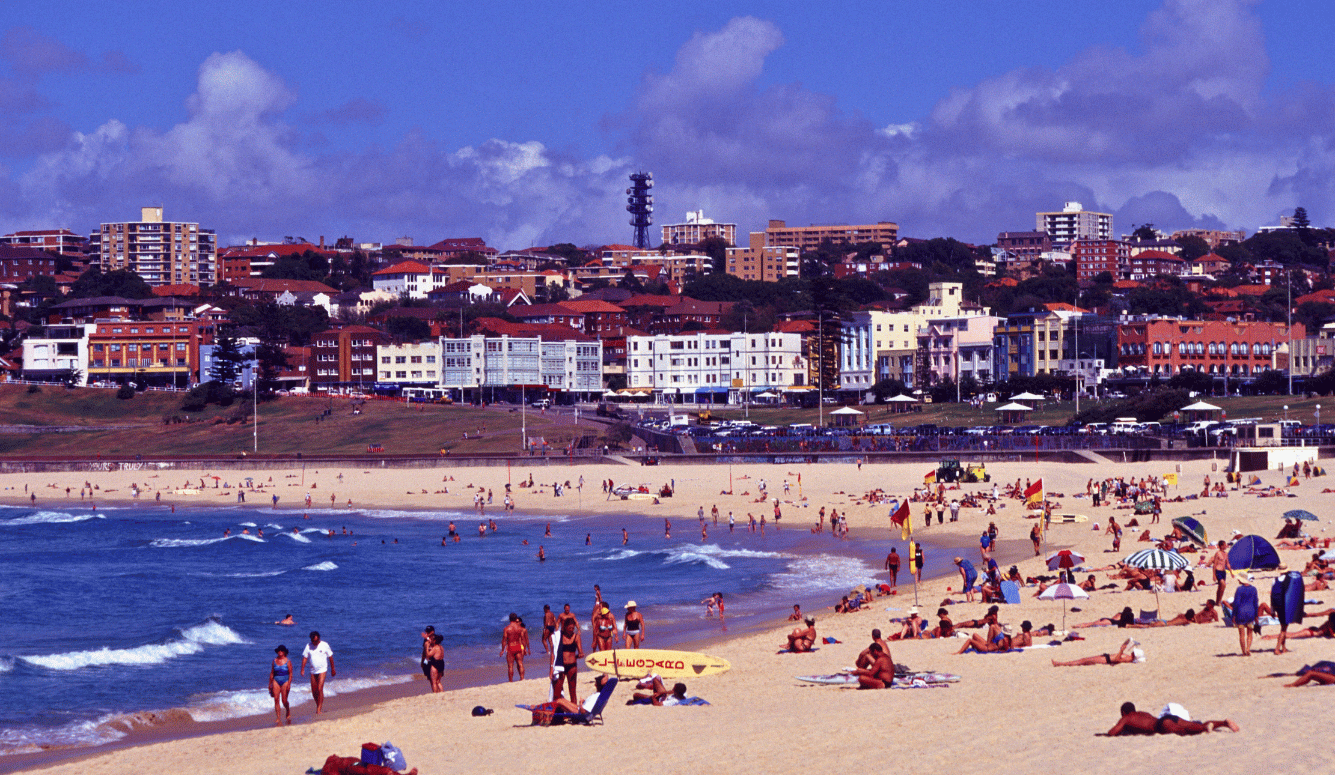
In a short piece published in the Wall Street Journal last year, Louise Perry writes about the place of Bondi Beach in Australian culture. Her analysis offers a way to start filling in the details of our way of life. Perry’s concern was not with the activities of the beach—where way of life might be equated with lifestyle and leisure activities like surfing, swimming, and sunbathing—but with the social norms that make those activities possible. She writes:
Australian beach culture relies on several social phenomena, all of them fragile: a nonsectarian commons that is freely accessible to everyone, regardless of ethnicity or religion; a culture that permits women to dress scantily without fear of harassment; and a tacit system of unwritten rules that maintain order on the beach, including respect for the authority of lifeguards who have no special legal powers and carry no weapons… The kind of high-trust society that can maintain a beach culture like Australia’s is a rare and precious thing.
She’s right—and we can generalise her strategy to think about the norms behind some of our other activities. Take our consumer activities, for example. I had a run-in last year with a crooked plumbing company. I agreed to pay a high price because it did not occur to me that the man standing in my home might be inflating the price of the materials and labour sixfold; I went along with an unusual request to pay by bank transfer rather than credit card because it did not occur to me that this would make it harder for me to get my money back when I eventually realised the extent of my overpayment.
The experience left me distrustful of tradespeople, but also more aware of how lucky we are that generally we don’t have to move through our daily consumer interactions being suspicious and mistrustful—that this was a one-off, rather than the norm. Australia scores well in the Corruption Perceptions Index. Just as Perry filled out the social norms of our beach culture, we might fill out the social norms of our consumer culture: non-discrimination, meaning that goods and services are exchanged between any persons capable of providing them and any persons willing to pay for them; the assumption of honest dealing; and a framework of regulations and remedies (professional bodies, small-claims courts, business insurance, a consumer ombudsman) that mean we can feel secure in making these exchanges.
We could do this same exercise in other domains of life. The question at the end of all that would be whether we have anything distinctive. Other countries have beaches; some lack our norms (e.g., the Maldives, where modest dress is required) but others have the same norms (e.g., New Zealand). All countries have consumer exchange; some lack our norms (e.g., Cameroon, where corruption is rife) but others have the same norms (e.g., Canada). Perhaps, in the end, we have a way of life shared by several other countries, embellished but not fundamentally transformed by Australiana.
Ex-Prime Minister Tony Abbott’s recent book Australia: A History emphasises three related features of Australian history: rehabilitation, social mobility, and egalitarianism. Rehabilitation relates to Australia’s penal colonies, which offered convicts considerably better conditions than elsewhere, with the effect that ex-convicts were able to become successful and accepted members of society. (This was rehabilitative because it meant rejecting any belief in a criminal type that was irredeemable.)
Social mobility relates both to the mobility of convicts but also to everyone else: migrants coming to Australia to join the gold rushes, or who were selected from refugee camps in Europe in order to bolster the Australian population. Such people were able to work hard and improve their own and their families’ lives—a kind of Australian Dream.
And finally, there is the strong sense of egalitarianism. Abbott writes:
A British lord on the goldfields had no title but “mate.” The son of a gentleman sent out to a sheep station could find himself “tyrannised” by a mere “common shepherd” for the simple crime of acting a gentleman. Australians told themselves that the old world distinctions had no place in their new country.
This belief in the equality of all persons was a rejection of British class elitism and made the commitment to rehabilitation and social mobility possible.
To the extent that these historical features remain a part of Australian society, we have a further way to fill in our way of life—but not one that answers the challenge of making that way of life distinctive as compared to other countries. Although New Zealand has a different history—especially since it has never been a penal colony—it offers just as much in the present by way of rehabilitation, social mobility, and egalitarianism.
Abbott also takes up Noel Pearson’s view of Australia as having three stories, which Pearson states in a defence of multiculturalism as “the Ancient Indigenous Heritage which is its foundation, the British Institutions built upon it and the adorning Gift of Multicultural Migration.” It is easy enough to fill in what the British institutions are, and to assess whether those we started with are those we still have. These will be a shared feature of many of Britain’s ex-colonies.
It’s more challenging to articulate exactly the legacy of Australia’s indigenous heritage, or the contribution of multicultural migration (are we to think about specific waves, or all migration? Specific impacts, e.g., on food culture or religious culture, or all impacts?) Both of these stories, though, offer a way of making the Australian way of life distinctive, because no other country has our indigenous history, and no other country has the legacy of our particular migration policies, for example the specific legacy of the Greek and Italian migration waves. The challenge here will be the same as for Australiana—making sure that what is distinctive is also important enough to justify immigration restrictions in order to protect it.
In Inventing Australia (1981, reprinted in 2020), Richard White offers a more cynical take on the Australian way of life. He argues that the phrase—extremely popular by the 1950s—was nothing but a tool to defend the status quo against the threat of communism. The Institute for Public Affairs published a newspaper advertisement in 1949, for example, that read, “It is the communist influence within the Labor Party that is lowering production. This dangerous influence must be eradicated if the Australian way of life is to survive.” At this time there was a historical shift away from the “Australian type” (an athletic, suntanned, sheep-shearing man) to the “Australian way of life.” In White’s view, this was a shift to emphasise Australia’s political character, a character shared with America, and united in opposition to communism. This shift also allowed the opening up of immigration, with the idea that outsiders could be assimilated to a “common, homogenous Australian way of life which would be threatened unless outsiders conformed to it.”
But White thinks the concept never really had any content and was simply used to criticise migrants. (This is interestingly perverse: it justified letting more migrants in, with the idea that they could be assimilated; then was used to criticise those who were let in, with the idea that they were a threat to the Australian way of life because they were different.) He describes the idea as “vague” and “meaningless,” quoting the Brisbane journalist Elizabeth Webb, who wrote at the time:
When it comes to The Australian Way of Life every foreigner I have met is completely at sea. To quote one—“What is this Way of Life? No one yet tells me what this is! Yet always they tell me I must adopt it … perhaps I begin to behave like you behave in pubs. I drink beer until I am stupid. Or learn to ‘put in the boot’ and bash the other fellow with a bottle … Is this the way of life I must learn? Thank you. No.’’
Another possibility that is worth taking seriously is that today’s deployments of the phrase “our way of life” remain a tool, but to do something different: to protect our quality of life, meaning our high standard of living. “Way of life” is grandiose and moralistic—it hints at culture while evading responsibility for what might in the end be a protection of material self-interest in the face of the desperate need of outsiders.
All that being said, Australians are surely right to think there’s something worth protecting here. Perhaps that thing is only liberalism: we have a liberal way of life and that is what we must fight to protect. If that’s what’s going on, though, the implications for immigration are very different to those suggested by framing Islam or multiculturalism as threats to our way of life. At the moment, Australia has an open border only with New Zealand. If our main concern is to protect our way of life, and our way of life is liberalism (and nothing more), then what’s the justification for not having an open border with all the other liberal countries? If our main concern is the preservation of Australia as a liberal society, then why is there a concern with Muslims, most of whom are happy to practise their religion in conditions of mutual toleration, rather than only with Islamists, who want a religious state?
One reason not to have an open border might be that liberal states vary in the percentage of citizens they have with illiberal attitudes. If the UK and Australia are both liberal states, but the UK has a higher percentage of citizens with illiberal attitudes, then having an open border with the UK might mean increasing Australia’s percentage of citizens with illiberal attitudes. If our concern is only with the preservation of liberalism then that percentage would have to change substantially for there to be any real threat. But if our concern is to preserve the day-to-day experience of minority group insiders, and to minimise the erosion of already-fragile social norms, then we might have a justification for careful attitude-screening of would-be migrants. One person with antisemitic (homophobic, racist, sexist, or in any other way prejudiced) attitudes can make a negative difference to a large number of people’s lives. But it’s worth noting that prejudicial treatment is not guaranteed by prejudicial attitudes, because some are happy to ‘live and let live,’ and would accept the bargain of a better quality of life in return for less freedom to express their beliefs. There is no easy solution here when it comes to immigration policy.
One thing is clear to me: confident use of the phrase “our way of life” outpaces any agreement about what our way of life is. At the very least, work remains to be done to articulate exactly what our way of life is, especially if protecting that way of life will be used as a justification for keeping outsiders from enjoying it. The less distinctive and the less important our way of life is, the less justified harsh immigration restrictions will be.
Quillette invites thoughtful responses to its essays.
Selected responses are published once per week as part of a curated Letters to the Editor feature. If selected, letters appear under the contributor’s real name and may be edited for clarity and length.
To submit a letter for consideration, please email [email protected].
Read the full article here
Fact Checker
Verify the accuracy of this article using AI-powered analysis and real-time sources.