Close Menu
FSNN | Free Speech News NetworkFSNN | Free Speech News Network
  • Home
  • News
    • Politics
    • Legal & Courts
    • Tech & Big Tech
    • Campus & Education
    • Media & Culture
    • Global Free Speech
  • Opinions
    • Debates
  • Video/Live
  • Community
  • Freedom Index
  • About
    • Mission
    • Contact
    • Support
Trending

Executive turnover clouds crypto payments firm RedotPay’s $4 billion U.S. IPO ambitions

6 minutes ago

Crypto Cards Aren’t The Future, But Onchain Credit Is

11 minutes ago

Bitcoin ETFs’ $1.2B Streak Hangs in Balance as FOMC Takes Center Stage

16 minutes ago
Facebook X (Twitter) Instagram
Facebook X (Twitter) Discord Telegram
FSNN | Free Speech News NetworkFSNN | Free Speech News Network
Market Data Newsletter
Wednesday, March 18
  • Home
  • News
    • Politics
    • Legal & Courts
    • Tech & Big Tech
    • Campus & Education
    • Media & Culture
    • Global Free Speech
  • Opinions
    • Debates
  • Video/Live
  • Community
  • Freedom Index
  • About
    • Mission
    • Contact
    • Support
FSNN | Free Speech News NetworkFSNN | Free Speech News Network
Home»News»Global Free Speech»‘I’m displaced too’: Lebanese journalists cover war after fleeing home
Global Free Speech

‘I’m displaced too’: Lebanese journalists cover war after fleeing home

News RoomBy News Room3 hours agoNo Comments5 Mins Read504 Views
Share Facebook Twitter Pinterest Copy Link LinkedIn Tumblr Email VKontakte Telegram
‘I’m displaced too’: Lebanese journalists cover war after fleeing home
Share
Facebook Twitter Pinterest Email Copy Link

Listen to the article

0:00
0:00

Key Takeaways

Playback Speed

Select a Voice

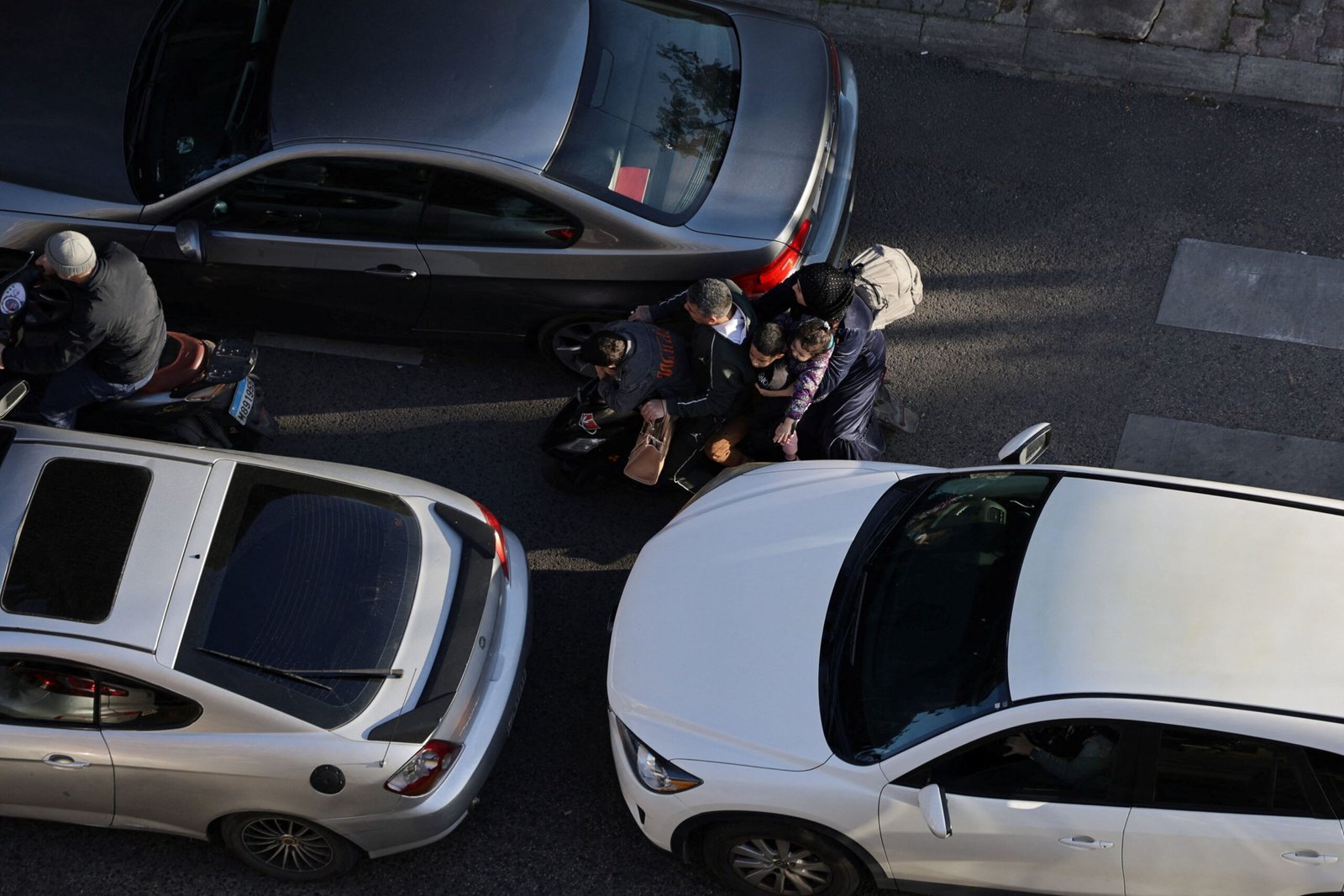
Beirut, March 18, 2026 – In early March, as the Iran war spread across the Middle East and Israeli strikes rained down on Lebanon, many journalists covering the country’s growing displacement crisis found themselves living it.

For freelance video journalist Hadil Iskandar, who has worked for German broadcaster Deutsche Welle and pan-Arab outlet Daraj Media, it was the second time in under two years that she found herself packing her belongings and fleeing her home in the Lebanese capital’s southern suburb of Dahieh.

After Israeli attacks escalated across Lebanon in early March, nearly a million people fled their homes — including the journalists covering the crisis. Reporters from parts of Beirut and southern Lebanon told the Committee to Protect Journalists that displacement has disrupted their ability to work, forcing them to report from temporary housing while worrying about their families, their homes, and their safety. 

Having fled during the 2024 war, for them it was a repeated experience of displacement, blurring the line between covering the unfolding humanitarian crisis and living through it.

“The displacement of journalists in Lebanon disruption has broader implications for press freedom,” said CPJ Regional Director Sara Qudah. “When journalists are forced from their homes, their ability to report safely, accurately, and consistently is severely undermined — limiting the flow of independent information from conflict zones at the time when it is most needed.”

Despite the upheaval, Iskander still felt she had a job to do.

“The first two days were very difficult for me, to the point that I couldn’t produce a single story,” said Iskandar, who initially took shelter with family members at an aunt’s house before searching for a more permanent place to stay. “There was a huge distraction between going to the ground, seeing people, doing my job, and at the same time contacting people to secure a house.”

Covering families who had lost their homes was especially painful, she said, feeling an affinity with them. “I’m one of the displaced too.”

Movement

Displacement has reshaped how the journalists work. Mohamed Ghassani, a journalist and editor at An-Nahar newspaper, fled his home in the southern coastal city of Tyre at around 3 a.m. with only his work laptop and identification papers. It took him seven hours to reach safety, with a bottleneck of traffic built up from civilians fleeing.

Movement has continued to be a major challenge. Since leaving home he has not been able to go to the office or be physically present with colleagues, and his work has shifted entirely to online communication, WhatsApp and phone calls. And if a story requires him to be physically present, getting there has become much harder. 

“No matter how much someone tries not to be affected and to continue working normally, you can’t in these conditions,” he told CPJ.

Psychological toll

Fatima Shoukair, a freelance journalist who contributes to Raseef 22, said she hasn’t felt fully safe in her home since the 2024 war with Israel.  She kept a bag containing identity papers, savings, and essentials in the car at all times in case a warning was issued while she was away and unable to return. 

On the night of the recent strikes, the bombing was so close that she thought she might not be able to get out in time.

Shoukair described the toll as largely psychological. Displacement and direct exposure to the attacks have made her work “extremely exhausting.”

“I can’t focus, and I don’t have the ability to produce,” she said.

So far, she has not been able to complete a full story and has continued only with administrative tasks. Without the focus, energy and stable space needed to work, she said she no longer sees events from a professional distance but “through the eyes of a victim.” Journalists rarely have the luxury of stepping away from the news even when they are living through it, she added, making it difficult to continue reporting.

No space to work

For Valentine Nasser, a journalist and director of the platform Silat Waseel,  displacement meant losing the space that made reporting possible. Forced to leave her home for the second time during the war, she moved with her family from the southern city of Tyre to a rented room in Beirut, a six-hour journey amid the build-up of people fleeing.

Constant movement has made it difficult to keep working. When an evacuation warning was issued while she was reporting, she had to continue working from her car on the way to Beirut, “with no electricity and no way to charge a laptop or phone.” 

The bombardment and tension make concentration difficult, she said, but the greater loss was the quiet workspace she had built before being displaced. “Today I lost that space.”

Ali Al Ahmar, a reporter for pro-Hezbollah broadcaster Al-Mayadeen TV, told CPJ he has found it difficult finding accommodation after fleeing his village, Kfarreman, in southern Lebanon’s Nabatieh area. He eventually managed to secure a room for his family despite high rent prices and the large number of displaced people flooding to the capital. 

Ahmar said, to him, displacement is not only about losing a house. “It means losing the basic infrastructure a journalist needs to work: safety, rest, stable connection, and an environment that helps you think.”


Read the full article here

Fact Checker

Verify the accuracy of this article using AI-powered analysis and real-time sources.

Get Your Fact Check Report

Enter your email to receive detailed fact-checking analysis

5 free reports remaining

Continue with Full Access

You've used your 5 free reports. Sign up for unlimited access!

Already have an account? Sign in here

Share. Facebook Twitter Pinterest LinkedIn Tumblr Email Telegram Copy Link
News Room
  • Website
  • Facebook
  • X (Twitter)
  • Instagram
  • LinkedIn

The FSNN News Room is the voice of our in-house journalists, editors, and researchers. We deliver timely, unbiased reporting at the crossroads of finance, cryptocurrency, and global politics, providing clear, fact-driven analysis free from agendas.

Related Articles

Global Free Speech

2 Haitian journalists abducted amid intensifying violence in Port-au-Prince

2 hours ago
Global Free Speech

CPJ, partners urge Pakistan PM to stop deportations of exiled Afghan journalists

6 hours ago
Global Free Speech

CPJ, rights groups urge new Bangladesh PM to address urgent press freedom concerns

7 hours ago
Global Free Speech

Two Haitian journalists abducted amid intensifying violence in Port-au-Prince

19 hours ago
Global Free Speech

CPJ, civil society groups call for Congress to pass Transnational Repression Policy Act

20 hours ago
Global Free Speech

Timeline: Estefany Rodríguez’s arrest and ICE detention

23 hours ago
Add A Comment
Leave A Reply Cancel Reply

Editors Picks

Crypto Cards Aren’t The Future, But Onchain Credit Is

11 minutes ago

Bitcoin ETFs’ $1.2B Streak Hangs in Balance as FOMC Takes Center Stage

16 minutes ago

Pete Hegseth: We Can’t Wait For Larry Ellison To Turn CNN Into Another Right Wing Propaganda Mill

47 minutes ago

TV Station News Managers Fired for Allegedly Anti-Gay Memo Can Go on with Their Defamation Suit Against Nexstar Media

53 minutes ago
Latest Posts

UK lawmakers urge ‘immediate moratorium’ on crypto political donations

1 hour ago

RedotPay Defends Team Consolidation After Executive Turnover Report

1 hour ago

Morning Minute: The SEC & CFTC Declare ‘Most Crypto Assets’ Are Not Securities

1 hour ago

Subscribe to News

Get the latest news and updates directly to your inbox.

At FSNN – Free Speech News Network, we deliver unfiltered reporting and in-depth analysis on the stories that matter most. From breaking headlines to global perspectives, our mission is to keep you informed, empowered, and connected.

FSNN.net is owned and operated by GlobalBoost Media
, an independent media organization dedicated to advancing transparency, free expression, and factual journalism across the digital landscape.

Facebook X (Twitter) Discord Telegram
Latest News

Executive turnover clouds crypto payments firm RedotPay’s $4 billion U.S. IPO ambitions

6 minutes ago

Crypto Cards Aren’t The Future, But Onchain Credit Is

11 minutes ago

Bitcoin ETFs’ $1.2B Streak Hangs in Balance as FOMC Takes Center Stage

16 minutes ago

Subscribe to Updates

Get the latest news and updates directly to your inbox.

© 2026 GlobalBoost Media. All Rights Reserved.
  • Privacy Policy
  • Terms of Service
  • Our Authors
  • Contact

Type above and press Enter to search. Press Esc to cancel.

🍪

Cookies

We and our selected partners wish to use cookies to collect information about you for functional purposes and statistical marketing. You may not give us your consent for certain purposes by selecting an option and you can withdraw your consent at any time via the cookie icon.

Cookie Preferences

Manage Cookies

Cookies are small text that can be used by websites to make the user experience more efficient. The law states that we may store cookies on your device if they are strictly necessary for the operation of this site. For all other types of cookies, we need your permission. This site uses various types of cookies. Some cookies are placed by third party services that appear on our pages.

Your permission applies to the following domains:

  • https://fsnn.net
Necessary
Necessary cookies help make a website usable by enabling basic functions like page navigation and access to secure areas of the website. The website cannot function properly without these cookies.
Statistic
Statistic cookies help website owners to understand how visitors interact with websites by collecting and reporting information anonymously.
Preferences
Preference cookies enable a website to remember information that changes the way the website behaves or looks, like your preferred language or the region that you are in.
Marketing
Marketing cookies are used to track visitors across websites. The intention is to display ads that are relevant and engaging for the individual user and thereby more valuable for publishers and third party advertisers.