

 Freedom Index
Listen to the article
Christopher Buck is fermenting a vaccine in his kitchen. You can too.
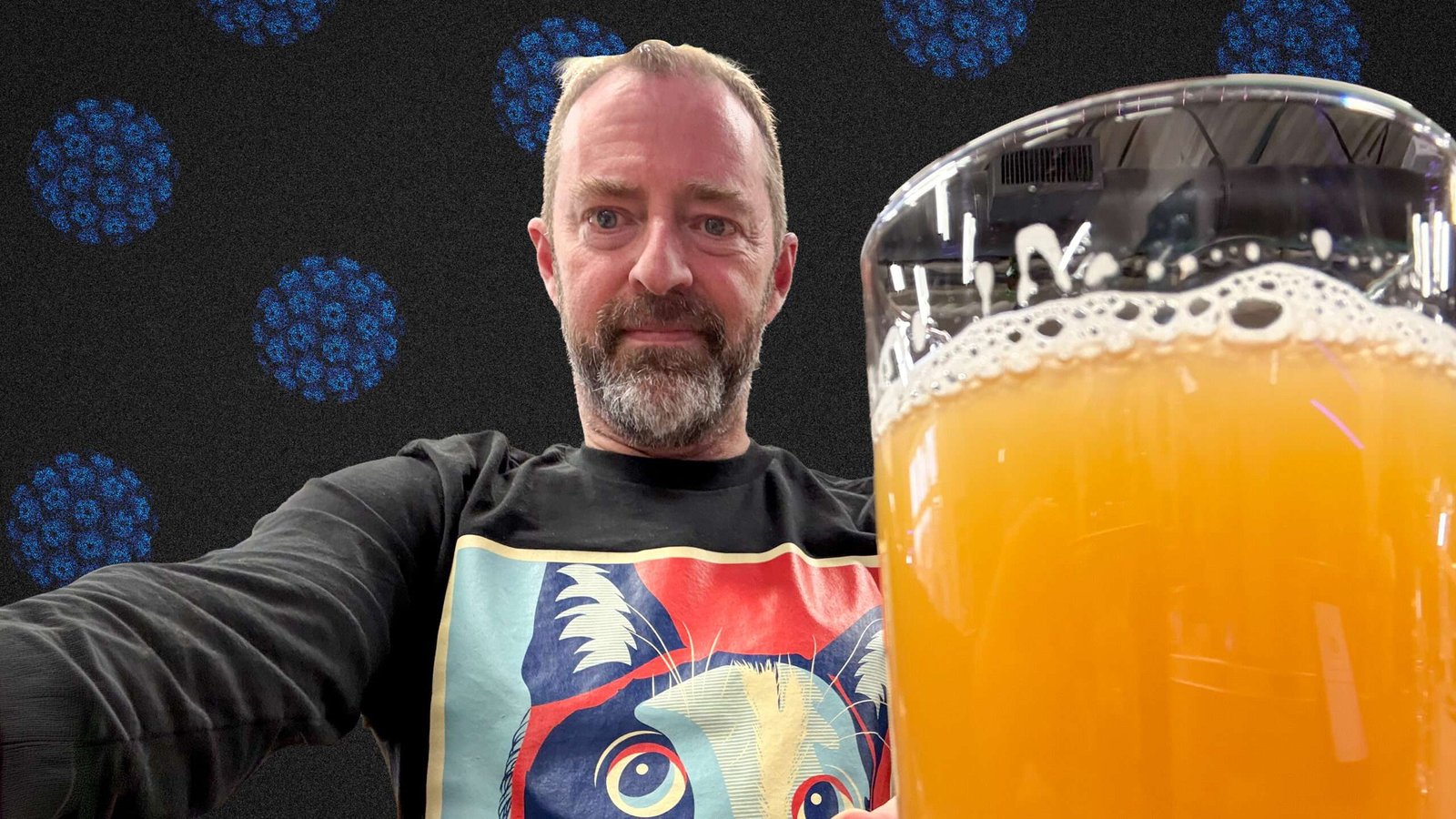
Specifically, Buck brews and quaffs a hazy beer that induces immunity against the BK virus, also known as human polyomavirus. Buck argues that you have the right to home-brew vaccines as a way to get around the Food and Drug Administration’s (FDA) yearslong vaccine approval process.
Buck joins the pantheon of pioneering vaccine self-experimenters. Among them are French physician and Nobel Prize winner Charles Jules Henri Nicolle, who used crushed lice to inoculate himself against typhus; Jonas Salk, who injected himself with his own polio vaccine; and Albert Sabin, who ingested his oral polio vaccine. In 2020, at the beginning of the COVID-19 pandemic, a group of researchers associated with Harvard launched the Rapid Deployment Vaccine Collaborative. They developed and self-administered a do-it-yourself nasal vaccine months before commercial vaccines against the coronavirus became available. They made their DIY recipe for the COVID-19 vaccine available to anyone.
Buck’s day job is as a researcher at the National Cancer Institute, where he works to prevent organ transplant rejection associated with polyomavirus infections. He is credited with discovering four of the 13 polyomaviruses known to infect humans.
Infection with human polyomavirus 1 is nearly ubiquitous, with about 90 percent of people expressing antibodies against the virus by age 10. Although the prefix polyoma literally means “many tumors,” infection is largely harmless in people with healthy immune systems. However, in people with organ transplants whose immune systems have been suppressed to prevent rejection, the virus often reactivates and causes inflammation that leads to organ failure. In this case, Buck’s vaccine functions as a model for possibly developing future edible vaccines.
Buck engineered brewer’s yeast to manufacture the protein that encapsulates the virus. The body’s immune system detects the foreign protein and creates antibodies against it. He mixed his yeast with a Flash Hefeweizen (wheat beer) kit in a fermenter along with hop tea made by steeping Saphir hop pellets.
For four days, Buck drank one to two pints of the beer, followed by two five-day booster flights over the following months. He conducted regular blood tests and reported that drinking the homemade beer did not cause any discernible adverse effects. He also noted: “It was one of the best homebrews I ever made.”
Keeping firmly in mind that this is an experiment with a single subject, Buck reports that his immune system produced antibodies against several strains of the BK polyomavirus. He observes that his “results open the door to the production and rapid testing of inexpensive vaccines that can immediately be delivered in the form of ordinary commercial food products.”
Since foods made using his yeast are not marketed as therapies, Buck says they would not be subject to the FDA regulation for vaccines. The ingredients in his beer are already in the food supply, and according to Buck they meet the FDA definition of “generally regarded as safe” for human consumption. To emphasize that he is making and drinking his vaccine beer as a private citizen and not in his professional capacity, Buck established the Gusteau Research Corporation, a nonprofit of which he is the sole employee. His brother founded Remy LLC to sell food-grade engineered yeast products. Both names were inspired by the film Ratatouille, in which chef Auguste Gusteau’s motto is “Anyone can cook.”
Vaccines have been among the most important public health interventions in human history, saving an estimated 154 million lives just since 1974. “In the United States, there has been a growing movement to downplay the safety and efficacy of traditional vaccines, and government officials have recently begun implementing policies restricting access,” says Buck.
Given this unfortunate state of affairs, Buck argues that “current law supports a path in which food-based vaccine development could be simplified to the point that free market forces, combined with standard scientific scrutiny, could serve as a check-and-balance against regulatory overreach.” In addition, he suggests that DIY “food-based vaccines could help put autonomous decision-making authority back in the hands of individual Americans.”
Buck is urging his fellow scientists to begin exploring whether his polyomavirus vaccine results can be extended to creating edible vaccines against other viral threats such as bird flu and proliferating COVID-19 variants. He reminds scientists on his website that, in the words of his Pixar paragon, “anyone can cook—but only the fearless can be great.”
This article originally appeared in print under the headline “Enjoy a Refreshing DIY Beer Vaccine.”
Read the full article here
Fact Checker
Verify the accuracy of this article using AI-powered analysis and real-time sources.