

 Freedom Index
Listen to the article
The American–Israeli war with Iran that began on 28 February has significantly expanded in two—possibly three—directions, with likely revolutionary implications for the geopolitics of the Middle East in the coming decades.
The most immediate possibility is the likely demise of Hezbollah, Lebanon’s Islamist terrorist organisation, which is Iran’s main proxy in the region. Though strapped for cash, this past year Iran has sent Hezbollah some one billion US dollars, in funds or in kind. After a two-day hesitation and under pressure from an embattled Iran to join the fighting, on Day Three of the war Hezbollah launched a salvo of short-range rockets toward Israel’s northern border settlements. The organisation said this was in response to the Israeli assassination of Ayatollah Ali Khamenei, Iran’s “Supreme Leader” and the most important religious and political figure in the Shi’ite universe.
The Lebanese Islamists may have been simply trying to make a symbolic statement, but the IDF—eager to complete the job it began in summer 2024 and demolish Hezbollah—responded with an escalating array of operations, including bombardments of targets in southern and eastern Lebanon and in the Dahiya quarter of southern Beirut, the Lebanese capital’s Shi’ite neighbourhood and Hezbollah’s main stronghold.
Most significantly, the IDF ordered the inhabitants of southern Lebanon, most of whom are Shi’ites, to completely evacuate the villages south of the Litani River and the Dahiya district. Since Thursday, Beirut’s boulevards and Lebanon’s roads have been clogged with endless streams of cars heading north and east, loaded with mattresses and other household appurtenances. More than half a million Lebanese are reportedly on the move and seeking makeshift shelter. On Friday, the Israeli Air Force (IAF) began toppling multistorey apartment blocks in the Dahiya district. Meanwhile, the IDF began moving armour and infantry into the border-hugging areas of southern Lebanon to prevent possible Hezbollah raids on Israel’s border settlements and possibly also as the start of a slow crawl northwards towards the Litani River line.
Hezbollah responded with rocket and drone strikes on northern Israel and, on one occasion, on Tel Aviv. A drone also appears to have unsuccessfully targeted Benjamin Netanyahu’s private home in Caesarea, on the Mediterranean coast south of Haifa. On Friday and Saturday, Hezbollah ordered the population of Israel’s northern border settlements, including the town of Kiryat Shmona, to evacuate southward to a depth of five kilometres from the border in an obvious response to the Israeli evacuation orders in Lebanon, but observers considered this an empty gesture and few Israelis are likely to actually leave their homes. So far, Hezbollah rockets and drones have been largely ineffectual and have claimed no Israeli lives.
None of this is new. But what is new is the near-simultaneous announcement by the Lebanese government deeming all Hezbollah military activity illegal and the arrest of 26 armed Hezbollah operatives at Lebanese national army roadblocks. Then, after Israel ordered all Iranian Revolutionary Guards Corps (IRGC) officers, who had been training and arming Hezbollah for decades, to leave Lebanon on pain of death, the Lebanese government ordered them out, announcing that henceforward all Iranians will require visas to enter the country. In effect, Iranians and Iranian funds for Hezbollah are now barred from Lebanon. Although the Beirut government has been unhappy with Hezbollah and Iranian interference in internal Lebanese affairs for decades, this is the first time it has directly challenged Hezbollah or Iran. On Saturday, Israeli jets struck a suite in a downtown Beirut hotel reportedly housing operatives of the Iranian Revolutionary Guard Corps’ Quds Force.
Iran responded by announcing that if Israel bombs the Iranian Embassy in Beirut, which has often served as a base of operations for IRGC officers, it will target Israel’s embassies worldwide, as well as the Dimona nuclear plant in southern Israel, where the Jewish state reportedly produces its nuclear weapons.
Over the past few days, the Lebanese Christian and Sunni publics, who together form the bulk of the country’s population, have been outspoken in their condemnations of Hezbollah for dragging Lebanon into a destructive war contrary to the country’s interests. And many Lebanese Shi’ites, including the group’s senior leader, Nabih Berri, the speaker of the Lebanese parliament, have joined the chorus of disapproval. Berri has now dissociated his Amal Party from its rival, Hezbollah. In the past, he routinely supported the Islamist organisation.
It is possible that the IDF will launch the two to three divisions that are strung out along Israel’s northern border and occupy all of southern Lebanon up to the Litani River. But many Israeli experts oppose the permanent occupation of southern Lebanon and the establishment of a new “security zone,” pointing out that when Israel tried this in the 1980s and ’90s, it had to counter an ultimately successful Hezbollah guerrilla/terrorist campaign that cost hundreds of Israeli lives before the IDF withdrew to the Israeli border in 2000. This time around, Hezbollah rockets, mortar bombs, and anti-tank missiles have already injured more than a dozen IDF soldiers in southern Lebanon. Defeating Hezbollah in the region is going to be no walk in the park. During the Israeli–Hezbollah clashes of 2023–24, Hezbollah’s Kornet anti-tank missiles, which have a range of 5–10 kilometres, proved very effective.
Lebanon’s Malignant State
Some 30 years after the end of its dirty civil war, Lebanon has cultivated a well-developed preference for discretion.
But what is now unfolding in Lebanon is a pincer movement in which Hezbollah, which can no longer rely on material aid from the beleaguered regime in Tehran, is caught between a rock and a hard place, being assailed militarily from the south by Israel and politically from within by the Lebanese government and people.
The prime mover in this, Lebanon’s Sunni Prime Minister Nawaf Salam, has traditionally been wary of taking on Hezbollah for fear of the outbreak of a new civil war. He must tread carefully. Lebanon endured a horrific civil war, primarily fought between Muslim and Christian militias, in 1975–91. The experience left the country traumatised. But, pressed by anti-Hezbollah Lebanese public opinion, Salam is apparently set on a showdown in which he can expect the backing of IDF firepower. However, he is restrained by the consideration that the Lebanese army, whose forces include members of all the country’s religious factions, including Shi’ites with family ties to Hezbollah, could fall apart. Still, Hezbollah is certainly feeling the pinch. As the IDF bombs rain down, hundreds of thousands of its ethno-religious Shi’ite base have been calling on the organisation to cease fire, and even to surrender its arms, as stipulated in the US-brokered Israeli–Hezbollah ceasefire agreement of November 2024 and as now demanded by Salam. Moreover, in recent days, both Salam and Lebanese President Joseph Aoun have issued public statements to the effect that Lebanon is ready to open “non-military” negotiations with Israel, which implies a readiness to reach a political accommodation with the Jewish state—or perhaps even peace, in the style of the Abraham Accords. Meanwhile, Israel’s northern border settlements and military camps are enduring a continuous pounding by Hezbollah rockets and drones. The IDF’s Iron Dome anti-rocket batteries routinely knock out the rockets but the drones are proving more elusive, though no Israelis have been killed so far.
Iran’s Gulf Strikes Forge the Alliance It Feared Most
The Islamic Republic’s assault on the Gulf will forge the new Middle East.
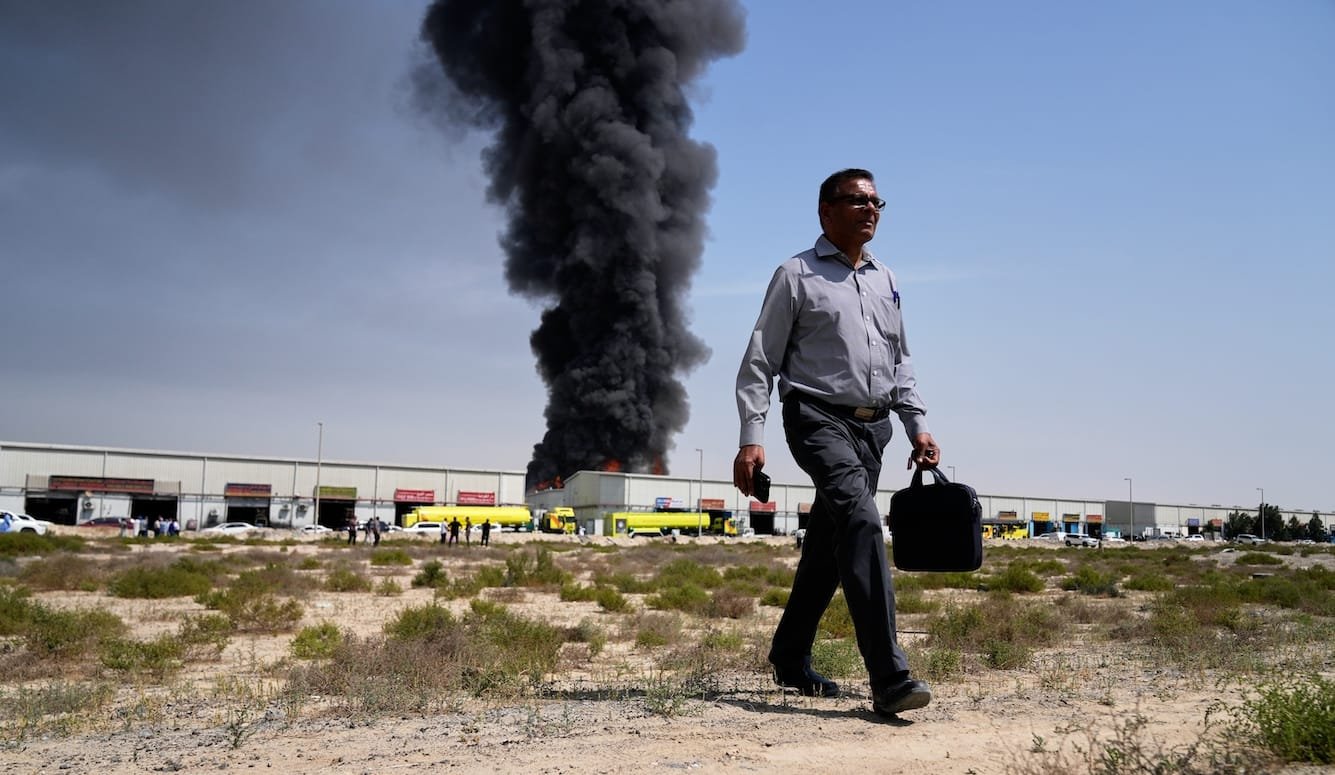
But at this potentially earth-shattering moment, Lebanon is not the only dramatic regional spin-off from the American–Israeli confrontation with Iran. Another, potentially of even greater significance, is the evolving battle between Islamist Iran and the neighbouring Sunni Arab gulf states. If the Islamist regime falls, it will all be well and good. But even if it doesn’t, the power structure in the region is radically changing before our eyes.
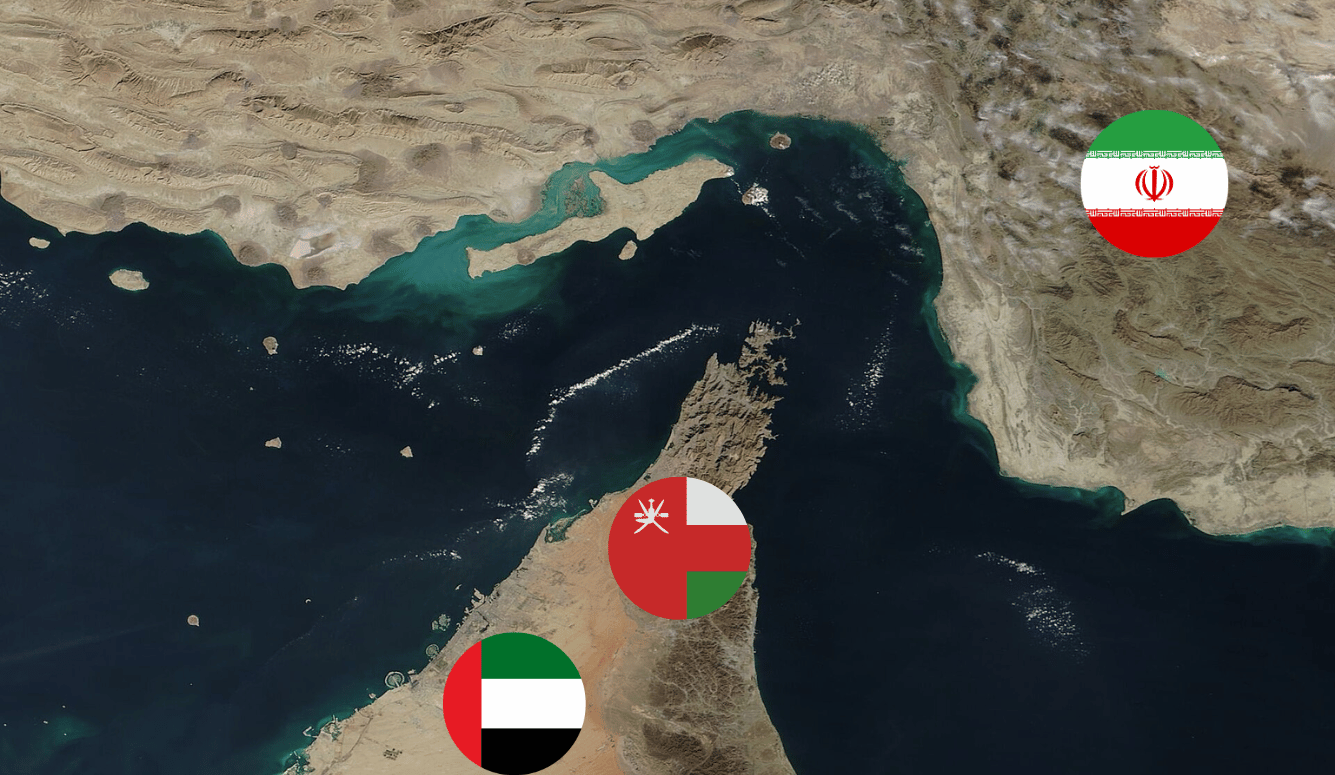
In the lead-up to the current conflagration, the Iranians repeatedly threatened to ignite a “region-wide war” should the Americans attack. And, in a giant gamble, they are now attempting to do just that. Over the past week, Iran has launched more than 500 ballistic missiles and some 1,500 drones against targets in the Persian Gulf—far more projectiles than it has launched against Israel, against which it so far has launched fewer than 150 ballistic missiles and several dozen drones. The Iranians claim that they were and are only targeting American military installations hosted by the Arab states. But in fact, the Iranian drones and missiles have also specifically targeted hotels, oil and gas installations, and civilian airports around the region, including in Saudi Arabia, the United Arab Emirates, Qatar, Kuwait, Oman (which acted as a mediator in the pre-war US–Iranian talks), and Bahrain. None of these countries have air raid warning systems or shelters for their populations—or indeed for visiting tourists and tourism represents an important source of income for the UAE and Qatar—thirty million visit the UAE alone each year.
Iran has even launched drones carrying five, ten, or twenty kilogrammes of explosives at Azerbaijan and, via Hezbollah, at the British Akrotiri air base in Cyprus. The strike on Azerbaijan makes some sense from Iran’s viewpoint, as Azerbaijan has close ties with Israel, supplies the Jewish state with some thirty percent of its oil, and reportedly serves as a base and listening post into Iran for Israel’s intelligence services. The attack on Akrotiri, however, makes no sense and may end up prompting London to join the confrontation with Iran. So far, the British have sent several fighter aircraft to the region, while a destroyer, the HMS Dragon, and possibly an aircraft carrier, are on their way; the French are also sending air and sea units to protect their citizens and to defend their installations and bases in the region, as both countries put it. But Iran’s provocations may lead these units to fight against the Islamic Republic. The Islamist Iranian leaders are apparently in the grip of eschatological Shi’ite passions and appear to be throwing caution to the wind.
But cool calculation may also be at play. The clerics and IRGC generals who are running Iran may hope that the attacks on the Sunni-majority Gulf states will generate fear, inducing them to put pressure on the US to halt its offensive against Iran. But so far, they appear to have had the opposite effect. All those countries have been castigating Iran. Spokesmen for Azerbaijan, Saudi Arabia, and the United Arab Emirates have declared that they are preparing retaliatory strikes against Tehran—though so far, no such strikes have actually materialised. After one of its airports was hit by four Iranian drones, Azerbaijan withdrew its diplomatic staff from Iran. Meanwhile, the Iranian strikes on cities and airports have triggered a chaotic exodus of potentially hundreds of thousands of Western tourists, employees, and expats from the Gulf states, but the process has been slow due to occasional incoming Iranian projectiles.
The Gulf states have always been wary, indeed afraid, of the Islamist regime in Tehran, and have occasionally absorbed strategic hits from the Iranian military—most famously the 2019 missile and drone strike against Saudi Arabia’s Aramco-run oil fields—without responding. No doubt they are aware that Trump will eventually leave the world stage, while Iran will always be nearby. As a result, they have been uniformly reluctant to confront Tehran. But both the leaders and the general public in Saudi Arabia, Kuwait, the UAE, Azerbaijan, and even Qatar—an Islamist state that has generally supported Iran in regional conflicts—have clearly been outraged by the Iranian attacks, which they regard as unprovoked, and the current swing in public opinion is likely to have lasting political effects. So far, the Iranian gamble appears not to have paid the hoped-for dividends, though in the first days of the war Qatar and Kuwait reportedly pressed Donald Trump to renew negotiations with Iran.
The Iranian gamble has not been restricted to targeting the Gulf states’ territory. Last week, the IRGC carried out a threat they made before the war by closing the Strait of Hormuz, which connects the Persian Gulf with the Indian Ocean. Several ships have already been hit by Iranian weaponry and some 150 vessels are now stranded on either side of the strait, stopped dead by fear of Iranian attack and heightened insurance costs.
Some twenty percent of the world’s oil and gas, most of it produced by the Sunni Gulf states, passes through the strait on the way to Asia, Europe, and Africa. Blocking the strait means the gradual strangulation of these countries’ economies. It is unclear whether Iran’s own oil exports are getting through. US forces have already destroyed most of Iran’s navy, including its pride and joy, the drone- and helicopter-carrier IRIS Dena, which was sunk by an American submarine off Sri Lanka on 4 March, killing almost ninety seamen. But the ships struck in the gulf last week were hit by drones, which are small and slow-flying and much more difficult to neutralise. The Iranians also possess surface-to-ship missiles. Whether the Americans will succeed in re-opening the strait, as they have announced they will, is unclear. The Iranians appear to hope that by closing the strait, provoking a hike in oil and gas prices and forcing the stoppage of production in many of the Gulf’s oil and gas installations, they will destabilise the world economy, resulting in pressure on the US to halt the war. But on Friday, Trump defiantly announced that there will be “no deals” and that the US will agree to nothing less than Iran’s “unconditional surrender.”
The economic side-effects of all this are not restricted to gas and oil themselves. There have also been major price hikes in a variety of oil-related products, including fertilisers and helium. Meanwhile, Iran and China—fifty percent of whose oil is imported from the Islamic Republic—are reportedly negotiating safe passage for China-bound tankers through the strait. But it is unclear how that could be assured, given the chaotic circumstances.
So far, the US and Israel—probably at Trump’s insistence—have refrained from striking Iran’s own oil and gas terminals concentrated in Kharg Island and Abadan. Such a strike would send fuel prices soaring even beyond the 15–20 percent increases already registered (the price of crude has already risen from US$60 to $80 per barrel). The devastation of Iran’s oil installations would send the country’s economy into a tail-spin, which would further negatively impact the global economy and bequeath any (potentially non-Islamist) successor regime in Tehran with economic chaos.
No Friends but the Mountains
America and the West have once again betrayed their Kurdish allies. Al-Sharaa’s assault on the Kurds of northern Syria, with Turkish backing, is just the latest chapter in the Kurds’ long struggle for self-rule.
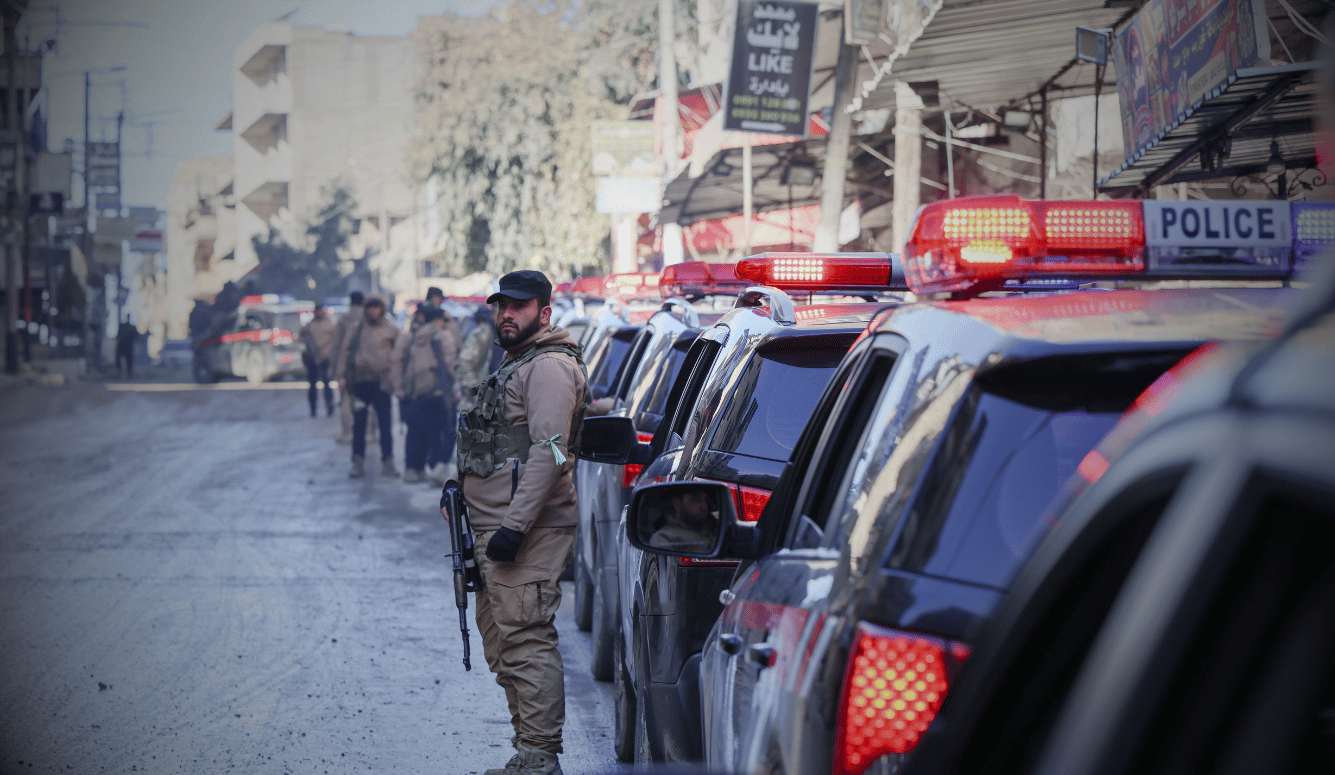
The final possible geopolitical repercussion of the war concerns the Kurds. There are some 40–45 million Kurds worldwide, mostly clustered as minorities in geographically contiguous border areas of Turkey, Iran, Iraq, and Syria; some 10–12 million live in northeastern Iran, bordering Iraq and Turkey. Last week, Trump initiated telephone conversations with the two leaders of the Iraqi Kurdish autonomous government, longtime rivals Bafel Jalal Talabani and Masoud Barzani. What exactly Trump said and how they responded is unknown. But observers believe that he told them that the moment was propitious and that they need to take sides and offered them arms and funds if they initiated attacks on Iran’s Kurdish-populated border provinces, with American or perhaps Israeli air cover. There have already been reports that Iranian Kurdish exiles, who have been training in Iraqi Kurdistan, have attacked several Iranian border posts. Trump apparently views such raiding—or even an “invasion” by Kurdish forces from Iraq—as the adjunct to or precipitant for a rising by the Iranian opposition to unseat the government in Tehran. The Iraqi–Iranian border region is mountainous, snow-covered in winter, and difficult to traverse, which makes the likelihood of a mass attack or cross-border “invasion” remote—though Hannibal did cross the Alps with elephants long ago.
The Iraqi Kurdish leaders are likely to be hesitant about any such operation, given that if the Islamists manage to retain power in Tehran, Iraq’s and Iran’s Kurds will have hell to pay. Iranian ballistic missiles and drones have already landed in or near Irbil in Iraqi Kurdistan, targeting American or Israeli military assets as well as in the Peshmerga (Kurdish Iraqi military) camps. Israel has reportedly bombed IRGC positions on the Iranian side of the border with Iraq, perhaps to smooth the way for Kurdish raiders.
Talabani has traditionally been aligned with Tehran, while Barzani has long been considered a CIA asset. But neither is likely to want to send Iraqi Kurdish troops to fight in Iran unless the Islamist regime is clearly on the verge of collapse. Last year, the Iraqi Kurds signed an agreement with Tehran to protect the border with Iran against the entry of hostile elements into the Islamic Republic.
The American outreach to the Iraqi Kurds is part of a CIA or joint CIA–Israeli plan to support a return of the opposition to the streets of Tehran to topple the Iranian regime, after it has been weakened by the American–Israeli aerial campaign. But this plan is likely to encounter a serious obstacle in the person of Turkey’s president, Recep Tayyip Erdogan, who has spent many years suppressing Kurdish subversion in his country. The leaders of Turkey, Iran, and Syria have long feared a potential coalition of the Kurdish minorities and armed forces in the three states, who might join forces to attempt to carve out a Kurdish state from dismembered parts of their respective countries. Last month, the new Islamist regime in Damascus attacked the country’s Kurds, substantially reducing their holdings in northeastern Syria.
Of the three potential firestorms, the Kurdish one is the least likely to substantially change the geopolitics of the Middle East. But right now, in a region going into a tailspin, anything seems possible.
Quillette invites thoughtful responses to its essays.
Selected responses are published once per week as part of a curated Letters to the Editor feature. If selected, letters appear under the contributor’s real name and may be edited for clarity and length.
To submit a letter for consideration, please email [email protected].
Read the full article here
Fact Checker
Verify the accuracy of this article using AI-powered analysis and real-time sources.