

 Freedom Index
Listen to the article
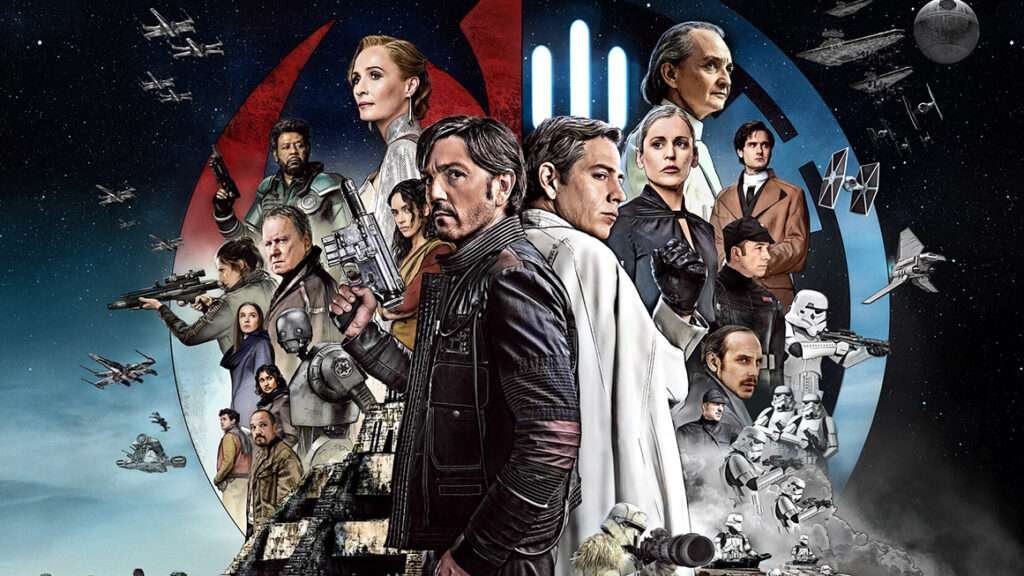
The fictional Star Wars universe is full of terrifying and powerful villains, from planet-destroying superweapons to black-cloaked space wizards wielding magic swords. In Andor, that well-trod story of the evil Galactic Empire becomes something even more unsettling: a portrait of how authoritarian systems consolidate power and crush dissent.
Over its two-season run, the critically acclaimed Disney+ series explored the formation of the Rebel Alliance that would eventually confront and defeat the Empire, as first seen in the original 1977 Star Wars film and its sequels. Andor offers a gritty view of what it takes to organize a mass uprising against a tyrannical government. Luke Skywalker might be the hero of the Star Wars story, but Andor suggests he’d never have had the opportunity to destroy the Death Star without the subterfuge, spycraft, and sacrifice that mold the rebellion.
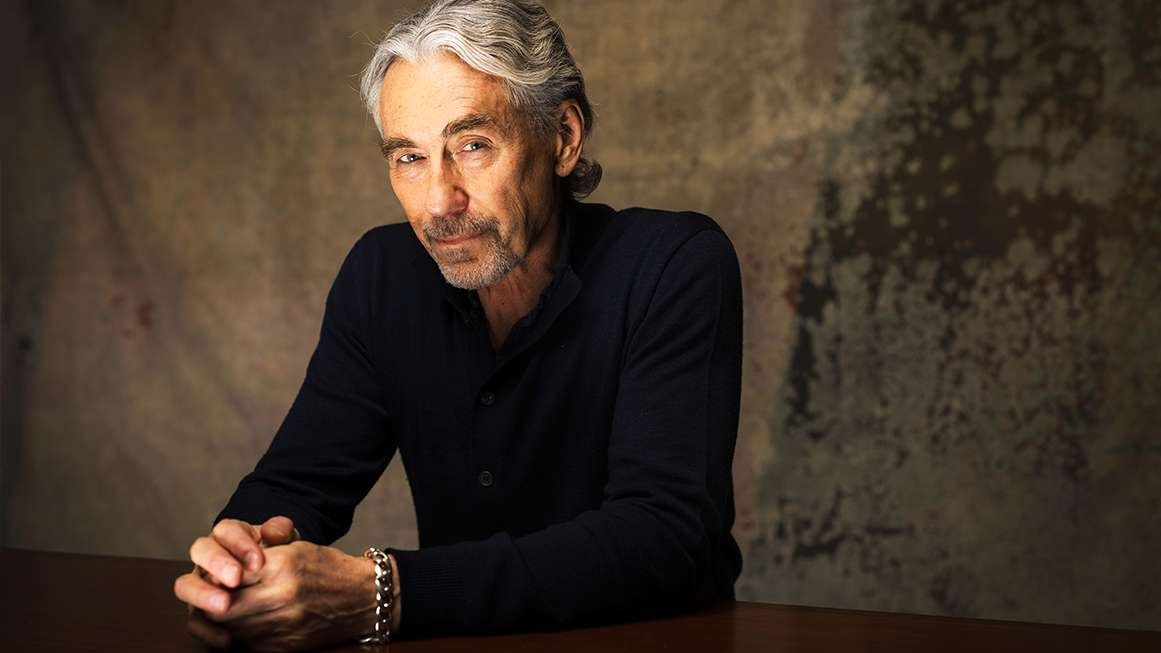
Tony Gilroy, the veteran screenwriter who largely wrote and directed Andor, reimagined the Empire as a bureaucratic machine set on centralizing control and normalizing surveillance. What results is an all-too-familiar story of a powerful government shattering cultures, seizing private corporations, and pursuing anyone seen as a threat to its authority. In Gilroy’s telling, fascism does not arrive with a single dramatic rupture, but with a slow tightening of executive powers and a willing staff of employees hoping to advance their careers.
That realism, drawn not just from current events but from the long and ugly history of authoritarian regimes, may explain why the series resonated so strongly with audiences across ideological lines.
In a December 2025 conversation with Reason, Gilroy reflected on the decision to set aside the lightsabers and lore to tell a story about moral and political dilemmas. Gilroy also spoke about his resistance to reading Andor through a simple left-right political lens, his belief that the destruction of communities is essential to autocratic rule, and why depicting power as banal and procedural can be more frightening than any planet-destroying weapon.
Reason: For anyone who isn’t familiar, catch us up briefly on where this is in the Star Wars timeline and how this show fits into the broader story.
Gilroy: Rogue One is the discovery of the plans to the Death Star that will lead to what people traditionally know as the beginning of Star Wars. [Andor] is the five years gathered around one of the main characters of Rogue One, Cassian Andor.
Our last scene in Andor is him walking into what would be the first scene of Rogue One. It’s a five-year tranche of history right before the destruction of the Death Star, and it is a five-year period where the Empire is really tightening its grip around the throat of the galaxy in the most extreme way.
One of the interesting things about Andor is that it sort of leaves aside—maybe not entirely, but largely—the mystical side of Star Wars. Was that something you decided to do deliberately?
Our attitude was: We’re going to take the Latin Mass out of the church. We’re going to do it a different way. That was the mandate.
One of my original questions to the experts was, “In this huge galaxy, how many people would have ever encountered a Jedi? How many people would ever know about the Force? How many people know about this family you keep rotating these movies on?”
And the answer is: almost nobody. If you’re a being in the galaxy, you’ve probably never had any encounter with Jedi or the Force. In the beginning, I was never, ever, ever going to touch on the Force. We’re certainly going to do a show without lightsabers. And we’ll certainly do a show that doesn’t have anything to do with the same people that you’ve been dealing with all this time.
Coming into the second season, there was a really cool way to touch [the Force] and have it enhance our story. So we touched on it. I liked the way we ended up doing it.
The concept of the show was to talk about what happens when authoritarianism and fascism comes kicking down your door—ordinary people—and you’re forced to make a choice. A lot of people in the show are forced to make choices because of events. And that doesn’t really involve lightsabers, and it doesn’t really involve a spiritual dimension that will help you.
In an interview with Ross Douthat at The New York Times, you described yourself as a moralist. That sounds like what you’re talking about here: that there is a moral compass to Andor, that the characters are dealing with. It’s not necessarily a religious or metaphysical one, right? They’re making choices for sometimes political reasons, but oftentimes moral, calculated reasons.
That was an interesting interview, because he was really trying to pin the show down and pin me down—and to analyze it in a way, but certainly put it in a place where I didn’t feel comfortable.
I think it’s two different things again. One is what my job is as a writer and a dramatist. You have to just completely inhabit the people that you’re writing about—in a generous way—to do it. I have to live through them. If you’re writing anybody, you have to get inside them. Everyone’s the hero of their own story, and everybody believes what they’re doing.
There have probably been characters over time that I’ve judged as I’ve been writing them, but it’s really not a great place to be. I want to let them let their freak flags fly.
But I think when you’re talking about the moralism, it really came around from him trying to push me into a left-right definition of the show. And I don’t see the show in that context. I know what my politics are, and they’re certainly left. But the characters in the show are not ever advocating monetary supply or social safety net or better schools or less drug laws. There’s no list of demands.
What I really do think is universal to the show—and what I really can stand behind as an ideology in the show—is the destruction of community. The parallels to what’s happening in our world right now are even beyond moralistic, I think. There’s an essential decency aspect to what’s happening politically in the world right now that I don’t understand. There is a personal decency aspect to what’s happening in the world that I don’t understand. There is a giddy rush—you’ll see people cravenly move toward power because it’s going to benefit them, or it’s warmer there, or they have no spine or moral commitment—but what we’re seeing now is on a level that I don’t know when the parallel is. People getting on board something, getting on board a train that’s on fire that they know is heading toward a cliff. It’s just amazing to watch the sort of giddy rush of people stripping off their clothes and jumping onto the fire here. It’s quite amazing.
And I think that’s provoked in me more of a realization that—I just feel there’s a level of decency and compassion that’s worth fighting for.
It’s obviously a show with political themes, but were you surprised to see it read as such a commentary on modern events?
Oh, we saw that. We did the first season, and that was sort of done in a vacuum. By the time we were in the second season and developing it, the Trump resurgence was coming back. It takes two and a half years to do the show. As we’re finishing and watching the election coming up, we’re going, “Wow, are we heading for a highway collision here or not?”
I would have been well pleased to not have the level of synchronicity that we had. As it started to happen—what can you do? It presented complexities for Diego [Luna] and myself and some of the actors who were out selling the show. It made some of these early conversations very difficult. Disney has a lot of money invested in the show, and the Star Wars audience is rather large and complicated, and probably includes all kinds of different people. We didn’t want to have anybody tune out. So we tiptoed our way through the beginning of it. I think over time, we gradually just couldn’t not face what was happening in front of us.
I want to go back to something you said about the destruction of communities, as that’s sort of a hallmark of authoritarianism. That comes up very clearly in the show—with Ghorman most specifically. But also, one of the arcs I really enjoyed was Bix, who is hiding out after the first season. You might even read her character as an illegal immigrant doing farm work on another planet, right?
It’s obvious that’s what they are.
Right, and the Empire comes for her, too. You’ve crafted this authoritarian regime as one that just becomes increasingly difficult for people to get away from.
Yeah. This is a period when the Empire is consolidating, as fascism does. In the very first episode, five years back, the inciting incident for the show is that Cassian Andor goes to a pleasure zone on a corporate-controlled planet, looking for a long-lost sister. Two funky, corrupt cops basically try to shake him down, and an accident happens, and he kills them. Not intentionally, but he has to.
As that bubbles up to the Empire’s notice, they use that as an excuse to nationalize that corporation, which is the classic fascist model.
They’re tightening everything. And the Death Star is meant to be the final turn in that screw.
You’ve created an Empire that is an authoritarian surveillance bureaucracy, and in a lot of ways that is more terrifying than Darth Vader and the Death Star. Why do you think that is? Why is seeing the inside of this bureaucratic institution—full of grain audits and takeovers of corporations—in some ways scarier than a planet-destroying superweapon?
Anything real, anything that you can identify as reality, is going to be more emotionally connected and more terrifying, or funnier, or more poignant to you. And you know it from any show that you ever watch.
There’s all kinds of lenses that we put on when we watch things. We’re such sophisticated viewers of narrative at this point in our lives and in our culture and our history. People could argue that we’re living in an idiocracy and that the general IQ of political emotional literacy has deteriorated. There is no denying that even the lowest common denominator of that formula have consumed more narrative in their life than any 150,000 people did 100 years ago.
You’ve been consuming narrative your entire life, and you have an incredibly sophisticated series of filters with which to watch it and how it comes at you. Something that really feels real, something that you recognize, is always going to dig a little deeper.
Our show is always trying to be real. Our fascists are worried about their parking places. Our fascists are worrying about whether they’re going to get to the commissary in time to get the fresh cheesecake. Our fascists are worried about the person next to them getting ahead of them, or failing to hit their numbers on their quotas. It’s very recognizably empathetic for the audience in that sense.
Part of the game plan of authoritarianism or fascism, when it’s played well, is to create an environment where people will forget, willfully forget, about those things because, “Oh, it’s not me, I was only taking orders,” “I was asked to do this,” “Everyone’s doing it.” That inoculation is the hallmark of really successful authoritarian bureaucracies.
You talk about how we’re inundated by narratives. I noticed that Andor also had a form of mass media, which is something I don’t think had ever been in Star Wars before. But there is propaganda. There’s cable news in this show. Why did you make that decision? Is that a commentary about the inundation of narratives and how that changes the way we look at the world?
If there is a main event in the second season, it’s the destruction of Ghorman. We invented Ghorman: the planet, the culture, the history, a language, a national anthem, a wardrobe, everything.
We wanted to see something really substantial. What happens when the Empire really has to take down something really substantial—a political force, an economic force? And Ghorman is really successful. They manufacture all this material. They’ve done it for centuries. It’s very bourgeois and very established and politically powerful.
So to take them down, what’s the new weapon that’s required for that? That’s propaganda. And that hadn’t really been done in Star Wars that much before. There was a HoloNews Network that’s already canonically true, and we thought, “Well, this is how they do it.”
In the very first episode, we have something very much like the Wannsee Convention. I don’t know how many people in your audience are familiar with it, but the Wannsee Convention is where the Nazis—basically over a PowerPoint luncheon—about 15 to 20 people got together, and set out the detailed logistical plan for the Final Solution. And they kept great notes. And they had their lawyers there. And the logicians were there.
So we wanted to do that. So we see that the plan for the destruction of Ghorman has happened long beforehand. It’s been a long-term plan. And one of the key components is to turn the galaxy against Ghorman and make its destruction seem not only inevitable, but a wise choice.
Propaganda is really part of that, and state-owned media is clearly the way to go.
There’s a lot of commentary in the media about the loneliness epidemic, or about people who are searching for meaning, even in a very prosperous, very successful, generally very free country like America. Does that prime the pump for authoritarianism? Is that something you were trying to say with the character of Syril Karn?
I’m not sure. As you’re saying it—yes. I fundamentally do believe that.
There’s a terrible scene with him. He moves back to his mother’s house in Coruscant after his whole police career blows up, and he’s in the room that he grew up in. He’s all by himself with his crazy mother. And you just see him alone.
I don’t think I’ve ever written those lines that go to that, but it’s absolutely true. Isolation and loneliness almost always lead to vulnerability of choices. I think social media, I think isolation, I think what’s happened economically in America, and the fragmentation of media, the lack of a common narrative—even lack of a common entertainment experience in a weird way—has led to the rise of MAGA.
Would you ever go back to the Star Wars world again?
The way we think about it, we made eight Star Wars movies in five years. That’s essentially what we did. We really made eight full films, and that’s a lot. And I think it’s hard to imagine the circumstances that would lead me to go back, but I would never say never. But it was a gas to do. I doubt I’ll ever be prouder of anything I ever do.
Let’s talk about some of the other things you’ve done in your career. I went back and watched the Jason Bourne movies to prep for this conversation. The Bourne Ultimatum really stood out to me as one I wanted to ask you about. Maybe this is just the libertarian journalist side in me, but amid all the car crashes and the awesome fight scenes and the special effects and all the great action sequences, one of the most pivotal scenes happens at the end of Ultimatum, when the assistant director of the CIA makes the decision to fax some information about the assassin program to someone. We don’t even know who gets it. And there’s this sort of confrontation that happens over a fax machine in a small office. That stood out to me as an important moment in the movie, one that comes well before Edward Snowden or anyone was leaking secrets. Am I overemphasizing the importance of that moment?
I think maybe what you’re recognizing is, my approach is really, really small. Start small. All these big things will take care of themselves.
Use Michael Clayton as an example. If I tried to write a movie with “I want to do a movie about evil corporations and pesticides and legal malfeasance” as a starting point, I’d sit here forever and never get anything. Ever.
I start with, “They have these lawyers in these law firms that fix things. What’s that guy’s life like? What would he fix? How would he be treated at the law firm? How will the other lawyers deal with him? What comes out of that?”
I’m not making a bonfire. I’m just trying to light a little kindling. I trust that my opinions, my worldview, my attitudes, my obsessive gathering of information over time will lead me someplace ultimately larger. But I don’t want to ever start larger.
Arguing over a fax machine is right in my wheelhouse. A small thing that has great significance is really valuable to me.
So much media with a political message seems hackneyed or just too obvious. But you’re starting by writing these characters. You’re not going in thinking, “I’m going to make a statement about the ways in which people oppose authoritarian regimes.”
No, I want you to care about the people before they tell you how they got there and what they believe. I really need you to be deeply invested in them, and then you can decide if you trust them or not along the way.
If I’m writing a libertarian character, my first instinct is not, “Well, I have to find out all about the spectrum of libertarianism.” My interest is: What leads somebody personally? What happened? What led you to this? And why are you there? And what are you getting out of it? How shaky is it for you? Those are the things that interest me.
There’s a paranoia that inhabits some of your stories. Are you a paranoid person? Or do you think that’s just a sensible way to think about authoritarian regimes—whether it’s the Empire or the CIA—to always be worried about what they might know in their sterile rooms?
I would say that the overwhelming wheelbarrow of history would be on my side here. I don’t think it’s paranoia. I think it is reportage, really.
I’m an anticipatory human. I get paid for a couple things. I get paid for being a grinder and working really hard. I get paid for the discipline of having figured out how to make people come alive and write shootable scenes and understand the structure of how stories go, and keeping your interest.
But I primarily make my living off my imagination. Ultimately: Can you make shit up? And make a lot of it up? And Andor was the maximal expression of that.
Part of a constantly unstoppable imaginative engine is one anticipates. Sometimes it’s really good for you. It’s good if you’re traveling. It’s really good if you’re in an emergency. Your imagination works against you if you’re ill—it can really fuck with you.
I don’t think I’m a fantasist. Is there a world of assassins? Not probably as much as [in the Bourne movies]. Are there government pharmaceutical programs that were like The Bourne Legacy? I think there are. I don’t think there’s anything where I’m pushing the fantasy into the point of unreality.
This interview has been condensed and edited for style and clarity.
Read the full article here
Fact Checker
Verify the accuracy of this article using AI-powered analysis and real-time sources.