Close Menu
FSNN | Free Speech News NetworkFSNN | Free Speech News Network
  • Home
  • News
    • Politics
    • Legal & Courts
    • Tech & Big Tech
    • Campus & Education
    • Media & Culture
    • Global Free Speech
  • Opinions
    • Debates
  • Video/Live
  • Community
  • Freedom Index
  • About
    • Mission
    • Contact
    • Support
Trending

Hamit Coskun secures important victory against UK prosecutors, but threats to free expression linger

25 minutes ago

In Senate Testimony on DHS Shootings, Kristi Noem Lies About Her Lies

30 minutes ago

New bull market may be about to begin, says Owen Lau

50 minutes ago
Facebook X (Twitter) Instagram
Facebook X (Twitter) Discord Telegram
FSNN | Free Speech News NetworkFSNN | Free Speech News Network
Market Data Newsletter
Wednesday, March 4
  • Home
  • News
    • Politics
    • Legal & Courts
    • Tech & Big Tech
    • Campus & Education
    • Media & Culture
    • Global Free Speech
  • Opinions
    • Debates
  • Video/Live
  • Community
  • Freedom Index
  • About
    • Mission
    • Contact
    • Support
FSNN | Free Speech News NetworkFSNN | Free Speech News Network
Home»News»Media & Culture»Maryland Lawmakers Want To Strengthen Regulations That Make Health Care More Expensive
Media & Culture

Maryland Lawmakers Want To Strengthen Regulations That Make Health Care More Expensive

News RoomBy News Room2 hours agoNo Comments4 Mins Read1,671 Views
Share Facebook Twitter Pinterest Copy Link LinkedIn Tumblr Email VKontakte Telegram
Maryland Lawmakers Want To Strengthen Regulations That Make Health Care More Expensive
Share
Facebook Twitter Pinterest Email Copy Link

Listen to the article

0:00
0:00

Key Takeaways

Playback Speed

Select a Voice

A bill is advancing in the Maryland General Assembly that, if passed, could make health care more expensive for the state’s residents.

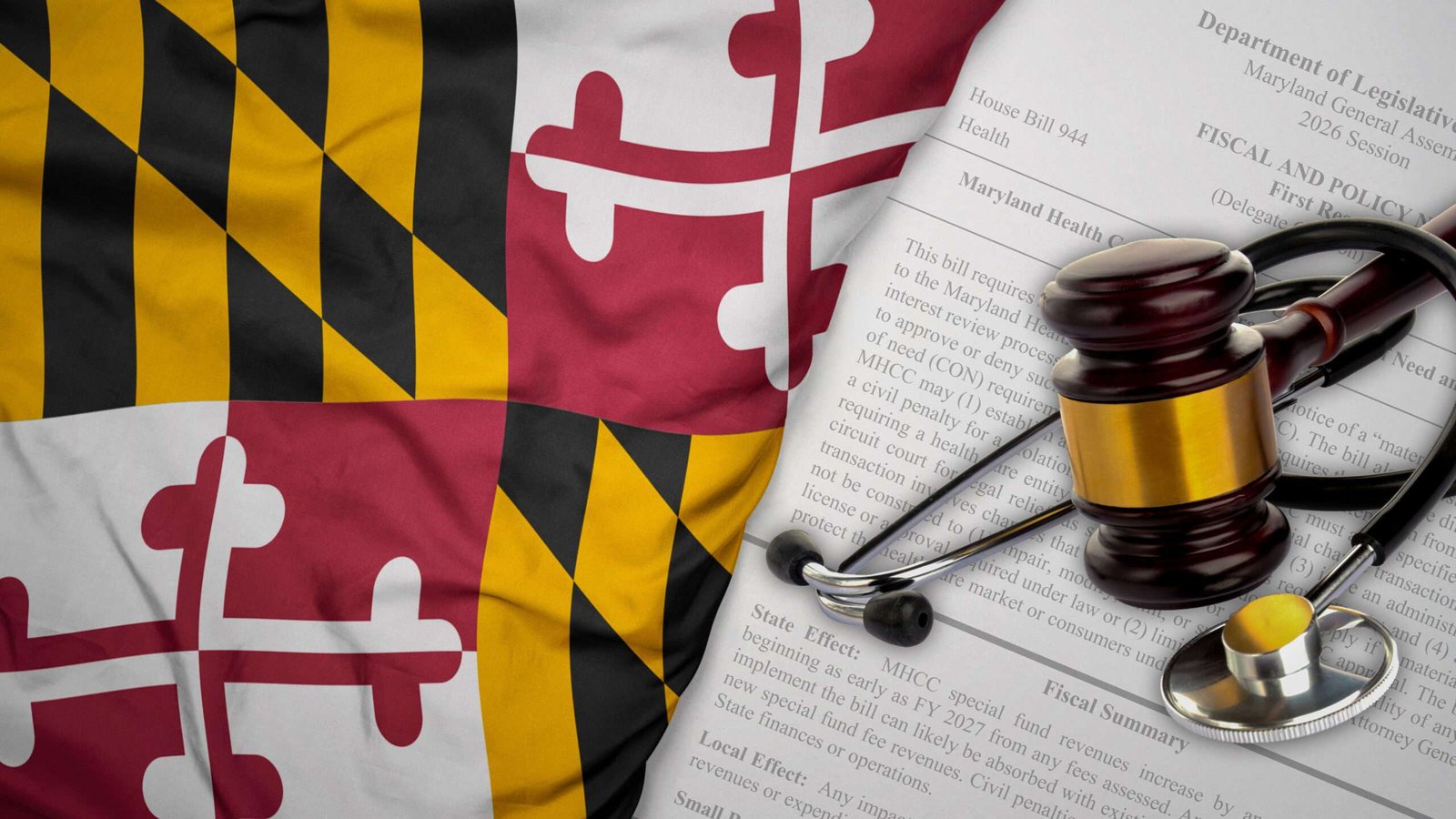
In February, state Rep. Bonnie Cullison (D–Aspen Hill) introduced House Bill (H.B.) 944. This bill, along with its Senate companion, would strengthen Maryland’s certificate of need (CON) laws, which require health care providers to receive government approval before expanding or building health care facilities.

Like other federal efforts, this bill looks to crack down on consolidation in the health care sector. Specifically, H.B. 944 directs health providers to provide 90-day advance notice to the Maryland Health Care Commission (MHCC) before any “material change transactions,” including mergers and acquisitions of most health care facilities and some real estate transactions. After receiving notice, the commission could either approve the transaction or launch a lengthy “public interest review” that could ultimately end in denial.

Since they were first introduced in the 1970s, CON laws have given state governments broad authority to regulate the health care industry, often making it worse and more expensive.

North Carolina’s CON laws set off a yearslong legal battle between WakeMed Health and Hospitals and Duke University Hospital. In September 2023, state regulators gave a CON to WakeMed for a linear particle accelerator (LINAC) for cancer treatment in Wake County. Duke University, which already had four other LINACs (and approval for a fifth), challenged the decision, and in February 2025, an administrative judge overturned WakeMed’s CON. WakeMed immediately appealed to the Court of Appeals, alleging that Duke Health had engaged in anticompetitive actions, reports the Carolina Journal. However, in January, both parties asked for the case to be dismissed, “saying they had reached an agreement in undisclosed settlement discussions,” according to North Carolina Health News. It’s unclear if WakeMed will be allowed to add the LINAC since its CON was struck down last year.

CON laws don’t only stymie life-saving care like LINAC, they also prohibit online vision tests, less invasive colonoscopies, mental health facilities, addiction treatment centers, Neonatal Intensive Care Units, specialized brain injury rehabilitation, freestanding birth centers, new MRI machines, and other medical imaging services.

In Maryland, which the Cicero Institute labels as having some of the most stringent CON rules in the nation, these laws delayed the opening of a hospital after regulators determined it to be too big and expensive. These laws also inhibit the size of ambulatory surgical centers in the state—facilities with three or more operating rooms are subject to Maryland’s CON regulations. Because of this, most centers only have two operating rooms.

Despite this, Maryland lawmakers are intent on strengthening the state’s CON laws, but doing so will not be easy. The bill faces staunch opposition from several stakeholders, including the Maryland State Medical Society (MedChi). Although MedChi doesn’t oppose all CON laws, Gene Ransom, the group’s CEO, warns that this bill could add unnecessary costs to health care facilities in Maryland. “We need to be careful when we’re adding a new layer of regulation that could raise the cost of health care,” he tells Reason.

By trying to prevent consolidation, which regulations like CON laws incentivize, policymakers are protecting incumbent providers from potential health care disrupters that could offer cheaper services. “Certificates of need…will [generally] favor the more complex, sophisticated institutions like hospitals and insurance companies who are more able to negotiate the complexity of the state regulatory approvals than independent practices,” says Benjamin Lowentritt, a Maryland urologist whose practice has worked with private equity firms in the past. He adds that “private investors considering investment in the health care space are more likely to look elsewhere if the regulatory burden is high.”

The Maryland Chamber of Commerce is also opposed to the legislation and filed a letter against the bill before a recent hearing of the Health Committee. In it, the Chamber warns that it “would create a new and expansive regulatory review process that extends beyond private equity activity and could apply broadly to a wide range of business transactions.”

Adding “an additional layer of oversight” to “an already complex regulatory environment” could increase costs for health care providers and delay services. Lowentritt warns that “Putting everyone through this opaque process would only discourage innovation.” It’s unclear if the bill will reach Democratic Gov. Wes Moore’s desk, but if it does, it would restrict the health care market in Maryland, which would likely raise costs for consumers. Lowentritt says that if the bill passes, Maryland “would be the most restrictive environment in the country.”

Read the full article here

Fact Checker

Verify the accuracy of this article using AI-powered analysis and real-time sources.

Get Your Fact Check Report

Enter your email to receive detailed fact-checking analysis

5 free reports remaining

Continue with Full Access

You've used your 5 free reports. Sign up for unlimited access!

Already have an account? Sign in here

#Democracy #MediaEthics #NarrativeControl #OpenDebate #PoliticalMedia
Share. Facebook Twitter Pinterest LinkedIn Tumblr Email Telegram Copy Link
News Room
  • Website
  • Facebook
  • X (Twitter)
  • Instagram
  • LinkedIn

The FSNN News Room is the voice of our in-house journalists, editors, and researchers. We deliver timely, unbiased reporting at the crossroads of finance, cryptocurrency, and global politics, providing clear, fact-driven analysis free from agendas.

Related Articles

Media & Culture

In Senate Testimony on DHS Shootings, Kristi Noem Lies About Her Lies

30 minutes ago
Cryptocurrency & Free Speech Finance

Morgan Stanley Picks Coinbase, BNY as Custodians for Planned Bitcoin ETF

60 minutes ago
Cryptocurrency & Free Speech Finance

Dogecoin Pumps as Bitcoin Pops, Reversing Recent DOGE Losing Streak

2 hours ago
Media & Culture

Judge Says He’s Sick Of The Government’s Shit; Threatens To Make DHS, DOJ Testify Under Oath

3 hours ago
Media & Culture

Court Dismisses Discrimination Claims Against Northwestern Over Alleged Post-Oct. 7 Anti-Semitism

3 hours ago
Cryptocurrency & Free Speech Finance

South Korean Cop Sentenced to Six Years in Prison for Bribes Tied to Crypto Crime: Report

3 hours ago
Add A Comment
Leave A Reply Cancel Reply

Editors Picks

In Senate Testimony on DHS Shootings, Kristi Noem Lies About Her Lies

30 minutes ago

New bull market may be about to begin, says Owen Lau

50 minutes ago

What Will Sustain The Price Breakout?

53 minutes ago

Morgan Stanley Picks Coinbase, BNY as Custodians for Planned Bitcoin ETF

60 minutes ago
Latest Posts

Speaking Freely: Shin Yang

1 hour ago

Maryland Lawmakers Want To Strengthen Regulations That Make Health Care More Expensive

2 hours ago

Georgia’s Supreme Court rejects jailed journalist Mzia Amaglobeli’s appeal

2 hours ago

Subscribe to News

Get the latest news and updates directly to your inbox.

At FSNN – Free Speech News Network, we deliver unfiltered reporting and in-depth analysis on the stories that matter most. From breaking headlines to global perspectives, our mission is to keep you informed, empowered, and connected.

FSNN.net is owned and operated by GlobalBoost Media
, an independent media organization dedicated to advancing transparency, free expression, and factual journalism across the digital landscape.

Facebook X (Twitter) Discord Telegram
Latest News

Hamit Coskun secures important victory against UK prosecutors, but threats to free expression linger

25 minutes ago

In Senate Testimony on DHS Shootings, Kristi Noem Lies About Her Lies

30 minutes ago

New bull market may be about to begin, says Owen Lau

50 minutes ago

Subscribe to Updates

Get the latest news and updates directly to your inbox.

© 2026 GlobalBoost Media. All Rights Reserved.
  • Privacy Policy
  • Terms of Service
  • Our Authors
  • Contact

Type above and press Enter to search. Press Esc to cancel.

🍪

Cookies

We and our selected partners wish to use cookies to collect information about you for functional purposes and statistical marketing. You may not give us your consent for certain purposes by selecting an option and you can withdraw your consent at any time via the cookie icon.

Cookie Preferences

Manage Cookies

Cookies are small text that can be used by websites to make the user experience more efficient. The law states that we may store cookies on your device if they are strictly necessary for the operation of this site. For all other types of cookies, we need your permission. This site uses various types of cookies. Some cookies are placed by third party services that appear on our pages.

Your permission applies to the following domains:

  • https://fsnn.net
Necessary
Necessary cookies help make a website usable by enabling basic functions like page navigation and access to secure areas of the website. The website cannot function properly without these cookies.
Statistic
Statistic cookies help website owners to understand how visitors interact with websites by collecting and reporting information anonymously.
Preferences
Preference cookies enable a website to remember information that changes the way the website behaves or looks, like your preferred language or the region that you are in.
Marketing
Marketing cookies are used to track visitors across websites. The intention is to display ads that are relevant and engaging for the individual user and thereby more valuable for publishers and third party advertisers.