

 Freedom Index
Listen to the article
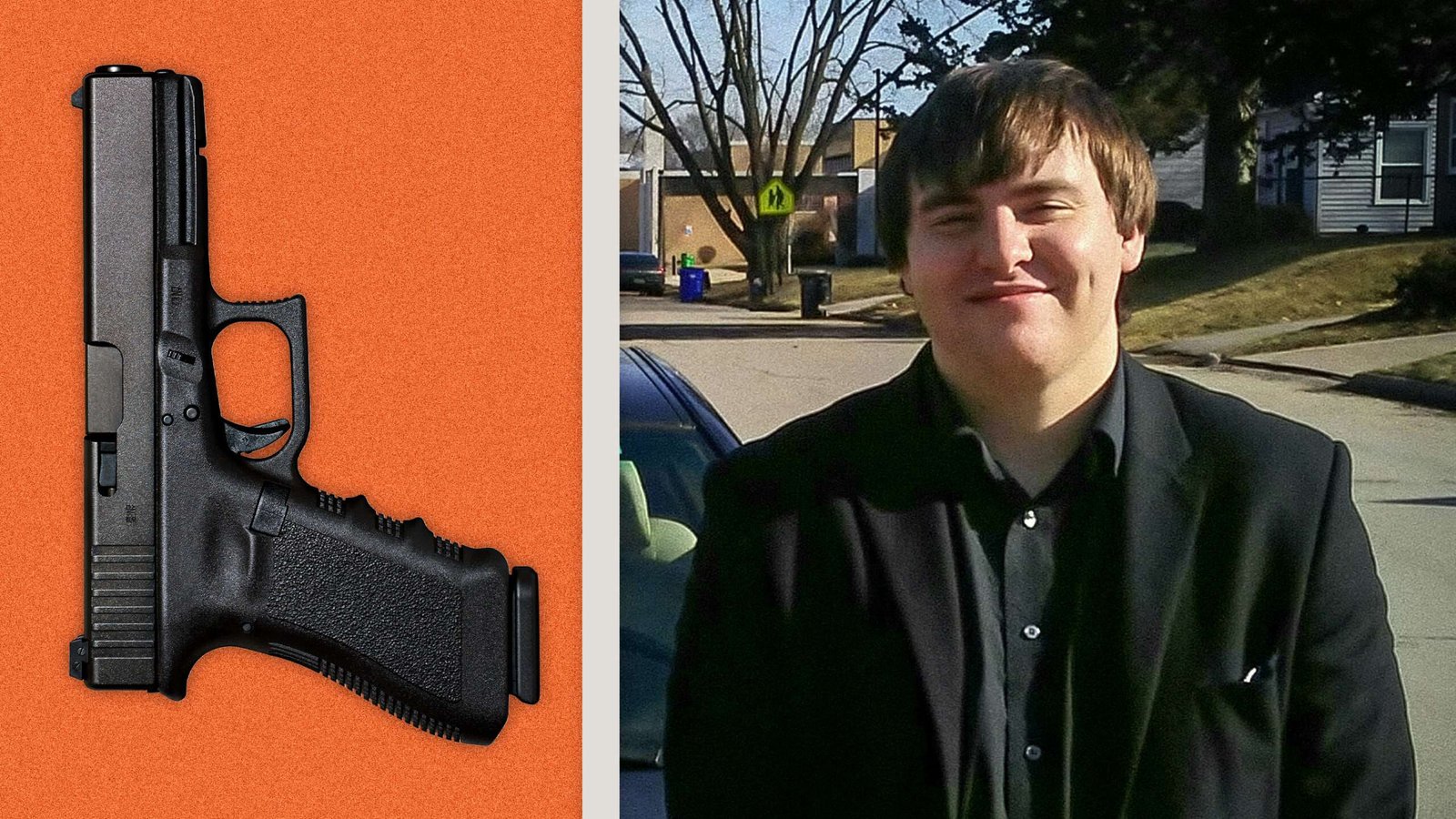
Ali Hemani, the Texas cannabis consumer at the center of a Second Amendment case that the Supreme Court heard on Monday, was charged with illegal drug possession in 2023. His case never went to trial because the charge was dismissed based on a 2024 decision by the U.S. Court of Appeals for the 5th Circuit, which held that the Second Amendment bars such prosecutions when they are based on nothing beyond the elements specified by the statute. By contrast, Alexander Ledvina, an Iowa cannabis consumer, was convicted of the same charge in 2023 and is now serving a 51-month sentence at the federal prison in Memphis.
The U.S. Court of Appeals for the 8th Circuit recently gave Ledvina a shot at freedom by ruling that a district court should decide whether his prosecution was consistent with the Second Amendment. The 8th Circuit’s February 6 decision in United States v. Ledvina largely embraces the 5th Circuit’s logic, which also got a seemingly sympathetic reception at the Supreme Court in United States v. Hemani. “Without more,” Judge Ralph Erickson writes in the 8th Circuit panel’s majority opinion, “drug use generally or marijuana use specifically does not automatically extinguish a person’s Second Amendment right.”
That ruling by no means guarantees a victory for Ledvina, since the government will argue that the case against him includes “more”: allegations that suggest he was more dangerous than the average marijuana user. But the principle endorsed by the 8th Circuit, which Hemani wants the Supreme Court to accept, would preclude many, perhaps most, prosecutions under 18 USC 922(g)(3), which makes it a felony, punishable by up to 15 years in prison, for an “unlawful user” of “any controlled substance” to receive or possess a firearm. To prove the elements of that felony, the government does not need to show that the defendant’s pattern of drug use posed any sort of threat to public safety.
Judge David Stras, who was nominated by President Donald Trump, joined Erickson, another Trump appointee, in concluding that Ledvina deserved another chance to argue that imprisoning him for owning guns violates the Second Amendment. Although 8th Circuit precedent rules out a facial challenge to Section 922(g)(3), they say, “an as-applied challenge may be available.”
The 8th Circuit first signaled the possibility of such challenges in a decision published about five months after Ledvina’s conviction. In the April 2024 case United States v. Veasley, the appeals court rejected a facial challenge to Section 922(g)(3), saying the law was “consistent with this Nation’s historical tradition of firearm regulation”—the Second Amendment test established by the Supreme Court’s 2022 ruling in New York State Rifle & Pistol Association v. Bruen. The 8th Circuit perceived historical analogs in the treatment of “the mentally ill” and in laws against “going armed” in “terror of the people.” But while accepting the ban on gun possession by drug users as a general matter, the court suggested there could be exceptions.
“Not every drug user or addict will terrify others, even with a firearm,” the 8th Circuit conceded in Veasley. “Consider the 80-year-old grandmother who uses marijuana for a chronic medical condition and keeps a pistol tucked away for her own safety. It is exceedingly unlikely she will pose a danger or induce terror in others. But those are details relevant to an as-applied challenge, not a facial one. For our purposes, all we need to know is that at least some drug users and addicts fall within a class of people who historically have had limits placed on their right to bear arms.”
Less than a year later in United States v. Cooper, the 8th Circuit elaborated on that distinction. In Veasley, “we concluded that keeping firearms out of the hands of drug users does not ‘always violate[] the Second Amendment,'” the court said. “Now the question is whether it sometimes can. The answer is yes.”
That case involved LaVance LeMarr Cooper, who—like Ledvina—was convicted in the Northern District of Iowa after a bench trial based on stipulated facts. “One was that he smoked marijuana three to four times a week,” the 8th Circuit noted. “Another was that he had done it two days before officers found a Glock 20 pistol in his car during a traffic stop. Based on those facts and a few others, the district court found Cooper guilty of being a drug user in possession of a firearm and sentenced him to 37 months in prison.”
Given those circumstances, the appeals court thought, Cooper had a plausible argument that his prosecution was unconstitutional. “Nothing in our tradition allows disarmament simply because Cooper belongs to a category of people, drug users, that Congress has categorically deemed dangerous,” the appeals court said. “Neither the confinement of the mentally ill nor the going-armed laws operated on an irrebuttable basis.” Concluding that the district court had erred by ruling out an as-applied challenge, the 8th Circuit remanded the case for further consideration.
The appeals court reached a similar conclusion in the July 2025 case United States v. Perez, which involved an Iowa man, Aldo Ali Cordova Perez Jr., who possessed a rifle and admitted that he “used marijuana two or three times daily.” The 8th Circuit overturned Cordova Perez’s Section 922(g)(3) conviction and remanded the case, saying the district court had not adequately addressed the question of whether he met the criteria for disarmament that Cooper described as consistent with historical tradition.
The district court did not explicitly find that Cordova Perez’s cannabis consumption made him “act like someone who is both mentally ill and dangerous” or that it “caused him to ‘induce terror, or pose a credible threat to the physical safety of others with a firearm,'” the 8th Circuit noted. Nor did the district court “ask if Cordova Perez’s marijuana use placed him in a category of people ‘present[ing] a special danger of misuse’ sufficient to justify disarmament irrespective of any individualized showing of dangerousness”—a Second Amendment exception that the Supreme Court recognized in the 2024 case United States v. Rahimi.
The 8th Circuit thought the same reasoning applied in Ledvina’s case. “Consistent with Cooper and Perez,” Erickson writes, “we vacate Ledvina’s § 922(g)(3) conviction and remand for the district court to reassess Ledvina’s as-applied challenge in accordance with our recent precedents.”
Writing in dissent, Chief Judge Steven Colloton, a George W. Bush appointee, faults the majority for remanding the case instead of resolving Ledvina’s as-applied challenge based on the existing record. “Rather than decide the legal question presented on appeal, the majority vacates the conviction and remands for further proceedings that are unwarranted and unnecessary,” he says. “The state of the law in this circuit concerning § 922(g)(3) is untenable. In appeal after appeal, the court refuses to decide whether the statute is constitutional as applied to unlawful drug users. The court should decide the question presented in this case and affirm the judgment.”
Colloton also thinks the 8th Circuit’s application of the Bruen test erred by likening drug users to “the mentally ill” or ruffians who carry arms “in terror of the people.” A more logical comparison, he says, is “habitual drunkards,” who historically could be confined to workhouses or mental institutions based on judicial determinations.
The Trump administration is relying on the same analogy in Hemani, arguing that cannabis consumers, regardless of how they actually behave, are equivalent to people who would have been deemed “habitual drunkards” at the Founding. For good reason, several justices were skeptical of that claim during oral argument.
Colloton seems to join the Trump administration in arguing, based on that dubious comparison, that Section 922(g)(3) prosecutions never violate the Second Amendment. “Congress’s prohibition on gun possession by drug addicts and regular drug users is consistent with the principles underlying the Nation’s tradition,” he writes. “Both habitual drunkenness and unlawful drug use under § 922(g)(3) involve the regular use of a mind-altering substance. Congress concluded that drug addicts and regular drug users present a special risk of misusing firearms.”
Colloton’s categorical approach is “inconsistent with the Second Amendment and how constitutional litigation typically works,” Stras complains in a concurring opinion. He notes that “not a single other circuit has adopted it.” In addition to the 5th Circuit and the 8th Circuit, five other federal appeals courts (the 3rd, 6th, 7th, 10th, and 11th circuits) have recognized that Section 922(g)(3) may be unconstitutional as applied to at least some defendants.
Ledvina welcomed the 8th Circuit’s decision, although he thinks the court also should have vacated his related conviction under 18 USC 924(a)(1)(A). That law makes it a felony, punishable by up to five years in prison, to “knowingly” make “any false statement or representation with respect to the information” that federally licensed firearm dealers are required to keep. Ledvina was convicted of committing that crime by denying that he was an “unlawful user” of “any controlled substance” on a gun purchase form he completed. If Section 922(g)(3) “is unconstitutional as applied to me,” he writes in a letter from prison, that should nullify the basis for the other charge.
Either of those convictions would be enough to permanently deprive Ledvina of his Second Amendment rights under 18 USC 922(g)(1), which applies to anyone convicted of a crime punishable by more than a year of incarceration, regardless of whether it involved violence in any way. “Besides seeing my family again, the most important thing for me is to get the felon label off and restoration of my civil liberties,” Ledvina says. “I want a second chance to be a normal person again.”
Read the full article here
Fact Checker
Verify the accuracy of this article using AI-powered analysis and real-time sources.