Close Menu
FSNN | Free Speech News NetworkFSNN | Free Speech News Network
  • Home
  • News
    • Politics
    • Legal & Courts
    • Tech & Big Tech
    • Campus & Education
    • Media & Culture
    • Global Free Speech
  • Opinions
    • Debates
  • Video/Live
  • Community
  • Freedom Index
  • About
    • Mission
    • Contact
    • Support
Trending

Withholding $260 Million From Minnesota Won’t Win the War on Medicaid Fraud

3 minutes ago

War or Deal Isn’t the Real Question

24 minutes ago

U.S. regulator’s GENIUS pitch puts dark cloud over crypto sector’s stablecoin model

27 minutes ago
Facebook X (Twitter) Instagram
Facebook X (Twitter) Discord Telegram
FSNN | Free Speech News NetworkFSNN | Free Speech News Network
Market Data Newsletter
Thursday, February 26
  • Home
  • News
    • Politics
    • Legal & Courts
    • Tech & Big Tech
    • Campus & Education
    • Media & Culture
    • Global Free Speech
  • Opinions
    • Debates
  • Video/Live
  • Community
  • Freedom Index
  • About
    • Mission
    • Contact
    • Support
FSNN | Free Speech News NetworkFSNN | Free Speech News Network
Home»News»Media & Culture»The 4 Economic Myths Powering Trump’s New Tariff Push
Media & Culture

The 4 Economic Myths Powering Trump’s New Tariff Push

News RoomBy News Room3 hours agoNo Comments5 Mins Read1,034 Views
Share Facebook Twitter Pinterest Copy Link LinkedIn Tumblr Email VKontakte Telegram
The 4 Economic Myths Powering Trump’s New Tariff Push
Share
Facebook Twitter Pinterest Email Copy Link

Listen to the article

0:00
0:00

Key Takeaways

Playback Speed

Select a Voice

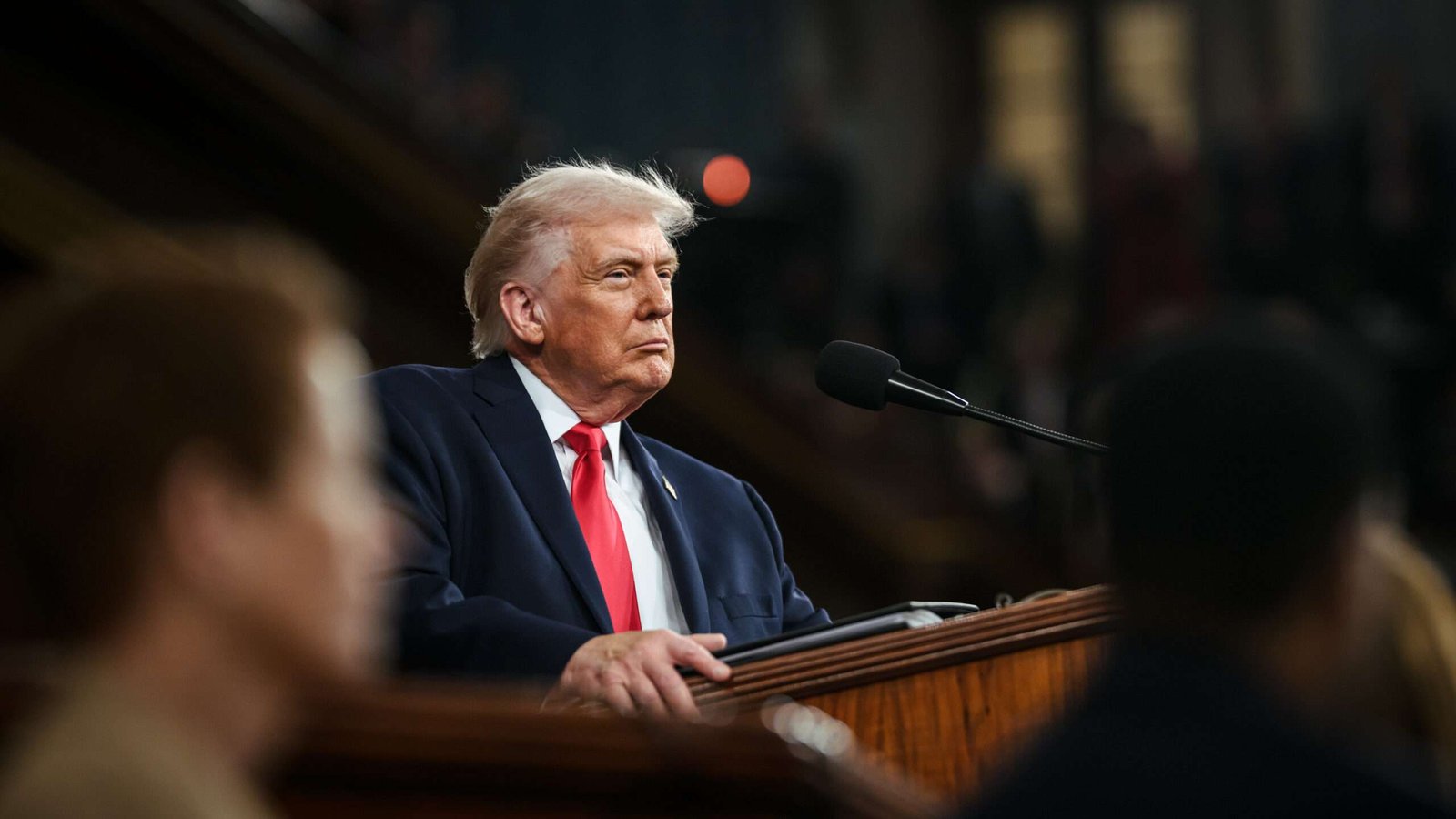
Within hours of the Supreme Court ruling that the White House’s widespread “emergency” tariffs were illegal, President Donald Trump moved to install 10 percent across-the-board tariffs under a different alleged authority. He later said he would raise that rate to 15 percent and delivered a combative response in the State of the Union.

The trade war isn’t ending. It’s just changing ZIP codes. What won’t change is the propaganda coming from the White House, which insists that Americans don’t pay the costs.

Consider what follows as a guide to the fallacy-filled arguments that you’ll soon hear more of.

The first argument is the optimistic one: Tariffs “reshore” production, raise domestic demand, push wages up, and leave consumers better off. It’s a tidy story. It’s also wrong.

Tariffs don’t conjure consumer demand out of thin air. Americans were buying plenty of washing machines, clothing, and steel before the tariffs. What changes is where some things are made. Production shifts from foreign manufacturers with efficiency or cost advantages to more expensive domestic manufacturers. American producers stand to gain, except when they must pay tariffs to import the materials they need (as is often the case).

But everyone who buys the product pays more. The extra $100 a family spends on a washing machine won’t instead be spent at the restaurant next door, the repair shop, or the shoe store. Real wages—what your paycheck actually buys—fall when the prices of most things rise.

Second is the zero-sum argument: Making China worse off automatically makes Americans better off. This is not how economics works outside of campaign rallies.

Trade is not a game in which one side’s loss is the other’s gain. When Americans buy less from China, it’s true, some of our overseas business competitors lose revenue. But what about the American households losing access to cheaper goods? Or the American producers losing access to cheaper materials and ingredients that make them more competitive?

Both countries take a hit. Serious analysts who favor targeted tariffs for strategic reasons generally acknowledge this tradeoff and argue that the benefits justify the costs. What they don’t claim is that such costs don’t exist.

Third is an attempt at a populist argument made in the past by U.S. Trade Representative Jamieson Greer. He claimed that tariffs can’t hurt lower-income Americans because the wealthy do most of the consuming. This is clearly an attempt to refute the common—and correct—argument that tariffs are regressive, or disproportionately hurtful to lower-income people.

Sadly, our trade official does not understand what regressivity means. A tax is regressive, and therefore not populist, when it takes a larger share of earnings from lower-income households than from wealthier households. The absolute dollar figure is irrelevant to the question. A billionaire will spend many more dollars on imported goods than a teacher does, but that spending represents a sliver of the billionaire’s income.

Nearly every dollar the teacher earns goes toward supporting a family, much of it spent on clothing, appliances, and household goods that are heavily import-dependent. The empirical record from earlier tariffs confirms that the burden falls hardest, as a share of income, on working- and middle-class families.

Fourth is the corporate-absorption argument: Don’t worry, companies will eat the costs. Large retailers, the theory goes, quietly absorb tariff expenses through thinner profit margins instead of raising prices.

Even when firms do absorb some of the hit, the money doesn’t disappear. These companies instead hire fewer people, pay lower wages, invest less or, in industries where profit margins are already thin, hike future prices. The burden just takes a different route to your wallet.

These objections aren’t hypothetical. They’re backed by data.

The Federal Reserve Bank of New York recently published findings that American businesses and consumers absorbed nearly 90 percent of the 2025 tariffs’ economic burden. The researchers weren’t working from theory: They tracked actual transaction-level import price data and found that prices paid by U.S. importers rose nearly one-for-one with tariff rates. These results confirm what research on the 2018-19 tariffs already established and echoes other studies of the past year.

The bottom line is that, faced with tariffs, foreign exporters don’t really cut their prices to cushion the blow. Corporations don’t quietly absorb these hits. The costs are passed on, one way or another, just as the textbooks predict.

We also know that job creation was modest in 2025 and that manufacturing jobs are in decline. Whatever economic boom we are now experiencing is driven by computer and electronic investments, which happen to be the biggest sectors exempted from tariffs.

I could offer even more evidence that the administration’s tariff policy isn’t working. But Americans already know it, which is why strong majorities are firmly opposed.

The tariffs’ legality will continue to be litigated. The talking points will be recycled. For now, the steep price tag will remain ours to pay.

COPYRIGHT 2026 CREATORS.COM

Read the full article here

Fact Checker

Verify the accuracy of this article using AI-powered analysis and real-time sources.

Get Your Fact Check Report

Enter your email to receive detailed fact-checking analysis

5 free reports remaining

Continue with Full Access

You've used your 5 free reports. Sign up for unlimited access!

Already have an account? Sign in here

#Journalism #MediaAndPolitics #MediaBias #OpenDebate #PoliticalCoverage
Share. Facebook Twitter Pinterest LinkedIn Tumblr Email Telegram Copy Link
News Room
  • Website
  • Facebook
  • X (Twitter)
  • Instagram
  • LinkedIn

The FSNN News Room is the voice of our in-house journalists, editors, and researchers. We deliver timely, unbiased reporting at the crossroads of finance, cryptocurrency, and global politics, providing clear, fact-driven analysis free from agendas.

Related Articles

Media & Culture

Withholding $260 Million From Minnesota Won’t Win the War on Medicaid Fraud

3 minutes ago
Debates

War or Deal Isn’t the Real Question

24 minutes ago
Cryptocurrency & Free Speech Finance

There’s a New DeFi Bill in Congress—What Does That Mean for Crypto Market Structure?

29 minutes ago
Media & Culture

Why Libertarians Should Be Wary About Releasing the Epstein Files

1 hour ago
Cryptocurrency & Free Speech Finance

Morgan Stanley ‘Absolutely’ Plans to Offer Bitcoin Custody, Trading, Yield and Lending: Exec

2 hours ago
Media & Culture

DOJ’s Losing Streak Continues Because Federal Officers Just Can’t Stop Lying

2 hours ago
Add A Comment
Leave A Reply Cancel Reply

Editors Picks

War or Deal Isn’t the Real Question

24 minutes ago

U.S. regulator’s GENIUS pitch puts dark cloud over crypto sector’s stablecoin model

27 minutes ago

Bitcoin ETF Inflows Rise While Derivatives Markets Reflect Caution

28 minutes ago

There’s a New DeFi Bill in Congress—What Does That Mean for Crypto Market Structure?

29 minutes ago
Latest Posts

Taking ‘black’ out of Black History Month

50 minutes ago

Why Libertarians Should Be Wary About Releasing the Epstein Files

1 hour ago

Grant Cardone plans to tokenize his firm’s $5 billion real estate portfolio

1 hour ago

Subscribe to News

Get the latest news and updates directly to your inbox.

At FSNN – Free Speech News Network, we deliver unfiltered reporting and in-depth analysis on the stories that matter most. From breaking headlines to global perspectives, our mission is to keep you informed, empowered, and connected.

FSNN.net is owned and operated by GlobalBoost Media
, an independent media organization dedicated to advancing transparency, free expression, and factual journalism across the digital landscape.

Facebook X (Twitter) Discord Telegram
Latest News

Withholding $260 Million From Minnesota Won’t Win the War on Medicaid Fraud

3 minutes ago

War or Deal Isn’t the Real Question

24 minutes ago

U.S. regulator’s GENIUS pitch puts dark cloud over crypto sector’s stablecoin model

27 minutes ago

Subscribe to Updates

Get the latest news and updates directly to your inbox.

© 2026 GlobalBoost Media. All Rights Reserved.
  • Privacy Policy
  • Terms of Service
  • Our Authors
  • Contact

Type above and press Enter to search. Press Esc to cancel.

🍪

Cookies

We and our selected partners wish to use cookies to collect information about you for functional purposes and statistical marketing. You may not give us your consent for certain purposes by selecting an option and you can withdraw your consent at any time via the cookie icon.

Cookie Preferences

Manage Cookies

Cookies are small text that can be used by websites to make the user experience more efficient. The law states that we may store cookies on your device if they are strictly necessary for the operation of this site. For all other types of cookies, we need your permission. This site uses various types of cookies. Some cookies are placed by third party services that appear on our pages.

Your permission applies to the following domains:

  • https://fsnn.net
Necessary
Necessary cookies help make a website usable by enabling basic functions like page navigation and access to secure areas of the website. The website cannot function properly without these cookies.
Statistic
Statistic cookies help website owners to understand how visitors interact with websites by collecting and reporting information anonymously.
Preferences
Preference cookies enable a website to remember information that changes the way the website behaves or looks, like your preferred language or the region that you are in.
Marketing
Marketing cookies are used to track visitors across websites. The intention is to display ads that are relevant and engaging for the individual user and thereby more valuable for publishers and third party advertisers.