

 Freedom Index
Listen to the article
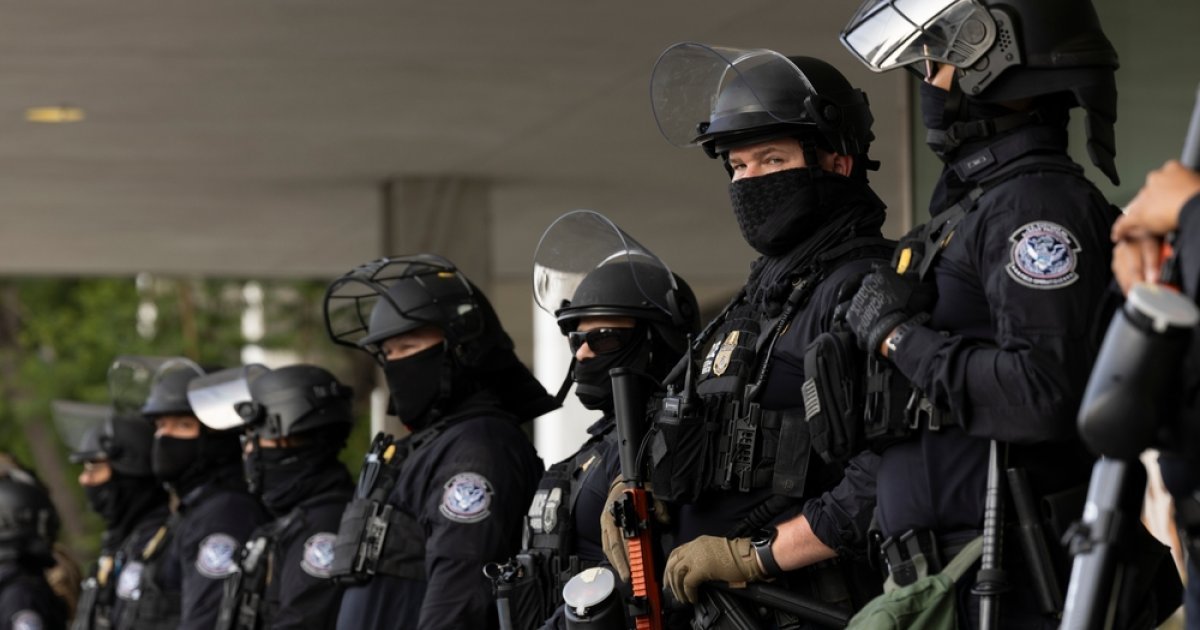
FIRE is suing Attorney General Pamela Bondi and Secretary of Homeland Security Kristi Noem for strong-arming Facebook and Apple to censor groups and apps that use public information to report ICE activity. Whether on Facebook, in an app, on a website — or even through flyers, pamphlets, or word-of-mouth — Americans enjoy a fundamental First Amendment right to document and criticize law enforcement.
But some people have raised objections centered on the relationship between free speech and law enforcement. So let’s answer some common criticisms we’ve faced.
There’s no First Amendment exception for “doxxing.” First, “doxxing” is not a legal term with a stable, accepted definition. While people generally use it to mean publicly identifying someone, usually online, different people will have different understandings about what does or doesn’t count as “doxxing.” And right now, federal government officials are using “doxxing” in an aggressive and expansive way as an all-purpose verb that blurs the line between protected speech and unprotected conduct. They’re suggesting the former can somehow constitutionally be punished.
Second, the core content shared on our clients’ “Eyes Up” app and “Chicagoland” Facebook group involved observations, photos, and videos of government agents carrying out enforcement activity in public. Posting information about what law enforcement officers — public servants working in public — are doing and where they’re doing it isn’t “doxxing.” It’s speech protected by the First Amendment, especially if that person is a law enforcement officer operating on public streets and sidewalks. What these platforms did was remind law enforcement that what’s done in public is public knowledge.
Shutting down speech under any vague rationale, much less “doxxing,” chills lawful speech and makes it harder to hold government officials and agents accountable when they violate the law.

Here are some scary-sounding words: conspiracy, harassment, targeting, intimidation, misinformation. These days, it’s trendy on both sides to cast speech you don’t like in these terms. If you were skeptical when the Biden administration labeled COVID-related posts as “misinformation” and pressured Meta and X to ban them, you should be equally skeptical now. The government can’t handwave away constitutional protection with ominous buzzwords.
To lose constitutional protection, speech must fit within one of the First Amendment’s narrow unprotected categories. And the government can prosecute people for physically interfering with ICE operations or assaulting an officer. For example, physically blocking an officer from entering a government building, or standing in front of an officer’s vehicle to prevent it from moving. Speech or expressive conduct could be grounds for charges only if they rise to the level of, say, constitutionally unprotected incitement or the obstructive conduct described here.
In 1969, the Supreme Court held in Brandenburg v. Ohio that prosecutions for incitement based on speech are constitutional only where “advocacy is directed to inciting or producing imminent lawless action that is likely to occur.” That’s a high bar, and for good reason. Eyes Up and Chicagoland don’t come close to it.
In fact, Chicagoland moderators actively removed content that even suggested violence. Eyes Up didn’t provide real-time location data, and its moderators individually approved each video before posting. That’s not calling for violence at all, let alone imminent violence.

You’re right, Archduke Food Baby: The First Amendment doesn’t literally say “you can record law enforcement.” But as with other constitutional rights, the First Amendment’s meaning doesn’t just come from bare words on the page. It comes from the underlying intent to protect speech — and speakers from government overreach — as articulated by court decisions giving those words constitutional force. Those decisions are clear: Every federal appeals court to address the issue has recognized a First Amendment right to record government officials like police engaged in their duties in public.
It bears repeating: The government can prosecute people for physically interfering with ICE operations or assaulting an officer. But the government can’t ban lawful tools just because someone else could (or did) use that tool to commit a crime. If a person uses Google maps to find an ICE facility and vandalize it, the government couldn’t just shut down Google maps. When we’re talking about speech, the First Amendment doesn’t bend the knee — even if that makes law enforcement more difficult because officers have to take constitutional interests into account.

This case isn’t about blowing whistles or blocking roads. It’s about the government pressuring private companies into censoring protected speech on private platforms.
That said, the First Amendment protects sounds. While DarkTechObserver might think that blowing a whistle isn’t “criticism,” the First Amendment doesn’t let the government censor expression based on the content of that expression — or the method used to convey it, whether it’s a pen or a whistle. Of course, depending on the context, the government can place reasonable content- and viewpoint-neutral limits on how loud you can be in public. It just can’t base those decisions on the content of what you’re saying.
Besides, there’s a difference between physically preventing law enforcement from operating and simply being loud at a protest. Whistles themselves are not obstruction, and as we explain above, the government can’t ban a tool just because that tool can be used in potentially illegal ways.
These are fact-specific questions that are difficult to answer in the abstract. But one thing is certain: we don’t just take the government’s word for it that a line has been crossed. The First Amendment requires the government to prove that a whistle, a bullhorn, or even people standing in the road, mean to prevent carrying out lawful law enforcement activity.

Yes. FIRE was very critical of the Biden administration’s jawboning efforts. Jawboning is just censorship by proxy: If it’s illegal for the government to censor certain speech directly, then using a middleman doesn’t change a thing. As nonpartisan free speech defenders, we have, and always will, call out censorship by both sides.
In 2021, officials under President Biden pressured social media companies to take down COVID-related posts in the name of public health — a classic case of jawboning. FIRE filed an amicus brief in the ensuing case, Murthy v. Missouri, arguing that the Biden administration violated the First Amendment by attempting to interfere with private content moderation. The Court ultimately held that the plaintiffs didn’t have the ability to sue because they couldn’t prove the government’s actions were the direct cause of the harm to the plaintiffs’ speech. But Justice Amy Coney Barrett, writing for the majority, suggested that the government’s actions would have been unconstitutional had the plaintiffs been able to show the government directly caused the speech restrictions.
FIRE also filed an amicus brief on the National Rifle Association’s behalf in the Supreme Court’s 2024 case NRA v. Vullo. The Vullo Court held that a New York state official violated the NRA’s constitutional rights by threatening regulatory enforcement against banks and insurance companies that did business with the gun rights group. Jawboning was wrong then, and it’s wrong now.
Read the full article here
Fact Checker
Verify the accuracy of this article using AI-powered analysis and real-time sources.