

 Freedom Index
Listen to the article
As you might expect, President Donald Trump was not happy about the Supreme Court’s rejection of his attempt to assert sweeping, unbridled tariff authority under the International Emergency Economic Powers Act (IEEPA). But the terms in which Trump expressed his displeasure highlighted his narcissistic authoritarianism, his disregard for the rule of law and the separation of powers, and his incomprehension of the role that the judicial branch plays in upholding both.
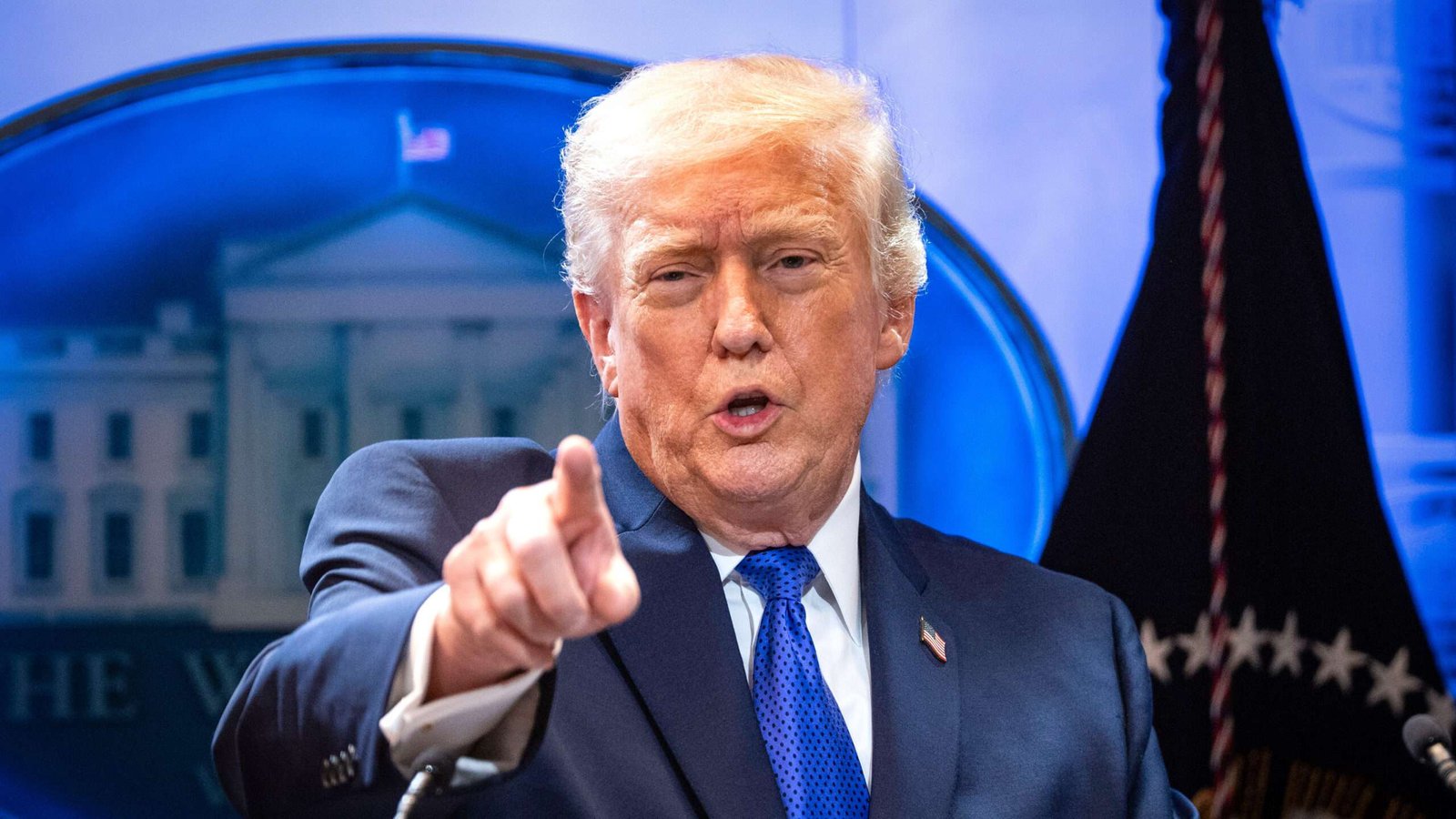
“The Supreme Court’s ruling on tariffs is deeply disappointing, and I’m ashamed of certain members of the Court, absolutely ashamed, for not having the courage to do what’s right for our country,” Trump told reporters on Friday. Those “certain members,” it became clear, were Justices Neil Gorsuch and Amy Coney Barrett, who had the temerity to vote against Trump even though he appointed them to the Court.
By joining Chief Justice John Roberts and three other members of the Court in concluding that IEEPA does not empower the president to impose tariffs, Trump said, Gorsuch and Barrett became “an embarrassment to their families.” The “terrible” decision revealed them as “fools and lapdogs for the RINOs and the radical-left Democrats.”
The president was not disappointed by the three Democratic appointees—Justices Sonia Sotomayor, Elena Kagan, and Ketanji Brown Jackson—who voted with the majority in Learning Resources v. Trump. “The Democrats on the Court are thrilled, but they will automatically vote no,” he said. “They’re against anything that makes America strong, healthy, and great again. They also are a, frankly, disgrace to our nation, those justices. They’re an automatic no, no matter how good a case you have.”
Still, Trump said, “you can’t knock their loyalty,” which is “one thing you can do with some of our people.” Gorsuch and Barrett “may think they’re being politically correct,” he averred, but “they’re very unpatriotic and disloyal to our Constitution.” He suggested they were “swayed by foreign interests and a political movement that is far smaller than people would ever think.”
Although the Americans who oppose Trump’s agenda represent “a small movement,” he said, they are “obnoxious, ignorant and loud,” and “I think certain justices are afraid of that. They don’t want to do the right thing. They’re afraid of it.”
By contrast, Trump thinks, the three Republican appointees who dissented from the Court’s decision—Justices Clarence Thomas, Samuel Alito, and Brett Kavanaugh—showed courage by doing what he wanted them to do. “I’d like to thank and congratulate Justices Thomas, Alito, and Kavanaugh for their strength and wisdom and love of our country, which is right now very proud of those justices,” he said.
The president singled out Kavanaugh, the Trump appointee who wrote the principal dissent, for special praise. “I’m so proud of him,” he said. “I would like to thank Justice Kavanaugh for his, frankly, his genius and his—his great ability. Very proud of that appointment.”
Although Trump’s tantrum over the tariff ruling may be his most peevish reaction to a Supreme Court decision so far, it reiterates a complaint we have heard from him before. Trump expects the justices he appointed—”our people”—to side with him, and he gets very angry when they fail to do so.
In July 2020, the Supreme Court rejected Trump’s attempt to block a state subpoena for his tax returns. “In our system of government, as this Court has often stated, no one is above the law,” Kavanaugh, whom Trump now lauds for his “genius” and “great ability,” wrote in a concurring opinion joined by Gorsuch. “That principle applies, of course, to a President.”
Trump “expressed deep anger at Justices Gorsuch and Kavanaugh, seeing their votes as a betrayal,” The New York Times reported, citing “a person familiar with his reaction.” Five months later, Trump went public with his anger at Gorsuch, Kavanaugh, and Barrett, who joined the Court that October.
In December 2020, the Supreme Court unanimously rejected Texas Attorney General Ken Paxton’s attempt to overturn Joe Biden’s victory in that year’s presidential election. “Texas has not demonstrated a judicially cognizable interest in the manner in which another State conducts its elections,” the order said. Trump called that reasoning “absurd,” adding that the justices “just ‘chickened out'” because they “didn’t want to rule on the merits of the case.” Their cowardice, he said, was “so bad for our Country!”
Trump was still simmering a couple of weeks later. “The U.S. Supreme Court has been totally incompetent and weak on the massive Election Fraud that took place in the 2020 Presidential Election,” he said. “We have absolute PROOF, but they don’t want to see it.” Their attitude, he warned, posed a grave threat to democracy: “If we have corrupt elections, we have no country!”
Trump reiterated that complaint during his pre-riot “stop the steal” speech on January 6, 2021. “I’m not happy with the Supreme Court,” he told his supporters. “They love to rule against me.”
As Trump sees it, justices who agree with the president who appointed them are brave, while justices who disagree with him are cowardly. They are “weak” and “incompetent” chickens who are “afraid” to “do the right thing.”
That assessment is counterintuitive, to say the least. If anything, Trump appointees who defy the president’s will are showing the courage of their convictions, applying the law as they understand it rather than reflexively deferring to the politician who gave them their jobs. But Trump, who takes it for granted that justices vote the way they do for political reasons, neither understands nor appreciates judicial independence.
The idea that Gorsuch and Barrett rejected Trump’s interpretation of IEEPA because they wanted to be “politically correct” is silly on its face. Both of them agreed with Roberts, who wrote the principal opinion in Learning Resources, that Trump’s assertion of tariff authority under that law ran afoul of the “major questions” doctrine, which says the executive branch can exercise delegated powers of “vast ‘economic and political significance'” only with clear congressional approval. “We have long expressed ‘reluctan[ce] to read into ambiguous statutory text’ extraordinary delegations of Congress’s powers,” Roberts noted.
That reluctance, as Gorsuch explained in his concurring opinion, is rooted in the separation of powers. “The Constitution lodges the Nation’s lawmaking powers in Congress alone, and the major questions doctrine safeguards that assignment against executive encroachment,” he wrote. “Under the doctrine’s terms, the President must identify clear statutory authority for the extraordinary delegated power he claims. And, as the principal opinion explains, that is a standard he cannot meet.”
In her concurrence, Barrett argued that “the major questions doctrine ‘situates text in context’ and is therefore best understood as an ordinary application of textualism.” Gorsuch objected to that take, arguing that the doctrine amounts to more than that. But wherever you come down on that dispute, Barrett and Gorsuch agreed with Roberts that IEEPA does not supply the clear authority demanded by the major questions doctrine. And although Sotomayor, Kagan, and Jackson saw no need to apply that doctrine, they concurred that IEEPA cannot reasonably be read as giving Trump the powers he asserted.
Whether or not you agree with them, the six justices who voted against Trump were applying neutral principles of statutory interpretation that do not favor one president or party over another. As Roberts noted, the Supreme Court has implicitly or explicitly relied on the major questions doctrine to reject assertions of power by Democratic presidents, including the Biden administration’s workplace vaccine mandate, nationwide eviction moratorium, and mass cancellation of student debt.
Whatever you think of that doctrine or its application in those cases, it is by no stretch of the imagination a “radical-left” idea. But if the justices were applying the doctrine consistently, there is no reason to think Republican presidents would be immune from its implications.
Thomas, Alito, and Kavanaugh did not agree with this particular application of the major questions doctrine. In Trump’s view, that shows “their strength and wisdom and love of our country.” By contrast, Gorsuch and Barrett (and presumably Roberts too) turned out to be “very unpatriotic and disloyal to our Constitution.”
Those assessments have nothing to do with the merits of the justices’ legal reasoning. They hinge entirely on whether the justices ultimately took Trump’s side. Because Trump equates love of country with love of him, he sees any ruling against him as “unpatriotic.” And because he recognizes no distinction between respecting the law and respecting him, he thinks justices are “disloyal to our Constitution” when they disagree with him.
Trump complains that the Supreme Court’s three Democratic nominees are “an automatic no, no matter how good a case you have.” That bias, he says, makes them a “disgrace to our nation.” Yet he simultaneously complains that his appointees are not an automatic yes. The only way to reconcile that contradiction is by reference to the one principle that Trump really seems to care about: his own self-interest.
Read the full article here
Fact Checker
Verify the accuracy of this article using AI-powered analysis and real-time sources.