Close Menu
FSNN | Free Speech News NetworkFSNN | Free Speech News Network
  • Home
  • News
    • Politics
    • Legal & Courts
    • Tech & Big Tech
    • Campus & Education
    • Media & Culture
    • Global Free Speech
  • Opinions
    • Debates
  • Video/Live
  • Community
  • Freedom Index
  • About
    • Mission
    • Contact
    • Support
Trending

What next for Ripple-linked token as volatility sinks to 2024 lows

17 minutes ago

House Democrats Grill Bessent Over Trump-Linked Crypto Bank Bid

22 minutes ago

Today in Supreme Court History: February 20, 1933

58 minutes ago
Facebook X (Twitter) Instagram
Facebook X (Twitter) Discord Telegram
FSNN | Free Speech News NetworkFSNN | Free Speech News Network
Market Data Newsletter
Friday, February 20
  • Home
  • News
    • Politics
    • Legal & Courts
    • Tech & Big Tech
    • Campus & Education
    • Media & Culture
    • Global Free Speech
  • Opinions
    • Debates
  • Video/Live
  • Community
  • Freedom Index
  • About
    • Mission
    • Contact
    • Support
FSNN | Free Speech News NetworkFSNN | Free Speech News Network
Home»Cryptocurrency & Free Speech Finance»Silicon Valley Engineers Charged With Theft of Google, Tech Trade Secrets
Cryptocurrency & Free Speech Finance

Silicon Valley Engineers Charged With Theft of Google, Tech Trade Secrets

News RoomBy News Room3 hours agoNo Comments4 Mins Read557 Views
Share Facebook Twitter Pinterest Copy Link LinkedIn Tumblr Email VKontakte Telegram
Silicon Valley Engineers Charged With Theft of Google, Tech Trade Secrets
Share
Facebook Twitter Pinterest Email Copy Link

Listen to the article

0:00
0:00

Key Takeaways

Playback Speed

Select a Voice

In brief

  • Federal prosecutors have charged three former Google engineers with trade secret theft and obstruction.
  • The defendants face up to 10 years in prison for each trade secret count and up to 20 years for obstruction.
  • Prosecutors allege that trade secrets were routed to unauthorized locations, including access from Iran.

Federal prosecutors have arrested three Silicon Valley engineers accused of stealing sensitive chip security trade secrets from Google and others and routing them to unauthorized locations, including Iran, raising national security concerns.

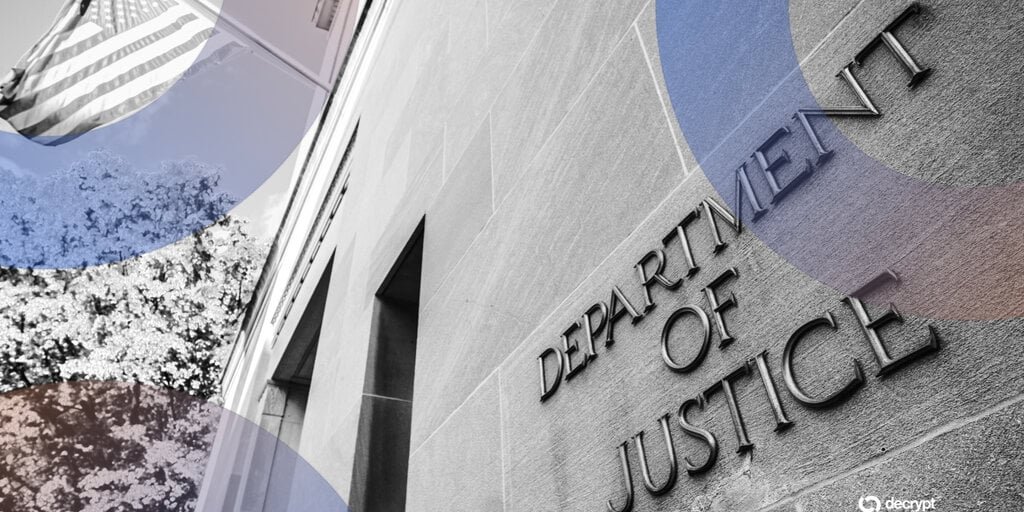
A federal grand jury in the U.S. District Court for the Northern District of California returned an indictment against Samaneh Ghandali, Soroor Ghandali, and Mohammadjavad Khosravi. The indictment was filed Wednesday and unsealed Thursday in San Jose, according to a statement from the DOJ.

While employed at Google, Samaneh Ghandali allegedly “transferred hundreds of files, including Google trade secrets, to a third-party communications platform,” to channels bearing each defendant’s first name, the DOJ said.

A copy of the unsealed indictment was not immediately available at the time of writing. Decrypt has reached out to the relevant DOJ office for further information and comment.

The trio allegedly used their employment at Google and two other unnamed companies to access confidential files tied to mobile computer processors. Per the DOJ, the stolen material included trade secrets related to processor security and cryptography, and Google materials were later copied to personal devices and to work devices associated with the other companies where the defendants were employed.

Prosecutors allege that the defendants sought to conceal their actions by deleting files, destroying electronic records, and submitting false affidavits to victim companies denying that they had shared confidential information outside the company.

In one episode described in the indictment, the DOJ alleges that in December 2023, the night before traveling to Iran, Samaneh Ghandali photographed roughly two dozen images of another company’s work computer screen displaying trade secret information.

While in Iran, a device associated with her allegedly accessed those photographs, and Khosravi allegedly accessed additional trade secret material.

According to the DOJ, Google’s internal security systems detected suspicious activity in August 2023 and revoked Samaneh Ghandali’s access. The indictment alleges she later signed an affidavit stating she had not shared Google’s confidential information outside the company.

All three defendants are charged with conspiracy and theft of trade secrets under federal law, as well as obstruction of justice under a statute that criminalizes corruptly altering, destroying, or concealing records or other objects to impair their use in an official proceeding.

The obstruction charge carries a statutory maximum sentence of 20 years in prison.

Risks and security implications

Observers say the case illustrates how insider access to advanced semiconductor and cryptographic systems can carry national security implications.

“Employees with legitimate access can quietly extract highly sensitive IP over time, even with existing controls in place,” Vincent Liu, chief investment officer at Kronos Research, told Decrypt.

The risk to semiconductor and cryptography firms often comes from “trusted insiders, not hackers,” he added, describing insider risk as a “persistent, structural vulnerability requiring constant monitoring and strict data compartmentalization.”

In such cases, “the insider is the attack surface,” Dan Dadybayo, strategy lead at crypto infrastructure developer Horizontal Systems, told Decrypt. “Firewalls don’t matter when the exfiltration vector is legitimate access,” he said, arguing that when engineers can move “architecture, key management logic or hardware security design out of controlled environments, the ‘perimeter’ collapses.”

If sensitive processor and cryptographic IP reached Iran, Dadybayo said regulators would likely respond aggressively.

He pointed to “tighter enforcement of deemed export rules where knowledge access itself counts as export” and “stricter segmentation, monitoring and licensing requirements inside U.S. firms,” adding that advanced chips and cryptography “are no longer treated as neutral commercial goods” but “instruments of geopolitical power.”

The case also exposes gaps between formal compliance and real-world resilience.

“In most technology organizations, information-theft risks are assumed to be mitigated by obtaining SOC 2 and ISO certifications,” Dyma Budorin, executive chairman at crypto security and compliance firm Hacken, told Decrypt.

Such frameworks “often measure compliance maturity, not actual resilience against a determined attacker—especially an insider.”

Certification, he said, proves controls exist “at the time of audit,” but “it does not prove that sensitive data cannot be stolen.”

Because these standards prescribe common safeguards, Budorin argued, they can make defenses predictable.

For sophisticated attackers, “compliant” often means predictable, he added, warning that real security requires “continuous validation, behavioral monitoring, and adversarial testing,” or organizations risk being “compliant on paper while critically exposed in practice.”

Daily Debrief Newsletter

Start every day with the top news stories right now, plus original features, a podcast, videos and more.


Read the full article here

Fact Checker

Verify the accuracy of this article using AI-powered analysis and real-time sources.

Get Your Fact Check Report

Enter your email to receive detailed fact-checking analysis

5 free reports remaining

Continue with Full Access

You've used your 5 free reports. Sign up for unlimited access!

Already have an account? Sign in here

Share. Facebook Twitter Pinterest LinkedIn Tumblr Email Telegram Copy Link
News Room
  • Website
  • Facebook
  • X (Twitter)
  • Instagram
  • LinkedIn

The FSNN News Room is the voice of our in-house journalists, editors, and researchers. We deliver timely, unbiased reporting at the crossroads of finance, cryptocurrency, and global politics, providing clear, fact-driven analysis free from agendas.

Related Articles

Cryptocurrency & Free Speech Finance

What next for Ripple-linked token as volatility sinks to 2024 lows

17 minutes ago
Cryptocurrency & Free Speech Finance

House Democrats Grill Bessent Over Trump-Linked Crypto Bank Bid

22 minutes ago
Media & Culture

Today in Supreme Court History: February 20, 1933

58 minutes ago
Cryptocurrency & Free Speech Finance

BTC price is still ‘signficantly undervalued,’ Bitwise says: Crypto Daybook Americas

1 hour ago
Cryptocurrency & Free Speech Finance

Bitcoin ETFs Near Five-Week Outflow Streak With $404M Outflows

1 hour ago
Media & Culture

Review: The Outer Worlds 2 Is a Video Game About Unchecked Corporate Power

2 hours ago
Add A Comment
Leave A Reply Cancel Reply

Editors Picks

House Democrats Grill Bessent Over Trump-Linked Crypto Bank Bid

22 minutes ago

Today in Supreme Court History: February 20, 1933

58 minutes ago

16th Feb, 2026. Hungarian Prime Minister Viktor Orban (R) and U.S. Secretary of State Marco Rubio attend a joint press conference in Budapest, Hungary on Feb. 16, 2026. Photo: David Balogh/Xinhua/Alamy Live News When I left Hungary on Sunday, the US secretary of state Marco Rubio had just arrived in Budapest for talks with the prime minister Viktor Orbán to give him the USA’s full-throttled support. Hungary has been somewhat of a touchstone for the MAGA movement and Rubio told Orbán that US Hungarian relations were entering “a golden age” and that if Orbán needed anything, the US would consider providing it. There are elections in Hungary just after Easter and it looks likely, if the polls are to be believed, that the more pro-EU opposition leader Péter Magyar will win. There is restrained optimism among many liberals in Budapest although nothing in this part of the world is a done deal. The week I was there, Magyar was going big on the theme that he had been lured into a honey trap and some Kompromat video Russian-style was going to be released. Only a grainy black and white still of a double-bed captured by a ceiling camera ever emerged. Even with a Magyar win, it will be difficult to unravel the total capture of institutions (universities, the media and the cultural centres) by billionaires and those loyal to Orbán’s Fidesz. I heard some 30-something American men in black bomber jackets in Budapest’s Jewish quarter loudly complaining in English that the “young people” in Hungary wanted to tax those billionaires, but they simply didn’t understand how the country relied on them. We are examining the implications on freedom of expression of all these Hungarian developments in the next magazine. This part of Europe, which was once the Habsburg Empire, feels in flux. People, and particularly young people, are fighting back to claim their rights to be heard. Liberal forces in Slovakia are mobilising, even while the far-right leader Robert Fico is attempting to “normalise” the cultural sector, taking money away from any arts institution considered to be too “activist”. Meanwhile in Vienna, the situation to the east is waved away in the coffee houses as being unimportant, or at least an issue which will resolve itself. A famous saying about the city is: “When the world comes to an end, move to Vienna because everything happens there 20 years later.” There are fears here about an over-dependence on an increasingly unfriendly USA, particularly when it comes to digital platforms and servers – the USA could turn them all off with a flick of a switch if Europe doesn’t toe the line – and a frustration that France and Germany are not working as one to build European solidarity against hostile forces in China and Russia. And then there is a question of the rise of the far-right parties in Europe, including in Austria itself. From the end of World War Two, it was the USA which acted as a liberal guarantor for free expression in western and then eastern Europe. The old order is breaking up, the EU is weakened and ordinary people are having to decide whether those rights are still worth fighting for. READ MORE

1 hour ago

BTC price is still ‘signficantly undervalued,’ Bitwise says: Crypto Daybook Americas

1 hour ago
Latest Posts

Bitcoin ETFs Near Five-Week Outflow Streak With $404M Outflows

1 hour ago

Review: The Outer Worlds 2 Is a Video Game About Unchecked Corporate Power

2 hours ago

Bitcoin (BTC) Drops 0.3% as All Assets Decline

2 hours ago

Subscribe to News

Get the latest news and updates directly to your inbox.

At FSNN – Free Speech News Network, we deliver unfiltered reporting and in-depth analysis on the stories that matter most. From breaking headlines to global perspectives, our mission is to keep you informed, empowered, and connected.

FSNN.net is owned and operated by GlobalBoost Media
, an independent media organization dedicated to advancing transparency, free expression, and factual journalism across the digital landscape.

Facebook X (Twitter) Discord Telegram
Latest News

What next for Ripple-linked token as volatility sinks to 2024 lows

17 minutes ago

House Democrats Grill Bessent Over Trump-Linked Crypto Bank Bid

22 minutes ago

Today in Supreme Court History: February 20, 1933

58 minutes ago

Subscribe to Updates

Get the latest news and updates directly to your inbox.

© 2026 GlobalBoost Media. All Rights Reserved.
  • Privacy Policy
  • Terms of Service
  • Our Authors
  • Contact

Type above and press Enter to search. Press Esc to cancel.

🍪

Cookies

We and our selected partners wish to use cookies to collect information about you for functional purposes and statistical marketing. You may not give us your consent for certain purposes by selecting an option and you can withdraw your consent at any time via the cookie icon.

Cookie Preferences

Manage Cookies

Cookies are small text that can be used by websites to make the user experience more efficient. The law states that we may store cookies on your device if they are strictly necessary for the operation of this site. For all other types of cookies, we need your permission. This site uses various types of cookies. Some cookies are placed by third party services that appear on our pages.

Your permission applies to the following domains:

  • https://fsnn.net
Necessary
Necessary cookies help make a website usable by enabling basic functions like page navigation and access to secure areas of the website. The website cannot function properly without these cookies.
Statistic
Statistic cookies help website owners to understand how visitors interact with websites by collecting and reporting information anonymously.
Preferences
Preference cookies enable a website to remember information that changes the way the website behaves or looks, like your preferred language or the region that you are in.
Marketing
Marketing cookies are used to track visitors across websites. The intention is to display ads that are relevant and engaging for the individual user and thereby more valuable for publishers and third party advertisers.