Close Menu
FSNN | Free Speech News NetworkFSNN | Free Speech News Network
  • Home
  • News
    • Politics
    • Legal & Courts
    • Tech & Big Tech
    • Campus & Education
    • Media & Culture
    • Global Free Speech
  • Opinions
    • Debates
  • Video/Live
  • Community
  • Freedom Index
  • About
    • Mission
    • Contact
    • Support
Trending

New York sues Kalshi, will seek damages, alleging it offers gambling platform

20 minutes ago

Aave Proposal Targets 50 Reserves in Six-Market Wind-Down

21 minutes ago

$38M in Bitcoin Drained by Coldcard Key Flaw Its Maker Thinks AI Found

23 minutes ago
Facebook X (Twitter) Instagram
Facebook X (Twitter) Discord Telegram
FSNN | Free Speech News NetworkFSNN | Free Speech News Network
Market Data Newsletter
Friday, July 31
  • Home
  • News
    • Politics
    • Legal & Courts
    • Tech & Big Tech
    • Campus & Education
    • Media & Culture
    • Global Free Speech
  • Opinions
    • Debates
  • Video/Live
  • Community
  • Freedom Index
  • About
    • Mission
    • Contact
    • Support
FSNN | Free Speech News NetworkFSNN | Free Speech News Network
Home»News»Media & Culture»Mamdani To Increase NYC Property Taxes by 9.5 Percent To Balance Budget if Income Taxes Are Not Raised
Media & Culture

Mamdani To Increase NYC Property Taxes by 9.5 Percent To Balance Budget if Income Taxes Are Not Raised

News RoomBy News Room5 months agoNo Comments4 Mins Read192 Views
Share Facebook Twitter Pinterest Copy Link LinkedIn Tumblr Email VKontakte Telegram
Mamdani To Increase NYC Property Taxes by 9.5 Percent To Balance Budget if Income Taxes Are Not Raised
Share
Facebook Twitter Pinterest Email Copy Link

Listen to the article

0:00
0:00

Key Takeaways

Playback Speed

Select a Voice

New York City is already one of the most expensive places to live in the United States, but residents should brace themselves to pay even more for housing if the city’s budget deficit persists.

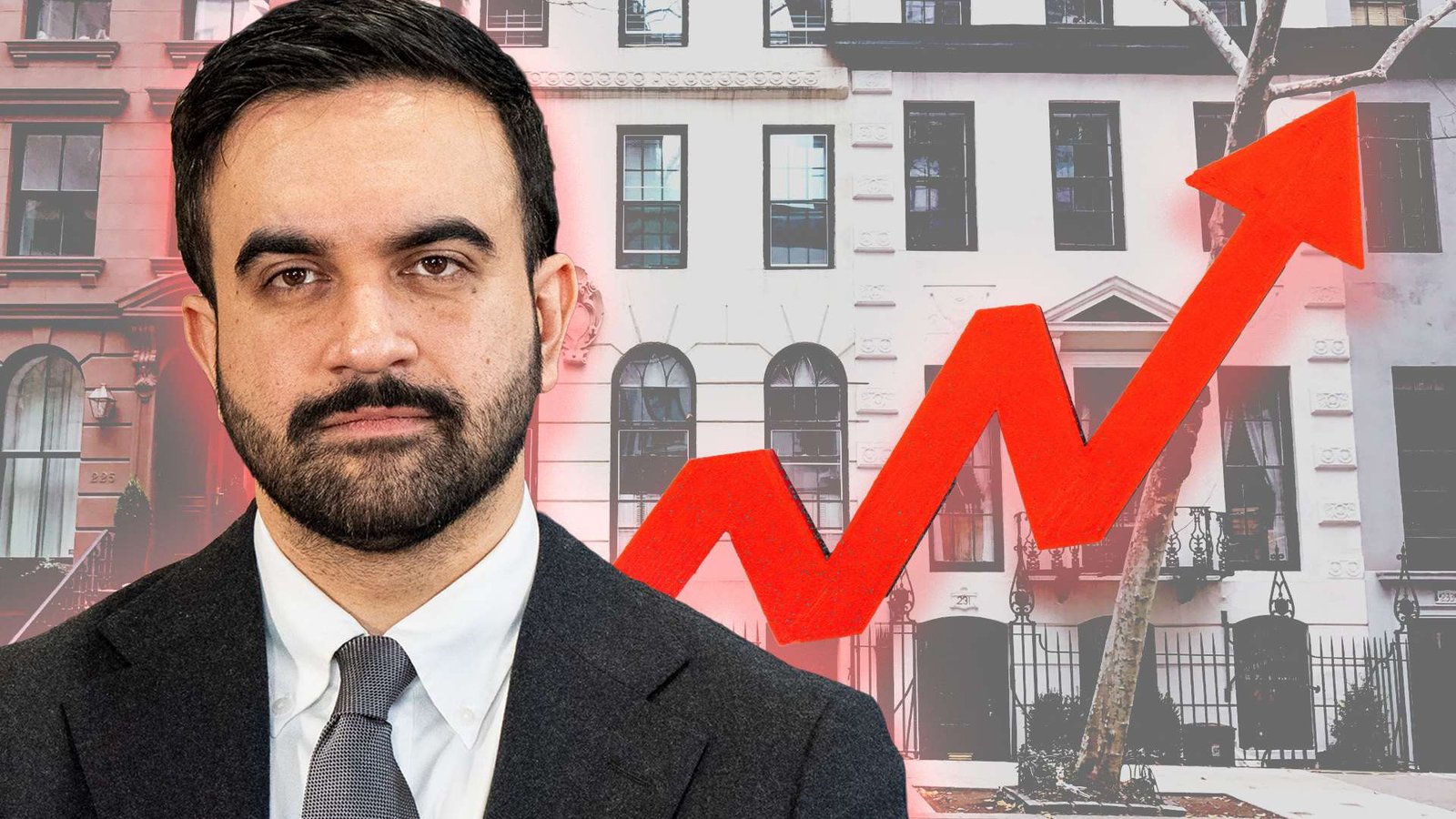
On Tuesday, New York City Mayor Zohran Mamdani announced that the city was facing a budget deficit of $5.4 billion over the next two years. If the state or city does not raise income taxes to balance the budget, as is required by the city’s charter, Mamdani says he will raise property taxes on over 3 million residential units and 100,000 commercial buildings by 9.5 percent. 

The city’s impending fiscal crisis became impossible to ignore when New York City Comptroller Brad Lander released the city’s annual financial report in December. In the report, Lander predicted budget gaps of $2.18 billion and $10.41 billion for FY 2026 and FY 2027, respectively. A month later, Mamdani blamed former Mayor Eric Adams’ “staggering fiscal mismanagement [for leaving] a $12 billion hole in NYC budget for the next two fiscal years.”

Lander, Adams’ comptroller, noted “a recurring pattern of decisions that defer difficult budget choices rather than address them” and identified “the expiration of Federal pandemic aid and the surge in asylum seekers seeking shelter from the City,” the latter of which cost the city over $8 billion from 2023 to 2025 and is projected to cost another $3.6 billion through 2029, according to the New York State Comptroller’s asylum seeker spending report.

New York City’s total expenditures increased from $106 billion in FY 2022 to over $117.5 billion in FY 2025 under Adams. While the budget will increase by $4.5 billion in FY 2026 and $9.5 billion in FY 2027 compared to 2025 levels, 96 percent of this $14 billion in new spending is to cover underfunded programs implemented by Adams, not Mamdani. 

Mamdani reduced the two-year, $12 billion deficit to $7 billion “by deploying in-year reserves, committing to an agency savings plan and incorporating higher-than-expected revenues,” according to a Monday press release. (Mamdani’s savings plan requires the Chief Savings Officers, which he instituted at every city agency in late January, to identify savings through “program consolidation and insourcing, and by eliminating/sunsetting programs” by March 20.)  

To further reduce the deficit, Mamdani wants more state tax revenue to go to the city.

At a late January press conference, Mamdani lamented how “New Yorkers contribute 54.5 percent of state revenue and receive only 40.5 percent back.” The irony here, City Journal’s Adam Lehodey notes, is that Mamdani is essentially objecting to progressive taxation—giving out less in benefits to those who contribute more in revenue—between the city and state, while advocating for such taxation within the city. 

Luckily for New Yorkers, Mamdani’s inconsistency did not compromise his appeal to Democratic Gov. Kathy Hochul. 

On Monday, one day before the city’s budget deadline, the governor agreed to allocate $1.5 billion from state coffers to help address the city’s funding. Still, a roughly $5.4 billion deficit remains. To eliminate this remainder, Mamdani called on Albany to raise income tax rates on the 33,000 New Yorkers making over $1 million a year and to raise “corporate taxes on the most profitable corporations.”

New York State already taxes corporate income at a base rate of 6.5 percent, which rises to 7.25 percent on income over $5 million. Meanwhile, New York’s top marginal individual income tax rate—10.9 percent on earnings over $25 million—is the third highest in the nation. 

Compounding this tax burden, New York City has its own corporate income tax of up to 9 percent for businesses that make over $1.1 million in revenue. The city also taxes individual incomes at a rate of around 3.1 percent, which increases to about 3.9 percent on income over $50,000 for single filers. 

If revenues can’t be raised by increasing these rates, Mamdani will take nearly $1 billion out of the city’s Rainy Day Fund, over $200 million from the Retiree Health Benefits Trust, and jack up property taxes as “a last resort.” These taxes already stand at around 20 percent for family homes, 12 percent for apartment buildings, and 11 percent for commercial properties. 

Before realizing his multibillion-dollar promises of new spending, Mamdani is going to have to address the profligacy of his predecessor, most likely through “a tax on working- and middle-class New Yorkers.” So much for “the warmth of collectivism.”

Read the full article here

Fact Checker

Verify the accuracy of this article using AI-powered analysis and real-time sources.

Get Your Fact Check Report

Enter your email to receive detailed fact-checking analysis

5 free reports remaining

Continue with Full Access

You've used your 5 free reports. Sign up for unlimited access!

Already have an account? Sign in here

#Democracy #FreePress #MediaAndPolitics #PoliticalDebate #PressFreedom
Share. Facebook Twitter Pinterest LinkedIn Tumblr Email Telegram Copy Link
News Room
  • Website
  • Facebook
  • X (Twitter)
  • Instagram
  • LinkedIn

The FSNN News Room is the voice of our in-house journalists, editors, and researchers. We deliver timely, unbiased reporting at the crossroads of finance, cryptocurrency, and global politics, providing clear, fact-driven analysis free from agendas.

Related Articles

Cryptocurrency & Free Speech Finance

$38M in Bitcoin Drained by Coldcard Key Flaw Its Maker Thinks AI Found

23 minutes ago
Media & Culture

Some Tentative Thoughts on Substack

1 hour ago
Media & Culture

Brickbat: Apples and Oranges

2 hours ago
Media & Culture

Trump’s Boat Strikes Killed 221 People, but Didn’t Win the War on Drugs

3 hours ago
Media & Culture

Drones Over Egypt

4 hours ago
Media & Culture

Homeland Security Is Spending $1 Billion on ‘Autonomous’ Border Surveillance Towers

5 hours ago
Add A Comment

Comments are closed.

Editors Picks

Aave Proposal Targets 50 Reserves in Six-Market Wind-Down

21 minutes ago

$38M in Bitcoin Drained by Coldcard Key Flaw Its Maker Thinks AI Found

23 minutes ago

Some Tentative Thoughts on Substack

1 hour ago

Our report with the University of Essex The weaponisation of travel bans to Silence Speech and Dissent is published today. Photo: Curated Lifestyle/Unsplash+ When we think of state censorship, we often picture prison cells, violent police crackdowns or control of newsrooms. However, our report titled The weaponisation of travel bans to silence speech and dissent published today by Index on Censorship reveals a quieter, less visible tool of state repression that is devastating civil society across the world. We found that rather than protecting public safety, governments are increasingly manipulating “national security” or “public order” exemptions to trap journalists, fracture families and exile critics. Our research shows that these bans are highly adaptable tools that occur around politically sensitive events such as protests, elections and crackdowns on democratic activity. Their shared, devastating objective is to control narratives, block external scrutiny and create a chilling effect on free expression. As we researched this topic, we strongly felt that to understand the severity of this crisis, the spotlight must remain entirely on the impacted individuals. The victims of this widespread authoritarian trend pay with their lives and livelihoods being upended by arbitrary and undemocratic measures. Our analysis highlights that in authoritarian contexts, travel bans act as overt tools of absolute repression. In Saudi Arabia, they function as a form of “quasi-detention”, ensuring that prisoners of conscience remain silenced long after they are physically released from their cells. Take the example of Salma Al-Shehab, a doctoral student at Leeds University, who was imprisoned simply for tweeting in support of women’s rights. Upon her release, she was handed an eight-year travel ban, effectively destroying her academic career by barring her return to the United Kingdom. Similarly, in Algeria, our research shows how journalists like Mustapha Bendjama find themselves trapped in a bureaucratic nightmare. Extrajudicial travel bans, known as ISTNs, are routinely issued by security agencies without formal judicial oversight, leaving targets in a legal vacuum with no clear avenues for appeal. Bendjama shared with us that this forced isolation acts as a “mental imprisonment” that has dried up his sources and severely compromised his ability to conduct rigorous journalism. One of our most troubled findings was that the chilling effect of these restrictions extends well beyond authoritarian states, creeping into hybrid democracies. In India, administrative tools like “Look Out Circulars” are deployed to trap critical voices within the country’s borders. Sanna Irshad Mattoo, a Pulitzer Prize-winning photojournalist, was prevented from travelling to New York to accept her award, sending a clear message that international recognition offers no immunity from state retaliation. In Georgia, foreign journalists who report critically on the country’s democratic backsliding have been arbitrarily denied re-entry at the border using generic legislative clauses. French journalist Clément Giradot was refused entry after reporting on political demonstrations, a decision that suddenly separated him from his home, his Georgian wife and his young child without any concrete legal justification. It became clear to us that these are not isolated administrative errors. We believe they are part of a coordinated assault on international human rights. Whether it is Nicaragua arbitrarily revoking citizenship to render critics stateless, Belarus forcing exiled dissidents into jeopardy by refusing to renew passports abroad or the United States deploying visa revocations and social media screenings against lawfully present critics, the goal appears to be one: to enforce widespread self-censorship and fear. The international community can no longer treat these administrative traps as routine border control measures. We urgently recommend taking action. States must do away with these opaque directives, end the use of secondary travel bans as a form of collective punishment against families and align their domestic laws with international human rights standards. Furthermore, democratic host nations must step in to provide secure legal status and alternative travel documents for exiled dissidents while applying sustained diplomatic pressure to demand the lifting of these arbitrary restrictions globally. Respecting and protecting freedom of speech should not know any ideological boundaries or state borders. With this report, we express our solidarity with the brave ones who raised their voices and with many more who were silenced and never known. While researching and interviewing participants at the front lines of this injustice, we were reminded of the importance of academia’s role as both a sanctuary for freedom of expression and a service to society at large. window.option_df_140795 = {“outline”:[],”autoEnableOutline”:”false”,”autoEnableThumbnail”:”false”,”overwritePDFOutline”:”false”,”direction”:”1″,”pageSize”:”0″,”source”:”https:\/\/www.indexoncensorship.org\/wp-content\/uploads\/2026\/07\/travel-bans-report.pdf”,”wpOptions”:”true”}; if(window.DFLIP && window.DFLIP.parseBooks){window.DFLIP.parseBooks();}   READ MORE

1 hour ago
Latest Posts

Quantum Solutions, Hyperscale Data tap crypto treasuries to fund AI data centers

1 hour ago

RWA Perpetual Futures Near Bitcoin Volume on Hyperliquid, Binance

1 hour ago

Brickbat: Apples and Oranges

2 hours ago

Subscribe to News

Get the latest news and updates directly to your inbox.

At FSNN – Free Speech News Network, we deliver unfiltered reporting and in-depth analysis on the stories that matter most. From breaking headlines to global perspectives, our mission is to keep you informed, empowered, and connected.

FSNN.net is owned and operated by GlobalBoost Media
, an independent media organization dedicated to advancing transparency, free expression, and factual journalism across the digital landscape.

Facebook X (Twitter) Discord Telegram
Latest News

New York sues Kalshi, will seek damages, alleging it offers gambling platform

20 minutes ago

Aave Proposal Targets 50 Reserves in Six-Market Wind-Down

21 minutes ago

$38M in Bitcoin Drained by Coldcard Key Flaw Its Maker Thinks AI Found

23 minutes ago

Subscribe to Updates

Get the latest news and updates directly to your inbox.

© 2026 GlobalBoost Media. All Rights Reserved.
  • Privacy Policy
  • Terms of Service
  • Our Authors
  • Contact

Type above and press Enter to search. Press Esc to cancel.

🍪

Cookies

We and our selected partners wish to use cookies to collect information about you for functional purposes and statistical marketing. You may not give us your consent for certain purposes by selecting an option and you can withdraw your consent at any time via the cookie icon.

Cookie Preferences

Manage Cookies

Cookies are small text that can be used by websites to make the user experience more efficient. The law states that we may store cookies on your device if they are strictly necessary for the operation of this site. For all other types of cookies, we need your permission. This site uses various types of cookies. Some cookies are placed by third party services that appear on our pages.

Your permission applies to the following domains:

  • https://fsnn.net
Necessary
Necessary cookies help make a website usable by enabling basic functions like page navigation and access to secure areas of the website. The website cannot function properly without these cookies.
Statistic
Statistic cookies help website owners to understand how visitors interact with websites by collecting and reporting information anonymously.
Preferences
Preference cookies enable a website to remember information that changes the way the website behaves or looks, like your preferred language or the region that you are in.
Marketing
Marketing cookies are used to track visitors across websites. The intention is to display ads that are relevant and engaging for the individual user and thereby more valuable for publishers and third party advertisers.