Close Menu
FSNN | Free Speech News NetworkFSNN | Free Speech News Network
  • Home
  • News
    • Politics
    • Legal & Courts
    • Tech & Big Tech
    • Campus & Education
    • Media & Culture
    • Global Free Speech
  • Opinions
    • Debates
  • Video/Live
  • Community
  • Freedom Index
  • About
    • Mission
    • Contact
    • Support
Trending

How Close Can AI Get To Writing A Techdirt Post?

14 minutes ago

No First Amendment Right to Force Government to Provide Live Feed of Macaques in Government Lab

15 minutes ago

Kraken parent acquires token management company ahead of planned IPO push

33 minutes ago
Facebook X (Twitter) Instagram
Facebook X (Twitter) Discord Telegram
FSNN | Free Speech News NetworkFSNN | Free Speech News Network
Market Data Newsletter
Wednesday, February 18
  • Home
  • News
    • Politics
    • Legal & Courts
    • Tech & Big Tech
    • Campus & Education
    • Media & Culture
    • Global Free Speech
  • Opinions
    • Debates
  • Video/Live
  • Community
  • Freedom Index
  • About
    • Mission
    • Contact
    • Support
FSNN | Free Speech News NetworkFSNN | Free Speech News Network
Home»News»Global Free Speech»U2 supports CPJ as it launches new EP ‘Days of Ash’
Global Free Speech

U2 supports CPJ as it launches new EP ‘Days of Ash’

News RoomBy News Room4 hours agoNo Comments2 Mins Read1,128 Views
Share Facebook Twitter Pinterest Copy Link LinkedIn Tumblr Email VKontakte Telegram
U2 supports CPJ as it launches new EP ‘Days of Ash’
Share
Facebook Twitter Pinterest Email Copy Link

Listen to the article

0:00
0:00

Key Takeaways

Playback Speed

Select a Voice

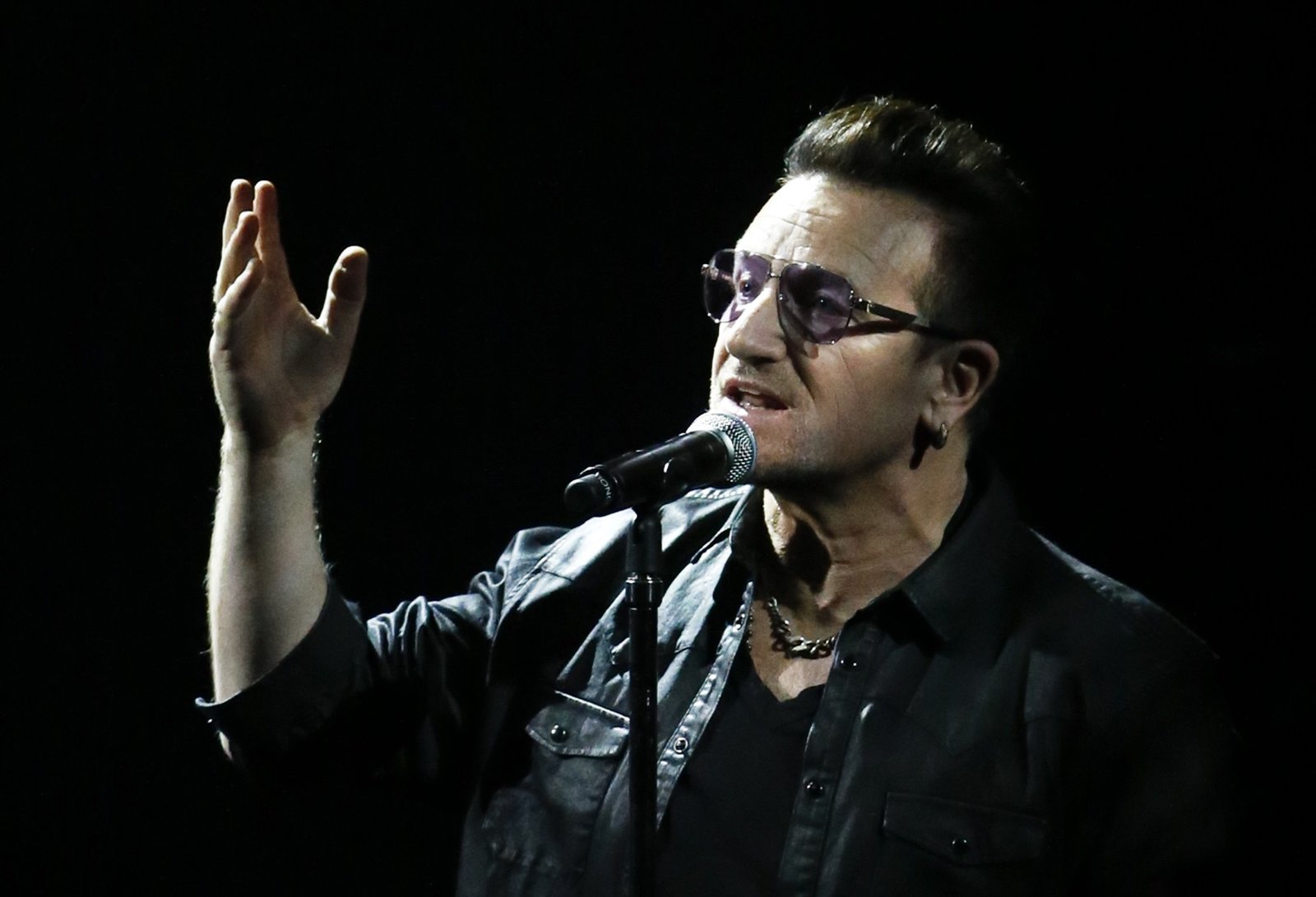
New York, February 18, 2026—Irish rock band U2 has named the Committee to Protect Journalists (CPJ) one of three charitable partners it is supporting as it launches “Days Of Ash” — a self-contained collection of five new songs and a poem inspired by the “many extraordinary and courageous people fighting on the front lines of freedom.” 

The EP is being released ahead of a new album in late 2026.

In launching “Days of Ash,” U2 frontman Bono describes the collection as “songs of defiance and dismay, of lamentation. Songs of celebration will follow, we’re working on those now … because for all the awfulness we see normalized daily on our small screens, there’s nothing normal about these mad and maddening times, and we need to stand up to them before we can go back to having faith in the future.”

CPJ is being named alongside Amnesty International and the U.N. Refugee Agency (UNHCR) as one of the organizations U2 is supporting in conjunction with the release.

“We are deeply grateful to be recognized by U2 in this way,” said CPJ CEO Jodie Ginsberg. “As Bono notes, there is nothing normal about these times and journalists play a vital role in bearing witness to the abuses we see taking place worldwide.”

You can donate to CPJ’s work here.

###

About the Committee to Protect Journalists

The Committee to Protect Journalists is an independent, nonprofit organization that promotes press freedom worldwide. We defend the right of journalists to report the news safely and without fear of reprisal.

For media queries, please contact [email protected].

Read the full article here

Fact Checker

Verify the accuracy of this article using AI-powered analysis and real-time sources.

Get Your Fact Check Report

Enter your email to receive detailed fact-checking analysis

5 free reports remaining

Continue with Full Access

You've used your 5 free reports. Sign up for unlimited access!

Already have an account? Sign in here

Share. Facebook Twitter Pinterest LinkedIn Tumblr Email Telegram Copy Link
News Room
  • Website
  • Facebook
  • X (Twitter)
  • Instagram
  • LinkedIn

The FSNN News Room is the voice of our in-house journalists, editors, and researchers. We deliver timely, unbiased reporting at the crossroads of finance, cryptocurrency, and global politics, providing clear, fact-driven analysis free from agendas.

Related Articles

Global Free Speech

Funding of just 8.9 million euro would only be sufficient to cover RTK’s basic operational needs. Photo: Arianit/CC BY-SA 4.0 The undersigned international media freedom and journalist organisations today express our serious concerns about the underfunding of Kosovo’s public broadcaster, Radio Television of Kosovo (RTK), and urgently call for legal budget requirements to be met. The Assembly of Kosovo is currently discussing the RTK budget, which is anticipated to be passed in two readings on 19 and 20 February 2026. According to the draft Law on the Budget for 2026, the parliament, based on the government’s proposal, will allocate only 8.9 million euros, which is sufficient only to cover basic operational needs such as staff salaries. The Law on RTK foresees that the public broadcaster should receive 0.7 percent of the total state budget of around three billion euros. This would mean that RTK should be allocated approximately 22 million euros. If passed, the current budget would be only 40% of this legally mandated total. A budget shortfall of this scale would seriously undermine the ability of the public broadcaster to operate independently and to fulfil its mission to inform citizens on matters of public interest. If RTK were to receive the budget it is legally entitled to, it would allow it to operate independently from any interference from the government and Parliament, while also enabling investment and development of the public broadcaster. We note that Article 5 of the European Union’s European Media Freedom Act (EMFA) requires Member States – which Kosovo aspires to become – to provide sustainable and adequate funding to public service media to allow for their stable and independent operations. The proposed budgetary system, which conflicts with the existing legal framework, would, if applicable, clearly violate this EMFA provision. We take this opportunity to invite the Government and the Parliament to initiate work on the implementation of the EMFA, as well as to begin discussions on reforming the funding and governance of RTK to ensure that its editorial and functional independence is guaranteed. Ahead of the pending budgetary decision, our organisations therefore jointly ask the Prime Minister and President of Lëvizja Vetëvendosje, Albin Kurti, and the Speaker of the Kosovo assembly, Albulena Haxhiu, to ensure that the public broadcaster receives the adequate and equitable budget in accordance with the law and that it is not subjected to political pressure through budget limitations. Signed: European Centre for Press and Media Freedom (ECPMF) International Press Institute (IPI) European Federation of Journalists (EFJ) Index on Censorship Osservatorio Balcani Caucaso Transeuropa (OBCT) READ MORE

5 hours ago
Global Free Speech

Students at the University of Essex discuss self-censorship and internet shutdowns at the Index magazine launch event Each generation has its resentments and irritations with the previous one. The baby boomers rebelled against post-war austerity, and their fury fuelled the student revolutions that swept the world in 1968. In some senses, they were the lucky ones. In the UK, free higher education and cheap housing made the boomers rich and comfortable. My own peers, Generation X, sneered at their smug complacency as we were hit by recession, the Poll Tax and Thatcherism. But some also benefitted from the unleashing of the free market, or rather the housing market. The millennials that followed were the first digital natives. They were hopeful and idealistic, but they were also the first generation to be saddled with crippling student debt. These generations had little in common, but one thing they rarely felt, in the West at least, was silenced. At the launch event for our Gen Z edition of Index on Censorship at the University of Essex recently it was striking how many ways the panellists felt their voices had been muffled and contained, if not outright censored. The speakers at the event (Has Gen Z Been Silenced On and Off Campus) could not have been more diverse, but they each felt restrictions on their free expression keenly. Sariah Lake, head of editorial at Essex Student Union’s Rebel Media said while she recognised that in some parts of the world, young people’s voices were being genuinely censored, for her the key issue was the influence of social media. “We are losing focus, we are getting distracted, we are just going to repost things,” she said. “Overcoming distraction, connecting with the real world, connecting with originality is what we can do to maintain freedom of speech.” Adil Zawahir, an Indian lawyer working on a master’s degree in human rights law, said the situation was different for overseas students. “In the West, and the UK in particular, the curtailment of speech is not due to a fear of repression, it is more because of the fear of social ostracization and the anxiety you may feel after you’ve spoken out.” He added that international students have a double problem. “We share the social anxiety, but in addition to that, every time we think about speaking out, in the back of our minds is our status in this country. It is a temporary status. We are always subject to what the government decides for us.” For Yelyzabeta Buriak, a journalism student from Ukraine who has written about her experience for the latest edition of Index, her situation as a refugee from a war zone brought with it extra concerns and restrictions. She said she avoided discussing the topic of Ukraine altogether for the first year in this country. “I’ve been carrying a feeling of guilt: for being safe here while my parents and friends are still in Ukraine in a very dangerous area,” she said. “You have this feeling of guilt, and you are always careful with words. You think ten times before saying something.” Sometimes, according to Buriak, the biggest silences are not caused by the law or university policy. “Sometimes it is self-censorship, sometimes it is fear, guilt and online judgement and sometimes its is paperwork and systems.” An important reminder of the wider international context was provided by Merick Niyongabo, President of the Politics Society at Essex, who celebrated the Gen Z revolutions in Nepal, Bulgaria and Kenya but also pointed to the internet shutdowns being used across the world to silence dissent. “It’s important we raise the voices of those who are not being heard, the voices of those in Iran and Russia, who are going through repression, but not able to publish what they are writing or express their views because of censorship.” A launch event for the Index on Censorship Gen Z issue was also held at Liverpool John Moores University, where the students mainly discussed a campaign to make LJMU a “Pro-Choice Campus”. A report of the event can be found on the Mersey News Live website, which is run by students at the university. The event at University of Essex was to launch the Winter 2025 issue of Index on Censorship, Gen Z is revolting: Why the world’s youth will not be silenced, published on 18 December 2025. READ MORE

13 hours ago
Global Free Speech

‘I literally felt naked’: Angolan journalist Teixeira Cândido targeted with Predator spyware

22 hours ago
Global Free Speech

CPJ to release report documenting Palestinian journalists’ claims of torture in Israeli prisons

1 day ago
Global Free Speech

Ukraine’s youth abroad are censoring what they say to those still at home. Photo: Illia Horokhovsky/Unsplash This article first appeared in the Winter 2025 issue of Index on Censorship, Gen Z is revolting: Why the world’s youth will not be silenced, published on 18 December 2025. For Ukraine’s Gen Z, the war has created two kinds of silence: one under sirens and the other under guilt. Those who stayed live through air raid alerts and numb routine; those who left watch from abroad – scrolling through updates, unsure what to say to the people they love back home. Both carry their version of survival, and both are having to learn to speak to each other again. In Dnipro, Dasha Buldenko, 19, says she has grown used to fear. “You get used to the sirens, you get used to the explosions. You stop feeling anything,” she tells me. “We live in totally different worlds now.” For her, life has narrowed to a quiet persistence: staying, coping and enduring without expecting understanding from those who left Ukraine. “People who moved abroad forget where they came from,” she says, frustrated by what she calls the “pity” tone of returning friends. “They see a different world, different opportunities. We don’t have those because of war.” Mark Neshta, a 21-year-old student at the University of Essex in the UK, describes another kind of distance: the one between empathy and experience. “You just can’t truly understand how it feels,” he admits. “At the beginning, I was deeply depressed that my country was going through such horror while I was sitting safely 1,000km away.” He calls it “a strange cognitive dissonance” when “you’re physically abroad but all you care about, all you live by, is news from Ukraine. You consume it only through the internet or through conversations with loved ones who stayed”. Over time, that guilt has turned into a determination to define himself more clearly. Living abroad, he says, has made him think about what it means to represent Ukraine. “When people ask where I’m from, I want them to see more than war, to see culture, history, identity.” He even switched to speaking Ukrainian, though he grew up speaking Russian. “I don’t think living abroad is what caused that,” he says. “It was the war itself.” Both voices show the same wound from opposite sides. Those inside Ukraine hide their pain behind fatigue. Those outside hide their guilt behind activism or composure. When they talk, it is not politics that divides them but the need to censor emotion, to sound strong, to sound grateful, to avoid hurting each other with what the other cannot understand. What does that do to identity? For Dasha, being Ukrainian “just is”. She says: “We are all Ukrainians; we stand for our own, regardless of language barriers.” For her, it is a fact of staying and surviving. For Mark, it is something to articulate and explain. One holds on by living it, the other by translating it. In the end, both sides are searching for the same thing: to be understood. “People just need to actually listen to each other,” Dasha says. READ MORE

1 day ago
Global Free Speech

Cambodian journalist Luot Sophal detained over military water shortage report

2 days ago
Add A Comment
Leave A Reply Cancel Reply

Editors Picks

No First Amendment Right to Force Government to Provide Live Feed of Macaques in Government Lab

15 minutes ago

Kraken parent acquires token management company ahead of planned IPO push

33 minutes ago

Altcoin Sell Pressure Hits $209B As BTC Volumes Lead The Market

40 minutes ago

Peter Thiel Exits ETHZilla Investment After Ethereum Treasury Stock Craters

41 minutes ago
Latest Posts

Daily Deal: Luminar Neo Bundle

1 hour ago

Free Speech Unmuted: Student Speech, Threats, and the First Amendment

1 hour ago

BTC’s bounce from this month’s crash evaporates

2 hours ago

Subscribe to News

Get the latest news and updates directly to your inbox.

At FSNN – Free Speech News Network, we deliver unfiltered reporting and in-depth analysis on the stories that matter most. From breaking headlines to global perspectives, our mission is to keep you informed, empowered, and connected.

FSNN.net is owned and operated by GlobalBoost Media
, an independent media organization dedicated to advancing transparency, free expression, and factual journalism across the digital landscape.

Facebook X (Twitter) Discord Telegram
Latest News

How Close Can AI Get To Writing A Techdirt Post?

14 minutes ago

No First Amendment Right to Force Government to Provide Live Feed of Macaques in Government Lab

15 minutes ago

Kraken parent acquires token management company ahead of planned IPO push

33 minutes ago

Subscribe to Updates

Get the latest news and updates directly to your inbox.

© 2026 GlobalBoost Media. All Rights Reserved.
  • Privacy Policy
  • Terms of Service
  • Our Authors
  • Contact

Type above and press Enter to search. Press Esc to cancel.

🍪

Cookies

We and our selected partners wish to use cookies to collect information about you for functional purposes and statistical marketing. You may not give us your consent for certain purposes by selecting an option and you can withdraw your consent at any time via the cookie icon.

Cookie Preferences

Manage Cookies

Cookies are small text that can be used by websites to make the user experience more efficient. The law states that we may store cookies on your device if they are strictly necessary for the operation of this site. For all other types of cookies, we need your permission. This site uses various types of cookies. Some cookies are placed by third party services that appear on our pages.

Your permission applies to the following domains:

  • https://fsnn.net
Necessary
Necessary cookies help make a website usable by enabling basic functions like page navigation and access to secure areas of the website. The website cannot function properly without these cookies.
Statistic
Statistic cookies help website owners to understand how visitors interact with websites by collecting and reporting information anonymously.
Preferences
Preference cookies enable a website to remember information that changes the way the website behaves or looks, like your preferred language or the region that you are in.
Marketing
Marketing cookies are used to track visitors across websites. The intention is to display ads that are relevant and engaging for the individual user and thereby more valuable for publishers and third party advertisers.