Close Menu
FSNN | Free Speech News NetworkFSNN | Free Speech News Network
  • Home
  • News
    • Politics
    • Legal & Courts
    • Tech & Big Tech
    • Campus & Education
    • Media & Culture
    • Global Free Speech
  • Opinions
    • Debates
  • Video/Live
  • Community
  • Freedom Index
  • About
    • Mission
    • Contact
    • Support
Trending

T-Bills Primary Force Behind BTC’s Price Action, Not Fed Policy — Report

6 minutes ago

Canary, Grayscale Sui ETFs Hit US Markets With Staking Rewards

7 minutes ago

The ‘Most Massive Attack On Free Speech’ Is Happening Right Now, And The Twitter Files Crew Is Mighty Quiet

41 minutes ago
Facebook X (Twitter) Instagram
Facebook X (Twitter) Discord Telegram
FSNN | Free Speech News NetworkFSNN | Free Speech News Network
Market Data Newsletter
Wednesday, February 18
  • Home
  • News
    • Politics
    • Legal & Courts
    • Tech & Big Tech
    • Campus & Education
    • Media & Culture
    • Global Free Speech
  • Opinions
    • Debates
  • Video/Live
  • Community
  • Freedom Index
  • About
    • Mission
    • Contact
    • Support
FSNN | Free Speech News NetworkFSNN | Free Speech News Network
Home»News»Media & Culture»Stephen Colbert Says CBS Killed an Interview Because of FCC Equal-Time Rule
Media & Culture

Stephen Colbert Says CBS Killed an Interview Because of FCC Equal-Time Rule

News RoomBy News Room3 hours agoNo Comments6 Mins Read1,018 Views
Share Facebook Twitter Pinterest Copy Link LinkedIn Tumblr Email VKontakte Telegram
Stephen Colbert Says CBS Killed an Interview Because of FCC Equal-Time Rule
Share
Facebook Twitter Pinterest Email Copy Link

Listen to the article

0:00
0:00

Key Takeaways

Playback Speed

Select a Voice

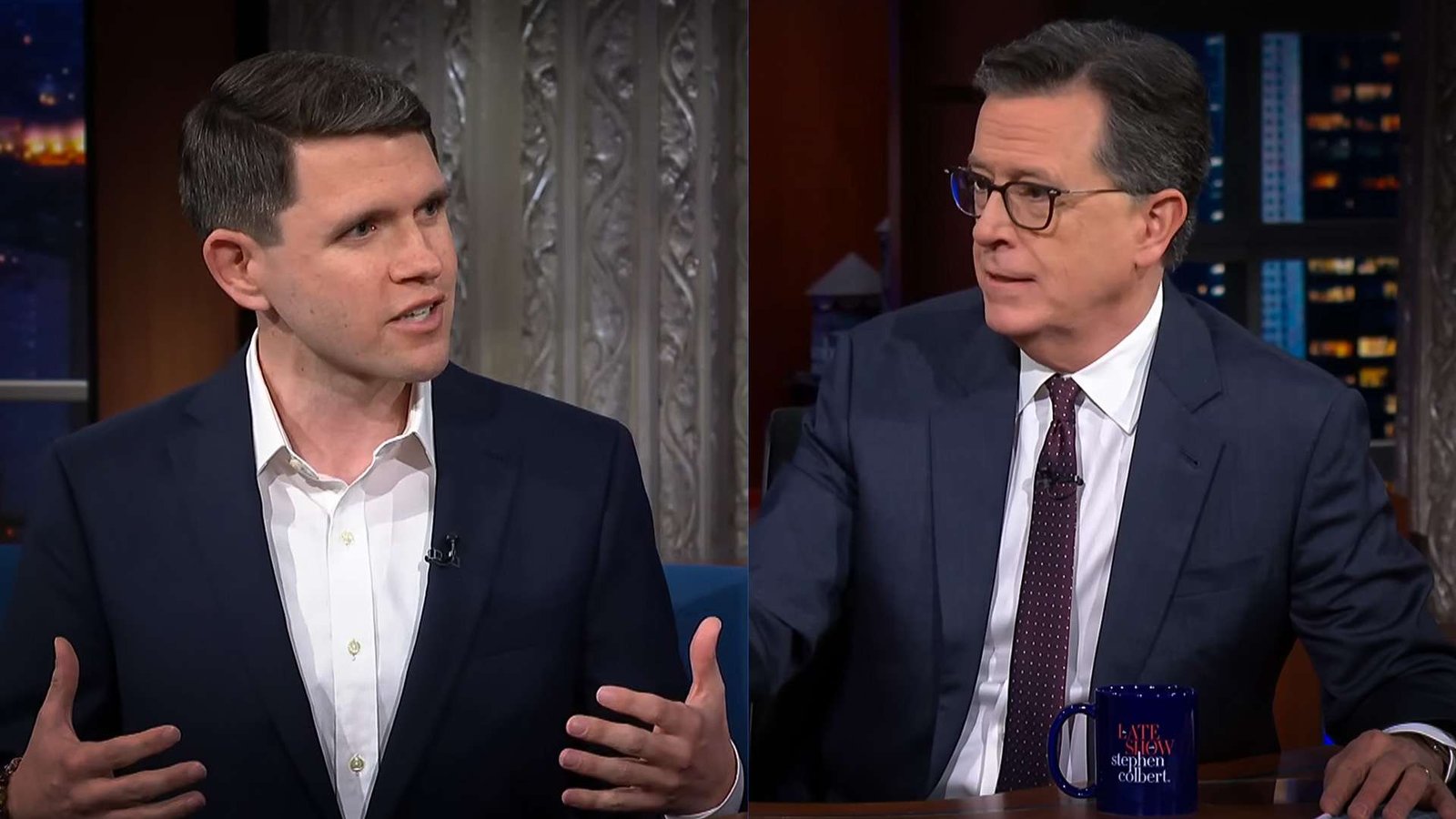
This week, Stephen Colbert—host of CBS’ The Late Show—interviewed Texas state Rep. James Talarico, a candidate in the state’s Democratic Senate primary on March 3.

But it didn’t air. As Colbert explained, CBS declined to broadcast the interview as a result of recent Federal Communications Commission (FCC) guidelines relating to the equal-time rule. If anything, the incident just provided further proof that the rule should be abolished.

“[Talarico] was supposed to be here, but we were told in no uncertain terms by our network’s lawyers, who called us directly, that we could not have him on the broadcast,” Colbert told his audience, who booed in reply.


According to Colbert, the network cited the equal opportunities requirement, better known as the equal-time rule. Stemming from the era when the limited broadcast spectrum was the only way to transmit radio or television, the equal-time rule says if a “legally qualified” candidate for public office appears on broadcast TV in the weeks before their election, the network must “afford equal opportunities to all other such candidates for that office.”

In a statement posted to X by CNN’s Brian Stelter, CBS said it did not keep Colbert from airing the Talarico interview, but it “provided legal guidance that the broadcast could trigger the FCC equal-time rule…and presented options for how the equal time for other candidates could be fulfilled.“

Talarico is one of three candidates running in the state’s Democratic Senate primary, plus eight Republican candidates; under the equal-time rule, if CBS aired Colbert’s interview with Talarico, it could be required to offer equivalent airtime to each of the other 10 candidates. CBS would only be required to make the offer, though any candidates that accepted would then mean the network must coordinate long-form interviews to air in the two weeks before the primary. (In its statement, CBS noted only that airing Talarico’s interview could include equal-time considerations for his two fellow Democratic candidates, U.S. Rep. Jasmine Crockett and businessman Ahmad Hassan.)

The equal-time rule allows exceptions for “bona fide” news coverage, and for decades, this was understood to include interviews. Richard Nixon appeared on The Jack Paar Show in 1960 and on Rowan & Martin’s Laugh-In in 1968, each time just weeks before an election in which he was competing. During the 1992 presidential primaries, Bill Clinton endeared himself to younger voters by playing the saxophone on The Arsenio Hall Show.

But in a January directive, FCC Chairman Brendan Carr sought to upend that interpretation.

Carr advised that going forward, “a program that is motivated by partisan purposes” would not qualify as “bona fide” news coverage exempt from the equal-time rule.

What qualifies as “partisan” motivation, as opposed to just catering to your overwhelmingly liberal audience? That’s apparently in the eye of the beholder. As a result, networks are less likely to book liberal guests and risk running afoul of an FCC chair who apparently relishes his reputation as President Donald Trump’s “media pit bull.”

But even in the face of the equal-time rule, Colbert still did the interview. The full 14-minute video is available on the show’s YouTube page, as well as on Paramount+, the streaming service of CBS’ parent company. YouTube and streamers are both beyond the reach of the FCC’s equal-time rule.

So, for that matter, is cable news: After he leaves CBS in May, Colbert could host a show on the left-of-center cable news channel MS NOW (formerly MSNBC), on which he only interviews Democrats, and the FCC would have no purview to complain.

That, ultimately, is the takeaway from this bit of jawboning—not that Carr is protecting the public’s precious airwaves, but that there is little reason for them to be protected in the first place.

Last week, Colbert’s broadcast averaged 2.45 million viewers; his interview with Talarico eclipsed that total within 24 hours of hitting YouTube. That’s not to mention the number of people who watch it on streaming, or on social media platforms like Instagram or TikTok.

The equal-time rule originated in the era when radio was the only form of broadcast; it later expanded to include television, but for decades, that only included the major broadcast networks. Now, most Americans get their information online, either eschewing broadcast TV altogether or just catching it on streaming services or YouTube.

The equal-time rule even makes little sense in practice. On Wednesday, Colbert is set to interview Sen. Jon Ossoff (D–Ga.), a declared candidate in the 2026 midterm elections. But since Georgia’s candidate qualification period does not begin until March 2, and the primary itself is not until May 19, Ossoff is not yet a “legally qualified” candidate as defined under federal law, putting him outside the equal-time rule’s qualifications.

Clearly, for whatever merit the equal-time rule had when Congress first drafted it nearly a century ago, it has only become more unnecessary and onerous with time. Even when applied with some level of logic and fairness, it still constitutes a top-down federal mandate that a broadcast network air certain content, at a time when it has never been easier for consumers to find any content they want.

“Brendan Carr’s FCC is continuing its streak of naked partisanship by wielding the agency’s power in new and laughable ways,” Robert Corn-Revere, chief counsel for the Foundation for Individual Rights and Expression, said in a statement. “Candidate interviews have long been exempt from ‘equal time’ rules for good reason. It would be wrong if a Democratic administration demanded conservative talk radio hosts give equal airtime when they interview candidates, and it’s wrong for the Trump administration to demand the same of late night talk show hosts.” In fact, as Colbert noted during his broadcast, Carr said last month that he would not be targeting conservative talk radio with his new directive.

“By putting pressure on late night talk shows critical of the Trump administration while openly admitting that conservative talk radio is immune from the FCC’s ire,” Corn-Revere added, “[Carr is] making himself the poster boy for big government putting its thumb on the scale of political debate.”

Read the full article here

Fact Checker

Verify the accuracy of this article using AI-powered analysis and real-time sources.

Get Your Fact Check Report

Enter your email to receive detailed fact-checking analysis

5 free reports remaining

Continue with Full Access

You've used your 5 free reports. Sign up for unlimited access!

Already have an account? Sign in here

#MediaAccountability #MediaBias #PoliticalCoverage #PoliticalMedia #PressFreedom
Share. Facebook Twitter Pinterest LinkedIn Tumblr Email Telegram Copy Link
News Room
  • Website
  • Facebook
  • X (Twitter)
  • Instagram
  • LinkedIn

The FSNN News Room is the voice of our in-house journalists, editors, and researchers. We deliver timely, unbiased reporting at the crossroads of finance, cryptocurrency, and global politics, providing clear, fact-driven analysis free from agendas.

Related Articles

Cryptocurrency & Free Speech Finance

Canary, Grayscale Sui ETFs Hit US Markets With Staking Rewards

7 minutes ago
Media & Culture

The ‘Most Massive Attack On Free Speech’ Is Happening Right Now, And The Twitter Files Crew Is Mighty Quiet

41 minutes ago
Media & Culture

Blaming Buildings for Sex Trafficking

43 minutes ago
Cryptocurrency & Free Speech Finance

Goldman Sachs CEO Owns ‘Very Little’ Bitcoin, Backs Bessent on Clarity Act

1 hour ago
Media & Culture

NYU Democracy Project Article on How to “Strengthen Democracy by Empowering People to Vote with their Feet”

2 hours ago
Cryptocurrency & Free Speech Finance

Sai’s New Perps DEX Offers ‘Clean, CEX-like Experience’ With Onchain Settlement

2 hours ago
Add A Comment
Leave A Reply Cancel Reply

Editors Picks

Canary, Grayscale Sui ETFs Hit US Markets With Staking Rewards

7 minutes ago

The ‘Most Massive Attack On Free Speech’ Is Happening Right Now, And The Twitter Files Crew Is Mighty Quiet

41 minutes ago

Blaming Buildings for Sex Trafficking

43 minutes ago

U2 supports CPJ as it launches new EP ‘Days of Ash’

48 minutes ago
Latest Posts

Funding of just 8.9 million euro would only be sufficient to cover RTK’s basic operational needs. Photo: Arianit/CC BY-SA 4.0 The undersigned international media freedom and journalist organisations today express our serious concerns about the underfunding of Kosovo’s public broadcaster, Radio Television of Kosovo (RTK), and urgently call for legal budget requirements to be met. The Assembly of Kosovo is currently discussing the RTK budget, which is anticipated to be passed in two readings on 19 and 20 February 2026. According to the draft Law on the Budget for 2026, the parliament, based on the government’s proposal, will allocate only 8.9 million euros, which is sufficient only to cover basic operational needs such as staff salaries. The Law on RTK foresees that the public broadcaster should receive 0.7 percent of the total state budget of around three billion euros. This would mean that RTK should be allocated approximately 22 million euros. If passed, the current budget would be only 40% of this legally mandated total. A budget shortfall of this scale would seriously undermine the ability of the public broadcaster to operate independently and to fulfil its mission to inform citizens on matters of public interest. If RTK were to receive the budget it is legally entitled to, it would allow it to operate independently from any interference from the government and Parliament, while also enabling investment and development of the public broadcaster. We note that Article 5 of the European Union’s European Media Freedom Act (EMFA) requires Member States – which Kosovo aspires to become – to provide sustainable and adequate funding to public service media to allow for their stable and independent operations. The proposed budgetary system, which conflicts with the existing legal framework, would, if applicable, clearly violate this EMFA provision. We take this opportunity to invite the Government and the Parliament to initiate work on the implementation of the EMFA, as well as to begin discussions on reforming the funding and governance of RTK to ensure that its editorial and functional independence is guaranteed. Ahead of the pending budgetary decision, our organisations therefore jointly ask the Prime Minister and President of Lëvizja Vetëvendosje, Albin Kurti, and the Speaker of the Kosovo assembly, Albulena Haxhiu, to ensure that the public broadcaster receives the adequate and equitable budget in accordance with the law and that it is not subjected to political pressure through budget limitations. Signed: European Centre for Press and Media Freedom (ECPMF) International Press Institute (IPI) European Federation of Journalists (EFJ) Index on Censorship Osservatorio Balcani Caucaso Transeuropa (OBCT) READ MORE

54 minutes ago

Base moves away from Optimism’s ‘OP stack’ in major tech shift

1 hour ago

Trump Family-Backed WLFI Token Surges Ahead of Mar-a-Lago Crypto ‘Forum‘

1 hour ago

Subscribe to News

Get the latest news and updates directly to your inbox.

At FSNN – Free Speech News Network, we deliver unfiltered reporting and in-depth analysis on the stories that matter most. From breaking headlines to global perspectives, our mission is to keep you informed, empowered, and connected.

FSNN.net is owned and operated by GlobalBoost Media
, an independent media organization dedicated to advancing transparency, free expression, and factual journalism across the digital landscape.

Facebook X (Twitter) Discord Telegram
Latest News

T-Bills Primary Force Behind BTC’s Price Action, Not Fed Policy — Report

6 minutes ago

Canary, Grayscale Sui ETFs Hit US Markets With Staking Rewards

7 minutes ago

The ‘Most Massive Attack On Free Speech’ Is Happening Right Now, And The Twitter Files Crew Is Mighty Quiet

41 minutes ago

Subscribe to Updates

Get the latest news and updates directly to your inbox.

© 2026 GlobalBoost Media. All Rights Reserved.
  • Privacy Policy
  • Terms of Service
  • Our Authors
  • Contact

Type above and press Enter to search. Press Esc to cancel.

🍪

Cookies

We and our selected partners wish to use cookies to collect information about you for functional purposes and statistical marketing. You may not give us your consent for certain purposes by selecting an option and you can withdraw your consent at any time via the cookie icon.

Cookie Preferences

Manage Cookies

Cookies are small text that can be used by websites to make the user experience more efficient. The law states that we may store cookies on your device if they are strictly necessary for the operation of this site. For all other types of cookies, we need your permission. This site uses various types of cookies. Some cookies are placed by third party services that appear on our pages.

Your permission applies to the following domains:

  • https://fsnn.net
Necessary
Necessary cookies help make a website usable by enabling basic functions like page navigation and access to secure areas of the website. The website cannot function properly without these cookies.
Statistic
Statistic cookies help website owners to understand how visitors interact with websites by collecting and reporting information anonymously.
Preferences
Preference cookies enable a website to remember information that changes the way the website behaves or looks, like your preferred language or the region that you are in.
Marketing
Marketing cookies are used to track visitors across websites. The intention is to display ads that are relevant and engaging for the individual user and thereby more valuable for publishers and third party advertisers.