Close Menu
FSNN | Free Speech News NetworkFSNN | Free Speech News Network
  • Home
  • News
    • Politics
    • Legal & Courts
    • Tech & Big Tech
    • Campus & Education
    • Media & Culture
    • Global Free Speech
  • Opinions
    • Debates
  • Video/Live
  • Community
  • Freedom Index
  • About
    • Mission
    • Contact
    • Support
Trending

Brickbat: Do You Know Who You’re Talking To?

4 minutes ago

Myanmar junta revokes licenses of 3 media outlets in martial law clampdown

14 minutes ago

Dogecoin zooms 10% in breakaway from bitcoin as open interest hits year-high

26 minutes ago
Facebook X (Twitter) Instagram
Facebook X (Twitter) Discord Telegram
FSNN | Free Speech News NetworkFSNN | Free Speech News Network
Market Data Newsletter
Thursday, April 30
  • Home
  • News
    • Politics
    • Legal & Courts
    • Tech & Big Tech
    • Campus & Education
    • Media & Culture
    • Global Free Speech
  • Opinions
    • Debates
  • Video/Live
  • Community
  • Freedom Index
  • About
    • Mission
    • Contact
    • Support
FSNN | Free Speech News NetworkFSNN | Free Speech News Network
Home»News»Global Free Speech»Students at the University of Essex discuss self-censorship and internet shutdowns at the Index magazine launch event Each generation has its resentments and irritations with the previous one. The baby boomers rebelled against post-war austerity, and their fury fuelled the student revolutions that swept the world in 1968. In some senses, they were the lucky ones. In the UK, free higher education and cheap housing made the boomers rich and comfortable. My own peers, Generation X, sneered at their smug complacency as we were hit by recession, the Poll Tax and Thatcherism. But some also benefitted from the unleashing of the free market, or rather the housing market. The millennials that followed were the first digital natives. They were hopeful and idealistic, but they were also the first generation to be saddled with crippling student debt. These generations had little in common, but one thing they rarely felt, in the West at least, was silenced. At the launch event for our Gen Z edition of Index on Censorship at the University of Essex recently it was striking how many ways the panellists felt their voices had been muffled and contained, if not outright censored. The speakers at the event (Has Gen Z Been Silenced On and Off Campus) could not have been more diverse, but they each felt restrictions on their free expression keenly. Sariah Lake, head of editorial at Essex Student Union’s Rebel Media said while she recognised that in some parts of the world, young people’s voices were being genuinely censored, for her the key issue was the influence of social media. “We are losing focus, we are getting distracted, we are just going to repost things,” she said. “Overcoming distraction, connecting with the real world, connecting with originality is what we can do to maintain freedom of speech.” Adil Zawahir, an Indian lawyer working on a master’s degree in human rights law, said the situation was different for overseas students. “In the West, and the UK in particular, the curtailment of speech is not due to a fear of repression, it is more because of the fear of social ostracization and the anxiety you may feel after you’ve spoken out.” He added that international students have a double problem. “We share the social anxiety, but in addition to that, every time we think about speaking out, in the back of our minds is our status in this country. It is a temporary status. We are always subject to what the government decides for us.” For Yelyzabeta Buriak, a journalism student from Ukraine who has written about her experience for the latest edition of Index, her situation as a refugee from a war zone brought with it extra concerns and restrictions. She said she avoided discussing the topic of Ukraine altogether for the first year in this country. “I’ve been carrying a feeling of guilt: for being safe here while my parents and friends are still in Ukraine in a very dangerous area,” she said. “You have this feeling of guilt, and you are always careful with words. You think ten times before saying something.” Sometimes, according to Buriak, the biggest silences are not caused by the law or university policy. “Sometimes it is self-censorship, sometimes it is fear, guilt and online judgement and sometimes its is paperwork and systems.” An important reminder of the wider international context was provided by Merick Niyongabo, President of the Politics Society at Essex, who celebrated the Gen Z revolutions in Nepal, Bulgaria and Kenya but also pointed to the internet shutdowns being used across the world to silence dissent. “It’s important we raise the voices of those who are not being heard, the voices of those in Iran and Russia, who are going through repression, but not able to publish what they are writing or express their views because of censorship.” A launch event for the Index on Censorship Gen Z issue was also held at Liverpool John Moores University, where the students mainly discussed a campaign to make LJMU a “Pro-Choice Campus”. A report of the event can be found on the Mersey News Live website, which is run by students at the university. The event at University of Essex was to launch the Winter 2025 issue of Index on Censorship, Gen Z is revolting: Why the world’s youth will not be silenced, published on 18 December 2025. READ MORE
Global Free Speech

Students at the University of Essex discuss self-censorship and internet shutdowns at the Index magazine launch event Each generation has its resentments and irritations with the previous one. The baby boomers rebelled against post-war austerity, and their fury fuelled the student revolutions that swept the world in 1968. In some senses, they were the lucky ones. In the UK, free higher education and cheap housing made the boomers rich and comfortable. My own peers, Generation X, sneered at their smug complacency as we were hit by recession, the Poll Tax and Thatcherism. But some also benefitted from the unleashing of the free market, or rather the housing market. The millennials that followed were the first digital natives. They were hopeful and idealistic, but they were also the first generation to be saddled with crippling student debt. These generations had little in common, but one thing they rarely felt, in the West at least, was silenced. At the launch event for our Gen Z edition of Index on Censorship at the University of Essex recently it was striking how many ways the panellists felt their voices had been muffled and contained, if not outright censored. The speakers at the event (Has Gen Z Been Silenced On and Off Campus) could not have been more diverse, but they each felt restrictions on their free expression keenly. Sariah Lake, head of editorial at Essex Student Union’s Rebel Media said while she recognised that in some parts of the world, young people’s voices were being genuinely censored, for her the key issue was the influence of social media. “We are losing focus, we are getting distracted, we are just going to repost things,” she said. “Overcoming distraction, connecting with the real world, connecting with originality is what we can do to maintain freedom of speech.” Adil Zawahir, an Indian lawyer working on a master’s degree in human rights law, said the situation was different for overseas students. “In the West, and the UK in particular, the curtailment of speech is not due to a fear of repression, it is more because of the fear of social ostracization and the anxiety you may feel after you’ve spoken out.” He added that international students have a double problem. “We share the social anxiety, but in addition to that, every time we think about speaking out, in the back of our minds is our status in this country. It is a temporary status. We are always subject to what the government decides for us.” For Yelyzabeta Buriak, a journalism student from Ukraine who has written about her experience for the latest edition of Index, her situation as a refugee from a war zone brought with it extra concerns and restrictions. She said she avoided discussing the topic of Ukraine altogether for the first year in this country. “I’ve been carrying a feeling of guilt: for being safe here while my parents and friends are still in Ukraine in a very dangerous area,” she said. “You have this feeling of guilt, and you are always careful with words. You think ten times before saying something.” Sometimes, according to Buriak, the biggest silences are not caused by the law or university policy. “Sometimes it is self-censorship, sometimes it is fear, guilt and online judgement and sometimes its is paperwork and systems.” An important reminder of the wider international context was provided by Merick Niyongabo, President of the Politics Society at Essex, who celebrated the Gen Z revolutions in Nepal, Bulgaria and Kenya but also pointed to the internet shutdowns being used across the world to silence dissent. “It’s important we raise the voices of those who are not being heard, the voices of those in Iran and Russia, who are going through repression, but not able to publish what they are writing or express their views because of censorship.” A launch event for the Index on Censorship Gen Z issue was also held at Liverpool John Moores University, where the students mainly discussed a campaign to make LJMU a “Pro-Choice Campus”. A report of the event can be found on the Mersey News Live website, which is run by students at the university. The event at University of Essex was to launch the Winter 2025 issue of Index on Censorship, Gen Z is revolting: Why the world’s youth will not be silenced, published on 18 December 2025. READ MORE

News RoomBy News Room2 months agoNo Comments4 Mins Read1,916 Views
Share Facebook Twitter Pinterest Copy Link LinkedIn Tumblr Email VKontakte Telegram
Students at the University of Essex discuss self-censorship and internet shutdowns at the Index magazine launch event 


				Each generation has its resentments and irritations with the previous one. The baby boomers rebelled against post-war austerity, and their fury fuelled the student revolutions that swept the world in 1968. In some senses, they were the lucky ones. In the UK, free higher education and cheap housing made the boomers rich and comfortable. My own peers, Generation X, sneered at their smug complacency as we were hit by recession, the Poll Tax and Thatcherism. But some also benefitted from the unleashing of the free market, or rather the housing market. The millennials that followed were the first digital natives. They were hopeful and idealistic, but they were also the first generation to be saddled with crippling student debt.
These generations had little in common, but one thing they rarely felt, in the West at least, was silenced.
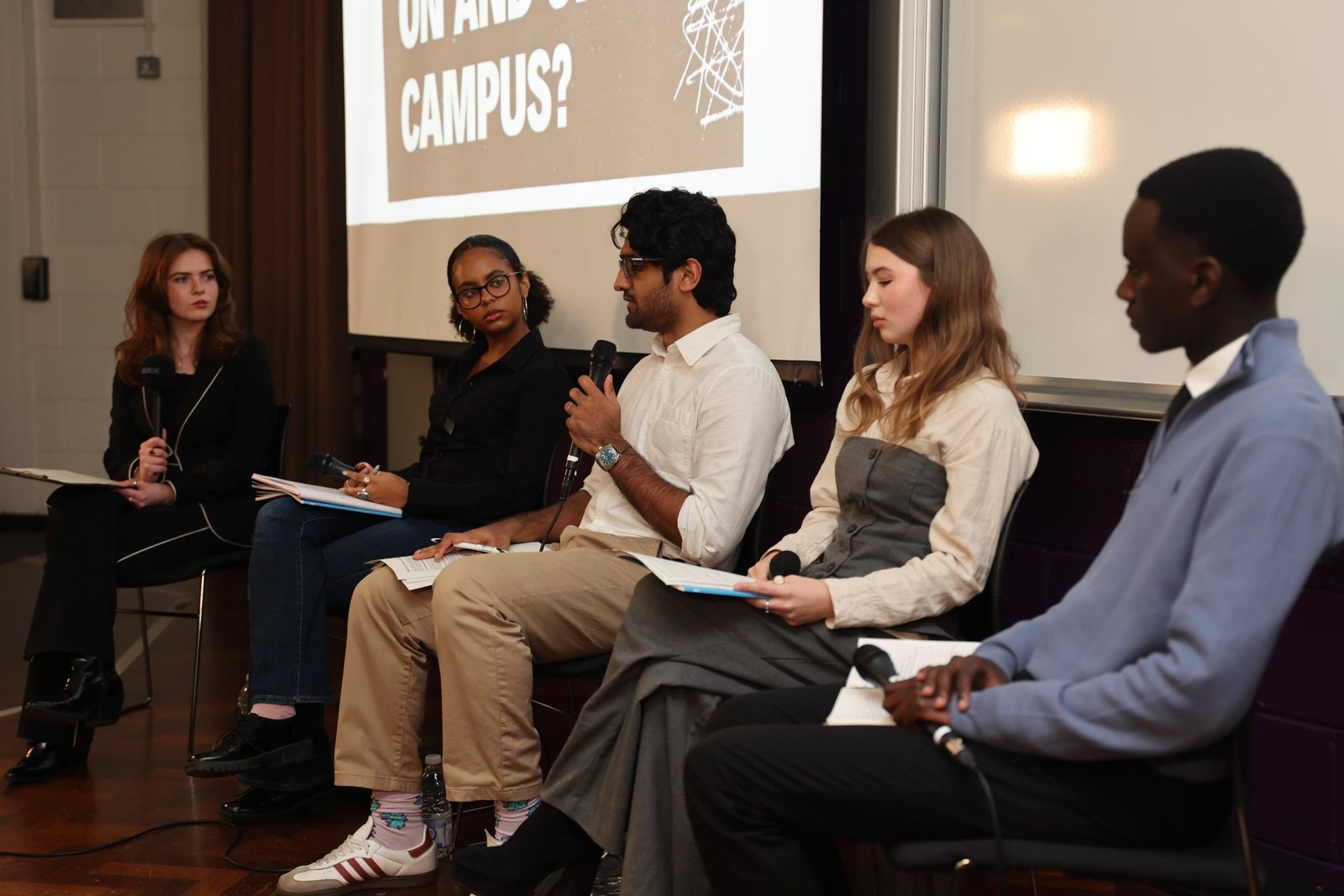
At the launch event for our Gen Z edition of Index on Censorship at the University of Essex recently it was striking how many ways the panellists felt their voices had been muffled and contained, if not outright censored. The speakers at the event (Has Gen Z Been Silenced On and Off Campus) could not have been more diverse, but they each felt restrictions on their free expression keenly. Sariah Lake, head of editorial at Essex Student Union’s Rebel Media said while she recognised that in some parts of the world, young people’s voices were being genuinely censored, for her the key issue was the influence of social media. “We are losing focus, we are getting distracted, we are just going to repost things,” she said. “Overcoming distraction, connecting with the real world, connecting with originality is what we can do to maintain freedom of speech.”
Adil Zawahir, an Indian lawyer working on a master’s degree in human rights law, said the situation was different for overseas students. “In the West, and the UK in particular, the curtailment of speech is not due to a fear of repression, it is more because of the fear of social ostracization and the anxiety you may feel after you’ve spoken out.” He added that international students have a double problem. “We share the social anxiety, but in addition to that, every time we think about speaking out, in the back of our minds is our status in this country. It is a temporary status. We are always subject to what the government decides for us.”
For Yelyzabeta Buriak, a journalism student from Ukraine who has written about her experience for the latest edition of Index, her situation as a refugee from a war zone brought with it extra concerns and restrictions. She said she avoided discussing the topic of Ukraine altogether for the first year in this country. “I’ve been carrying a feeling of guilt: for being safe here while my parents and friends are still in Ukraine in a very dangerous area,” she said. “You have this feeling of guilt, and you are always careful with words. You think ten times before saying something.” Sometimes, according to Buriak, the biggest silences are not caused by the law or university policy. “Sometimes it is self-censorship, sometimes it is fear, guilt and online judgement and sometimes its is paperwork and systems.”
An important reminder of the wider international context was provided by Merick Niyongabo, President of the Politics Society at Essex, who celebrated the Gen Z revolutions in Nepal, Bulgaria and Kenya but also pointed to the internet shutdowns being used across the world to silence dissent. “It’s important we raise the voices of those who are not being heard, the voices of those in Iran and Russia, who are going through repression, but not able to publish what they are writing or express their views because of censorship.”
A launch event for the Index on Censorship Gen Z issue was also held at Liverpool John Moores University, where the students mainly discussed a campaign to make LJMU a “Pro-Choice Campus”. A report of the event can be found on the Mersey News Live website, which is run by students at the university.
The event at University of Essex was to launch the Winter 2025 issue of Index on Censorship, Gen Z is revolting: Why the world’s youth will not be silenced, published on 18 December 2025.


				READ MORE
Share
Facebook Twitter Pinterest Email Copy Link

Listen to the article

0:00
0:00

Key Takeaways

Playback Speed

Select a Voice

Each generation has its resentments and irritations with the previous one. The baby boomers rebelled against post-war austerity, and their fury fuelled the student revolutions that swept the world in 1968. In some senses, they were the lucky ones. In the UK, free higher education and cheap housing made the boomers rich and comfortable. My own peers, Generation X, sneered at their smug complacency as we were hit by recession, the Poll Tax and Thatcherism. But some also benefitted from the unleashing of the free market, or rather the housing market. The millennials that followed were the first digital natives. They were hopeful and idealistic, but they were also the first generation to be saddled with crippling student debt.

These generations had little in common, but one thing they rarely felt, in the West at least, was silenced.

At the launch event for our Gen Z edition of Index on Censorship at the University of Essex recently it was striking how many ways the panellists felt their voices had been muffled and contained, if not outright censored. The speakers at the event (Has Gen Z Been Silenced On and Off Campus) could not have been more diverse, but they each felt restrictions on their free expression keenly. Sariah Lake, head of editorial at Essex Student Union’s Rebel Media said while she recognised that in some parts of the world, young people’s voices were being genuinely censored, for her the key issue was the influence of social media. “We are losing focus, we are getting distracted, we are just going to repost things,” she said. “Overcoming distraction, connecting with the real world, connecting with originality is what we can do to maintain freedom of speech.”

Adil Zawahir, an Indian lawyer working on a master’s degree in human rights law, said the situation was different for overseas students. “In the West, and the UK in particular, the curtailment of speech is not due to a fear of repression, it is more because of the fear of social ostracization and the anxiety you may feel after you’ve spoken out.” He added that international students have a double problem. “We share the social anxiety, but in addition to that, every time we think about speaking out, in the back of our minds is our status in this country. It is a temporary status. We are always subject to what the government decides for us.”

For Yelyzabeta Buriak, a journalism student from Ukraine who has written about her experience for the latest edition of Index, her situation as a refugee from a war zone brought with it extra concerns and restrictions. She said she avoided discussing the topic of Ukraine altogether for the first year in this country. “I’ve been carrying a feeling of guilt: for being safe here while my parents and friends are still in Ukraine in a very dangerous area,” she said. “You have this feeling of guilt, and you are always careful with words. You think ten times before saying something.” Sometimes, according to Buriak, the biggest silences are not caused by the law or university policy. “Sometimes it is self-censorship, sometimes it is fear, guilt and online judgement and sometimes its is paperwork and systems.”

An important reminder of the wider international context was provided by Merick Niyongabo, President of the Politics Society at Essex, who celebrated the Gen Z revolutions in Nepal, Bulgaria and Kenya but also pointed to the internet shutdowns being used across the world to silence dissent. “It’s important we raise the voices of those who are not being heard, the voices of those in Iran and Russia, who are going through repression, but not able to publish what they are writing or express their views because of censorship.”

A launch event for the Index on Censorship Gen Z issue was also held at Liverpool John Moores University, where the students mainly discussed a campaign to make LJMU a “Pro-Choice Campus”. A report of the event can be found on the Mersey News Live website, which is run by students at the university.

The event at University of Essex was to launch the Winter 2025 issue of Index on Censorship, Gen Z is revolting: Why the world’s youth will not be silenced, published on 18 December 2025.

Read the full article here

Fact Checker

Verify the accuracy of this article using AI-powered analysis and real-time sources.

Get Your Fact Check Report

Enter your email to receive detailed fact-checking analysis

5 free reports remaining

Continue with Full Access

You've used your 5 free reports. Sign up for unlimited access!

Already have an account? Sign in here

Share. Facebook Twitter Pinterest LinkedIn Tumblr Email Telegram Copy Link
News Room
  • Website
  • Facebook
  • X (Twitter)
  • Instagram
  • LinkedIn

The FSNN News Room is the voice of our in-house journalists, editors, and researchers. We deliver timely, unbiased reporting at the crossroads of finance, cryptocurrency, and global politics, providing clear, fact-driven analysis free from agendas.

Related Articles

Global Free Speech

Myanmar junta revokes licenses of 3 media outlets in martial law clampdown

14 minutes ago
Global Free Speech

Ahmed Shihab-Eldin, subjected to ‘grave violations’ of fundamental rights, has Kuwaiti citizenship revoked

17 hours ago
Global Free Speech

Bahrain sentences photographer Sayed Baqer Al-Kamel to 10 years in prison

20 hours ago
Global Free Speech

“I have been expelled from my country. Stripped of my home, my ability to return, to see loved ones, to visit my mother’s grave. I have nothing but what I carry” – Shchyrakova on her release in 2025 “I am staying in Belarus. I will not run. I am ready to spend time in prison for the chance to live in my homeland.” That was the firm—though now I’m no longer sure it was the right—decision I made after the 2020 presidential election in Belarus, as the machinery of repression began accelerating against journalists, civil society, and, more broadly, anyone unwilling to accept dictatorship, violence, and systemic human rights abuses. For the next two years, I lived in a constant, suffocating anticipation of arrest. Fear became a permanent companion: that at any moment, they would come for me. I listened to every sound outside, watched every movement, wondering if this was it. At home, I kept a “go bag” packed with essentials for prison. Paradoxically, this anticipation sharpened my sense of life. Every day of freedom felt like a gift. Conversations with my son, meetings with friends, walks with my dog—all carried the weight of possible finality. It was a kind of anxious happiness. At the beginning of 2022, for safety reasons, I left journalism and began pursuing long-postponed ambitions: studying psychology and working on ethnographic photography projects. These gave meaning to my days and dulled the fear—but never fully. So when they finally came, on a grey, freezing December morning, I felt something unexpected: relief. The waiting was over. I was charged with “discrediting the Republic of Belarus”—for expressing critical views about Alyaksandr Lukashenka, the government, and security forces during an interview. Later, another equally absurd criminal charge was added. During the investigation, I was held in a pre-trial detention center in my hometown of Homel. Cells held six to eight women—cramped spaces with barred windows offering only a sliver of sky. We were allowed outside for one hour a day, into a small concrete yard enclosed by bars overhead. Books became a lifeline. From the prison library and bookshop, I managed to access literature that helped me endure. One book in particular—Viktor Frankl’s Man’s Search for Meaning—became essential. A survivor of Nazi concentration camps, Frankl argued that survival depends on finding meaning even in suffering. I found mine in self-education: psychology, foreign languages, the prison system, and the social realities revealed in conversations with fellow inmates. Seven months later, my trial began. But calling it a trial is misleading—it was a performance of justice, not justice itself. The outcome was predetermined. There was no point in proving innocence or invoking constitutional rights to free expression. The sentence: three and a half years in prison. I chose not to appeal. I had no faith in the system and no desire to prolong my imprisonment. Life in the penal colony Penal colony no. 4 in Homel where Larysya was detained The first week in the colony felt almost euphoric. I could walk without escort, hands at my sides, see the open sky without bars, notice trees, flowers, grass. Then reality set in. Daily life became monotonous and harsh: strict regime, discrimination against political prisoners, constant uncertainty, forced labour six days a week in a sewing factory for negligible pay, and toxic interpersonal dynamics. One of the hardest aspects was the lack of personal space—living among 90 other women under constant psychological strain. There were mandatory screenings of propaganda films, including graphic World War II footage—violence, suffering, mass death—that was mentally overwhelming. The rules were often arbitrary and absurd. I resisted where I could. Sharing food or belongings with others was forbidden—I did it anyway, risking punishment. Studying foreign languages or psychology was effectively banned—the relevant books removed from the library—but I found ways to continue learning. Communication between political prisoners from different units was prohibited—I maintained contact, exchanged information, even smuggled notes hidden in clothing. I never stopped being a journalist. I spoke with inmates and staff—essentially conducting interviews—gathering and analysing stories, discussing them with others. The only thing I lacked was the ability to publish. Behind each prisoner’s story were broader social issues: addiction, domestic violence, lack of parental care, poor communication skills, low stress resilience. I observed firsthand how the penitentiary system functioned—archaic, punitive, and ineffective in rehabilitation. One of the few opportunities for expression came through cultural events, especially group discussions of films. War films became an opportunity to indirectly criticise Russia’s war against Ukraine. I spoke openly: war is not heroic—it is violence, suffering, death. These were, unmistakably, pacifist statements about the present. During a discussion about Alexander Pushkin, I recited poetry about freedom, dignity, and resistance to tyranny—words that resonated deeply with fellow political prisoners. Not all such moments went unnoticed. During a discussion titled “healthy family,” I spoke out against discrimination toward LGBTQ+ people, arguing for equality and the right to marriage. I was stopped mid-speech—but the consequences followed: a month of cleaning toilets and corridors, and transfer to another unit. Political prisoners were forced to work six days a week in a sewing factory for negligible pay Pardon and exile My release through a presidential pardon was not entirely unexpected. Even before my arrest, I believed I would not serve the full term. The regime has a history of using political prisoners as bargaining chips. In summer 2025 there were negotiations involving US envoy John Coale and Alyaksandr Lukashenka. As a result, in exchange for sanctions relief 14 people were pardoned. On 10 September 2025, I was summoned and asked to write a pardon request. That evening, I was told to pack my belongings. The next morning, masked KGB officers transported us (four women from the colony) in a minibus. No explanations, no consent. Like cargo. Five hours later, we reached the Lithuanian border. John Coale welcomed us (52 political prisoners from different colonies), expressing sympathy and acknowledging our suffering. For the first time in nearly three years, we were treated with dignity. In Vilnius, a crowd gathered—activists, journalists, strangers who cared. I stood there in prison clothes, exhausted, disoriented, thinking: “I have been expelled from my country. Stripped of my home, my ability to return, to see loved ones, to visit my mother’s grave. I have nothing but what I carry.” And yet— I will return. I will return to a free Belarus. Until then, I live in Poland. I plan to return to journalism and continue my work in ethnographic photography. Life goes on. And the suffering—mine and that of many others—was not in vain. Freedom never comes without a price. READ MORE

23 hours ago
Global Free Speech

Indian police invoke anti-terror law to unmask anonymous news handle TeluguScribe

1 day ago
Global Free Speech

CPJ joins call for Turkey to repeal disinformation law for its use against journalists

2 days ago
Add A Comment

Comments are closed.

Editors Picks

Myanmar junta revokes licenses of 3 media outlets in martial law clampdown

14 minutes ago

Dogecoin zooms 10% in breakaway from bitcoin as open interest hits year-high

26 minutes ago

Meta Stablecoin Move Brings USDC Payouts to Select Creators

29 minutes ago

Andy Serkis: What Orwell Understood About Tyranny

1 hour ago
Latest Posts

Crash risk rises as bond yields surge

1 hour ago

WLFI Token Price Drops 14% After Controversial Token Unlock Proposal Goes to Vote

1 hour ago

All New Cars Could Have Mandatory Surveillance Tech Unless Congress Stops This Mandate.

2 hours ago

Subscribe to News

Get the latest news and updates directly to your inbox.

At FSNN – Free Speech News Network, we deliver unfiltered reporting and in-depth analysis on the stories that matter most. From breaking headlines to global perspectives, our mission is to keep you informed, empowered, and connected.

FSNN.net is owned and operated by GlobalBoost Media
, an independent media organization dedicated to advancing transparency, free expression, and factual journalism across the digital landscape.

Facebook X (Twitter) Discord Telegram
Latest News

Brickbat: Do You Know Who You’re Talking To?

4 minutes ago

Myanmar junta revokes licenses of 3 media outlets in martial law clampdown

14 minutes ago

Dogecoin zooms 10% in breakaway from bitcoin as open interest hits year-high

26 minutes ago

Subscribe to Updates

Get the latest news and updates directly to your inbox.

© 2026 GlobalBoost Media. All Rights Reserved.
  • Privacy Policy
  • Terms of Service
  • Our Authors
  • Contact

Type above and press Enter to search. Press Esc to cancel.

🍪

Cookies

We and our selected partners wish to use cookies to collect information about you for functional purposes and statistical marketing. You may not give us your consent for certain purposes by selecting an option and you can withdraw your consent at any time via the cookie icon.

Cookie Preferences

Manage Cookies

Cookies are small text that can be used by websites to make the user experience more efficient. The law states that we may store cookies on your device if they are strictly necessary for the operation of this site. For all other types of cookies, we need your permission. This site uses various types of cookies. Some cookies are placed by third party services that appear on our pages.

Your permission applies to the following domains:

  • https://fsnn.net
Necessary
Necessary cookies help make a website usable by enabling basic functions like page navigation and access to secure areas of the website. The website cannot function properly without these cookies.
Statistic
Statistic cookies help website owners to understand how visitors interact with websites by collecting and reporting information anonymously.
Preferences
Preference cookies enable a website to remember information that changes the way the website behaves or looks, like your preferred language or the region that you are in.
Marketing
Marketing cookies are used to track visitors across websites. The intention is to display ads that are relevant and engaging for the individual user and thereby more valuable for publishers and third party advertisers.