

 Freedom Index

Listen to the article
Determinism, Self-Determinism, and Your Future Self
In 1985, the physiologist Benjamin Libet conducted a series of experiments that involved taking EEG readings of subjects’ brains engaged in a task that required them to press a button at random intervals whenever they felt like it during the session. The results were revealing: several hundred milliseconds before the “decision” was consciously made by the subject, the brain’s motor cortex was activated.
Libet’s research has held up well during the replication crisis in psychology. The neuroscientist John-Dylan Haynes, for example, employed fMRI brain scans in a 2008 study, replicated in 2011, in which subjects inside the scanner and observing a series of random letters were instructed to press one of two buttons whenever they wanted. Participants were then told to verbally report which letter was on the screen when they “decided” to press the button. The results were equally striking: the time between brain activation and conscious awareness of a “choice” was several seconds, and in some cases a full seven seconds. In these studies, and others, scientists measuring subjects’ brains knew which decision they would make before the subjects themselves knew it!
What these studies imply is that we are not free to choose in the way we think we are. We feel free, but that’s just what our higher conscious self believes because it doesn’t know about the inputs feeding into it from our lower self below that has apparently already made the choice. Here is how the neuroscientist Sam Harris articulated it in his widely-read book Free Will:
Our wills are simply not of our own making. Thoughts and intentions emerge from background causes of which we are unaware and over which we exert no conscious control. We do not have the freedom we think we have.
In his book Determined: A Science of Life Without Free Will, the Stanford University biologist Robert Sapolsky articulated the deterministic position even more succinctly:
We are nothing more or less than the cumulative biological and environmental luck, over which we had no control, that has brought us to any moment.
Remember these exact definitions as I will come back to them shortly.
Self-Determinism
Since philosophers love to employ thought experiments to test ideas, here’s one for you to consider (feel free to plug yourself and your spouse or significant other into the situation): John Doe is an exceptionally moral person who is happily married to Jane. The chances of John ever cheating on Jane is close to zero. But the odds are not zero because John is human, so let’s say—for the sake of argument—that John has a one-night stand while on the road and Jane finds out. How does John account for his actions? Does he, pace the standard deterministic explanation for human behaviour (as in Harris’s and Sapolsky’s definitions above), say something like this to Jane?
Honey, my will is simply not of my own making. My thoughts and intentions emerge from background causes of which I am unaware and over which I exert no conscious control. I do not have the freedom you think I have. I could not have done otherwise because I am nothing more or less than the cumulative biological and environmental luck, over which I had no control, that brought me to the moment of infidelity…
Could John even finish the thought before the stinging slap of Jane’s hand across his face terminated the rationalisation? If free will is the power to do otherwise, as it is typically defined by philosophers, both John and Jane know that, of course, he could have done otherwise, and she reminds him that should such similar circumstances arise again he damn well better make the right choice… or else.
Consider the “could you have done otherwise?” question in a rewind of the tape of your life. If it is a Read Only Memory (ROM) tape, then no, you could not have done otherwise, because that’s just a replay of a recording of what already happened. If the entire universe is a ROM tape and in a replay everything would repeat exactly as it originally happened, then determinism is true, free will is an illusion, and there is no compatibilist work-around. In this universe, it was determined from the moment of the Big Bang that I would type these words and you would read them.
But this is not the universe we live in. In our universe (unlike the one in which thought experiments are run), the Second Law of Thermodynamics and entropy means that time flows forward and no future scenario can ever perfectly match one from the past. As Heraclitus’ idiom informs us, “you can’t step into the same river twice,” because you are different and the river is different. What you did in the past influences what you choose to do next in future circumstances (the technical name for this is “learning”), which are always different from the past. So, while the world is determined, we are active agents in determining our decisions going forward in a self-determined way, in the context of what already happened and what might happen. Our universe is not pre-determined but rather post-determined, and we are part of the causal net of the myriad determining factors to create that post-determined world. Far from self-determinism being a downer, it’s the ultimate upper because it means we can do something about the future, namely, we can change it!
The Reductionistic Physics Envy of Determinists
In his book, Free Agents, the geneticist and neuroscientist Kevin Mitchell shows that the determinist’s reductionistic approach to understanding human thought and behaviour—from neurons to molecules to atoms, or neuroscience, chemistry, and physics—“is not just wrong—it’s wrong-headed.” Why? “A purely reductionist, mechanistic approach to life completely misses the point.”
Do determinists really fall into the trap of pure reductionism? They do. Here is the determinist Robert Sapolsky defending his belief that free will does not exist because single neurons don’t have it: “Individual neurons don’t become causeless causes that defy gravity and help generate free will just because they’re interacting with lots of other neurons.” In fact, billions of interacting neurons is exactly where self-determinism arises. But Sapolsky is having none of that: “A lot of people have linked emergence and free will; I will not consider most of them because, to be frank, I can’t understand what they’re suggesting, and to be franker, I don’t think the lack of comprehension is entirely my fault.”
Robert Sapolsky is Wrong
A new book about free will fails to offer an original argument or make a convincing case.
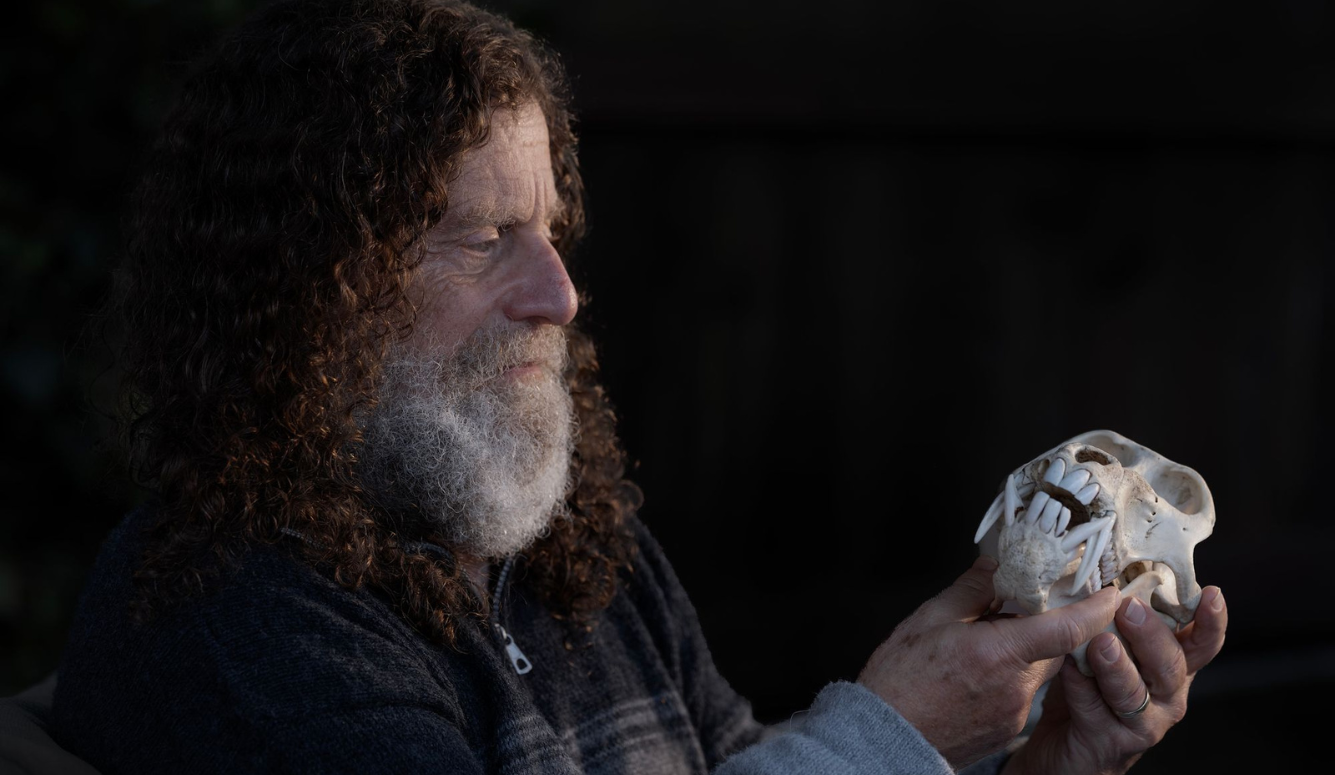
Determinists like Harris and Sapolsky have physics envy. The history of science is littered with the failed pipe dreams of ever-alluring reductionist schemes to explain the inner workings of the mind—schemes increasingly set forth in the ambitious wake of Descartes’ own famous attempt, some four centuries ago, to reduce all mental functioning to the actions of swirling vortices of atoms, supposedly dancing their way to consciousness. Such Cartesian dreams provide a sense of certainty, but they quickly fade in the face of the complexities of biology. We should be exploring consciousness and choice at the neural level and higher, where the arrow of causal analysis points up toward such principles as emergence and self-organisation.
This we have through the sciences of complexity, in which we recognise the properties of self-organisation and emergence that arise out of complex adaptive systems, which grow and learn as they change, and they are autocatalytic—containing self-driving feedback loops. For example:
Water is a self-organised emergent property of a particular arrangement of hydrogen and oxygen molecules.
Complex life is a self-organised emergent property of simple life, where simple prokaryote cells self-organised to become more complex eukaryote cells (the little organelles inside cells were once self-contained independent cells).
Consciousness is a self-organised emergent property of billions of neurons firing in patterns in the brain.
Language is a self-organised emergent property of thousands of words spoken in communication between language users.
Economy is a self-organised emergent property of millions of people pursuing their own self-interests without any awareness of the larger system in which they work.
Free will, volition, and choice are not to be found in atoms, molecules, or individual neurons, but in the collective action of billions of neurons bundled into neural networks of information out of which real choices are made.
As I like to ask determinists: Where is inflation in the laws and principles of physics, biology, or neuroscience? It’s not, because inflation is an emergent property arising from millions of individuals in economic exchange, a subject properly described by economists, not physicists, biologists, or neuroscientists.
Your Future Self: Self-Determination Through Willpower and Won’t Power
In an episode of the hit animated television series The Simpsons, Marge Simpson warns her husband that he might regret the drinking binge he’s about to go on, to which Homer replies: “That’s a problem for future Homer. Man, I don’t envy that guy.” All of us, in fact, have future selves. Or, more accurately, there is no fixed self, but rather an ever-changing self, and the fact that we can project ourselves into the future means we can not only anticipate how our future selves might act, we can take measures today to alter how our future selves behave.
Is this really possible? Of course it is. Since the future can never perfectly match the past in a universe like ours governed by the Second Law of Thermodynamics, while the world (and you by extension) are determined, your future self is not pre-determined. Thus, you can alter the causal net of the future by choosing to restructure the present as you move through it. How?
Well, you can start by making your bed. Seriously. That was the advice of Admiral William H. McRaven in his 2014 commencement address at the University of Texas at Austin that when posted online went viral with millions of views. Its core message is summed up in his memorable line, “if you want to change the world, start off by making your bed.” The Navy SEAL veteran expanded on the principle:
If you make your bed every morning you will have accomplished the first task of the day. It will give you a small sense of pride and it will encourage you to do another task and another and another. By the end of the day, that one task completed will have turned into many tasks completed. Making your bed will also reinforce the fact that little things in life matter. If you can’t do the little things right, you will never do the big things right. And, if by chance you have a miserable day, you will come home to a bed that is made—that you made—and a made bed gives you encouragement that tomorrow will be better.
In self-help parlance these are called “small wins” which, cumulatively, build into larger wins and, ultimately, the fulfilment of one’s goals. Each step in the causal chain requires some level of self-control over your present self in order to bring about the outcomes desired by your future self.
It may seem odd to think of yourself as a past-self, present-self, and future self, but as suggested in this language, your “self” is not fixed from birth, destined to a future over which you have no control. We live not only in space, but in time, and as such no matter the pre-conditioning factors nudging you along a given pathway—your genes, upbringing, culture, luck and contingent history—there is always wiggle room to alter future conditions. The river of time flows ever onward and you are part of its future.
Act accordingly.
Excerpted from Truth: What It Is, How to Find It, and Why It Still Matters, by Michael Shermer, 384 pages, Johns Hopkins University Press (January 2026).
Read the full article here
Fact Checker
Verify the accuracy of this article using AI-powered analysis and real-time sources.