Close Menu
FSNN | Free Speech News NetworkFSNN | Free Speech News Network
  • Home
  • News
    • Politics
    • Legal & Courts
    • Tech & Big Tech
    • Campus & Education
    • Media & Culture
    • Global Free Speech
  • Opinions
    • Debates
  • Video/Live
  • Community
  • Freedom Index
  • About
    • Mission
    • Contact
    • Support
Trending

Nexo returns to U.S. with Bakkt-backed crypto services after 2022 regulatory exit

2 minutes ago

Bitcoin ‘Fakeouts And Shakeouts’ Liquidate Traders This US Bank Holiday

7 minutes ago

Metaplanet Posts $605 Million Loss After Spending Billions on Bitcoin

7 minutes ago
Facebook X (Twitter) Instagram
Facebook X (Twitter) Discord Telegram
FSNN | Free Speech News NetworkFSNN | Free Speech News Network
Market Data Newsletter
Monday, February 16
  • Home
  • News
    • Politics
    • Legal & Courts
    • Tech & Big Tech
    • Campus & Education
    • Media & Culture
    • Global Free Speech
  • Opinions
    • Debates
  • Video/Live
  • Community
  • Freedom Index
  • About
    • Mission
    • Contact
    • Support
FSNN | Free Speech News NetworkFSNN | Free Speech News Network
Home»News»Global Free Speech»Ethiopia revokes Reuters journalists’ accreditation following investigative report
Global Free Speech

Ethiopia revokes Reuters journalists’ accreditation following investigative report

News RoomBy News Room3 hours agoNo Comments3 Mins Read485 Views
Share Facebook Twitter Pinterest Copy Link LinkedIn Tumblr Email VKontakte Telegram
Ethiopia revokes Reuters journalists’ accreditation following investigative report
Share
Facebook Twitter Pinterest Email Copy Link

Listen to the article

0:00
0:00

Key Takeaways

Playback Speed

Select a Voice

Nairobi, February 16, 2026—The Committee to Protect Journalists calls on Ethiopian authorities to restore the accreditation of three Reuters journalists who were barred from reporting after the news agency published a report alleging that Ethiopia was secretly training forces fighting in neighboring Sudan’s civil war.

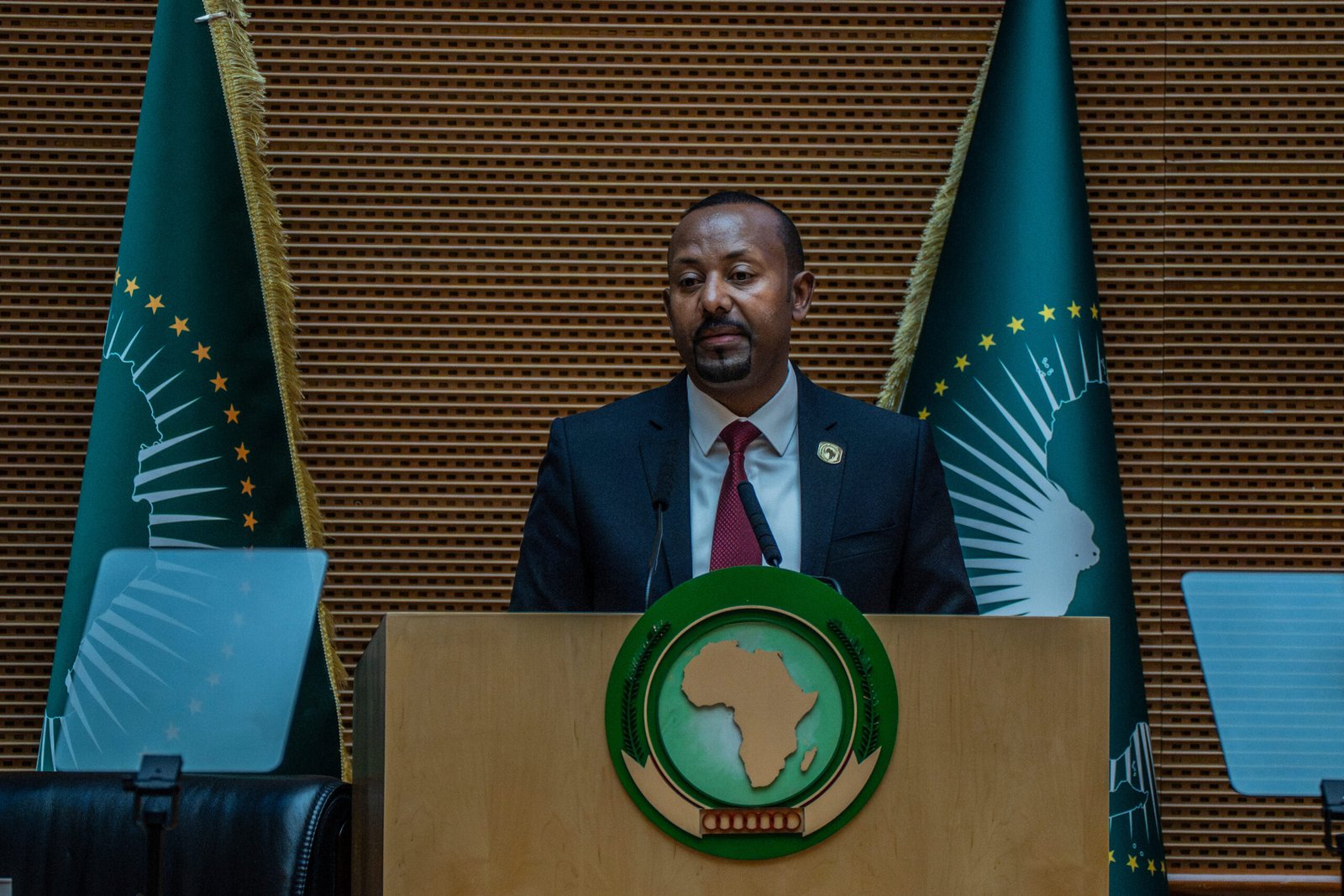
On February 14, Reuters reported that the Ethiopian Media Authority (EMA) had “declined” to renew the journalists’ accreditation and had also revoked its accreditation to cover the 39th African Union summit of heads of state and government in the Ethiopian capital Addis Ababa on February 14 and 15. 

“The revocation of Reuters’ credentials is the latest in a troubling pattern of repressive regulatory action against international and independent press in Ethiopia,” said CPJ Africa Program Coordinator Muthoki Mumo. “Ethiopian authorities should restore Reuters’ credentials, lift sanctions on other independent media, and stop treating critical journalism as a threat.”

Reuters said the EMA had “informally indicated” that the regulatory body’s actions were prompted by Reuters’ February 10 investigation, reported from Nairobi, London, and Cairo, which alleged that Ethiopia was hosting a secret camp, financed by the United Arab Emirates (UAE), to train thousands of fighters for Sudan’s paramilitary Rapid Support Forces (RSF). The group has been accused of war crimes.

Ethiopian authorities have not publicly responded to the report, while the UAE rejected the allegations as “unfounded.”

Reuters said it was reviewing the decision and will continue to report on Ethiopia “in an independent, impartial and reliable way.”

The move follows a series of restrictions on foreign media, including the October suspension of the licenses of all nine of Germany’s Deutsche Welle (DW) correspondents in Ethiopia. Following pressure, seven have resumed work but two correspondents, who cover the restive Tigray and Amhara regions, remain banned.

In January, the EMA revoked the operating license of the online outlet Wazema Radio, citing what it described as reporting that contradicted the “national interest,” lacked balance, excluded government responses, and incited unrest.

Wazema’s management said they had complied but did not believe the action was “correct by any standard.”

On June 1, Ethiopians are due to vote in a general election, amid concerns about regional conflicts and a stalled peace agreement ending its 2020 to 2022 civil war.

CPJ did not immediately receive responses to its requests for comment sent via email to the EMA and via messaging app to the EMA’s deputy director general, Yonatan Tesfaye

Read the full article here

Fact Checker

Verify the accuracy of this article using AI-powered analysis and real-time sources.

Get Your Fact Check Report

Enter your email to receive detailed fact-checking analysis

5 free reports remaining

Continue with Full Access

You've used your 5 free reports. Sign up for unlimited access!

Already have an account? Sign in here

Share. Facebook Twitter Pinterest LinkedIn Tumblr Email Telegram Copy Link
News Room
  • Website
  • Facebook
  • X (Twitter)
  • Instagram
  • LinkedIn

The FSNN News Room is the voice of our in-house journalists, editors, and researchers. We deliver timely, unbiased reporting at the crossroads of finance, cryptocurrency, and global politics, providing clear, fact-driven analysis free from agendas.

Related Articles

Global Free Speech

Philippine journalist Frenchie Mae Cumpio denied bail, to remain in prison after 6 years

12 hours ago
Global Free Speech

Group of teenage students using smartphones. Credit: Davidovich Mikhail/Alamy Banning social media for the under-16s appears to be contagious. Australia set the trend in December and now other countries are considering doing the same. There is growing momentum in Britain in favour of a ban (with the House of Lords having voted in favour of one last month). Spain is the first European country to propose legislation and Greece is said to be following suit. The Spanish prime minister, Pedro Sánchez, has spoken candidly about the abuse he has experienced online, saying it has “crossed many red lines” and nearly caused him to resign in 2024. He’s pushing through laws not only to ban access to major platforms for under-16s, but to hold social media executives criminally responsible if they do not take down illegal or hateful content. The country might even go one step further: Sira Rego, the youth minister, has suggested X should be prohibited altogether, because of the “flagrant violations of fundamental rights” taking place on the platform. She listed various issues, including the sexual deepfake images generated by Grok, and called the broader social media landscape “undemocratic” and controlled by “a few digital strongmen”. Elon Musk, of course, hit back, first posting on X: “Dirty Sánchez is a tyrant and a traitor to the people of Spain”, and an hour and a half later posting “Sánchez is the true fascist totalitarian.” I am not going cheerlead for Musk here. On X specifically, I find the culture now often unpleasant, somewhere I visit out of habit and seldom linger. And while X seems to be a microcosm of the worst trends of social media today, the other major platforms have flaws too. Do read this excellent piece we recently published from Brazilian writer Nina Auras on Meta banning left-wing political accounts in her country. But for those of us who work in defence of freedom of expression, the question is not whether platforms are flawed. The question is whether restricting access to them will strengthen our speech rights or weaken them. At Index, we’re not neuroscientists studying the cognitive effects of scrolling and the impact of social media on the young (as a sidenote a landmark trial has just started in Los Angeles on the mental health effects of Instagram and YouTube, the outcome of which will be very insightful). Rather we’re advocates for people whose speech is curtailed, be it journalists, activists or others. From that vantage point, social media remains incredibly important. For the isolated and the marginalised, it can be a lifeline: a source of learning, solidarity and visibility. The platforms continue to help expose state violence, mobilise protest movements and even unseat autocrats. Our recent magazine issue on Generation Z explored exactly that, and for those of us paying close attention to events in Iran, social media provided some of the best access to on-the-ground information. It is for these reasons that, until recently, the governments most eager to ban social media have typically been the least tolerant of dissent. Yes, the calls from Australia, Spain, Greece, the UK and other countries are rooted in different, more admirable reasons. It’s just bans will still have the same impact. None of the above excuses the abuse, the disinformation, the addictive design of algorithms and democratic interference. Those harms demand attention. But when solutions jump straight to prohibition without reckoning with what might be lost, they begin to resemble moral panics of the past – video games, rock ’n’ roll, the printing press, each once cast as existential threats to society that should be controlled no matter what the cost. READ MORE

2 days ago
Global Free Speech

CPJ nominates Philippine journalist Frenchie Mae Cumpio for UNESCO’s Guillermo Cano Prize

3 days ago
Global Free Speech

The Gen Z revolution will be polarised

3 days ago
Global Free Speech

CPJ welcomes Guatemalan journalist Jose Rubén Zamora’s release to house arrest, calls for all charges to be dropped

4 days ago
Global Free Speech

Senegalese news commentator arrested, accused of spreading false news

4 days ago
Add A Comment
Leave A Reply Cancel Reply

Editors Picks

Bitcoin ‘Fakeouts And Shakeouts’ Liquidate Traders This US Bank Holiday

7 minutes ago

Metaplanet Posts $605 Million Loss After Spending Billions on Bitcoin

7 minutes ago

Hong Kong regulator approves first crypto company license since June last year

1 hour ago

Harvard Endowment Reduces Stake in Bitcoin ETF, Adds Ether Exposure

1 hour ago
Latest Posts

Vitalik Buterin: Hedging on Prediction Markets Could ‘Replace Fiat Currency’

1 hour ago

Crypto mining can help energy volatility, Paradigm responds to policy onslaught

2 hours ago

How South Korea Is Using AI to Detect Crypto Market Manipulation

2 hours ago

Subscribe to News

Get the latest news and updates directly to your inbox.

At FSNN – Free Speech News Network, we deliver unfiltered reporting and in-depth analysis on the stories that matter most. From breaking headlines to global perspectives, our mission is to keep you informed, empowered, and connected.

FSNN.net is owned and operated by GlobalBoost Media
, an independent media organization dedicated to advancing transparency, free expression, and factual journalism across the digital landscape.

Facebook X (Twitter) Discord Telegram
Latest News

Nexo returns to U.S. with Bakkt-backed crypto services after 2022 regulatory exit

2 minutes ago

Bitcoin ‘Fakeouts And Shakeouts’ Liquidate Traders This US Bank Holiday

7 minutes ago

Metaplanet Posts $605 Million Loss After Spending Billions on Bitcoin

7 minutes ago

Subscribe to Updates

Get the latest news and updates directly to your inbox.

© 2026 GlobalBoost Media. All Rights Reserved.
  • Privacy Policy
  • Terms of Service
  • Our Authors
  • Contact

Type above and press Enter to search. Press Esc to cancel.

🍪

Cookies

We and our selected partners wish to use cookies to collect information about you for functional purposes and statistical marketing. You may not give us your consent for certain purposes by selecting an option and you can withdraw your consent at any time via the cookie icon.

Cookie Preferences

Manage Cookies

Cookies are small text that can be used by websites to make the user experience more efficient. The law states that we may store cookies on your device if they are strictly necessary for the operation of this site. For all other types of cookies, we need your permission. This site uses various types of cookies. Some cookies are placed by third party services that appear on our pages.

Your permission applies to the following domains:

  • https://fsnn.net
Necessary
Necessary cookies help make a website usable by enabling basic functions like page navigation and access to secure areas of the website. The website cannot function properly without these cookies.
Statistic
Statistic cookies help website owners to understand how visitors interact with websites by collecting and reporting information anonymously.
Preferences
Preference cookies enable a website to remember information that changes the way the website behaves or looks, like your preferred language or the region that you are in.
Marketing
Marketing cookies are used to track visitors across websites. The intention is to display ads that are relevant and engaging for the individual user and thereby more valuable for publishers and third party advertisers.