

 Freedom Index
Listen to the article
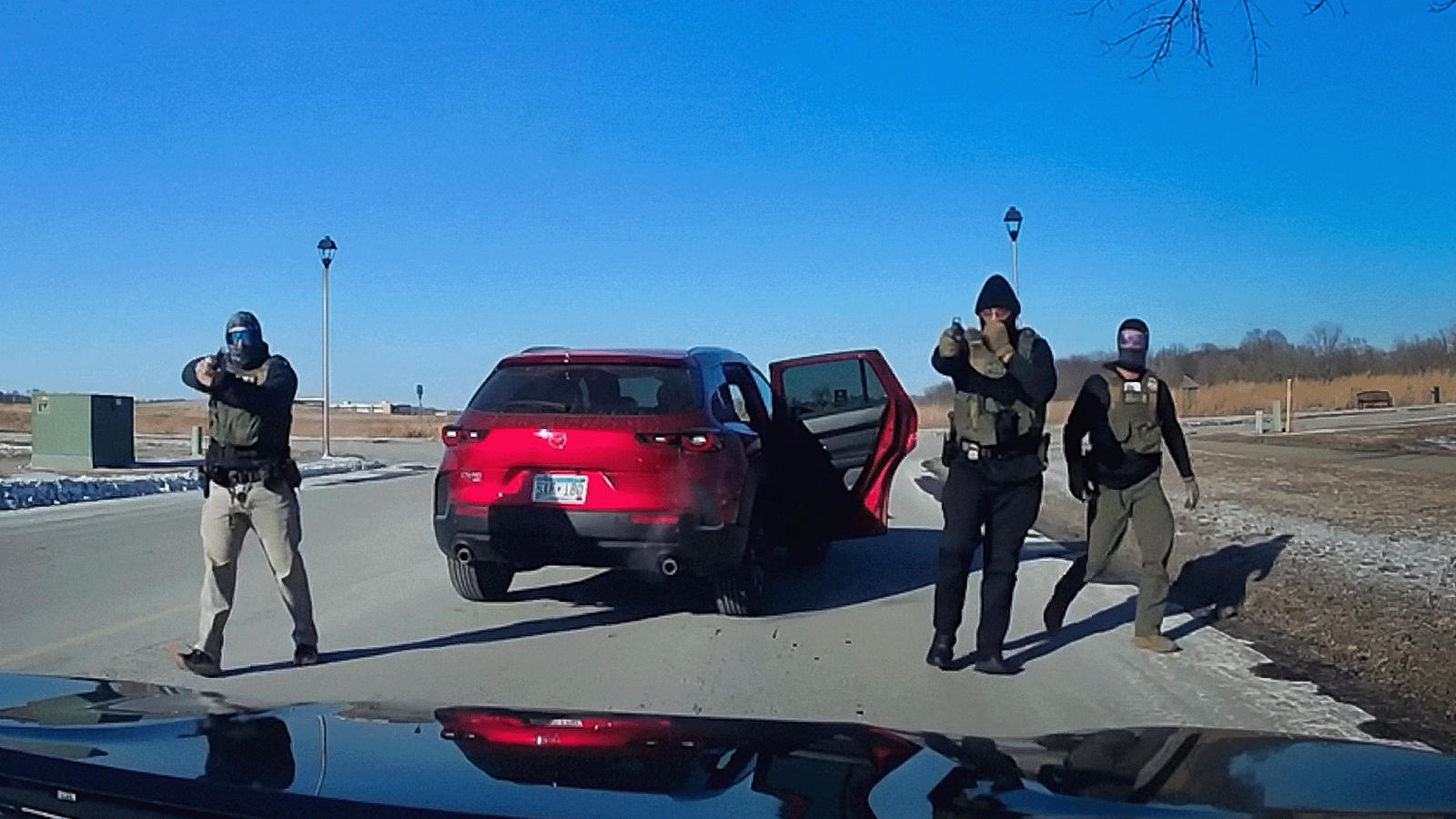
In a video of a late-January incident in Minnesota, federal immigration officers sped past an Immigration and Customs Enforcement (ICE) observer’s vehicle and swerved to box her in. While the driver called someone and asked them to dial 911, agents approached with weapons drawn and ordered her out of her car. She was taken into custody, only to be released later after an agent received a phone call and diverted to meet the local police chief.
From a citizen’s perspective, the encounter is frightening and tense. From the perspective of someone who spent years wearing a badge and operating within jurisdictional limits, it raises deeper concerns. The issue isn’t that enforcement occurred, but that it appears to have taken place without clear authority, restraint, or purpose.
The video is not an outlier. A growing body of footage shows similar patterns in federal immigration enforcement. Many of these encounters are initiated without a clear legal basis, then escalate rapidly, with agents using force that conflicts with widely accepted law enforcement standards. In one case, an agent punches an individual in the face during an attempted detention, even though the person does not appear to pose an immediate threat. In others, chemical agents are deployed on individuals already pinned to the ground by multiple officers, sometimes sprayed directly into the face at close range. People are being struck by canisters or other objects. Pepper-ball munitions are fired at distances that appear to violate use-of-force protocols.
Modern law enforcement training is explicit about these risks. Force stacking, prolonged prone restraint, and unnecessary escalation with chemical agents are repeatedly identified as dangerous and, in some cases, deadly. These are core principles taught across agencies because their value is clear and unambiguous.
Taken together, these encounters suggest more than isolated judgment errors. They point to a broader pattern of authority being exercised without sufficient legal grounding or professional discipline.
A federal badge does not confer universal authority or “absolute immunity,” as some wrongly claim. Authority is contextual; it must be tied to a lawful mission, jurisdiction, and conduct. When those elements are absent or unclear, it is not sufficient to dismiss the resulting conduct as an unfortunate mistake. Many of these encounters appear to involve agents operating outside their authority, in ways that should demand discipline and accountability.
In many of these videos, encounters are initiated with U.S. citizens engaged in constitutionally protected activity: filming, speaking, standing nearby, or questioning authority. Those actions do not create detention power. Filming officers is not interference; verbal criticism is not obstruction; refusing an unlawful command is not resisting.
Every police academy teaches the same foundational rule: If you do not have lawful authority to detain, you cannot use force. Escalating force does not create authority where it did not exist before. It cannot be a substitute for legal justification. Yet in these encounters, escalation often appears to come first, followed by claims of resistance that are then used to rationalize the force that followed.
Officers are trained to avoid this dynamic. We are taught about officer-created jeopardy—the idea that officers are responsible for decisions that unnecessarily create danger. Initiating physical contact when disengagement is available, escalating verbal encounters without tactical need, or inserting oneself into a situation without a lawful purpose all increase risk. Courts understand this. They do not freeze the frame at the moment force is applied. They examine how that moment came to be; the totality of the circumstances.
Use-of-force policy also makes clear that officers must de-escalate after control is achieved. Earlier resistance does not justify continued force. Spraying chemical agents into the face of a restrained individual is not de-escalation. Holding someone prone while layering force tools is not decisive enforcement. This is exactly how people get seriously injured or killed.
Any working officer watching these videos should ask a simple question: What would happen if I handled an encounter this way? What if I deployed chemical agents on someone already prone and pinned? What if I escalated without clear detention authority? Would I be praised, or would I be investigated, disciplined, or fired?
The glaring violations and contradictions present in these incidents take a toll on local law enforcement, who must respond to everyday calls against a backdrop of renewed fear and distrust. The public does not distinguish between badges or agencies. They remember the coercion, not the jurisdiction.
None of this criticism is meant to be anti-law enforcement. It is pro-professionalism. Policing depends on legitimacy. Patterns of agents overstepping, escalating unnecessarily, or treating force as a shortcut to control weaken the legal and moral foundation that allows law enforcement to function at all. Many officers see what is happening and know it is wrong. Now is the time to speak up.
It is not too late for federal immigration agencies to correct course, but doing so will require clear policy enforcement, real accountability, and a recommitment to disciplined, improved training and lawful policing. If the current trajectory continues, they may do irreparable damage not only to public trust, but also to the credibility of law enforcement more broadly.
Read the full article here
Fact Checker
Verify the accuracy of this article using AI-powered analysis and real-time sources.